Is there a competition between the two National songs of India?
Is the controversy genuine or a legal necessity?
Constitutional Equal Respect to the Two
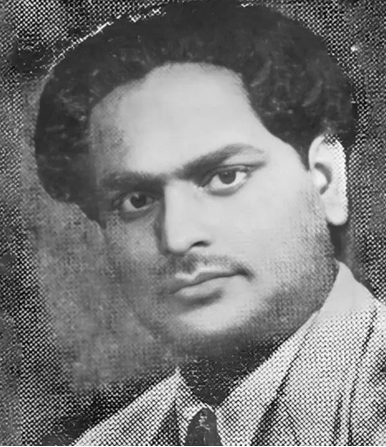
Freedom fighter Vande Mataram Ramachander Rao (1918–2001) faced the brutal ‘Tiktiki’ whipping punishment during the historic 1938 Vande Mataram movement in the princely state of Hyderabad. During the Nizam’s government has banned singing “Vande Mataram” in Osmania University and affiliated hostels, labeling it a communal and anti-religious song instead of the official Asafia dynasty anthem (Do Al Men Riya Sabe). In fact, the students defiantly chanted the national mantra in prayer halls and hostels, triggering mass strikes and expulsions.
Tiktiki Whipping in Nizam’s Hyderabad: Pellet Guns in Janam Mantar
Student leaders like Ramachandra Rao were arrested, imprisoned, and subjected to the severe ‘Tiktiki’ flogging/torture method, earning him the prefix “Vande Mataram” as a badge of honor. Even in the British or Nizam regime used spike fixed sticks, etc were not used, but in Jantar Mantar, it was threatened, though not used. But weapons used by security forces were pellet guns (anti-riot guns firing birdshot ammunition) and shock batons (electric shock weapons), rather than spiked weapons. Additionally, an AK-47 assault rifle was discharged by a policeman during an escalation of the protest.
Sansad Chalo: pellet shards and vision loss.
It was widely reported during the CJP’s “Sansad Chalo” march to Parliament in New Delhi, on July 20, 2026, despite initial denials by local police, that hospital and medical reports later confirmed multiple student injuries caused by pellet shards, leading to severe injuries including vision loss. Videos began circulating online showing a Delhi Police official holding a wooden baton wrapped with protruding iron nails. We can’t believe all kinds of WhatsApp images and videos are circulated. One should verify correctly, and only then can readers conclude. If verified visual evidence proved that an official was carrying a baton with nails attached to it, however, there is no factual evidence or recorded documentation proving that the spiked stick was actually used to hit or assault any protesters. The police primarily utilized standard polycarbonate lathis, tear gas, and pellet-firing shotguns for crowd control.
Supreme Court noted that the Bihar government admitted the AK-47 was discharged, the constable fired four rounds into the air after being trapped by a hostile crowd, and asserted that no protesters were injured by the rifle fire.
1938 Vande Mataram strike
Following the 1938 Vande Mataram strike, the vindictive Nizam government rusticated 350 students from Osmania University and over 1,200 students across the state. To ensure their academic ruin, the Nizam’s regime strictly enforced a rule preventing other universities from admitting rusticated students without a clearance certificate.
While wealthy, prominent institutions like Andhra University and Banaras Hindu University bent to the Nizam’s pressure to protect their annual ₹2 lakh government grants, Nagpur University boldly stepped in to save the students’ futures.
By providing a safe academic haven, Nagpur University preserved a whole generation of brilliant minds who went on to lead India’s political and freedom struggles. Among the rescued students who transferred to Nagpur-affiliated colleges was P.V. Narasimha Rao (who studied at Hislop College), later becoming the Prime Minister of India. Other rescued students included prominent future leaders like Devulapalli Venkateshwar Rao and Arutla Ramachandra Reddy. Vande Mataram Ramachander Rao was a stalwart of the Hyderabad State freedom struggle, an uncompromising revolutionary against the autocratic Nizam regime, and later an esteemed parliamentarian and cultural leader. In 1938–1939, during the widespread civil rights and Arya Samaj Satyagraha against the Nizam’s restrictions, singing Vande Mataram was strictly prohibited in educational institutions and public places across Hyderabad State.
Kaloji Narayana Rao (9 September 1914 – 13 November 2002), lovingly called Kaloji or Kalanna, was a colossal figure in Telugu literature and reflects the profound reverence that the stalwarts of the Telangana freedom struggle held for Vande Mataram. Our Praja Kavi, a great poet, has a poignant moment captured by Vande Mataram Garu. Whenever later generations casually heard the name or asked who “Vande Mataram” was, Kaloji would often be moved to tears because to his generation, that prefix was not an honorary title; it was etched in blood, sacrifice, and extraordinary defiance.
While imprisoned for participating in the satyagraha, Ramachander Rao refused to stop reciting Vande Mataram during daily morning prayers. He refused to stop when the prison superintendent told him to. He was whipped on a triangular framework (tiktiki) and whipped severely as a punishment. Rao chanted ‘Vande Mataram’’with every lash of the cane till he fell unconscious. The episode electrified the public, and from that day on, people inscribed the national slogan for him forever.
Rao worked underground in Hyderabad in the turbulent days leading up to Operation Polo. He collected important information about the Nizam’s army and the Razakars, a kind of paramilitary organization, and passed on important information directly to K.M. Munshi, the Agent-General of India in Hyderabad. To this end, the Nizam government framed him for high treason and tried him in Chanchalguda Central Jail.
A Fearless, Independent Politician:
He was a staunch man in post-independence politics. He contested as an independent and was elected as an MLA from Vikarabad Assembly constituency three times in 1957, 1962 and 1967. He was a famous loser to Deputy Chief Minister K.V. Ranga Reddy in 1967. He was noted for his unflagging fight against corruption and his success in exposing electoral malpractices of high-ranking cabinet ministers.
For love of Telugu
Vandemataram Rao was the President of the Andhra Pradesh Official Language Commission (Adhikara Bhasha Sangham) in 1978-1981. He was the leader of the movement to make Telugu the official language in government offices and court in the state.
He and his elder brother Veerabhadra Rao set up a gymnasium (vyayamshala) and study centre in Gadwal where young people were taught physical self-defence and classical literature. He led a simple life, though he was remembered as an incorruptible patriot in Telangana and Andhra Pradesh, despite the political influence that he enjoyed at a high level for decades.
Emotional bond
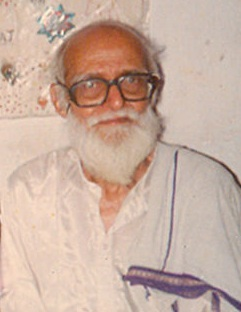
Why Kaloji was Emotional While Speaking on Him? Kaloji was a witness to Inconceivable Endurance. Kaloji had himself been in prison for several years in the Nizam’s jails and in the thick of the anti-feudal struggle, and so he was well acquainted with what defiance entailed in such a prison.
The tears of Anguish Over Historical Amnesia were often of a deep sorrow that society and post-Independence politics forgot the titans who suffered brutal torture without seeking any personal benefit, wealth or power in return. Kaloji saw Ramachander Rao as a symbol of selfless resistance.
He Shared Camaraderie and the moral backbone of both heroes. Kaloji and Ramachander Rao had a spirit of non-conformity and uncompromising. Both refused to be yes-men to power; both were courageous with the common people; they spoke truth to every government that came along even after 1948. He was not just telling the story of his life but also of the great moral obligation that the world bears to these indomitable characters.

Law professor and eminent columnist
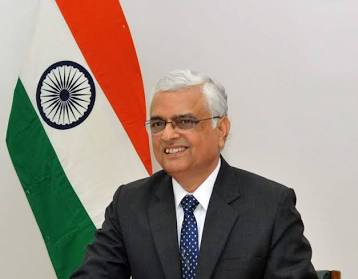
Madabhushi Sridhar Acharyulu, author of 63 books (in Telugu and English), Formerly Central Information Commissioner, Professor of NALSAR University, Bennett University (near Delhi), presently Professor and Advisor, Mahindra University, Hyderabad. Studied in Masoom Ali High School, AVV Junior College, CKM College, and Kakatiya University in Warangal. Madabhushi did LL.M., MCJ., and the highest law degree, LL.D. He won 4 Gold Medals at Kakatiya University and Osmania University.
Email: cicsridhar@gmail.com
Mobile: 8447651505


It is not acceptable that National song and anthem can ever compete with each other. Nonsensical even in concept.