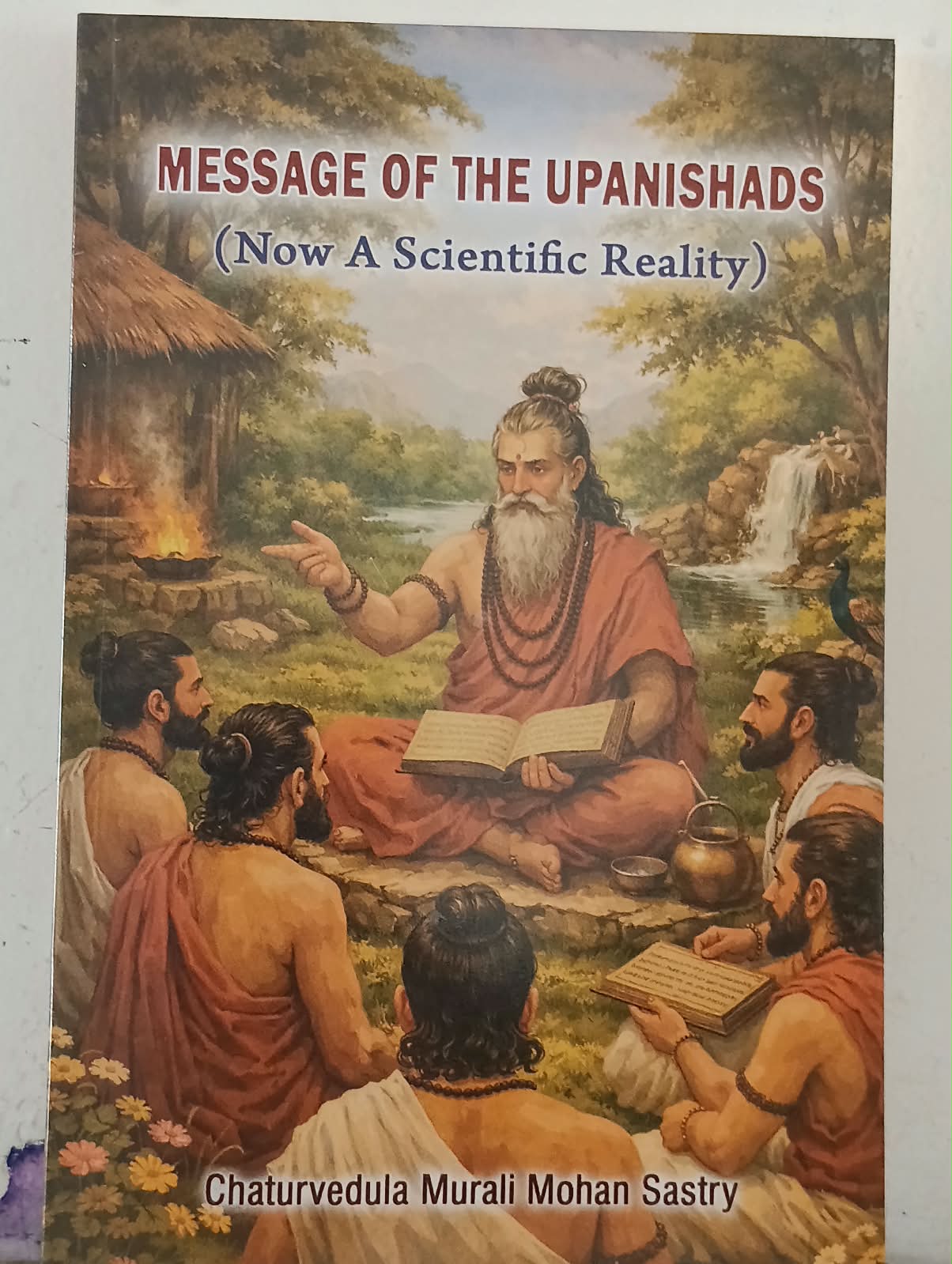
Sri C.M.M. Sastry: Harmonizing Modern Science and Vedantic Truth
A Physicist’s Vedantic Inquiry
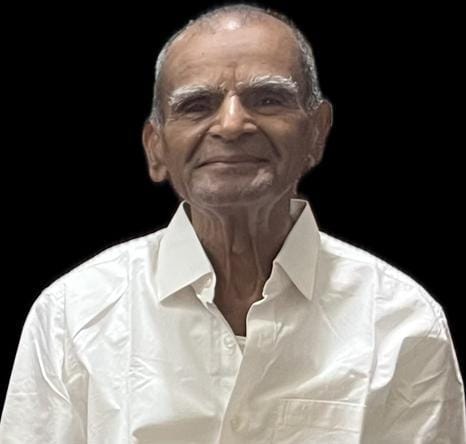
What happens when a professional teacher in science becomes an exponent of Vedanta philosophy, a seeker of truth? He tries to look for relationship between modern science and Vedanta philosophy. That is exactly what Sri Chaturvedula Murali Mohan Sastry has been doing. He was my physics teacher in 1968-69 who went on to become the principal of Ameerpet branch of the New Science College in Hyderabad. Ever since he retired two decades ago he has been living in Kasi (Varanasi) along with his wife while their two sons and their families stay in Hyderabad. After spending a lot of time in reading, listening and understanding the Vedanta, he started writing six years ago. He wrote ‘Jiva is Siva’ which was published by Sri Ramakrishna Math in Hyderabad. It was in Telugu, his mother tongue. The author is getting his original, bulky book, a magnum opus, translated into English. In the meanwhile he came out with a small book by way of introduction.
Understanding Reality: The Four Levels of Knowledge
Our maharishis have been saying from ancient times that universe is not an objective reality and it is only an illusion as seen by us. Adi Shanakracharya declared “Jaganmithya, Brahma Satyam,” based on his knowledge of Vedic Upanishads. This book is meant for the youth to appreciate the greatness and the scientific basis of the eternal Sanatana Dharma. The author hopes these essays give the youth some basic knowledge in their pursuit of both mundane and spiritual goals.
The author says, in chapter I, that the Indian philosophy divided people into four categories. The knowledge of the fourth category is limited to following their natural instinct (Vaasana Jnaana). They see the universe as nothing more than a place and an object of enjoyment. The Third category of people believe and follow one religion or another. These two types cover nearly 99 % of the population. The second category are scientists who have a great quest to understand the way the universe works, although they knew that it is mostly inert and incapable of working by itself. They try to understand the creation. In the first category there are philosophers who think about why a man and the universe exist. All philosophers, scientists and ordinary people should be able to take part in the discussion on the question of why we and the universe exist.
From Brahman to Atma: A Physicist’s Dialogue on Unity and Creation
The book starts by a question put by K.R. who is Krishna Rao, the author’s classmate and roommate during his M.Sc. and settled in France. The answers are given by S for Sastry, the author. In the first ten essays the author writes basic things about Brahman, Shiva and Keshava, Atheist, Atma, Blasphemy, Speech and Speaker, One universe-many creations, Is the universe unreal? Then he dwells on scientific evidence in the next 72 pages dividing the narrative into 26 parts according to the alphabets.
You have so many gods, complain other people about our religious practices. But we also say ‘Ekam eva adviteeyam Brahman.’ How this apparent contradiction can be resolved? The answer to the first question comprises the first chapter. The author explains what is Brahman? What is Atma? The central energy that is responsible for the vibrations of human body from a cell to the mind is Atma. If the Atma is also vibrating there must be some other non-vibrating part to make Atma vibrate and so on. This leads to ad-infinitum which is an unavoidable problem. Hence, we conclude that Atma as the ultimate end point in our body to be a non-vibrating entity…Brahman the power holder before an intention of creation we called Sadashiva, the absolute. The same with an intention of wielding its magic power to put up a show of creation we called Mahavishnu/ Eswara.
The Cause and Effect of Reality: From the Big Bang to the True Meaning of Varna
In the second chapter the author explains the difference between Shiva and Keshava. Shiva us the chaitanya, the external force, and Keshava is chetana, the vibration caused by the external force. Whenever one observes vibrations, work/Keshava, you must be able to confirm the existence of Shiva, the unseen external force behind every vibration. They are inseparable. One is the cause and the other is the effect. Advaita Vedanta sees no difference between the cause and effect.
“The Cartoonist’s guide to physics,” a book by Larry Gonick and Art Huffman, says that ‘the energy moving the writer’s pen can be traced back to the big bang…’ Does this sentence agree with our traditional knowledge passed on to us by the maharishis who derived Vedas from the various signals coming from the cosmos by their tapas and intuition? The answer offered by the author is that this sentence may be considered as a consequence of the scientist’s probe and enquiries made on the nature and its various phenomena. This confirms the Vedanta theories enunciated in Upanishads and its direct evidence of absolute truth reiterated by Sanatana Dharma millenniums ago. By Sanatana Dharma, the author means something above the worldly mundane things. The Sanatana Dharma used by the people of normal dispensation is entirely different which is a distorted version of the true meaning. There are varnas in Sanatana Dharma. But they are different from the caste system which has become a bane of the present-day society. It has nothing to do with the birth of an individual. If a person performs pooja, then he is acting as a Brahmin. When he looks into his accounts, he is seen as Vaisya. When he fights for a righteous cause, he is known as a Kshatriya and when the same person attends to physical work, he is considered Shudra. There are the four Varnas in the same individual.
Defining the Indefinnable: Debating Atheism and Advaita with Reuters Journalists
The Atheist’s Dilemma: Modern Science Echoing Ancient Vedas
The fourth chapter titled ‘Atheist’ was written based on the discussion the author based in Varanasi had with Reuters Television representatives Thomson Reuters in Singapore and Sunil Kataria in India for about six hours. The conversation begins with a statement of a journalist saying that he is an atheist and does not believe in God. The author asks him if he has a definition of God. The reply was when he does not believe in his existence why should he bother about the definition? The question about the existence of God continues in other chapters as well.
All the ten essays published in this book are intended to reveal some of the consequences that Advaita Vedanta leads the readers to. In 1950, Paramahansa Yogananda in his ‘Autobiography of a Yogi’ observed that modern physics appears to be a page written from Advaita philosophy. The author says the statements from Vedas and Shastras echo in 21st century modern science. The content of the last chapter is taken from one such book titled “The History of Science,” by John Hakim.
From Einstein to the Nobel Prize: How Quantum Physics Proved the Universe is Unreal
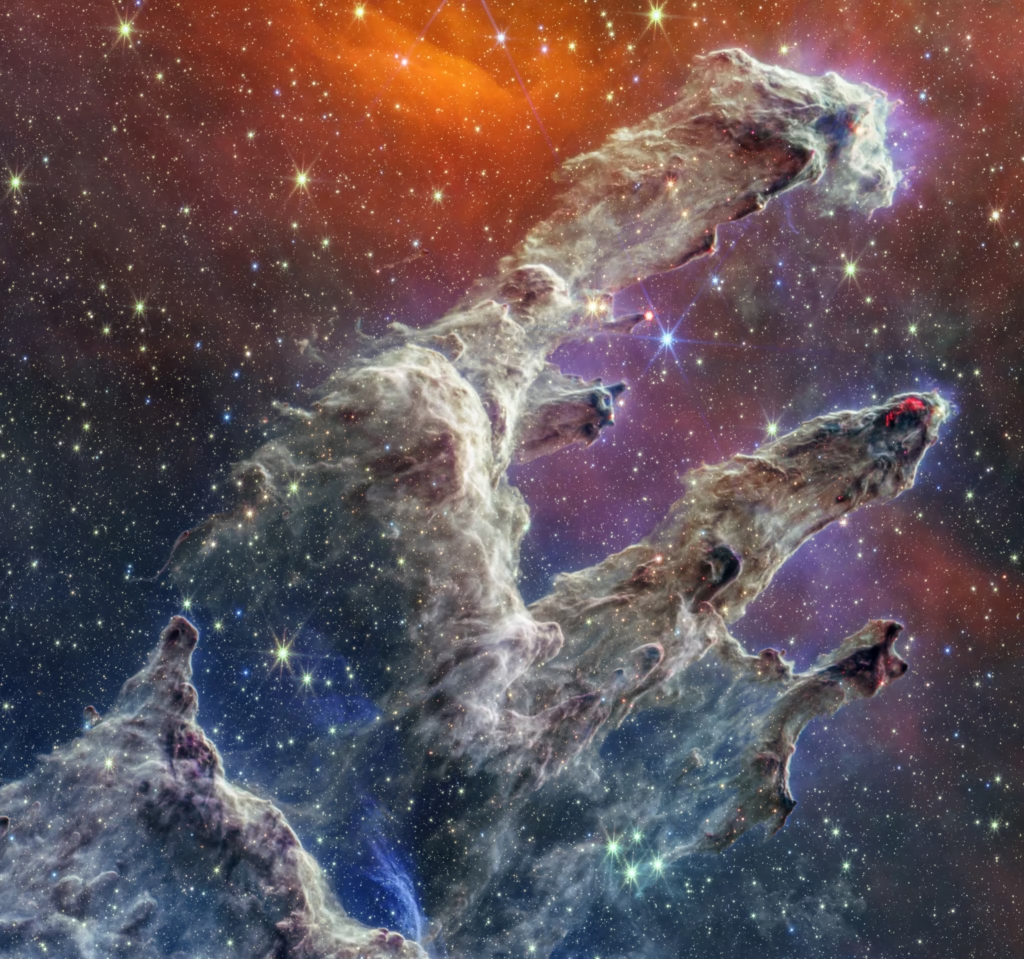
The story of science concerns itself primarily with the human quest to understand the way the universe works. Both Einstein and Bohr were dedicated to finding the truth, even when it proved them wrong. Einstein was convinced that quantum theory is not the whole picture, although he said it undoubtedly contains part of the ultimate truth. Einstein died in 1955. After 65 years of frantic scientific probe in the quantum field, scientists found the ultimate truth. The credit goes to three scientists in physics: Allain Aspect, John Clauser, and Anton Zeilinger for their quantum transport theory. They won the Nobel Prize in the year 2023. This is not partial but the whole and complete truth that transcends even quantum theory. The three scientists proved that the universe is unreal and it appears because we observe it.
A Synthesis of Ancient Sages and Modern Scientists
The author copiously quotes from Bhagavadgita throughout the book. Then comes Upanishads. Maharshi Veda Vyasa, Devarshi Narada, Adi Shankaracharya, Kalidasa, Bhagawan Ramana Maharshi, Swami Vivekananda, Vasista Ganapati Muni, Paramahansa Yogananda, Swami Lokeswaranandaji, Swami Budhananda, Saint composer Annamacharya, scientists like Einstein, Claude Shannon, Feynman, Bohm, Joy Hakim, Heisenberg, Schrodinger, philosopher Lucretius are referred to in the book.
From Wave Mechanics to One Consciousness: Einstein, Schrödinger, and Ancient Truth
In the end, the author quotes from two famous scientists. Einstein says, “The intuitive mind is a sacred gift and the rational mind is a faithful servant. We have created a society that honours the servant and has forgotten the gift.” Schrodinger, another great scientist, says, “In all the world there is no kind of framework within which we can find consciousness in plural…The unity and continuity of Vedanta are reflected in the unity and continuity of wave mechanics. This is entirely consistent with the Vedantic concept of all in one.” These quotations give the readers a clue to the mind and philosophy of the author.
This book is useful to understand the rudiments about the universe, Vedanta and the scientific basis for the Upanishads. It gives an idea of the scientific connection to our ethos and philosophy as preached by the sages for ages.
Prominent Journalist
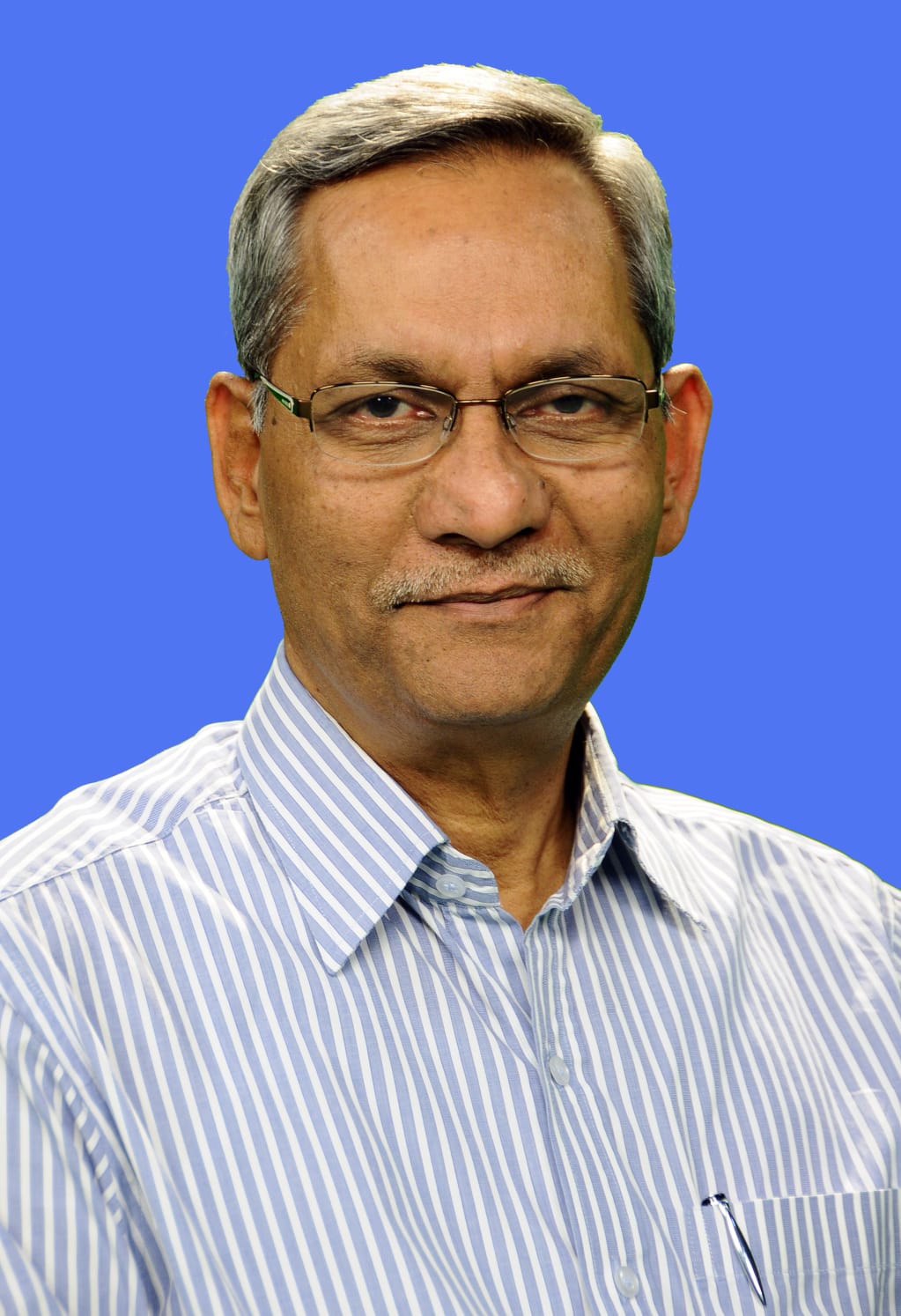
Dr. K. Ramachandra Murthy is a versatile journalist with a distinguished career. Dr. Murthy began his extensive career with Andhra Prabha of The Indian Express group in Bengaluru. He was editor of Udayam, Vaartha and Andhra Jyothy. Dr. Murthy founded and edited HMTV news channel and The Hans India, an English newspaper. He was also editorial director of the Telugu newspaper, Saakshi. He was awarded Ph. D for his research work in rural reporting. Dr. Murthy’s five decades in journalism showcases his influential roles across both print and electronic media. He wrote the political biography of NTR published by Harper Collins.
Email: murthykondubhatla@gmail.com
Mobile: 9908002211


An Excellent Item. The Content Itself Is Worthy. Our Upanishads, Rishis (Saints) Proved Reality In Scientific Researches in many aspects which have come true long before. Wonderful Item. Thanks For Sharing.
Upanishads or philosophical and metaphysical texts focused on consciousness rather than physical text books.Modern science demonstrates that particles donot have definite states until they are observed or measured. The observer and the observed or inextricably linked.Upanishads Ancient seers proposed that the objective world is shaped, filtered and sustained by individuals and cosmic awareness. Making consciousness an active fabric or reality rather than a passive by product.
There is a hidden force in every object (kinetic)! as to the question of life and exiatence of God I think it goes together the inanimate becoming animate the subtle force prana operates it.
Nicely narrated and explained well. Good
Very informative.
Science is a very small aspect of Vedas where controlled experiment and observation in the physical world lead to proof based understanding of phenomena.
Those who have that knowledge subscribe to Newton’s saying ” I am like small boy on the seashore picking a pebble or shell while the whole ocean of knowledge lies unexplored before me“.
The other odd fact in Hindu knowledge , is no matter what an experienced man describes it the true understanding occurs when you experience the same yourself. Then the self realisation happens and no description is necessary any more