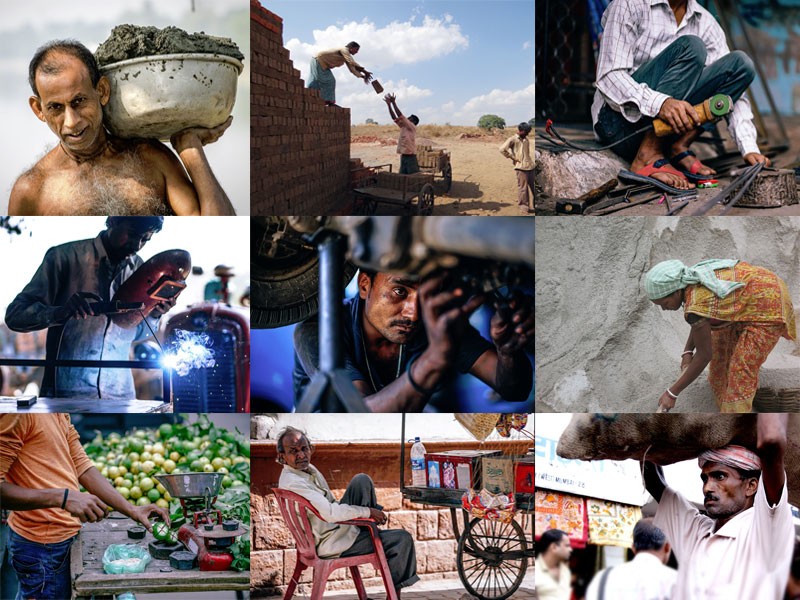
The Global and Indian Paradigm: A Civilisational Inquiry into the Perception of Work
Ancient, Historical, Political, Cultural, Anthropological, Religious, Caste, Class, Psychological, Educational and Economic Dimensions
“A nation’s moral stature is revealed not by how it honours power, but by how it respects those whose hands build its civilisation.”
Abstract
The principle of the dignity of labour—that every form of honest work possesses equal moral worth irrespective of its physical or intellectual character—stands as one of humanity’s noblest ethical ideals. Yet, paradoxically, it remains one of the least realised social principles, particularly in India.
Across much of the developed world, manual labour is increasingly recognised as a skilled profession deserving of economic security, legal protection and social respect. A plumber in Germany, an electrician in Australia, a carpenter in Japan or a sanitation worker in Scandinavia enjoys not merely respectable wages but also social dignity.
India, however, presents an extraordinary paradox.
The civilisation that produced the Bhagavad Gita’s philosophy of Karma Yoga, the Upanishadic celebration of selfless action, the Sikh doctrine of Sewa, the Buddhist emphasis on compassionate work, and the Jain ethic of disciplined labour, simultaneously evolved one of history’s most rigid systems of occupational hierarchy. Here, manual labour frequently remains associated with social inferiority, ritual pollution and inherited caste identity rather than productive contribution.
This contradiction is not accidental.
It is the cumulative product of thousands of years of religious interpretation, caste stratification, colonial bureaucracy, educational priorities, economic distortions, political populism and psychological conditioning. This essay attempts a comprehensive interdisciplinary examination of the dignity of labour from global and Indian perspectives, exposing the profound contradictions that continue to define Indian society.
The Great Civilisational Question
Every civilisation answers one fundamental question differently:
What makes a human being respectable?
Is dignity derived from
* birth?
* wealth?
* education?
* occupation?
* power?
* or character?
Most advanced industrial societies increasingly answer:
“Character and contribution.”
Traditional Indian society has too often answered:
“Birth and occupation.”
This single divergence explains much of India’s continuing social psychology.
Understanding the Meaning of Dignity of Labour
The dignity of labour is not merely respect for manual workers.
It is the recognition that:
Every honest occupation contributes to civilisation.
The surgeon cannot function without the sanitation worker.
The software engineer depends upon electricians.
The university professor relies upon farmers.
The judge cannot survive without food produced by agricultural labour.
Every intellectual achievement ultimately rests upon invisible physical labour.
Civilisation itself is a pyramid built upon millions of unseen hands.
Global Perspectives on Labour
I. The Western Transformation
Europe itself was not always respectful of manual labour.
Ancient Greece often regarded physical work as suitable for slaves.
Medieval Europe inherited rigid feudal hierarchies.
The decisive transformation came during the Protestant Reformation, particularly through the ideas later analysed by sociologist Max Weber.
The Protestant work ethic redefined labour as a divine vocation (Beruf). Honest work—whether farming, carpentry or commerce—became an expression of moral discipline rather than social inferiority.
The Industrial Revolution further professionalised skilled trades.
Today, countries such as Germany, Sweden, Norway, Denmark and the Netherlands demonstrate that manual work can coexist with prosperity, technological excellence and social prestige.
An electrician, machinist or plumber is respected because competence—not pedigree—is valued.
II. East Asia: The Culture of Craftsmanship
Japan presents perhaps the world’s finest illustration of cultural respect for labour.
The philosophy of Monozukuri celebrates not merely manufacturing but the pursuit of perfection through craftsmanship.
The concept of Takumi recognises lifelong mastery of a craft as a form of intellectual achievement.
A sushi chef who spends forty years perfecting his craft commands immense respect.
A master carpenter is regarded as a cultural custodian.
China’s Confucian tradition similarly values disciplined effort, collective responsibility and practical excellence.
South Korea transformed vocational education into an engine of national development.
Here, labour is not simply economic activity.
It is national service.
The Indian Civilisational Paradox
No civilisation speaks more eloquently about duty than India.
The Bhagavad Gita proclaims:
“Karmanye Vadhikaraste Ma Phaleshu Kadachana.”
One has the right to action, not merely to its rewards.
Yet Indian society frequently values the reward far more than the work itself.
The contradiction is profound.
A nation that worships Vishwakarma, reveres artisans in mythology and celebrates Karma Yoga often hesitates to respect those performing physical work in everyday life.
The philosophical ideal survived.
The social practice often did not.
Anthropological Origins
The roots of this paradox lie in the gradual transformation of occupational division into hereditary social hierarchy.
What may initially have functioned as an economic division of labour evolved into an inflexible birth-based system in many regions over centuries.
Occupations acquired notions of ritual purity and pollution.
Intellectual and priestly functions became associated with purity.
Manual work involving leather, sanitation, waste disposal or physical exertion became associated with impurity.
The consequence was devastating.
Work itself became moralised.
Occupation ceased to represent skill.
It became identity.
The worker inherited not merely a profession but also a social status.
Such hereditary occupational stratification has left enduring social consequences that continue to influence attitudes long after constitutional equality was established.
Religious Interpretations and Social Contradictions
India’s major religious traditions contain powerful affirmations of service and work.
The Bhagavad Gita extols disciplined action.
Sikhism institutionalises Sewa.
Buddhism honours right livelihood.
Jainism celebrates disciplined effort.
Yet historical social practices often diverged from these ethical ideals.
The contradiction illustrates an important sociological reality:
Religious philosophy and social institutions do not always evolve together.
Texts may preach equality.
Societies may preserve hierarchy.
Colonial Reinforcement of Occupational Prestige
British colonial rule intensified existing prejudices.
Thomas Babington Macaulay’s educational policy primarily sought to produce clerks, administrators and intermediaries for the colonial state.
Government employment became synonymous with prestige.
Desk work represented power.
Manual work represented subordination.
Education gradually became viewed not as the cultivation of knowledge but as an escape from physical labour.
This psychological legacy continues.
Millions pursue degrees less to acquire competence than to avoid manual occupations.
The Politics of Occupational Prestige
Independent India abolished untouchability and constitutionally guaranteed equality.
Yet political discourse often addressed representation more vigorously than occupational dignity.
Governments promised employment.
Few fundamentally transformed society’s perception of labour itself.
Vocational education remained institutionally secondary.
Industrial apprenticeships received inadequate prestige.
Election campaigns celebrated government jobs.
Few celebrated skilled craftsmen.
Politics promised upward mobility without sufficiently dignifying productive labour.
The Caste-Class Convergence
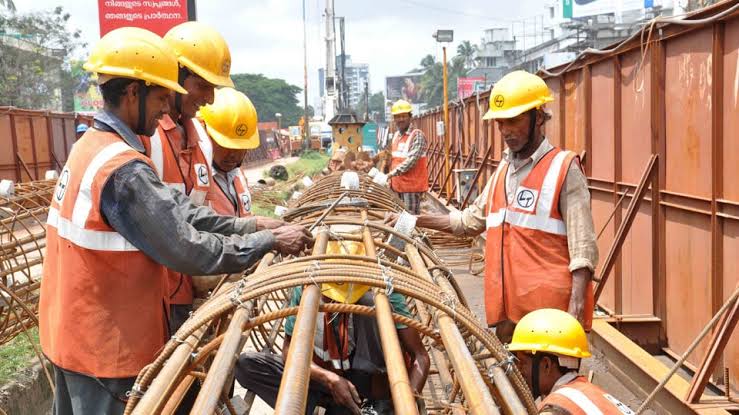
Modern India demonstrates an unusual convergence of caste and class.
Historically disadvantaged occupations frequently remain economically disadvantaged.
The market has changed.
Technology has advanced.
Cities have expanded.
Yet social attitudes often remain remarkably persistent.
The affluent household comfortably depends upon domestic workers, drivers, sanitation staff, plumbers, electricians and construction labourers while rarely extending them equal social respect.
Economic dependence coexists with social distance.
This is among the deepest hypocrisies of contemporary Indian society.
Psychological Dimensions
Children quickly internalise occupational hierarchies.
Parents commonly advise:
“Study well so that you will not have to do manual work.”
The unintended message is devastating.
Labour itself becomes a symbol of failure.
Education becomes an escape from work rather than preparation for meaningful work.
Consequently:
* educated unemployment rises;
* vocational careers remain undervalued;
* skilled trades face labour shortages despite high demand;
* millions prefer prolonged examination preparation to productive skilled employment.
The problem is psychological as much as economic.
Educational Failure
The Indian education system overwhelmingly privileges theoretical knowledge over practical competence.
Success is measured through examinations.
Failure is associated with vocational education.
Industrial Training Institutes (ITIs), polytechnics and apprenticeship programmes often become perceived as alternatives for those who could not enter conventional academic streams.
This perception is fundamentally flawed.
Modern economies require electricians, machinists, welders, robotics technicians, mechanics, construction engineers and digital fabrication specialists.
Without them, economic growth remains impossible.
Economic Contradictions
India possesses one of the world’s largest informal labour markets.
Manual workers frequently experience:
* wage insecurity;
* absence of health insurance;
* inadequate pensions;
* unsafe working conditions;
* limited legal protection.
The result is a vicious cycle.
Low wages reinforce low prestige.
Low prestige discourages skill development.
Poor skills suppress productivity.
Low productivity depresses wages.
The cycle perpetuates itself.
Gandhi’s Moral Revolution
Among modern Indian leaders, Mahatma Gandhi perhaps most forcefully challenged occupational hierarchy.
He cleaned toilets himself.
He spun cotton daily.
He insisted that every educated person should perform physical labour.
His doctrine of Bread Labour argued that intellectual activity alone cannot justify one’s existence.
Every individual must contribute physically to society.
Unfortunately, independent India commemorated Gandhi more enthusiastically than it implemented his social philosophy.
Swami Vivekananda’s Vision
Swami Vivekananda criticised excessive intellectualism detached from productive action.
He admired strength, discipline and service.
His vision of Daridra Narayana taught that serving the poor constituted worship itself.
He sought a civilisation where scholarship and labour complemented rather than opposed one another.
Contemporary Contradictions
Modern India exhibits extraordinary paradoxes.
The nation celebrates engineers but often neglects technicians.
It admires entrepreneurs while overlooking artisans.
It reveres innovation but undervalues manufacturing.
It applauds economic growth while underpaying those whose labour sustains that growth.
No nation can permanently sustain such contradictions.
Exposing the Hypocrisy
Perhaps the greatest irony lies here.
Society praises the dignity of labour during speeches.
Yet social behaviour frequently reveals the opposite.
People depend daily upon sanitation workers, construction labourers, domestic workers, drivers, mechanics, plumbers, electricians and farmers.
Yet these occupations rarely receive equal respect in social interaction.
The rhetoric of equality often conceals the persistence of inherited prejudice.
A civilisation cannot honestly claim to honour labour while simultaneously humiliating labourers.
Towards a New Labour Culture

India’s transformation requires far more than economic reform.
It demands a cultural renaissance.
Economic Reform
Formalise informal employment.
Ensure living wages.
Provide universal social security.
Strengthen labour rights.
Reward skilled craftsmanship.
Educational Reform
Integrate vocational education into mainstream schooling.
Make apprenticeships prestigious.
Recognise practical intelligence alongside academic excellence.
Cultural Reform
Celebrate workers in media.
Honour master craftsmen.
Remove occupational stereotypes from textbooks and public discourse.
Recognise that civilisation is built equally by hands and minds.
Psychological Reform
Parents, teachers and institutions must abandon the false hierarchy between intellectual and physical work.
Children should learn that dignity resides in honesty, competence and contribution—not in occupational labels.
Conclusion
The dignity of labour is not merely a labour issue.
It is a civilisational question.
It determines whether societies judge human beings by birth or by contribution; by inherited status or by earned excellence.
The world’s most prosperous societies have increasingly learned that no work is inherently degrading.
Only exploitation is degrading.
India’s greatest challenge, therefore, is not simply creating employment.
It is restoring dignity to work itself.
The measure of a civilisation is neither the height of its skyscrapers nor the sophistication of its digital economy.
It is whether the mason who builds those skyscrapers, the farmer who grows the nation’s food, the sanitation worker who protects public health, the artisan who preserves its heritage, and the mechanic who keeps its industries moving receive the same respect that society readily accords to judges, professors, bureaucrats and corporate executives.
Until honest labour is honoured without reference to caste, class, birth or occupation, the constitutional promise of equality will remain morally incomplete.
A truly enlightened civilisation does not ask, “What work do you do?” before offering respect. It first recognises the humanity of the worker.

M. Shiva Prasad, IPS (Rtd.) is a dedicated law enforcement professional who served the combined Andhra Pradesh cadre before opting for the Telangana cadre. Though a native of Andhra Pradesh, he considers himself a true Hyderabadi with an abiding love for the Telugu people. Driven by sincerity, fearlessness, and a lifelong fight against inequality and injustice, his ultimate strengths remain his goodwill and deep affection for the public and the police force. Today, he continues his mission by writing snippets and articles true to his conscience.
Email: Shivareach@yahoo.com
Mobile: 98480 38774