- Historical Realities and Reflections
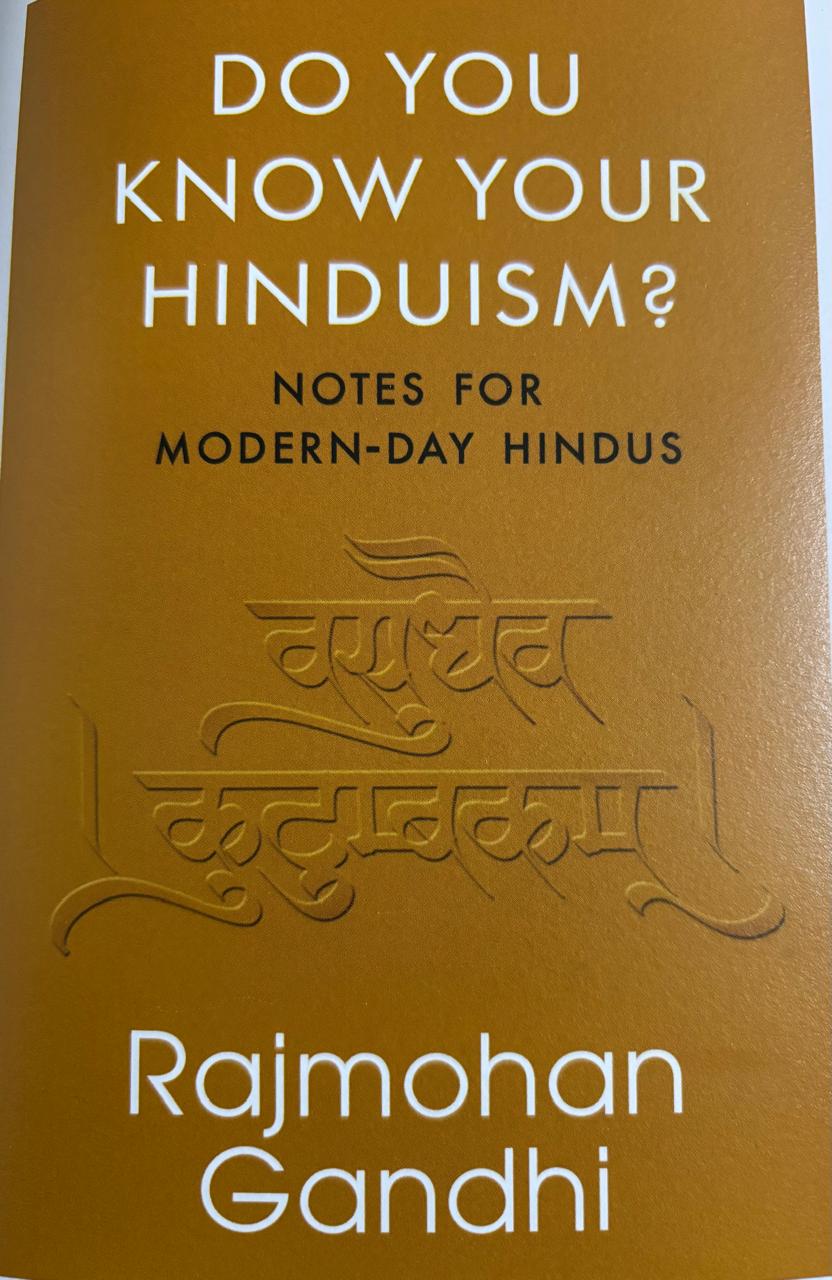
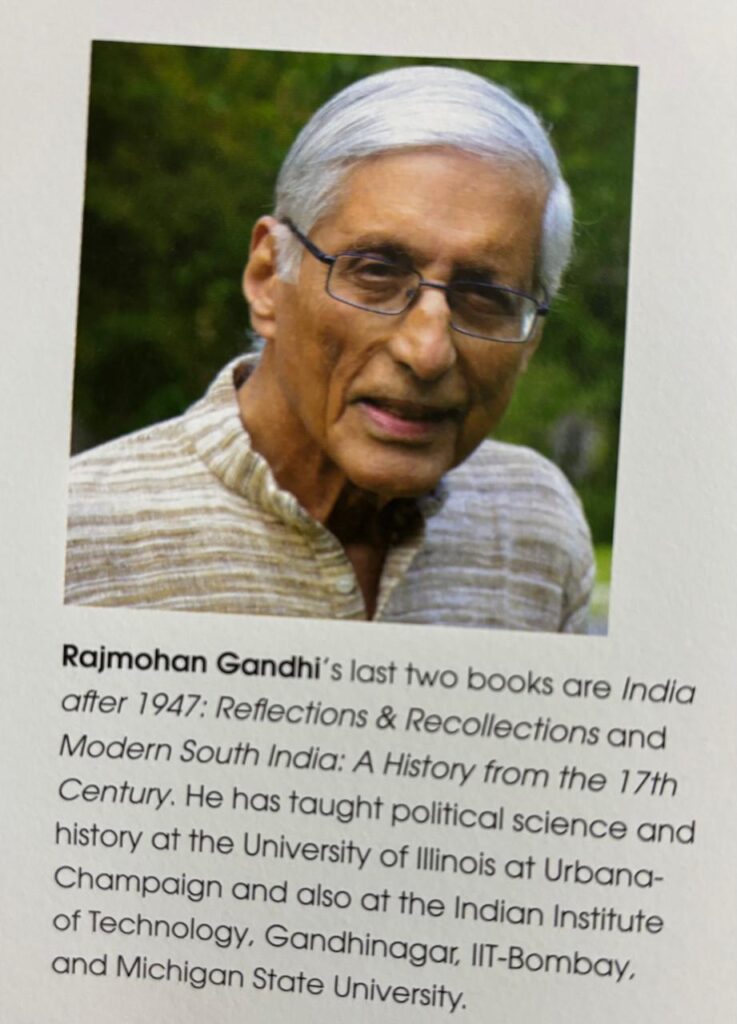
Rajmohan Gandhi, historian, biographer and professor, the grandson of Gandhi and C Rajagopalachari, wrote a small but great book titled, ‘Do you know your Hinduism? Notes for modern day Hindus.’ The book can be considered as a response to the Hindutva campaign promoted by BJP and Sangh Parivar. He answers a question often asked by Gandhi baiters, “Why did not he undertake a fast to prevent partition of India.” The teasing question is mischievously asked knowing very well that Jinnah or Mountbatten would not have cared for Gandhi’s fast at that stage. The following information was taken from his book.
Everyone who studied Indian history is aware that Mahatma Gandhi was against partition of India. If Gandhi was truly opposed to India’s division, why did not he fast against Mountbatten’s Partition Plan in the summer of 1947? Though this question is seldom asked in public discourse, it must be bothering even the admirers of the Father of the Nation.
Gandhi’s Use of the Fast as a Weapon
Gandhi used fast as weapon to force an issue. In 1932 he fasted when he was in Pune jail. It was against separate electorates for Dalits as proposed by Dr. BR Ambedkar. He got the proposal dropped. In September 1947, shortly after independence, he fasted in Kolkata for Hindu-Muslim peace. In January 1948, he fasted again for communal peace in Delhi. On both the occasions he restored order. Why then did he not oppose India’s division with a fast?
There was a hint of this question in a comment made by the RSS chief, Mohan Bhagwat, on 28 August 2025, when the organization celebrated its hundredth anniversary. The chief of the RSS had said, “It is wrong to say that the RSS did not protest against Partition. The Sangh had protested against it, but what power did the Sangh have at that time? The entire nation was following Mahatma Gandhi.”
Bhagwat’s remarks would appear natural, innocent and reasonable, one might think. But when the following facts are taken into consideration, his remarks would not look innocent. The implied meaning can be seen.
The Shift in the Congress Stance (1940–1947)
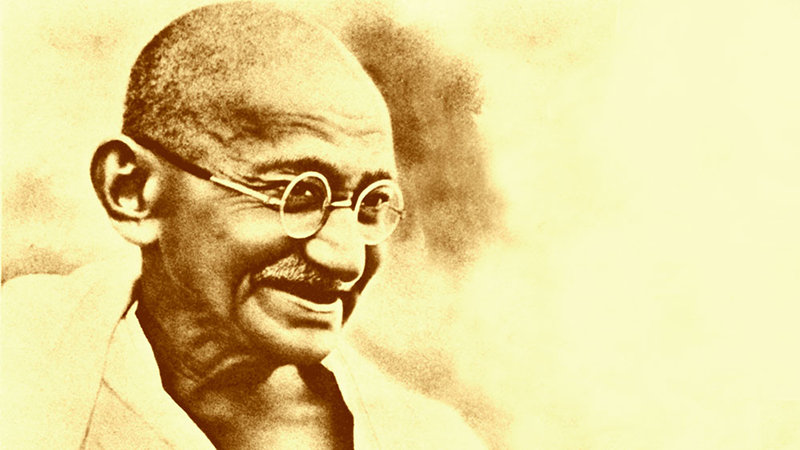
When in March 1940, Jinnah and the Muslim League first demanded a Pakistan consisting of Muslim-majority parts of India under British rule, Gandhi spelt out half a dozen problems with the proposal. Six months later, i.e., in September 1940, Gandhi made an emotional remark at a meeting of the All-India Congress Committee in Bombay. He said: “I do not say this as a Hindu. I say this as a representative of Hindus, Muslims, Parsis and all. I would say to Muslim brethren, ‘Cut me to pieces first and then divide India. You are trying to do something which was not attempted even during the Muslim rule of 200 years. We shall not allow you to do it.”
Gandhi was speaking for Indian National Congress (INC), the country’s largest and most representative political organization at the time. The Congress president in 1940 was Abul Kalam Azad. Leaders such as Nehru, Patel, Rajendra Prasad, Rajagopalachari, Abdul Ghaffar Khan, Sarojini Naidu, Kripalani and Govind Ballabh Panth comprise the leadership of INC for which Bapu was the guide. All the leaders were in agreement with Gandhi.
The scenario had undergone complete change over seven years. When new Viceroy, Mountbatten, presented his Partition Plan in June 1947, the leaders reacted differently. Those seven years had seen World War II, the Quit India movement and the incarceration of the Congress leader much of the seven years.
The Reality of the Interim Government
After the World War II ended in 1945, the Congress leaders were released from jails. They acquired clarity on two aspects in these seven years. One, the British are finally departing. They are very keen on leaving. Quit India goal had been achieved. The second aspect was the question of partition which all the Congress leaders were opposing right from 1940 when it was first proposed. There was a complete change in the attitude of the Congress top leaders including the AICC president Acharya Kripalani. They thought the partition will help them to give better administration to the Hindu majority areas which comprises three-fourths of the whole country. Gandhi who was called Bapu even then had become persona non-grata as far as the Congress affairs are concerned. The joint leadership of Nehru and Patel has come to take all the major decisions. The new leadership was acceptable to most of the leaders.
The ‘interim government’ installed in September 1946 had been a disaster. It consisted of Nehru, Patel and others from the Congress and Liaqat Ali Khan and others from Muslim League. The whole government was presided over by the chairman, the British Viceroy Lord Wavell. This experience had made the Congress leaders realize that it was almost impossible to work with obstructionist Muslim League. They were convinced that it is better to accept the division, get rid of the Muslim League and govern the three-fourths of India. They also felt that the Hindu-Muslim civil war on the sub-continental scale would be frightening. The rehearsals for such a communal conflict had already been staged in some places- Kolkata in August 1946, East Bengal in September 1946, Bihar in September-October 1946, Western UP in November 1946 and West Punjab in March 1947. Throughout the country, Hindu-Muslim relations had been damaged by ill-will, suspicion and bitterness from both sides.
The Failure of Gandhi’s Final Proposal
The civil war had hardened the attitudes of Hindus, Muslims and Sikhs. When in the first week of March 1947 riots targeting Sikhs and Hindus occurred in western Punjab, in and around Rawalpindi and Multan, the leaders of Punjab’s Hindu and Sikh communities swung their weight firmly in favour of partitioning their province. Same position was taken by influential Hindus in Bengal. From the autumn of 1946, Shyama Prasad Mukherjee, of Hindu Mahasabha, had been fighting openly for dividing Bengal to produce a Hindu-majority West Bengal. In 1951 at the behest of the RSS, Mukherjee became the head of Bharatiya Jana Sangh.
On 1 April 1947, Gandhi presented a proposal to the new Viceroy Mountbatten to make Jinnah the prime minister to keep India united. But this proposal was unequivocally opposed by Nehru, Patel and the rest of the INC leadership. Nehru and Patel and the rest of INC leaders saw partition as a painful but thought that rejecting the opportunity to govern a free, if smaller, India would be worse. Running all of undivided India in partnership with Jinnah and the Muslim League seemed an impracticable, unattractive, and almost impossible proposition.
Why Gandhi Did Not Fast
Unable to win the INC leaders to his ‘solution’, a disappointed Gandhi withdrew himself from the negotiations for the transfer of power. Gandhi had sent a letter to Mountbatten on April 11 saying, “I had several short talks with Pandit Nehru, and an hour’s talk with him alone and then with several members of the Working Committee about the formula I had sketched before you….I am sorry to say that I failed to carry any of them with me except Badshah Khan….I have to ask you to omit me from your consideration. Congressmen who are in the Interim Government are stalwarts, seasoned servants of the nation and, therefore, so far as the Congress point of view is concerned, they will be complete advisers.
The Congressmen who were in the interim government was a reference to Nehru, Patel, Azad, Rajendra Prasad, Rajagopalachari and Jagjivan Ram. The new Congress president Kripalani also favoured Partition.
In saying in his letter to the Viceroy that ‘the popular view is contrary to mine,’ Gandhi was in effect also saying ‘when Patel, Nehru, and all the Congress leaders hold a contrary view’. Asking, can I, should I, fast against Nehru, Patel, and all my associates of the last thirty years? he answered himself by saying he could not. He would not deny beloved comrades who had toiled, suffered, and sacrificed at his side the chance to lead India.
In mid-June a meeting of the AICC was organized. Nehru and party president Kripalani forced Gandhi to join the meeting. Gandhi said, “No one could be as much hurt by the division of the country as I am….If you feel that Working Committee is in the wrong you should remove it, you should revolt and assume all power….But I do not find that strength in us today. If you had it, I would be with you and if I feel strong enough myself I would, alone, take up the flag of revolt. But today I do not see the conditions for doing so…” We may or may not like this piece of history, but history it was. In 1947, the entire nation was not following Gandhi.
Neither the Hindu Mahasabha nor the RSS was politically strong in 1947. But there is little evidence that either of these organizations mounted an effort to stop the division or to strengthen Gandhi’s hands for stopping it. The fact that Muslims remained in truncated India in 1947 annoyed the RSS and the Hindu Mahasabha much more than the emergence of Pakistan.
Prominent Journalist
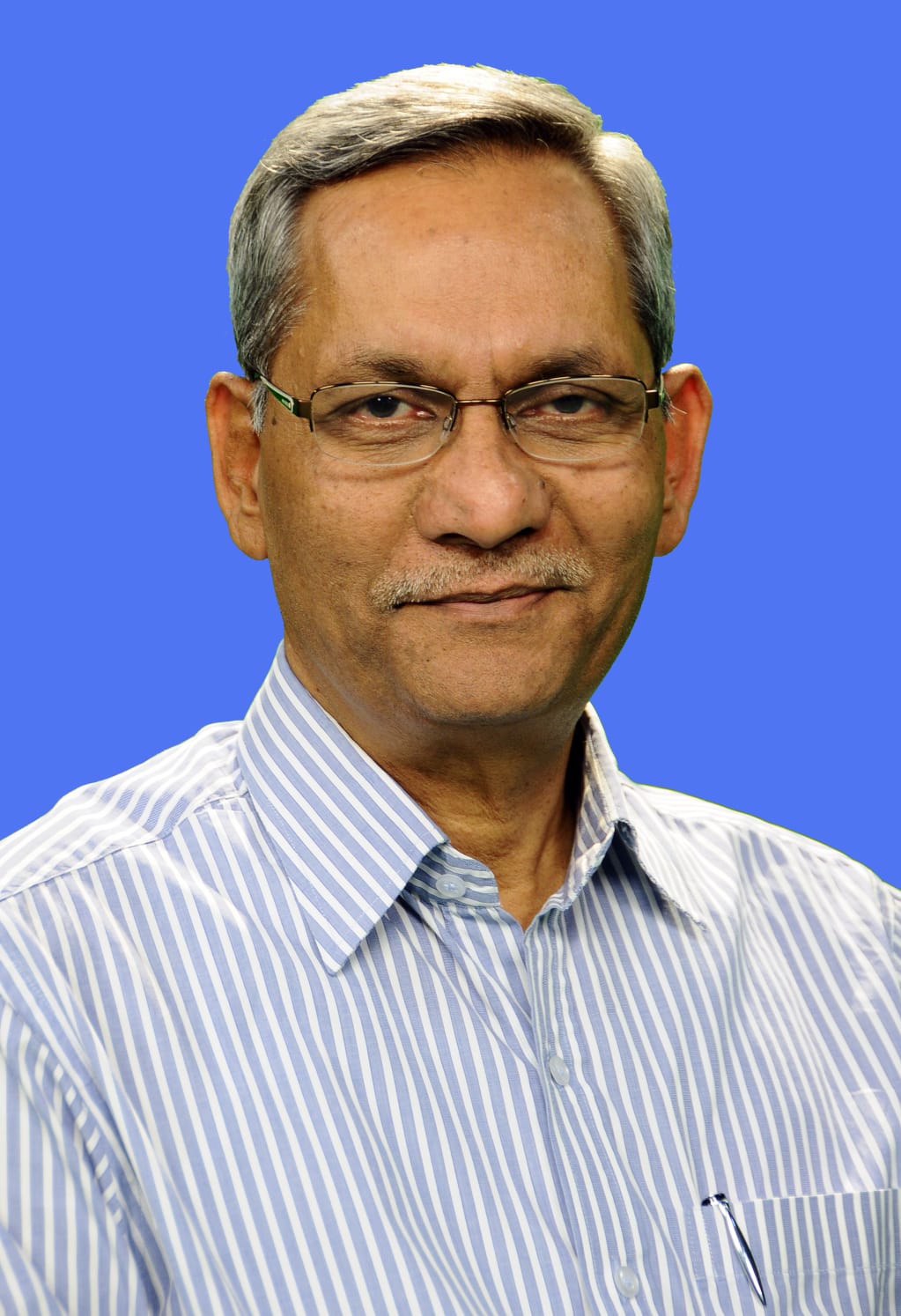
Dr. K. Ramachandra Murthy is a versatile journalist with a distinguished career. Dr. Murthy began his extensive career with Andhra Prabha of The Indian Express group in Bengaluru. He was editor of Udayam, Vaartha and Andhra Jyothy. Dr. Murthy founded and edited HMTV news channel and The Hans India, an English newspaper. He was also editorial director of the Telugu newspaper, Saakshi. He was awarded Ph. D for his research work in rural reporting. Dr. Murthy’s five decades in journalism showcases his influential roles across both print and electronic media. He wrote the political biography of NTR published by Harper Collins.
Email: murthykondubhatla@gmail.com
Mobile: 9908002211
The article is a eye-opener to the present generation to know the facts of partition of India by then British government.
M K Gandhi was inconsistent and erroneous in his actions and beliefs. To err is ok once, but not rectify is treacherous when it pertains to nation building. To support Khilafat and moplah movement, support the execution of Bhagat Singh and others and write different in his articles in Harijan . English and Gujarati articles were of different views on the same issues.
He was running with the hares and hunting with the hounds at the same time.
He garnered enemies from both sides.
Very informative