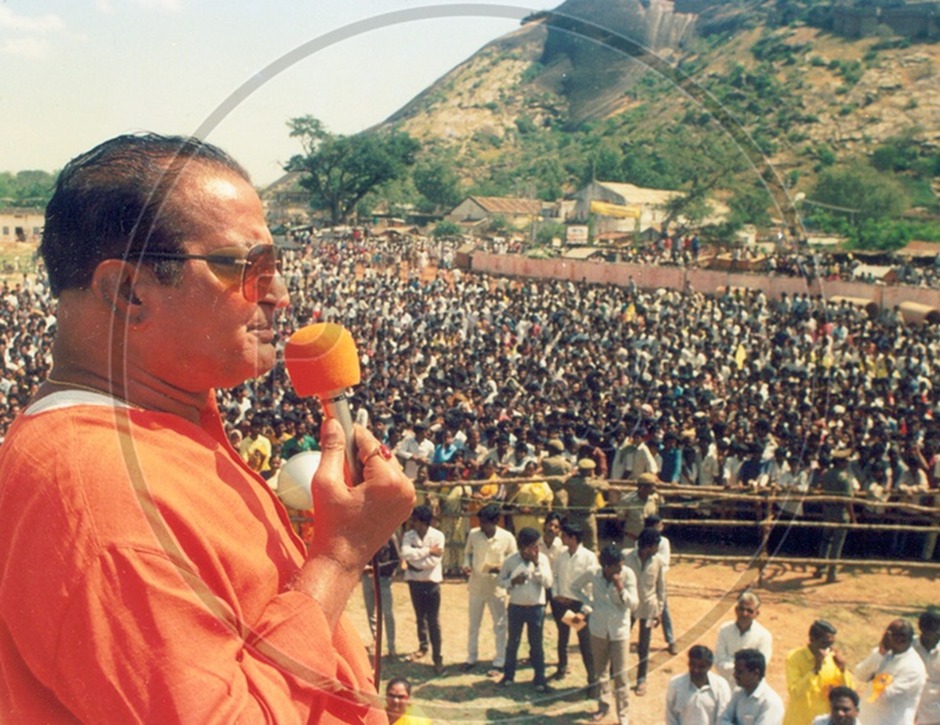
Standing atop his iconic Chaitanya Ratham, NTR openly mocked the fragmented Congress ecosystem, which was sprouting alphabet-soup factions like Congress (I), Congress (U), and Congress (S) like mushrooms after rain. Disgusted by this chaos, the people chose ‘Telugu Desam,’ injecting fresh, vibrant blood into the region’s veins.
Irony, however, has a wicked sense of play in politics. The present Chief Minister, N. Chandrababu Naidu, was a Congress minister back then who contested against his father-in-law NTR, and suffered a crushing defeat. Yet, within a few years, he took over the reins and continues as the TDP Chief Minister to this day.
Looking at the party now, one is forced to ask: Is this new blood fundamentally Congress in its DNA? Can anyone even recognize a trace of NTR’s original signature in the current setup?
(1982: The Original Blueprint)
NTR’s TDP: Anti-Congress, Grassroots, Backed by BCs
(1995: The Structural Shift)
The Palace Coup: Managerial, Corporate, Real-Estate Policy
(2026: The Modern Reality)
Mahanadu today: NTR’s branding remains, but the power structure
is centralized around a specific family and corporate ecosystem.
As the TDP observes its annual conclave under the banner of “Mahanadu” to coincide with NTR’s birth anniversary, the optics remain carefully preserved. NTR’s portraits, the institutional colors, and the names he coined are everywhere. But the tragic reality is that the core of the party he built was stripped away while he was still alive. Which party is this truly? Where is that historic ‘Mahanadu’ of yesteryear, and what has this ‘Nadu’ (present era) turned it into?
The Backward Classes (BCs), who once formed the unyielding backbone of the Telugu Desam, now find themselves caught and crushed in a political Kurukshetra dominated by one or two powerful communities. Senior TDP loyalists who marched with NTR find themselves entirely sidelined, left without a voice or a destination. The youth of 1982 are today’s veteran political pundits. Kept at arm’s length by the current ruling clique, these pioneers look at the state of affairs and wonder in quiet anguish: “Is this truly the Telugu Desam that we birthed alongside NTR?”
On the surface, it appears that NTR’s family rules. But a deeper look reveals an unsettling question: Which specific family is ruling? Which ‘Desam‘ is being governed? When a consolidated group of elite families and specific communities comfortably control power across both Andhra Pradesh and Telangana—regardless of which political party they formally belong to—can we honestly claim that this is a representative government of the Telugu people?
The clean, principled leaders who sacrificed their livelihoods for the original movement now remain silent, paralyzed by a profound existential crisis, quietly asking themselves: “Which party do I even belong to anymore?”
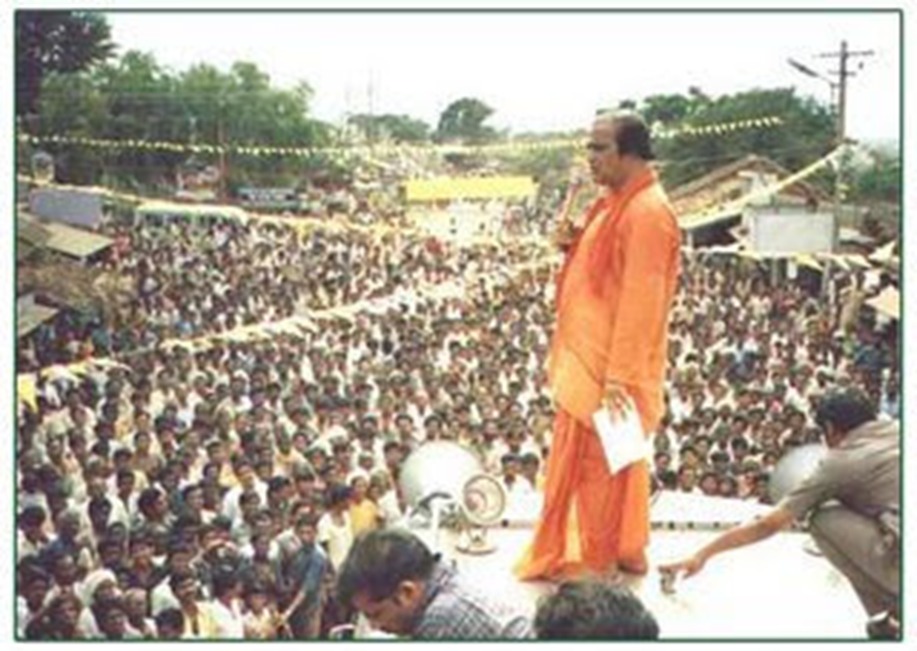
NTR was not just a politician; he was an absolute phenomenon. Entering the political arena at the ripe age of 60, he founded the Telugu Desam Party (TDP) and, within a mere nine months, galvanized the marginalized sections of society to capture power. His political universe was massive. He was a cinematic hero-turned-producer of a new government, building an administration filled with entirely fresh faces—people who abandoned their secure jobs to dive into an uncertain political future without knowing if they would even win.
NTR was a warrior who awakened the dormant self-respect (Atma Gauravam) of the Telugu people and infused them with fiery courage. In a historic anomaly, hundreds of ordinary citizens suddenly found themselves transformed into MLAs, ministers, and administrators. It was a spectacular marvel. A youthful government completely upended the monolithic Congress party, which had ruled since 1947 through various splits and internal re-engineering, forcing veteran political titans to bite the dust. The public breathed an entirely new air.
Celluloid to Power: The Parallel Trajectories of NTR and Vijay
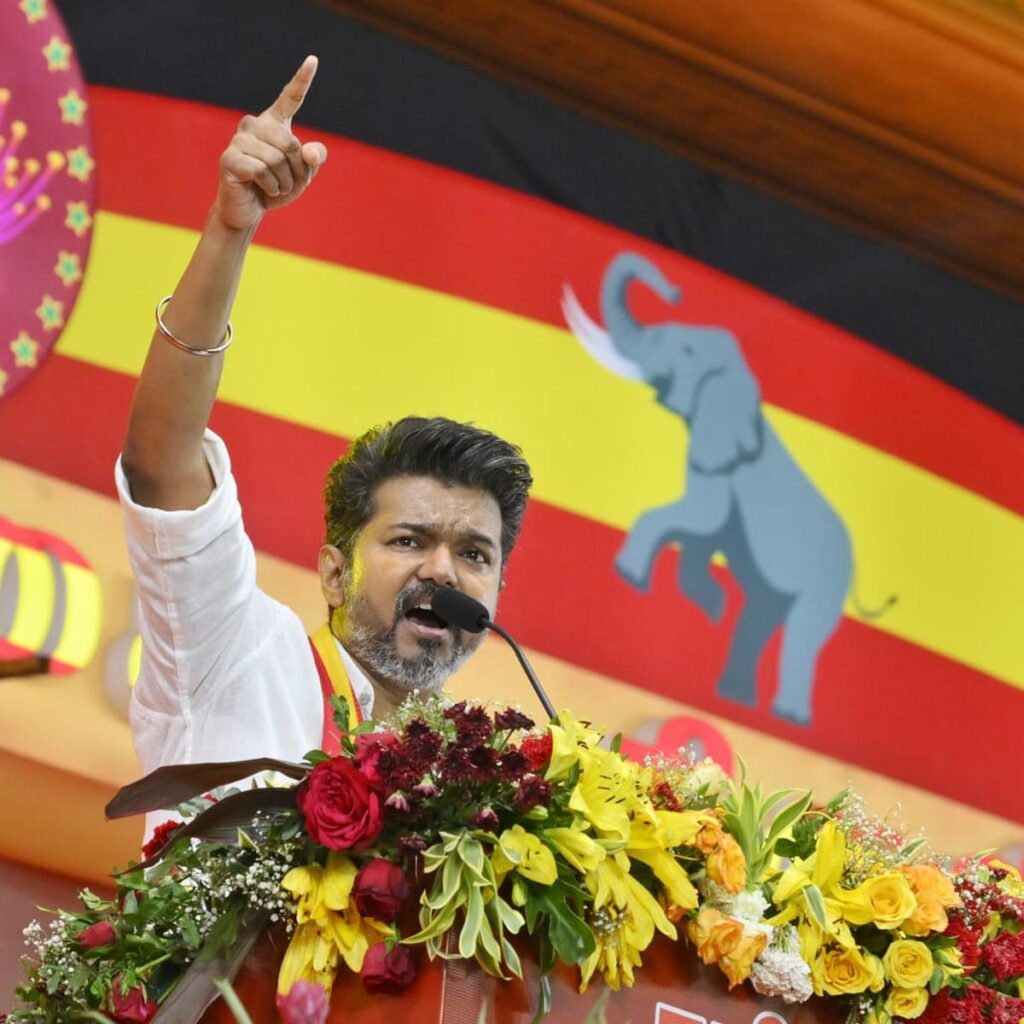
The intersection of cinema, charisma, and regional pride has long been a defining catalyst in South Indian politics. The historic rise of NTR in 1982 and the contemporary political triumph of C. Joseph Vijay, with his Tamilaga Vettri Kazhagam (TVK) between 2024 and 2026, reflects a shared political phenomenon: utilizing a massive cinematic canvas to capture the popular imagination, disrupt deep-seated political monopolies, and challenge entrenched establishments.
They fought, they won, and they stood their ground. But while the original architects of the Telugu experiment have grown weary and faded, their history remains a living textbook of lessons for Vijay’s political journey.
| Attribute | N. T. Rama Rao (TDP – 1982) | C. Joseph Vijay (TVK – 2024/2026) |
| The Catalyst for Entry | Telugu Self-Respect (Atma Gauravam): Prompted by the frequent humiliation of AP Chief Ministers by the Congress high command in Delhi. | Egalitarian Social Justice: Positioned against perceived systemic corruption, dynastic dominance, and regional Dravidian duopoly. |
| Political Status Quo | One-Party Monopoly: Broken a monolithic, highly centralized Congress party that had ruled Andhra Pradesh since independence. | Dravidian Duopoly: Disrupted a fifty-year-old bipartisan alternate rule between the DMK and AIADMK. |
| Ideological Anchor | Culturally center-left; focus on welfare, food security, and federal autonomy. | Explicitly secular, center-left fusion of Ambedkarite, Periyarite, and Kamaraj principles. |
| Grassroots Base | Massive fan associations backed by rising agrarian, backward classes, and business communities. | The Vijay Makkal Iyakkam (VMI)—an extensive network of fan-led social welfare clubs operational since 2009. |
The Structural Blueprint: How TDP Became a Workers’ Party
NTR did not merely sweep an election; he deliberately engineered a massive grassroots political machine. The transformation of the TDP into a rock-solid, cadre-based party remains an exceptional study in Indian political history.
- The Fan Club Substructure: Much like Vijay’s TVK, NTR’s initial organizational army was his pan-state fan associations. These were rapidly converted into formalized, local party committees.
- Systematic Institutionalization: Recognizing that cinema charisma has a definite shelf-life, the party introduced structured membership drives, village-level (Gram Shakhas) committees, and specialized training camps for field workers.
- Democratic Decentralization: NTR purposefully gave political space to backward classes (BCs) and younger leaders who had been entirely shut out by the dominant feudal-political structure of the Congress. This created a fiercely loyal, generational worker base.
- The Welfare Bond: Schemes like the ₹2-per-kg rice and subsidized housing were directly administered through party field workers, turning cadre members into the literal purveyors of survival at the village level.
The Anatomy of the 1995 Coup: The Managerial Takeover
Despite building a peerless worker-based party, NTR’s top-heavy, highly personalized leadership style created structural fault lines. The transition of the TDP from a charismatic populist vehicle to a corporate, hyper-managed political enterprise under N. Chandrababu Naidu highlights how systemic vulnerabilities can lead to sudden shifts in internal power.
- The Centralization Trap: NTR managed the party through absolute personal authority. When his second wife, Lakshmi Parvathi, was made others to enter the fray, certain opportunistic factions exploited the situation. The perception that she was exercising extra-constitutional influence over party tickets and administrative affairs triggered profound insecurity among senior leaders, cabinet ministers, and MLAs.
- The Viceroy Hotel Revolt: Capitalizing on this widespread internal discontent, Chandrababu Naidu executed a swift, clinical coup in August 1995 at the Viceroy Hotel. By convincing the vast majority of TDP MLAs that their political survival and the legacy of the party were at risk, Naidu successfully triggered a mass defection that stripped NTR of his chief ministership and party presidency within nine months of a historic electoral mandate. The entire apparatus—including the party’s assets and finances—was systematically swept into a new era.
- The Corporate Re-engineering: Chandrababu Naidu utilized his sharp managerial skills and real-estate-driven development policies to build a new organizational framework. He did not destroy the worker base; he modernized it into an efficient machine using computerized data management, direct leader-to-cadre connectivity, and tech-driven constituency audits. While one cannot help but admire Naidu’s sheer political craftsmanship, tactical brilliance, and Chanakya-style strategy, it fundamentally transformed the soul of the party from an emotional public movement into an autonomous, corporate entity.
Strategic Warnings for Vijay and the Future of TVK
Vijay’s historic triumph in ending five decades of Dravidian duopoly in Tamil Nadu is an undeniable landmark. However, the history of film-star-led parties—particularly the specific vulnerabilities exposed in NTR’s TDP—serves as a critical warning. To ensure long-term stability and growth, several key challenges must be addressed:
Institutionalize the Cadre, Do Not Just Rely on Fans
A fan club network is excellent for winning an election fueled by public excitement, but it can be brittle during prolonged periods in opposition. Vijay must aggressively convert the Vijay Makkal Iyakkam (VMI) from an emotional fanbase into a highly disciplined, ideologically trained political cadre.
Draw a Strict Laxman Rekha with Inner Circles
The history of the TDP shows that the greatest political wounds often come from within immediate, unchecked inner circles. Vijay must maintain strict boundaries between his personal friends or family networks and the formal governance of TVK. Decisions regarding party promotions, candidate selections, and policy must be handled by robust, transparent internal committees rather than an isolated, inaccessible clique.
Cultivate a Secondary Leadership Layer
A major vulnerability for charismatic leaders is the failure to build a clear line of succession. If the party begins and ends with Vijay, it remains perpetually exposed to destabilizing internal rebellions or sudden fragmentation. He must deliberately cultivate a strong second line of ideologically grounded, articulate leaders across every district in Tamil Nadu.
Ground Abstract Ideals into Concrete Policy
While a blend of secularism and social justice is an excellent framework, abstract principles must be translated into concrete, institutionalized policies. Without clear ideological boundaries, elected officials are highly susceptible to external pressures, horse-trading, and political defections—trends that continue to plague contemporary politics across states. Ideological clarity acts as the ultimate anchor against internal fracturing.
The Ultimate Truth:
Cinema can effortlessly ferry a leader to the shores of power, but only a disciplined, institutionalized organizational structure can act as an anchor to keep them there. NTR built a magnificent house, but the lack of structural safeguards allowed the keys to be taken from his hands. For TVK to outlast the immediate euphoria of its historic debut, Vijay must transition rapidly from a charismatic screen icon to a disciplined institutional architect. In the grand theater of politics, this is a universal law that applies to every political party.
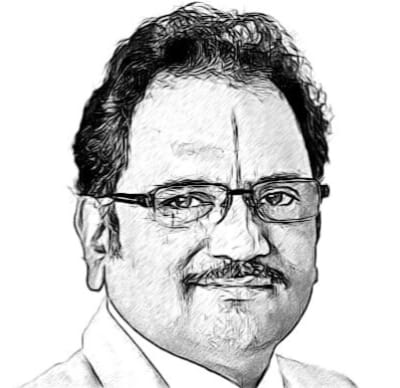
Law professor and eminent columnist
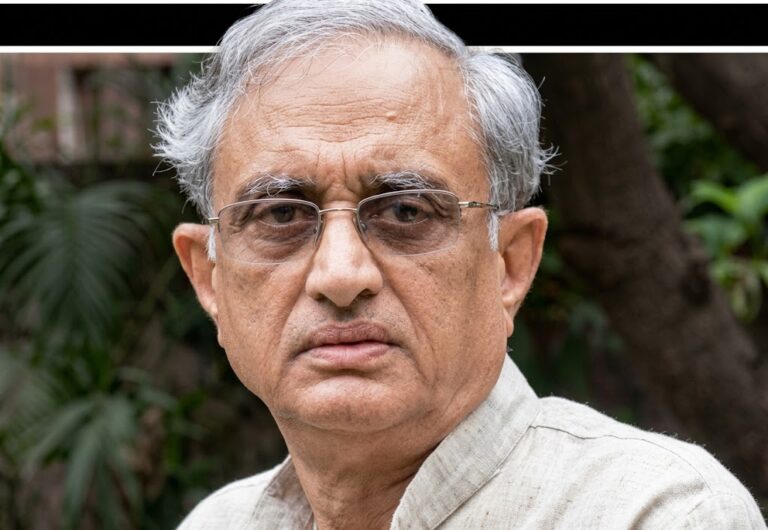
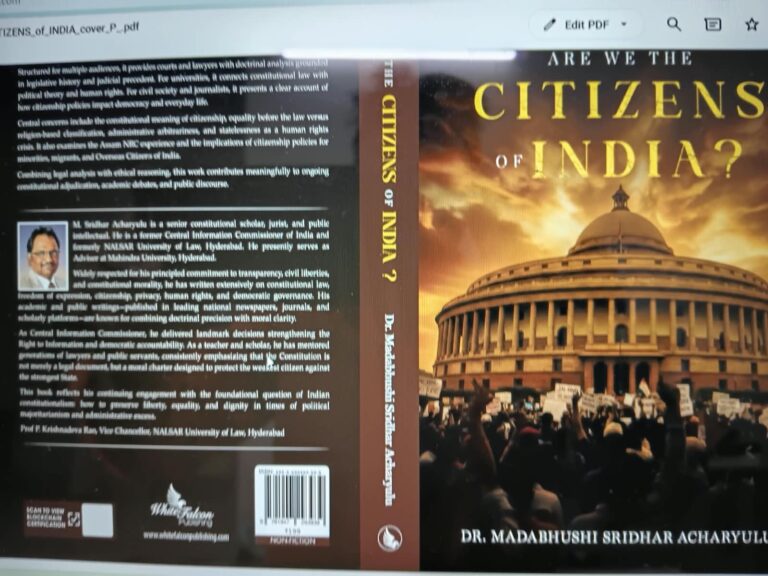
Madabhushi Sridhar Acharyulu, author of 63 books (in Telugu and English), Formerly Central Information Commissioner, Professor of NALSAR University, Bennett University (near Delhi), presently Professor and Advisor, Mahindra University, Hyderabad. Studied in Masoom Ali High School, AVV Junior College, CKM College, and Kakatiya University in Warangal. Madabhushi did LL.M., MCJ., and the highest law degree, LL.D. He won 4 Gold Medals at Kakatiya University and Osmania University.
Email: cicsridhar@gmail.com
Mobile: 8447651505