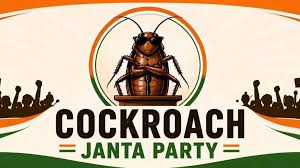
Cockroach JP” is an expression, though not a judgment!
Social media blocking orders under Section 69A of the Information Technology Act, 2000, allow the government to direct platforms like X, YouTube, or Instagram to block content in certain circumstances involving similar points like – National security, Public order, Sovereignty, and Prevention of offences. At the same time, the Supreme Court also emphasized that blocking powers cannot be arbitrary and must follow procedural safeguards.
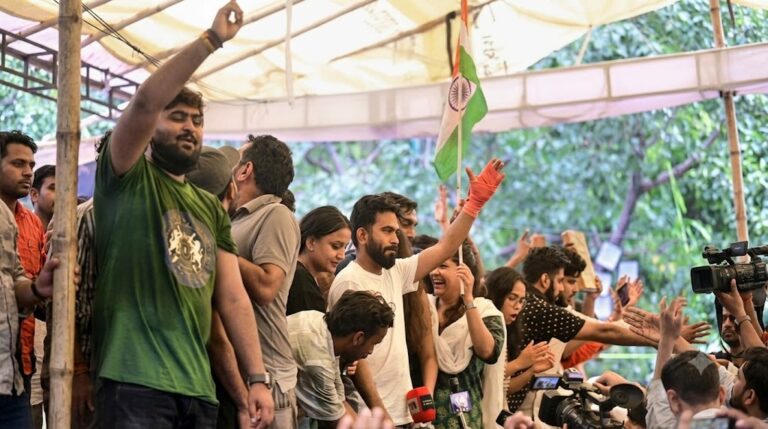
The X (formerly Twitter) account of the satirical online movement, CJP, was recently withheld in India following a legal demand, according to its founder Abhijeet Dipke, who is widely associated with this movement in the past as a volunteer with Aam Aadmi Party (AAP).
“Cockroach Is Back.”
He stated that the account had been created on May 16 and became hugely popular within just a few days. Then the account was blocked in India. He also alleged that there were attempts to hack the movement’s Instagram account. Soon after the suspension, Mr. Dipke launched a new X account titled “Cockroach Is Back.” Within a short time, the new account again attracted thousands of followers, showing that the movement still had strong public interest online.
Another Media Law
We need a new media law, not amenable to the court of law, because of the huge numbers. A strange and satirical phenomenon has recently captured national attention, CJP. What began as a meme-driven Instagram experiment soon became one of the most-discussed online political movements among India’s youth, particularly Gen Z users.
It was reportedly started after comments attributed to Chief Justice of India Surya Kant regarding unemployed youth allegedly being compared to “cockroaches.” Later clarified that his remarks had been “misquoted” by sections of the media.
Even if it was withdrawn, the comment provoked the discussion again, like a joke, a cartoon on the present society, including every Estate. Society, as a fifth estate, after the fourth, is considered the press and media. Though it could be a breach of ‘contempt of court’ or ‘contempt of parliamentary privilege’, it is not possible to be punished. No lawyer can defend this satire.
The “Cockroach Janta Party” (CJP) is an expression, though not a judgment, that made each viewer become a judge. Unfortunately, it is a victim of the system. While satire is a critical expression, it’s akin to freedom. Like humour, it could be a ‘defamatory remark’. Being part of Article 19(1)(a), freedom of expression. Liberty is a comprehensive ‘expression’, a cherished democratic characteristic of media constitutional law. If you call it a political party, it is not a political party, but rather an entity beyond definability.
The CJI’s remarks were not very elegant
The CJI’s remarks were not very elegant; these were especially hurtful as the young have been the victims rather than tormentors of the system. Among other things, they suffer because of a dearth of quality jobs and a conducive environment in which they can become wealth creators. And now, they are also hit by the incompetence and corruption in the bodies that carry out exams for coveted seats in higher education and jobs.
The remarks were deeply resented by not just youth but also others. This was the reason that the CJI later issued a clarification, stating he was misquoted and his remarks were directed specifically at individuals entering the legal profession through “fake and bogus degrees.”
The government overreacted by reportedly directing X to withhold the account following inputs from the Intelligence Bureau (IB), which flagged “national security concerns.” Apparently, the Ministry of Electronics & Information Technology (MeitY) invoked Section 69A of the Information Technology Act, 2000, to demand action against the CJP account. Senior Congress leader Shashi Tharoor pointed out that the episode “confirms to us the extent to which there is frustration and dissatisfaction that the public can express through being able to tap into an initiative like this.”
By moving to block the account, the government ended up validating the very criticism the satire sought to make. A parody page that may otherwise have remained a passing internet joke suddenly acquired political significance because of official intervention. In trying to suppress ridicule, the authorities amplified it. What makes the CJP episode particularly revealing is that the government appeared more offended by the language of protest than by the underlying anger that produced it. A confident government would have laughed away the joke. (Editorial of the Hans India, Daily, Hyderabad)
The freedom of speech and expression under Article 19(1)(a) was guaranteed. This right includes:
- Political criticism
- Satire and parody
- Humour and cartoons
- Public discussion of government and institutions
- Digital expression on social media
The Supreme Court has repeatedly held that freedom of speech includes even unpopular, offensive, or critical opinions, as long as they do not directly incite violence or threaten public order. Under Article 19(2), the State can impose “reasonable restrictions”. Was the restriction reasonable, lawful, proportionate, and transparent? It depends on judicial discretion based on the exercise of the right to freedom of a citizen.
Frustrated youth
The phenomenon of huge reach says its Instagram page crossed 14.5 million followers, even overtaking the official Instagram following of Bharatiya Janata Party (BJP). Several similar accounts using the “cockroach” theme also appeared across social media platforms. Unlike conventional political organizations, the CJP did not begin with public rallies, manifesto releases, or organizational structures. Instead, it started as a digital satire project using memes, reels, parody content, and political humour aimed at attracting frustrated young internet users.
The branding & viral explosion
The name itself, CJP, is symbolic and intentionally provocative. A cockroach is popularly seen as a creature that survives under any circumstance. Supporters of the movement interpret this as a metaphor for the resilience of ordinary people and youth voices in difficult political environments. Critics, however, dismiss it as an attention-seeking gimmick designed purely for virality. Regardless of interpretation, the branding worked.
Its growth was fueled by several factors:
- Short-form political comedy videos
- Meme-based criticism of establishment politics
- Viral reels targeting current affairs
- Relatable humour for urban youth
- Aggressive use of trending hashtags and internet culture
The movement particularly resonated with first-time voters and digitally active young Indians who increasingly consume political content not through television debates, but through Instagram reels, YouTube videos, podcasts, and influencer commentary. They influence the political parties.
Influencers and Opposition Voices
The visibility of CJP expanded significantly after public discussions and interactions by well-known digital commentators and opposition-linked figures. Personalities such as Dhruv Rathee and Mahua Moitra either referred to or engaged with discussions surrounding the movement online.
This reflects a larger trend in Indian politics: influencers and content creators are increasingly shaping political narratives. Traditional political communication once depended on newspapers, television channels, and public rallies. Today, an Instagram reel or YouTube commentary can reach millions within hours. As a result, political influence is no longer controlled exclusively by political parties or mainstream media institutions.
The digital-age evolution
India has a long history of political satire. From editorial cartoons and theatre performances to street plays and parody songs, satire has often served as a democratic tool for criticism and dissent. CJP represents the digital-age evolution of that tradition.
- Instead of newspaper cartoons, there are memes.
- Instead of pamphlets, there are reels.
- Instead of street theatre, there are viral edits and parody videos.
What makes this movement unique is its ability to convert humour into engagement. Young audiences who might otherwise avoid formal political discussions often participate enthusiastically when politics is presented through comedy and internet culture.
A variety of political parties
The CJP appears to function primarily as a digital movement rather than a registered political organization. It has no established electoral structure, declared leadership hierarchy, or formal policy platform comparable to mainstream political parties. However, its significance lies elsewhere. In the digital era is no longer dependent solely on elections or institutional power.
The Larger Political Message: The rise of CJP reveals several important shifts in Indian democracy. A common criticism in public discourse is that young people are politically disconnected. The CJP phenomenon suggests the opposite. Young citizens are deeply engaged, but through different formats and languages than previous generations.
A Parallel Political Arena
Political legitimacy is increasingly being measured online. Follower counts, engagement rates, and viral reach now influence how political narratives are constructed and amplified. In many ways, Instagram, YouTube, and X have become parallel political battlegrounds. Digital creators and internet personalities now hold enormous persuasive power, especially among younger demographics. This blurs the line between entertainment, activism, journalism, and political mobilization.
Oversimplify serious national issues
Not everyone views the movement positively. Critics argue that meme politics can oversimplify serious national issues and encourage shallow political engagement. Some believe viral satire risks replacing informed debate with emotional reactions and internet tribalism. Others question whether such movements are genuinely independent or indirectly aligned with political interests. These concerns are not unique to India. Democracies across the world are facing similar questions about algorithm-driven politics, influencer activism, and digital propaganda.
No transparency
This is a transformation of political communication in contemporary India. It shows how digital culture, humour, and youth participation are reshaping the language of politics. They are the enormous power of social media narratives in the modern era. One major criticism is that blocking orders are often secretive. The public usually does not know:
- Which authority issued the order
- What exact content was objectionable
- Whether due process was followed
- Whether the account holder got an opportunity to respond
This creates concerns about opaque censorship. Political satire has traditionally enjoyed strong protection in democratic societies. Courts generally recognize parody and humour as forms of political speech. Unless satire directly spreads hate speech, violence, or knowingly false, harmful information, banning entire accounts may appear disproportionate.
Frequent takedowns of political satire accounts may create what constitutional scholars call a “chilling effect.” People may become afraid to criticize Governments, Judges, Political leaders, and institutions, even through humour or parod.

Law professor and eminent columnist
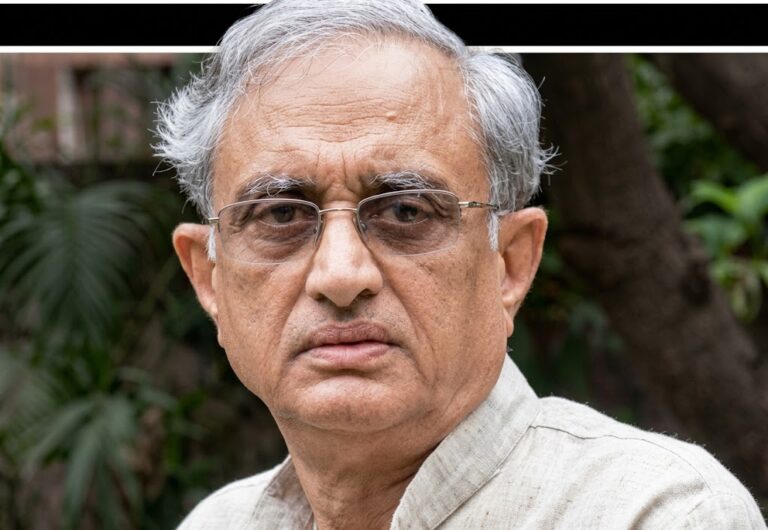
Madabhushi Sridhar Acharyulu, author of 63 books (in Telugu and English), Formerly Central Information Commissioner, Professor of NALSAR University, Bennett University (near Delhi), presently Professor and Advisor, Mahindra University, Hyderabad. Studied in Masoom Ali High School, AVV Junior College, CKM College, and Kakatiya University in Warangal. Madabhushi did LL.M., MCJ., and the highest law degree, LL.D. He won 4 Gold Medals at Kakatiya University and Osmania University.
Email: cicsridhar@gmail.com
Mobile: 8447651505