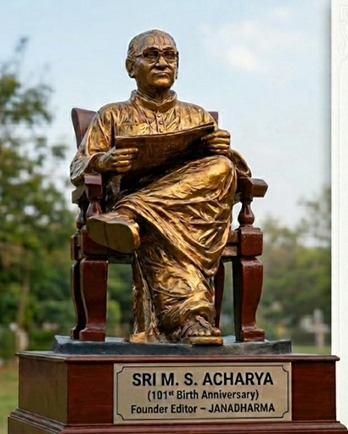
Is This Misery Still Continuing? (“Durdashena Inka?)
MS Acharya (101 years) wrote in 1981, the editorial with this title was not merely a reaction to isolated events—it was an expression of a deeper national anxiety. It reflected a time when India, though politically independent, appeared psychologically uncertain, internally fragile, and externally vulnerable. Revisiting that question in 2026, after forty-six years, demands not just comparison, but careful reflection on how the nature of that “misery” has evolved.
In visible and immediate threats
In 1981, the concerns you raised were grounded in visible and immediate threats. There were reports of Indians being humiliated or expelled from foreign countries, as in the case of Indonesians under Sukarno or the mass expulsion of Indians from Uganda under Idi Amin. Statements like those attributed to Zulfikar Ali Bhutto reflected not only geopolitical hostility but also a perceived lack of global respect for India. At home, separatist tendencies—from the Naga movement to unrest in Assam and Punjab- seemed to question the very idea of India as a unified nation. Even the unresolved tensions in Kashmir, emerging from decisions during the tenure of Jawaharlal Nehru, were seen as signs of an incomplete nation-building process.
“Post-independence shock phase.”
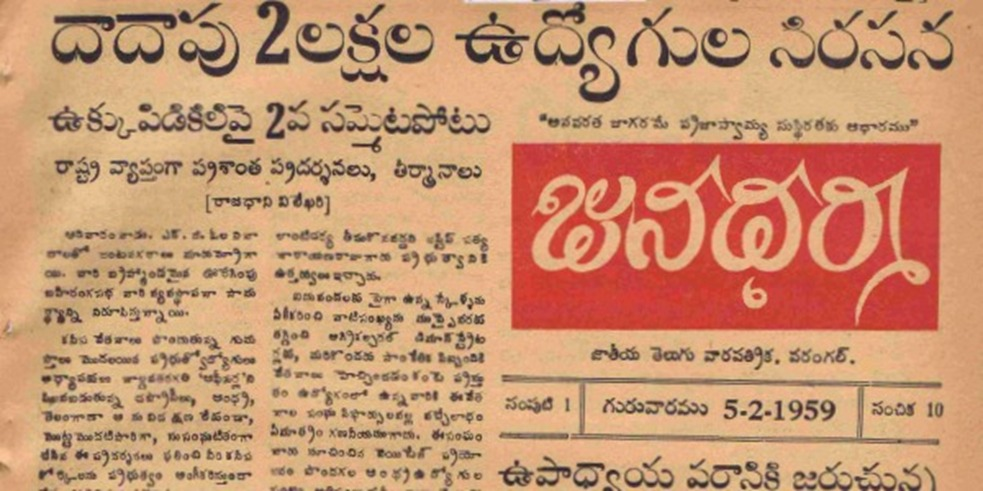
That period may be described as a “post-independence shock phase.” India had achieved freedom, but the trauma of Partition, the burden of diversity, and the challenge of democratic consolidation had not yet settled into stability. The fear was existential: could the country hold together? However, when we turn to 2026, the answer to your central question, “Is this misery still continuing?”- cannot be a simple yes or no. The truth lies somewhere in between. The nature of India’s challenges has changed, even though the underlying concern about unity persists.
India today is not the fragile state it appeared to be in the early decades after independence. It has emerged as a significant global power, playing a visible role in international diplomacy, economic networks, and technological innovation. Its military strength is formidable, its economy deeply interconnected with the world, and its democratic processes—especially elections—remain robust and widely participatory. The possibility that a small nation or a rogue group could easily humiliate or destabilize India, as feared in 1981, is no longer realistic.
Moreover, large-scale separatist insurgencies that once threatened national integrity have largely diminished. While regional aspirations remain, they are now more often articulated within the constitutional framework rather than against it. The demand is less for secession and more for recognition, autonomy, and equitable development.
It has not vanished; it has transformed.
Yet, to conclude that the “durdasha” has disappeared would be misleading. It has not vanished; it has transformed. The most striking shift is from external and territorial threats to internal and psychological ones. In place of visible enemies, India now faces subtler but equally potent challenges—social polarization, ideological fragmentation, and the rapid spread of misinformation. Divisions based on religion, caste, language, and region are not new, but in the digital age they are amplified with unprecedented speed and intensity. What once simmered locally can now spread nationally within hours.
Federal tensions
Federal tensions have also acquired new dimensions. Disputes between the Union and the States, over legislative authority, the role of Governors, and the interpretation of constitutional provisions, have become sharper. These are not signs of disintegration, but they do indicate a strain in cooperative federalism. The debates surrounding constitutional mechanisms reflect a deeper question: how should power be balanced in a diverse democracy? Another significant change is the emergence of “information warfare.” Unlike in 1981, today’s threats do not always come in the form of armies or insurgencies. They often appear as narratives – crafted, circulated, and consumed through digital platforms. False information, propaganda, and external influence operations can shape public opinion, deepen mistrust, and weaken social cohesion without a single shot being fired.
“Internal enemies.”
This brings us back to the most powerful line in your 1981 editorial: the inability to identify “internal enemies.” In 2026, this insight remains profoundly relevant, but its meaning has evolved. The “enemy within” is no longer a clearly identifiable group or movement. It is a condition—a combination of intolerance, suspicion, and the erosion of shared civic values. It resides not in geography, but in attitudes.
So, does India face the danger of being physically fragmented today? The answer is no. The structural foundations of the Indian state—its Constitution, its judiciary, its electoral system, and its economic interdependence- are far too strong to permit such an outcome. Institutions like the Supreme Court of India continue to act as guardians of constitutional balance and national unity. But there is another, more subtle danger: not the division of territory, but the division of minds. A nation may remain geographically intact while becoming socially fractured. This is the form in which “durdasha” persists today.
1981 to 2026
In 1981, the question was whether India would survive as a nation. In 2026, the question is different: what kind of nation will India be? Will it remain merely a political union, or will it continue as a shared moral and social community? The answer depends not only on governments or institutions, but on the collective consciousness of its people. National unity in the twenty-first century cannot be sustained by force or fear; it must be nurtured through trust, dialogue, and a commitment to constitutional values.
Thus, your question echoes across decades with renewed significance. The misery you described has not disappeared—it has changed its form. And recognizing that transformation is the first step toward addressing it.
(on the 1981 Editorial by M S Acharya, and the present situation)
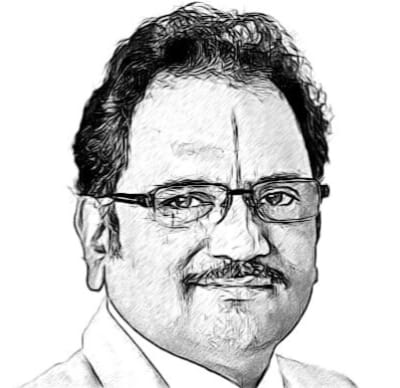
Law professor and eminent columnist
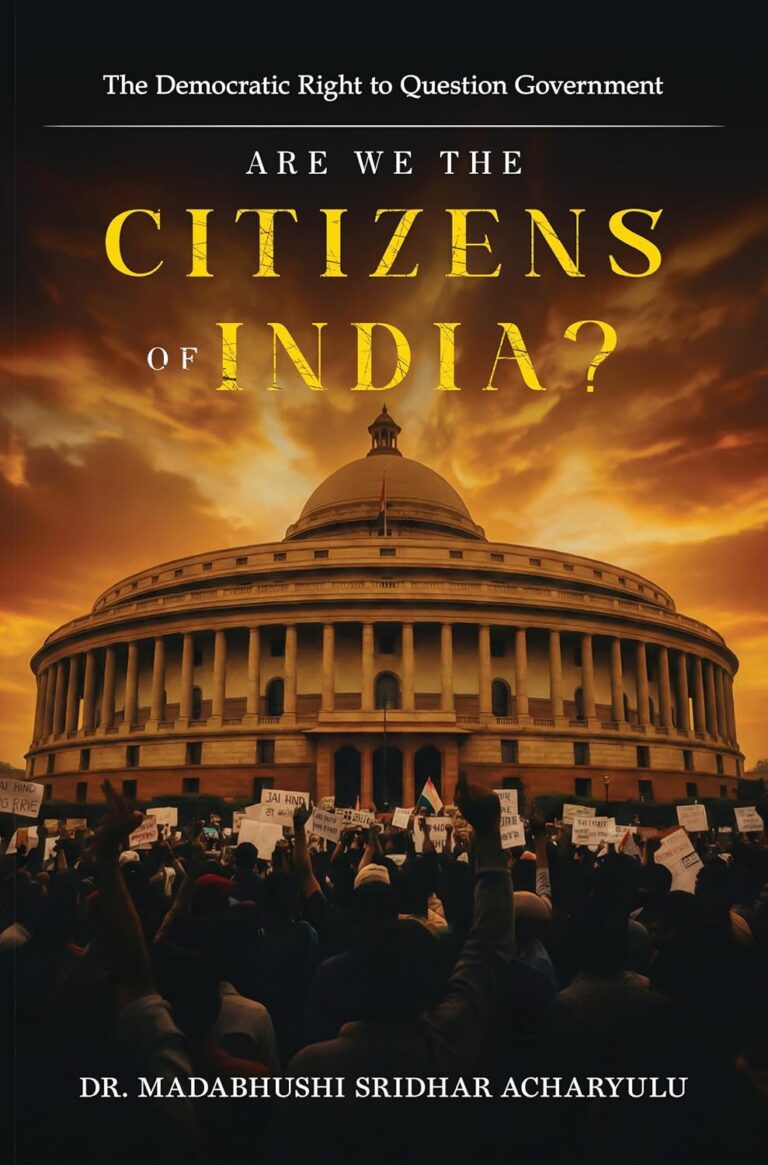
Madabhushi Sridhar Acharyulu, author of 63 books (in Telugu and English), Formerly Central Information Commissioner, Professor of NALSAR University, Bennett University (near Delhi), presently Professor and Advisor, Mahindra University, Hyderabad. Studied in Masoom Ali High School, AVV Junior College, CKM College, and Kakatiya University in Warangal. Madabhushi did LL.M., MCJ., and the highest law degree, LL.D. He won 4 Gold Medals at Kakatiya University and Osmania University.
Email: cicsridhar@gmail.com
Mobile: 8447651505
Sir your Review is just hand some
You have selected jaint personality
S v R
Hero. Charector actor
And. As senior actor
Unique actor
Of all the actors. S v R stand s
N o 1
His film pathala bharavi superb
One dialogues
SAHASAM SEYARa. Dimbaka
All actors SVR is. Superb.