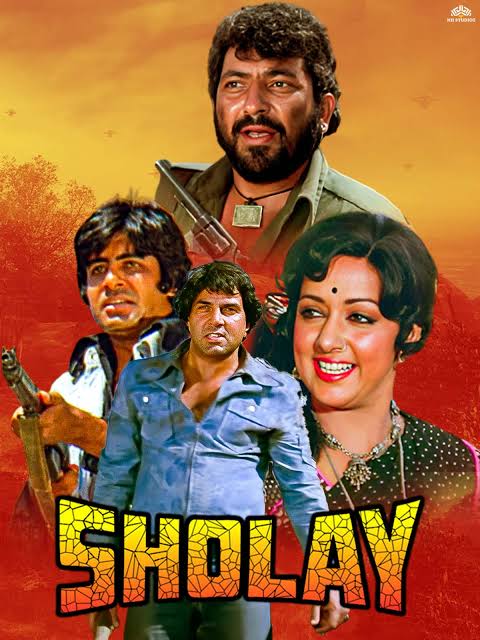
Half a century since its 1975 release, Sholay remains the gold standard of Indian filmmaking. Produced by G.P. Sippy and directed by Ramesh Sippy, it didn’t just break records—it defined the “Masala” genre. From the rugged terrains of Ramnagara to the haunting whistle of the background score, every element of Sholay was a masterstroke of creative genius.
Here is an elaboration on the nine key parameters that turned this film into a timeless legend.
1. The Genesis of Terror: Amjad Khan as Gabbar Singh
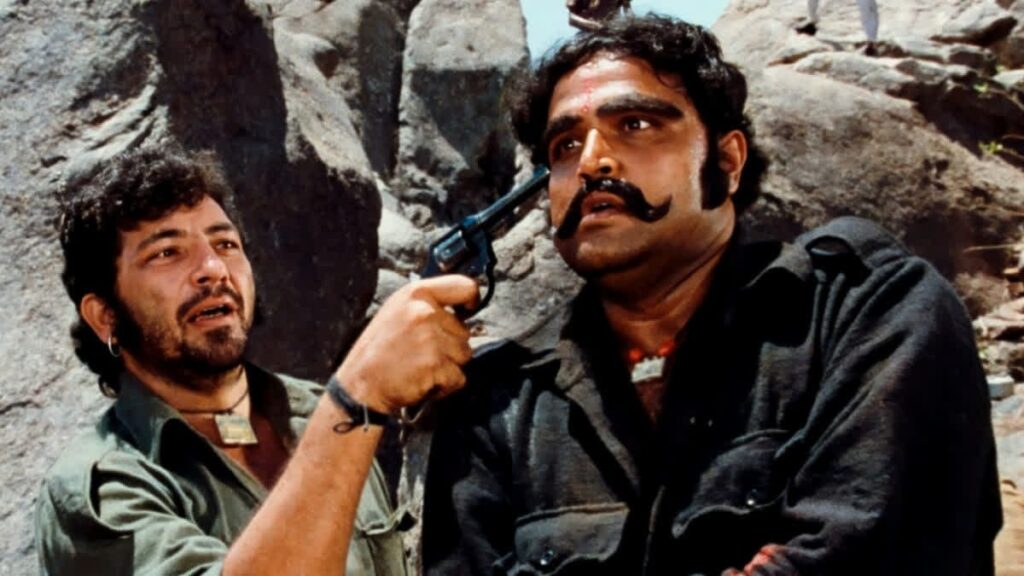
The selection of Amjad Khan was perhaps the most pivotal casting decision in Bollywood history. Despite initial doubts about his voice, Amjad Khan’s portrayal of Gabbar Singh redefined the Indian villain. The Impact: He wasn’t just a dacoit; he was a sociopath. His sadistic laughter, unique mannerisms (like scratching his neck with a tobacco-stained hand), and bone-chilling delivery of lines like “Kitne aadmi the?” created a character that overshadowed even the heroes. He brought a gritty, menacing realism that moved away from the “theatrical” villains of the past.
2. The Stoic Legend: Amitabh Bachchan’s “Jai”
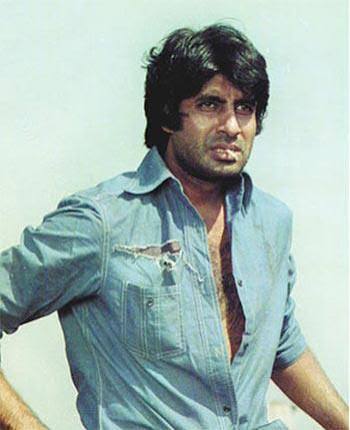
If Veeru was the heart of the duo, Jai was the soul. Amitabh Bachchan’s performance as the brooding, mouth-organ-playing Jai was a masterclass in understated acting. The Action: Unlike the high-energy roles of the time, Jai was cynical and quiet. His sacrifice in the climax remains one of the most emotional moments in cinema. Amitabh’s ability to convey deep emotion through silence and dry wit balanced the film’s intensity, cementing his “Angry Young Man” persona.
3. The Power of Pathos: Sanjeev Kumar’s Brilliant Turn
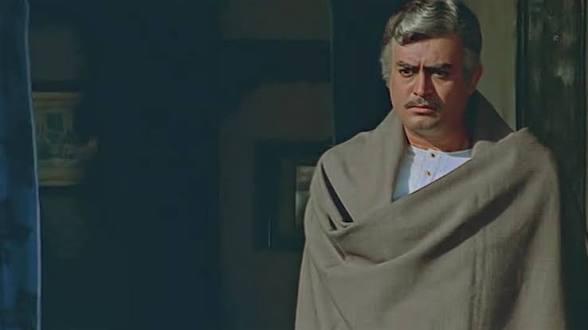
Sanjeev Kumar played Thakur Baldev Singh with a dignity that was palpable. The Performance: To carry an entire film without the use of one’s arms is a monumental task. Sanjeev Kumar used his eyes and his commanding voice to portray a man consumed by the fire of revenge yet bound by his principles. His confrontation with Gabbar is a battle of titans, representing the struggle between law and lawlessness.
4. The Pen of Power: Salim-Javed’s Writing
The duo Salim-Javed didn’t just write a script; they wrote a bible for Indian screenwriting. The Impact: Every character, from the leads to the “Angrez ke zamane ka jailor,” was given a distinct voice. The dialogues were so “apt” and punchy that they became part of the Indian lexicon. Their screenplay perfectly blended the “Curry Western” aesthetic with traditional Indian values of friendship (Dosti) and family honor. The brilliance of Salim-Javed’s writing shines through these lines, which remain etched in the cultural DNA of India:
Character Iconic Dialogue Context
Impact of Gabbar Singh”Kitne aadmi the?” The most famous inquiry in Indian cinema history. Gabbar Singh”Jo darr gaya, samjho marr gaya. “Defined the ruthless philosophy of the villain. Gabbar Singh”Tera kya hoga, Kaalia?”A terrifying mix of humor and menace before an execution.Jai”Basanti, in kutton ke saamne mat naachna.” A classic line of protective, cinematic heroics. Veeru”Gaon waalon! Chonki mat! Main oopar se bol raha hoon!”From the legendary “suicide” scene on the water tank. Thakur “Loha garam hai, maar do hathoda! “His call to action for Jai and Veeru to strike. Thakur”Yeh haath nahi, phaansi ka फंदा(noose) hai!”
Expressing his singular obsession with capturing Gabbar. Basanti “Yun ki, yeh kaun bola? “Showcasing her iconic, non-stop “tangewali” chatter.Rahim Chacha”Itna sannata kyun hai, bhai?” A heartbreaking line following the death of his son. The Jailor “Hum angrez ke zamane ke jailor hain!”Asrani’s comedic boast that became a legendary meme.
5. The Living Set: The Magic of Ramnagara
The decision to shoot in Ramnagara, Karnataka, was a stroke of visionary genius. The Importance: The rocky, desolate terrain provided a visual scale that a studio could never replicate. The hills didn’t just serve as a backdrop; they were a character in themselves. The geography allowed for tactical action sequences—the train heist, the bridge explosion, and Gabbar’s hideout—that felt immersive and grand.
6. The Spark: Dharmendra and Hema Malini’s Chemistry
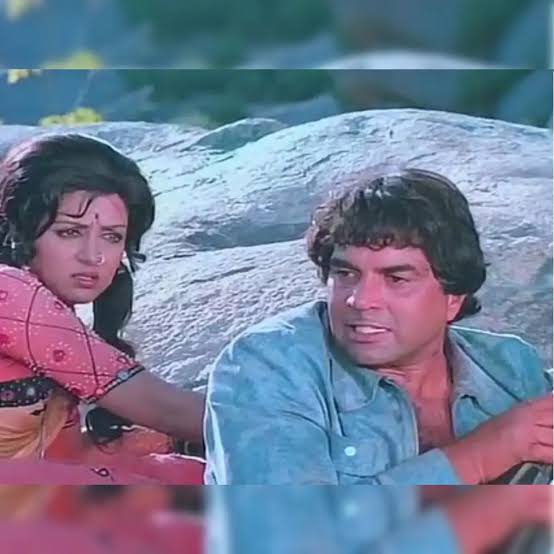
The chemistry between Veeru and Basanti provided the film’s much-needed levity and charm. The Influence: Dharmendra’s comedic timing (especially the iconic “suicide” scene atop the water tank) paired with Hema Malini’s non-stop chatter as the tangewali created a delightful contrast to the film’s darker themes. Their romance felt organic and provided the audience with a reason to cheer amidst the tragedy.
7. The Supporting Pillars: Jaya Bhaduri, A.K. Hangal, and Asrani
A masterpiece is built on the strength of its ensemble. Jaya Bhaduri: As the silent, grieving widow, she provided a hauntingly beautiful subplot, her chemistry with Amitabh speaking volumes through mere glances. A.K. Hangal: As Rahim Chacha, he delivered the film’s most heartbreaking line: “Itna sannata kyun hai, bhai?” (Why is there so much silence?), representing the moral conscience of the village. Asrani: His portrayal of the “Jailor” added a layer of legendary satire that lightened the tension, showing Ramesh Sippy’s ability to balance tone perfectly.
8. The Pulse of Ramgarh: R.D. Burman’s Sonic Revolution
R.D. Burman (Pancham Da) didn’t just compose a soundtrack; he created an auditory world that defined the film’s identity. His contribution is often cited as the “fifth pillar” of Sholay. The Background Score: Long before digital effects, Burman used innovative sounds—the haunting whistle representing Gabbar’s arrival, the rhythmic chugging of the train, and the clinking of bottles—to build tension. The silence was as much a part of his music as the notes themselves.
The Versatility: From the high-octane “Mehbooba Mehbooba” (inspired by Mediterranean rhythms) to the soulful, mouth-organ-led melodies of Jai, Burman captured every emotion. The Anthem of Friendship: “Yeh Dosti” became the unofficial national anthem for friendship in India, blending the powerhouse vocals of Manna Dey and Kishore Kumar. His music ensured that Sholay was a sensory masterpiece, not just a visual one.
9. The Visionary: Ramesh Sippy’s Directorial Mastery
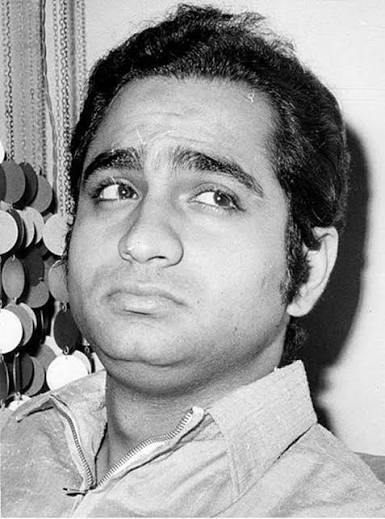
Ramesh Sippy’s talent lay in his ability to weave these diverse threads into a seamless tapestry. The Direction: He utilized 70mm cinematography and stereophonic sound (rare for the time) to give Sholay an international feel. His “picturisation” of the songs and action sequences was decades ahead of its time. By selecting the absolute best talent for every role—down to the smallest henchman—he ensured that Sholay wasn’t just a movie, but an experience that makes the viewer feel like they are standing right there in the dusty streets of Ramgarh.
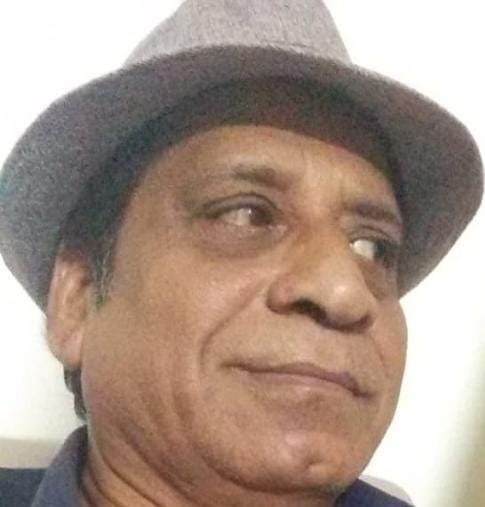
Principal Correspondent, Prime Post
Vidya Sagar Chaturvedula is a passionate film enthusiast whose four-decade career spans multiple sectors, including media and industry. Fluent in Telugu, Hindi, and English, he has a deep appreciation for cinema, particularly films in those three languages. His passion goes beyond simple viewing; he enjoys analyzing directional skill, the emotional depth of actors’ performances, and the profound meaning embedded in dialogue. Mr. Sagar is known for his ability to clearly articulate and narrate his insightful film analyses after watching a movie.
Email: sagar.chaturvedula@gmail.com
Mobile: 9030702917

Sholay was a great film.
You narrated well. Keep it up 👍
Well narrated vidya sagar garu.
The Big Cinema of Bollywood
Favourite movie of all time.
Good review.
Great Narrated Uncle 👍
Great Narrated Uncle 👍
I have seen Sholay movie
When iwas 27 years old
Beautiful movie to be remembered
For many more years
The success of this movie is because 1. Shot in out door
2. Good and heavy Casting
3 good Dialogues
4 melody songs
5Holowood l type of movie
6. Story direction very good
7 important point is
Dialogues give to decoits
Till today. 1. Sambha
2 Kalia
The name GABR is made papular
A Film which ran for years to bethe
Hearty congrats to one and ALL
A Burning movie
Last but least. Last secne
Dharmendra. And. Amitha Bachan
The story ended in very sentiment
Way
Very good sir.
Iconic movie and amazing review…😊
Good review sir jee
Master piece of indian cinema, giving equal importance to each and every role.. brilliantly narrated uncle 🙂
షోలే..ఈసినిమా చాలా పెద్ద హిట్టయింది ఇందులో నటులందరూ హేమాహేమీలు.చాలా బాగా నటించారు ఇందులో కథ డైలాగ్స్ పాటలు డైరెక్షన్ అన్నీ బాగుంటాయి చాలా సూపర్ హిట్ సినిమా
The story and movie details came into prominence much later.
What carried the day for weeks and months was the dialogue sequence of Arre oh Samba….to the infused laughter ….to the three bullets killing the three dacoits.
The viewers mesmerized and taking turns to mimic the above dialogue sequence to their neighbours and friends. One must be personally witness to understand the phenomenon. It was during 1975-77 almost all over India.
The rest is academic.
Good review👍
Very well narrated. Sholay is all time super hit, iconic movie of hindi cinema, Dharmendra’s and Amitabh Bachchan’s bonding and friendship in the movie was very natural and popular. Sanjeev Kumar as Thakur is memorable character , Hemamalini as Basanti was very impressive. Jaya Bhaduri acted very well. Amjad khan as Gabbar was too good and all time favorite villian character in hindi cinema. Totally great movie.
Excellent film. All super stars. Dharmendra, Amitabachan, Sanjeevkumar. Spl attraction Amjad khan. RD burman all songs super. Though a routine story. It was abig hit. Good review
A movie that appeals to Many people,
With great entertainment, pleasing stars, and their performance.
Blockbuster movie. None can beat it ever.
Nice review.Very well narrated
Sholay is a Nobel movie.
Masala mix movie with comedy, drama, action, vengeance and beautiful songs.
Regarding starring Sanjeev,Dharmendra, Amitabh and
Amjad khan lived in their roles.
Hema Malini, Jaya Bhaduri and Helen also printed impressions.
I watched so many times but not boring even Today also.
Music is at its peak.
Songs memorable.
Picturisation n action seens are ultimate.
The movie created all the records.
Hat’s off to all the actors, Director, musician, cinematography.
Brilliant review
One of the iconic movie of the Bollywood. Very well Narated.
Sagar garu your review is so impressive that you explained each and every charector in depth.Another iconic scene is the killing of Thakur saab family in great silence except the creeking sound of jhoola.Sholay is no doubt a masterpiece of Indian cinema