Fire, Poison, Power and the Silent Republic
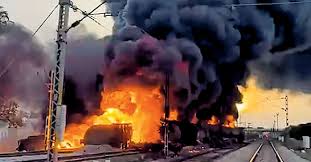
The devastating fire in Lucknow, the ammonia gas leak in Tiruvallur, Tamil Nadu, and the industrial explosion in the Pharma City complex at Parawada in Visakhapatnam, Andhra Pradesh, are not isolated incidents. They are merely different manifestations of the same systemic failure that has haunted the Indian Republic for decades. Fire, toxic gas, explosion—the nature of the disaster may differ. Yet the underlying cause remains strikingly similar: a governance system that has steadily lost its sense of accountability.
Demolition orders are issued against a building. Within weeks, those very orders are withdrawn. Industries operating under hazardous conditions continue to function. Inspections are conducted. Reports are submitted. Committees are constituted. Compensation packages are announced. News cycles gradually move on.
But the dead do not return.
And after every tragedy, one question inevitably resurfaces.
Who will answer?
The Lucknow fire raises a profoundly uncomfortable question. How did a building deemed unsafe enough to warrant demolition suddenly become fit for occupation within a short span of time? Did the principles of structural engineering change overnight? Did the safety deficiencies miraculously disappear? Or did files move faster through official corridors than realities changed on the ground?
Indian administration appears to have mastered a peculiar alchemy. Illegality is transformed into regularisation. Violations become permissions. Hazards become conveniences. A growing number of citizens increasingly believe that compromises matter more than laws, influence more than inspections, and relationships more than regulations.
The Tiruvallur tragedy exposed another painful reality. Many of those who perished were migrant women workers—individuals who had travelled hundreds of kilometres in search of livelihood and had devoted their labour to the nation’s industrial growth. Yet their deaths often survive merely as statistics. It is difficult to dismiss the suspicion that had the victims belonged to the ranks of senior officials, prominent personalities, or influential social groups, the national response might have been dramatically different.
The same pattern was visible in the explosion at Pharma City in Parawada, Visakhapatnam. In a region celebrated as a hub of pharmaceutical manufacturing serving the nation, two young workers lost their lives. After every industrial accident, authorities speak of safety reviews. After every death, inquiries are announced. Yet accidents continue to recur.
This does not imply that such tragedies are inevitable.
It suggests that existing safety systems are not sufficiently effective.
Collectively, these incidents raise a fundamental question. Is development merely about production, investment, exports, and growth in gross domestic product? Or does development also encompass the safety of workers, the right to life of citizens, and secure conditions of employment? We enthusiastically celebrate narratives of development and economic success. Yet behind these brightly illuminated stories lies another ledger. Workers buried beneath collapsed structures.
Women killed by toxic gases.
Sanitation workers who perish in sewers.
Young labourers consumed by industrial explosions.
All of them become the invisible cost of development.
Development has its beneficiaries.
Development also has its sacrificial victims.
The beneficiaries appear in conference halls.
The victims appear in cremation grounds.
The real problem is not corruption alone. Corruption is merely a symptom. The deeper disease is institutional indifference. Illegal constructions do not survive without administrative tolerance. Hazardous industries do not continue for years without regulatory failure. Numerous tragedies could be prevented long before they occur if enforcement mechanisms remained vigilant and effective.
Behind every disaster exists a chain of responsibility. Inspecting officers, licensing authorities, municipal bodies, labour departments, pollution control boards, industrial safety agencies, and elected representatives—all have a role to play. Yet the moment tragedy strikes, accountability dissolves into procedural fog.
Everyone becomes responsible. Therefore, no one is responsible.
This remains one of the most dangerous contradictions within Indian governance.
The Right to Information Act emerged as a powerful instrument of transparency. Yet delays in disclosure, missing records, disappearing files, and expanding technical exemptions continue to erode public confidence. Increasingly, there is concern that India is becoming a Republic where transparency exists in law but opacity prevails in practice.
The consequences extend beyond governance. They shape the psychology of society itself. Citizens repeatedly exposed to unpunished violations begin to believe that every approval can be influenced, every inquiry can be diverted, and every regulation can be circumvented. Once trust begins to erode, rebuilding it becomes an extraordinarily difficult undertaking.
History offers a similar lesson. Under colonial rule, people were viewed primarily as sources of revenue. Though institutions changed after Independence, administrative culture in many respects has not undergone a comparable transformation. File-based governance, excessive centralisation, delayed justice, and endless procedural postponements continue to endure.
Cases involving industrial negligence, land disputes, illegal constructions, and environmental violations often linger for years. By the time final judgments are delivered, victims may no longer be alive. Evidence may have weakened. Memories may have faded.
Delayed justice is not merely denied justice. It is often buried justice.
The economic dimension is equally troubling. Enforcing safety standards is expensive. Environmental protection requires investment. Worker welfare increases operational costs. Yet when the gains from violating regulations appear greater than the risks of punishment, the system generates what economists describe as a moral hazard.
Economists call it a “moral hazard.”
The ordinary citizen calls it “injustice.”
After every disaster, political leaders proclaim “zero tolerance.” Officials promise “stringent action.” Committees prepare “comprehensive reports.” Yet citizens have heard these assurances countless times before.
After every fire.
After every industrial explosion.
After every toxic gas leak.
After every building collapse.
The vocabulary changes.
The outcome rarely does.
And therefore, the question returns with even greater force.
Who will answer?
The officials who signed the approvals?
The politicians entrusted with overseeing regulatory systems?
The enforcement agencies that overlooked violations?
The managements that prioritised profits over safety?
Or will the answer once again consist of compensation packages, inquiry commissions, and collective public amnesia?
No Republic can endure indefinitely on selective accountability. Democracy is not merely an electoral arrangement. It is a continuous process of accountability. It is the obligation to explain actions before the people. It is the duty of every institution exercising authority to answer for its conduct.
Those who lost their lives in Lucknow, Tiruvallur, and Parawada deserve more than sympathy.
They deserve the truth.
They deserve accountability.
They deserve answers.
Until those answers arrive, the smoke rising from burning buildings, the toxic fumes escaping industrial tanks, and the flames erupting from factory explosions will continue to linger—not merely in the atmosphere, but within the collective conscience of this nation.
Our sages declared:
“Dharmo Rakshati Rakshitah” — Dharma protects those who protect it.
A society that neglects accountability ultimately risks losing its safety, its faith, and its very civilisation.

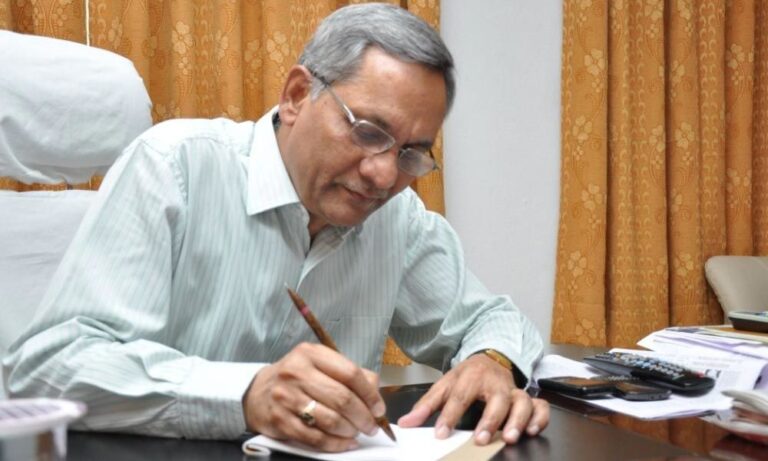
The author of the article, M. Shiva Prasad, IPS (Retired), worked in the combined Andhra Pradesh cadre before opting for the Telangana cadre. A true Hyderabadi at heart, he has a deep love for the Telugu people. Throughout his career, he excelled at handling extremism and countering religious terrorism. He remains a passionate lover of the uniform and a dedicated law-and-order officer.

With a journalistic long journey, we bring you https://primepost.news, a dynamic platform committed to unraveling the intricate tapestry of Indian politics, particularly delving deep into the heart of Telangana and Andhra Pradesh. Our blog is not just a source of news; it’s a reservoir of insights, analysis, and thought-provoking reviews.