Wealth, Might, and Innovation: The Enduring Blueprint of the American Success Story
The United States of America, the oldest democracy in the world, is celebrating its 250th anniversary. It is a dream destination for Indian students and youth. It is the wealthiest and mightiest country in the world. The political and philosophical underpinnings of US success and American model can be found in the Declaration of Independence and its constitution. The colonial settlers were keen to build a “new world.” Natural rights and inalienable freedoms are the pillars of American democracy. Indigenous population, black people and the immigrants have their problems. But the US moved away from feudalism. The country is known for its knowledge economy, innovation, military power and Hollywood. The great power leads rest of the world in all these areas.
1776: The Year That Defined Freedom and Capitalism
The Declaration of Independence, in 1776, formally “The unanimous Declaration of the Thirteen States,” was adopted by the Second Continental Congress. The Declaration says ‘all men are created equal , they are endowed by their Creator with certain unalienable rights that amongst these are life, liberty and the pursuit of happiness.’ While Britain’s 13 North American States declared their independence, the intellectual foundation for capitalism was laid by Adam Smith who published a theory called ‘The Wealth of Nations.’ The communism which challenged capitalism gave up with the demise of the Soviet Union in late 1980s. Capitalism has survived the test of time mainly because of the ability of the US to reinvent itself.
From Railroads to AI: The Architecture of Global Hegemony

The US was an agrarian Republic to start with. In 19th century it invented factories, railroads and mechanical production. It became the world’s leading industrial economy and it never had to look back. The second reinvention that took place in the 20th century increased the prosperity of the US. After the Second World War the US became the leader of world nations. It was the time when the US said the human beings should adapt to the needs of the machine. Other nations were expected to tailor their needs according to the American interests. In a war of attrition, the US has beaten the only other super power, the Soviet Union. The capitalism was exported to Europe and other nations. Telecommunications and computer technology ruled the roost. The US today is embarking on fourth reinvention based on AI and other modern technologies.
From Railroads to AI: The Architecture of Global Hegemony
The Indian diaspora in the US was liked and respected for their hardworking nature and the intellectual capabilities. In the first wave some thousands of Indians, most of them physicians, went to the US and settled there. In the next wave which started in 1990s, lakhs of Indians left for the US to man the software industry. Two of the largest Fortune 500 companies, Microsoft and Google, are headed by Indians – Satya Nadendla and Sundar Pichai respectively. During Barack Obama’s tenure Dr Vivek Murthy was appointed as surgeon general and in 2021 President Biden had reappointed him. After the Mars rover Perseverance touched down on February 2023, President Biden called Swati Mohan, the lead scientist at NASA, to congratulate her. “It is amazing, Biden said, Indian descent Americans are taking over the country – you, my vice-president (Kamala Harris), my speech writer (Vinay Reddy).You guys are incredible.”
The “Hellhole” Row: US Rhetoric Sparks Political Friction in India
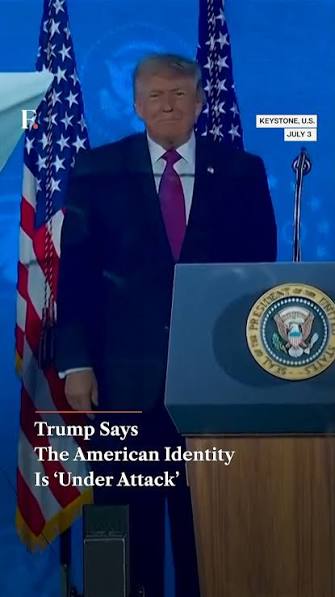
However, the US President Donald Trump, ever since he started his second term, has successfully spoiled the dream of immigrants and undermined the foundations on which the idea of America was built. Trump administration has pursued an aggressive anti-immigration policy and tried to end diversity and inclusion across universities and employment. Trump reposted a podcaster’s remarks describing India and China as “hellholes”, with the commentator saying that “a baby born here becomes an instant citizen, and then they bring their entire family in from China or India or some other hellhole on the planet.” Congress party has called the remarks “extremely insulting and anti-Indian. In contrast, Modi’s government maintained silence.
A History of Backlash: From Railroad Labor to H-1B Visas
It is not the first time the US authorities behaved against the America’s founding ideals. The Chinese Exclusion Act of 1882 barred Chinese immigrants from citizenship even when they came to lay the railroads in the US. The depression during 1873 – 79 saw immigrant being made the scapegoats for unemployment. We see today an echo of this kind of atmosphere in the backlash against H-1B visas, most of the recipients being Indians. The year 2025 brought among the sharpest deteriorations in US-India relations since 2001. Trump’s exorbitant tariffs, pressurizing India not to buy Russian oil, growing intimacy of Trump’s dispensation with the Pakistan military and the general anti-Indian remarks made often by Trump and his colleagues.
The End of the Boss: A Multipolar World
The US was the lone super power for some time since the fall of Communism in Europe and end of the Cold War. Soon China emerged as the world’s greatest manufacturer and a competitor to America ending the latter’s hegemony. The US is no more the boss. Even middle powers like India, Australia and Brazil started asserting themselves. While acknowledging great things about America (for example, its constitution), the arrogance of some pf the presidents also has to be mentioned. Known as notorious bully of the world, the US interfered in the internal affairs of many countries.
The History of US Interventions
The US has a history of capturing or killing foreign leaders. Emilio Aguinaldo, the first President of the Philippine Republic was captured by US forces during the Philippine-American War in a covert operation in March 1901. In December 1989, the US launched ‘Operation Just Cause’ invading Panama to remove its president Manuel Noriega. A former CIA informer Noriega sought refuge in the Vatican diplomatic mission before surrendering. He was flown to the US, tried on drug trafficking charges and sentenced to prison. The US devastated North Vietnam killing thousands of Vietnamese and losing quite a lot of American soldiers for more than a decade in 1960s and 1970s. It had to withdraw from Vietnam when it could not win the war.
Two Decades of Conflict: How the US War in Afghanistan Came Full Circle
In the aftermath of 11 September 2001 terrorist attack on twin towers in New York City (9/11), the US declared war on Afghanistan being ruled by Taliban. The stated objective was to dismantle Al-Qaeda which masterminded the attack on trade towers under the leadership of Osama Bin Laden. The United Kingdom was solidly with the US from the beginning of the invasion and removal of Al-Qaeda government. Many American allies joined it later. The then American President George W Bush demanded that Osama Bin Laden should be handed over to the US. During Barack Obama’s tenure Osama bin Laden, the founder of al-Qaeda and mastermind of 9/11 attack, was killed on 02 May 2011 during a covert US military raid codenamed ‘Operation Neptune Spear in Abbottabad in Pakistan. The operation was directed by President Obama himself. Hamid Karzai was selected to lead Afghan administration. But the Taliban, with the support of Pakistan, had increased the attacks on the US-led International coalition forces. After two decades of intensive fighting and suffering huge losses, the coalition forces withdrew from Afghanistan leaving it to the Taliban. The Taliban had captured Kabul and overthrew the Afghan government in August 2021. The Taliban had established the second Islamic emirate.
Case Studies of Saddam Hussein and Juan Orlando Hernández
After the US-led invasion of Iraq in March 2003, Saddam Hussein went into hiding following the fall of Baghdad. In December 2003, he was captured near Tikrit in an underground chamber. He was later tried by an Iraqi tribunal and executed on 30 December 2006. Juan Orlando Hernadez, President of Honduras from 2014 to 2022, was arrested by Honduras authorities following a US extradition request. He faced federal charges of drug and weapons trafficking in United States. A federal jury convicted him and sentenced to 45 years in prison. His was one of the few instances of former heads of foreign countries to be prosecuted in US courts.
U.S. Interventions and the Unchecked Power to Remove Global Leaders

Muammar Gaddafi ruled Libya for more than four decades. In 2011, the Arab Spring sparked a civil war, prompting the United States and NATO to intervene under a United Nations mandate to protect civilians. In October 2011, a NATO airstrike hit Gaddafi’s convoy as he attempted to flee Sirte. He was captured shortly afterwards by rebel forces and killed. While U.S. forces did not directly execute him, American military action played a decisive role in the events leading to his death.
In February 2026, a joint US -Israeli military operation killed Iran’s Supreme Leader, Ayatollah Ali Khamenei. The strikes targeted military and intelligence facilities in addition to Khamenei himself. No sitting leader of Iran had ever been killed by a foreign power in the modern era. The geopolitical consequences continue to unfold, with analysts debating whether this marks a turning point in Middle Eastern history or the start of a more volatile chapter. While the belated funeral of Khamenei was underway, President has exhibited his insensitivity by boasting that he had got Khamenei killed.
From Emilio Aguinaldo’s capture in 1901 to Khamenei’s death in 2026, the United States has repeatedly demonstrated a willingness to remove leaders it perceives, rightly or wrongly as threats. Each case carried its own justification, controversy and consequence. Taken together, these actions trace 125 years long (half of its age) thread of American influence and intervention in global politics. Even today, the US can threaten any country of dismantling it and get away. That is the power and domination America enjoys.
Prominent Journalist
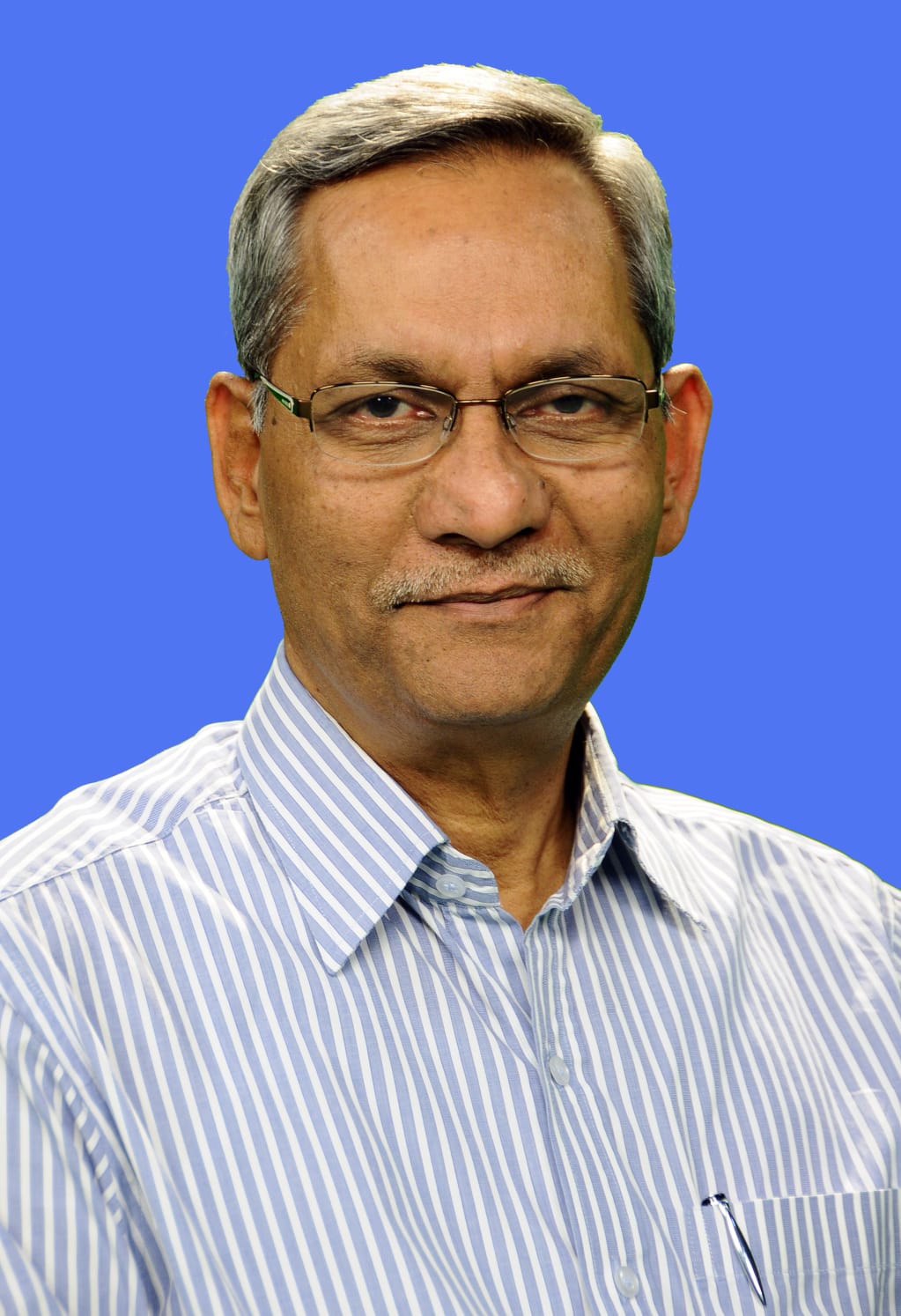
Dr. K. Ramachandra Murthy is a versatile journalist with a distinguished career. Dr. Murthy began his extensive career with Andhra Prabha of The Indian Express group in Bengaluru. He was editor of Udayam, Vaartha and Andhra Jyothy. Dr. Murthy founded and edited HMTV news channel and The Hans India, an English newspaper. He was also editorial director of the Telugu newspaper, Saakshi. He was awarded Ph. D for his research work in rural reporting. Dr. Murthy’s five decades in journalism showcases his influential roles across both print and electronic media. He wrote the political biography of NTR published by Harper Collins.
Email: murthykondubhatla@gmail.com
Mobile: 9908002211