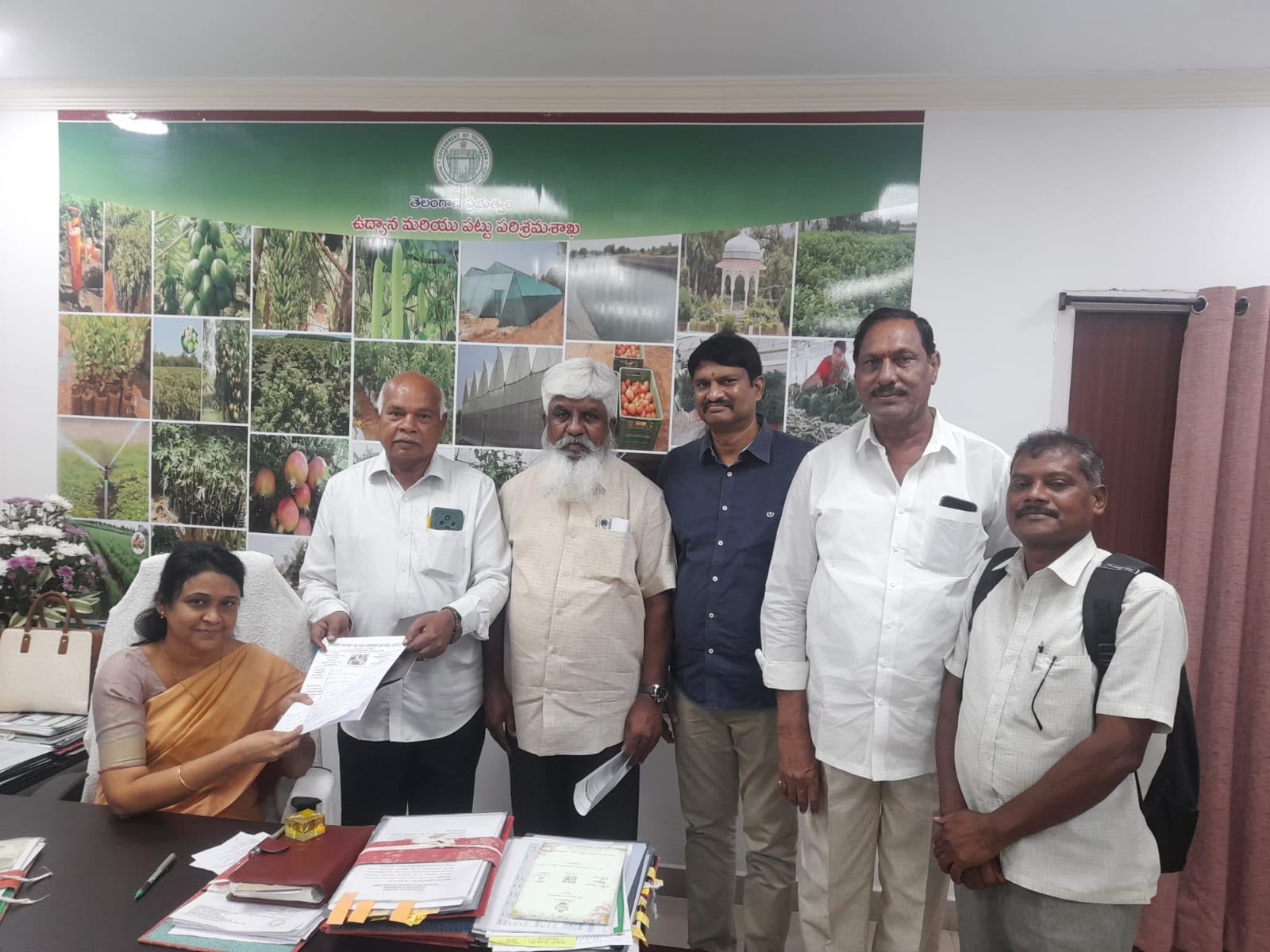
Protecting Telangana’s Oil Palm Farmers’s interests
The Battle for Fair Price for Palm Oil Pricing
Collective Action of Palm-Growers is Must to achieve the Goal
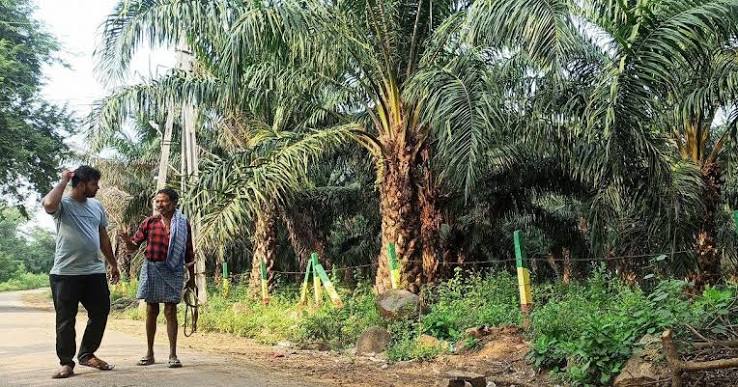
The rapid expansion of oil palm cultivation across Telangana marks a significant transition in the state’s agricultural landscape. Driven by expanded irrigation networks such as the Kaleshwaram Lift Irrigation Scheme, heavy state subsidies, and water availability constraints that are prompting a shift away from paddy cultivation, thousands of farmers are adopting oil palm. With around 1.25 lakh hectares currently under cultivation and ambitious targets to expand coverage significantly further, Telangana is positioning itself as a major player in domestic edible oil production. However, this growth brings critical challenges regarding the pricing mechanisms of Fresh Fruit Bunches (FFB). At the heart of this pricing structure lies the Oil Extraction Rate (OER) recorded at the government-run processing facility in Apparaopet, located in Dammapet mandal.
Strategic Importance of the Apparaopet OER
The Apparaopet OER serves as the standard benchmark for determining the price paid to farmers for their FFB harvest. Because a mere 1% reduction in the OER can drop the price of FFB by at least Rs 3,000 per ton, maintaining the integrity and accuracy of this benchmark is essential to farmer livelihoods. Yet, palm-growers are increasingly concerned about the future stability of the Apparaopet standard.
As large private companies join the palm oil industry to earn high profits, farmers worry that these businesses, corrupt government officers, and politicians might work together to lower or destroy the Apparaopet price standard. Because leaders from different political parties’ own shares in these private oil factories, farmers face a big danger of losing money through changed rules, legal tricks, or fake extraction records. If private mills stop using the fair Apparaopet benchmark and instead set their own lower oil extraction rates, growers will suffer heavy losses. To save their earnings, farmers must stay alert, carefully monitor factory processing numbers, and use their associations to demand complete honesty in how crop prices are set.
Empowering Growers Through Cooperative Processing Units
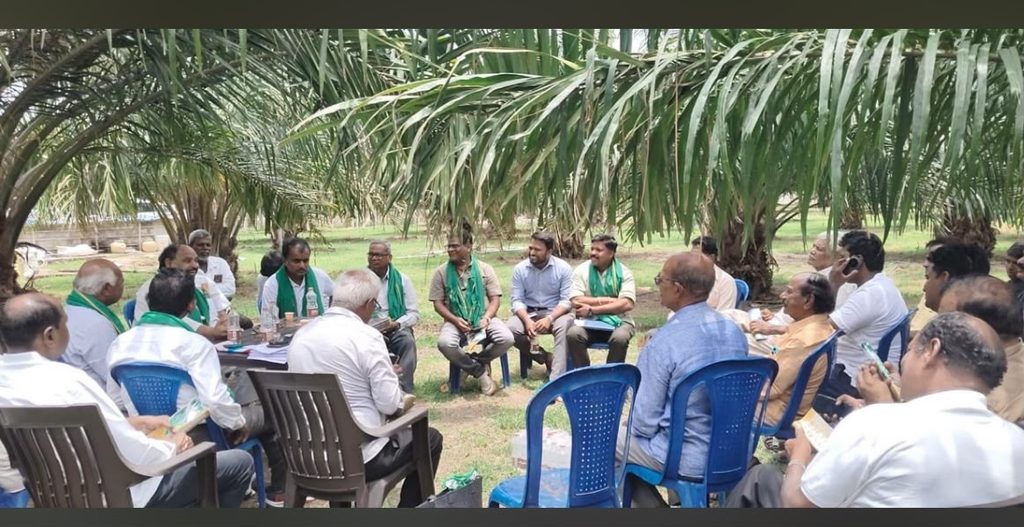
To permanently counteract the risks posed by corporate monopolization and political collusion, Telangana’s oil palm farmers must move beyond raw cultivation toward direct ownership in the supply chain. Establishing a farmer-owned cooperative palm oil processing unit funded by the growers themselves presents a practical pathway toward long-term self-reliance. By becoming direct equity stakeholders in their own factory, farmers can secure a reliable alternative processing facility that directly reflects true extraction yields without corporate distortion. A grower-funded cooperative unit serves as a permanent baseline in the market, making it significantly harder for private processors or regulatory bodies to artificially depress regional OER benchmarks.
Elevation of Collective Voice of Palm-growers
Beyond securing fair extraction rates, a farmer-owned cooperative unit functions as a unified political and economic pressure group. It elevates the collective voice of growers, ensuring that agricultural policy, factory allocations, and trade rules cannot be dictated solely by private corporate lobbies. However, for a cooperative initiative of this scale to succeed, absolute financial transparency is non-negotiable. Every rupee contributed by farmers must be rigorously audited, clearly accounted for, and managed with strict institutional oversight to prevent internal mismanagement and maintain trust. By organizing into strong cooperative structures, managing processing infrastructure, and supplying refined oil closer to end-consumers, Telangana’s oil palm growers can ensure they capture the true value of their harvest rather than leaving their financial futures vulnerable to external manipulation. The palm-growers surprised on the encouraging of private industries in the sector by the government when the prevailing factories being run by Telangana OIL FED is earning massive profits and employment generation being created.
Palm-growers can be made more OER price than now
Speaking to Prime Post, Telangana Horticulture Former Director L. Venkatarami Reddy stated that oil-palm farmers could receive an additional Rs 4,000 per tonne over current prices. He explained that fresh fruit crushing yields eight marketable products and by-products including Crude Palm Oil (CPO), Crude Palm Kernel Oil (CPKO), Empty Fruit Bunches (EFB), Mesocarp Fiber (Press Fiber), Palm Kernel Shells (PKS), Palm Kernel Cake / Expeller (PKC), Palm Oil Mill Effluent (POME) and Palm Fatty Acid Distillate (PFAD).
Reddy noted strong market demand for all these outputs, but criticized TS OILFED for failing to maximize farmer earnings by improving the Oil Extraction Ratio (OER). He urged the government to appoint domain experts to boost overall profitability and secure higher OER payouts for growers. He said that the government unit should only decide the OER and there was a government order and more employment can be created by setting up units by OILFED.
Need a unit in cooperative model to be run by palm-growers
Regatte Gurava Reddy, President of the Nalgonda District Palm-Oil Growers Society, expressed strong reservations about using the Apparaopet palm oil factory’s Oil Extraction Rate (OER) as a benchmark, citing the state government’s erratic decision-making. He noted that past experience shows numerous public sector units have shut down due to aggressive corporate strategies, bureaucratic corruption, and flawed government policies. He emphasized that oil palm farmers are actively working to ensure their voices are heard in future OER determinations.
Echoing these concerns, C.H. Guruji, General Secretary of the society, announced that several farmers are stepping forward to establish their own palm bunch crushing unit. He stated that taking control of processing in this manner is essential to protect growers’ interests and uphold their rights.

Principal Correspondent, Prime Post
Adapa Dora, journalist cum farmer, proved his excellence in both the fields. While working in Andhra Bhoomi (Telugu Paper) and Deccan Chronicle, he forced a famous seed company to pay compensation to the maize farmers for crop loss due to the supply of spurious seeds to them. He wished to maintain harmony between tribals and non-tribals in the mandals of Bhadradri-Kothagudem district for the prosperous of both groups.
Email: adapa.dora@gmail.com
Mobile: 9441332322



It’s good to see that the farmers in Telangana are growing palm oil trees in a large scale. This is also mentioned that reducing 1% in oil extract will be benefited Rs.3,000/- per ton to the farmers. Altogether price in oil extract should be economical to the farmers. So that they will get benefited. It should not burden to the farmers.