- Special Intensive Revision A Necessary Purge or Strategic Disenfranchisement?
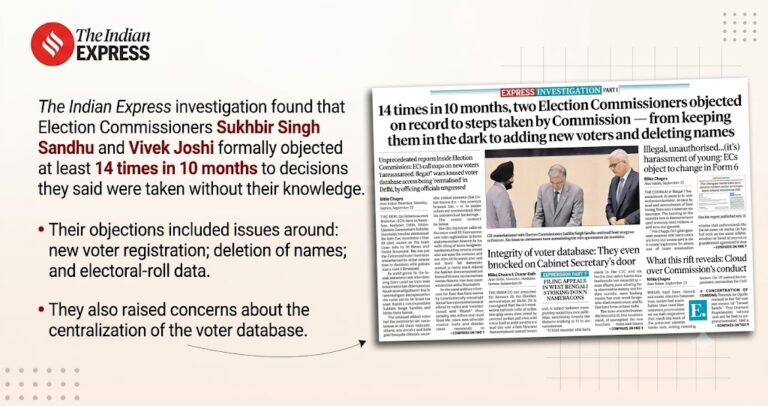
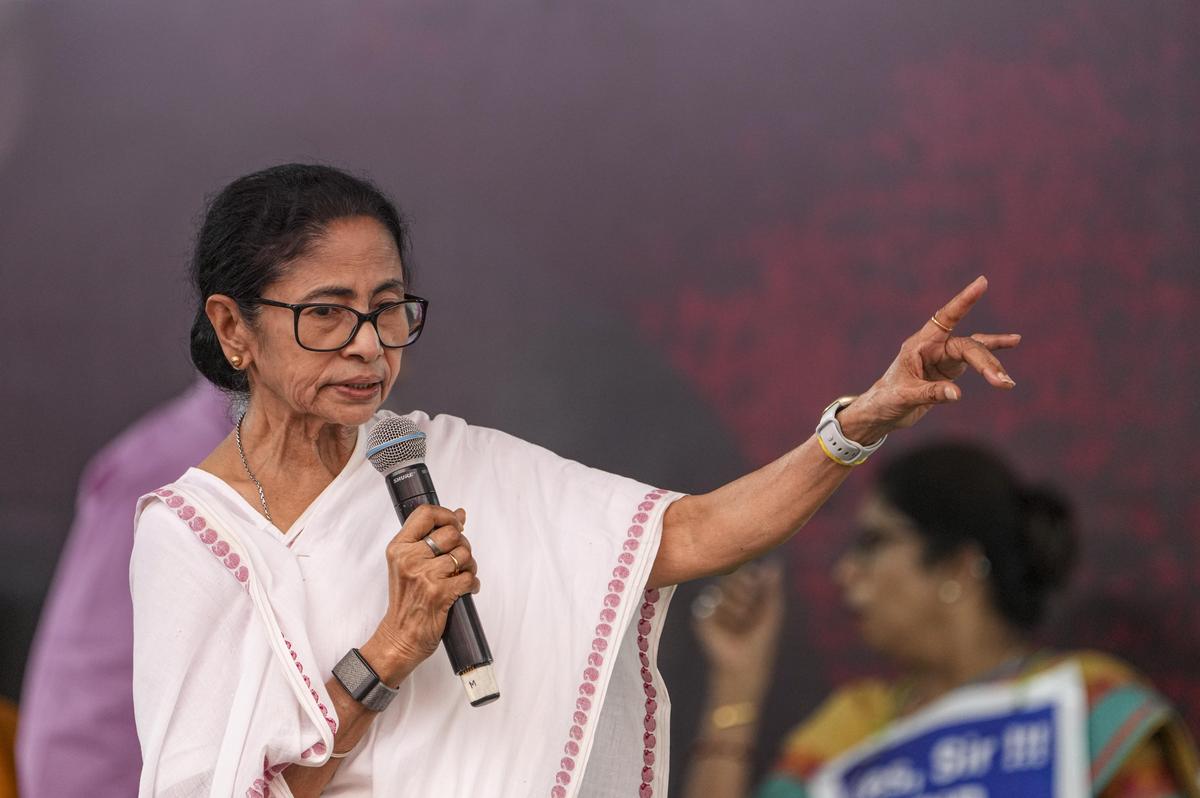
Thirteen States and Union Territories have undergone Special Intensive Revision (SIR) of votes but West Bengal is the only State for which there is an additional layer called special adjudication. Election Commission says the revision is intended to weed out duplicate or outdated entries and add genuine voters. Even when the SIR was conducted in Bihar last years there were controversies and legal problems. The Supreme Court had to intervene. It has become contentious in West Bengal where the ruling Trinamool Congress (TMC) is locked in a bitter standoff with the BJP on one hand and the poll body on the other. West Bengal Chief Minister Mamata Banerjee who is completing 15 years of rule has been fighting the NDA establishment and the Election Commission with all her might.
Gyanesh Kumar, Chief Election Commissioner, said the revision’s aim is to purify the electoral rolls with no eligible voters excluded and no ineligible voters included. But Prime Minister Narendra Modi has been saying that the SIR is intended to identify the infiltrators from Bangladesh whom he calls ‘guspetia.’
Though lakhs of voters were barred from voting in Bihar the number of infiltrators is not known. So is the case with West Bengal. About 90 lakh voters were found to be ineligible to vote in April 23 and April 29 elections. India shares a 4,096 KM border with Bangladesh which is porous and riverine and a significant stretch of the border runs through West Bengal. It is a contentious issue and there have been political jibes among political parties in West Bengal and Assam. Rajiv Gandhi as prime minister had signed an agreement with the student leaders in order to end a prolonged agitation on the issue of infiltrators in Assam.
Modi and Home Minister Amit Shah have been alleging that West Bengal Chief Minister Mamata Banerjee is treating the infiltrators as her vote bank. At the same time there is no SIR in Assam where the problem of infiltration is more acute and where the elections are being conducted now.
The Adjudication Layer: West Bengal’s Unique Electoral Hurdle
Another vote bank of Mamata Banerjee, according to the PM and HM, is the Muslim population in West Bengal. According to the 2011 census the Muslims in West Bengal are 14 percent of the total 17.2 crore Muslims in India. There are some districts which are dominated by Muslims. The opposition parties of India Bloc and observers like Parakala Prabhakar and Yogendra Yadav, contend that most of the 90 lakh voters declared ineligible for voting are Muslims. Constituency-wise data compiled by political parties suggests that around 65 percent of the 27 lakh voters who are doubtful are Muslims. Prabhakar, a reputed economist and political analyst, said at a recent meeting in Kolkata, that SIR is nothing but ‘bloodless political genocide.’ Mamata Banerjee who has been ruling West Bengal since 2011 after defeating the CPM-led Left Front, which was in power for more than three decades, is now fighting the BJP which is concentrating all its might in West Bengal.
The Special Session (April 16-18): Timing and Tactic behind the Women’s Reservation Bill
Even the special parliament session on April 16-18 also is meant to influence the women voters in that State. It is a fact that the real strength of Mamata Banerjee is women and minorities. To influence the women and to hoodwink the opposition regarding the delimitation of seats in legislatures, Modi is planning to introduce Bills related to women reservations and delimitation in Parliament. Both, in fact, are separate. There is unanimity among all the political parties on women reservations. The Congress, the main Opposition party, and other Opposition parties had asked the Union government to implement reservation of 33 percent seats in Lok Sabha and Assemblies for women from 2024 elections itself. But Modi was not prepared at that time. Now in order to influence women voters in West Bengal he is introducing the Women Reservation Bill post haste in a special session.
He has been talking all the while about ‘Nari Shakti Vandana’ and not a word about delimitation. Sonia Gandhi, the Congress leader, in an article published in The Hindu on Monday (13 April 2026) made it clear that the women reservation and delimitation are two different things. She said the PM can organize an all party meeting after the elections are over at the end of this month and arrive at a consensus on delimitation as well. Modi on the other hand is bent upon proving that the opposition parties are opposing the women reservation which is not a fact.
Bengali Asmita vs. The ‘Outsider’ Challenge: Mamata’s Cultural Defense
West Bengal is important for the BJP because it has fourth largest number of seats in Parliament. In the last Assembly elections it had emerged as the second largest party winning about a quarter of seats. Some of the CPM cadres joined the BJP in the course of time. The Congress has become weak. Some important TMC leaders had switched over to the TMC. Amit Shah is camping in West Bengal for a fortnight. The BJP is trying to make use of anti-incumbency for the 15 year rule of Mamata. The TMC leaders are also trying to use the anti-incumbency factor working against Modi.
Mamata challenged Modi to quit as prime minister if he wanted to fight her in the Assembly elections. Bengali leaders in the BJP are no match to Mamata Banerjee. She is the tallest Bengali leader and her asset is Bengali asmita (self-respect). She has been trying to prove that outsiders are attacking Bengalis. Modi has been calling her administration unlawful and dangerous.
Doubtful Voters and the Judiciary: The Struggle for Democratic Inclusion
The burden of proving their eligibility was thrown on the voters. They had submitted enumeration forms linking to the 2002 electoral rolls. Yet the poll panel used a new AI (Artificial Intelligence) driven process and said there are logical discrepancies in their forms. The voters are branded as doubtful if there is spelling mistake in their names or if the age is wrongly recorded. The Supreme Court which organized some judges to adjudicate the voters list has stopped in its track. One of the judges commented that the doubtful voters may not be able to vote this time but it does not mean that they lose their right to vote for ever. The highest court of the land is helpless. Who should help the doubtful voters who cannot vote in spite of their struggle to submit the enumeration forms?
This and many more questions are bothering the people of West Bengal and all democrats in the country while the time to vote is fast approaching. If Mamata can make it with a simple majority on May 4 when the votes are counted, it will be a miracle. If, on the other hand, the BJP wins the elections it is thanks to the Election Commission and its manipulations.
Prominent Journalist
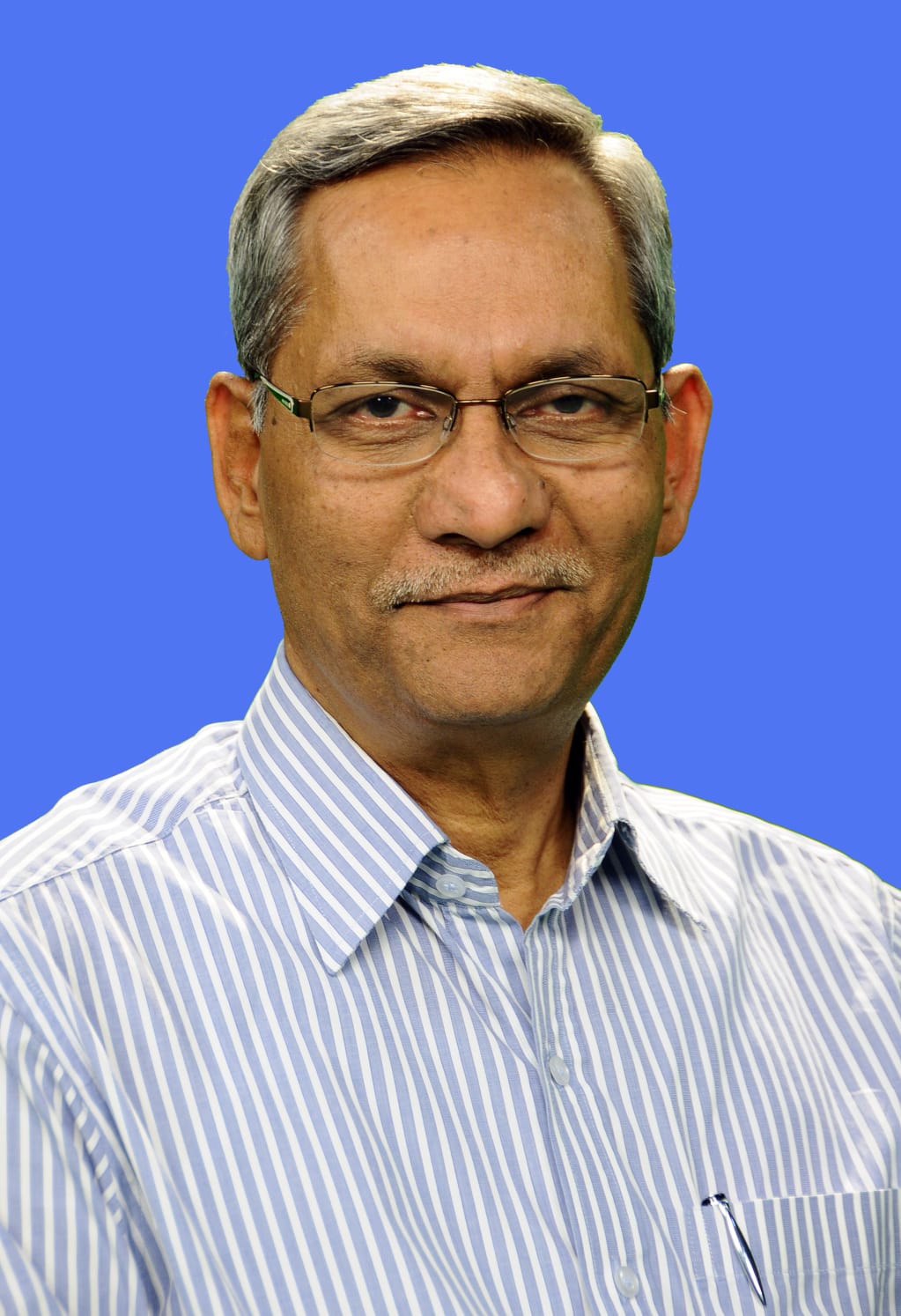
Dr. K. Ramachandra Murthy is a versatile journalist with a distinguished career. Dr. Murthy began his extensive career with Andhra Prabha of The Indian Express group in Bengaluru. He was editor of Udayam, Vaartha and Andhra Jyothy. Dr. Murthy founded and edited HMTV news channel and The Hans India, an English newspaper. He was also editorial director of the Telugu newspaper, Saakshi. He was awarded Ph. D for his research work in rural reporting. Dr. Murthy’s five decades in journalism showcases his influential roles across both print and electronic media. He wrote the political biography of NTR published by Harper Collins.
Email: murthykondubhatla@gmail.com
Mobile: 9908002211