The central government is reportedly preparing a landmark move that could fundamentally reshape India’s democratic landscape. According to recent reports, the government is set to introduce two monumental pieces of legislation in Parliament on the 16th of this month: the Delimitation Bill (Constituency Redrawing) and the Women’s Reservation Bill. The Ministry of Parliamentary Affairs has already communicated with Members of Parliament regarding these developments and has circulated copies of the proposed bills for their review.
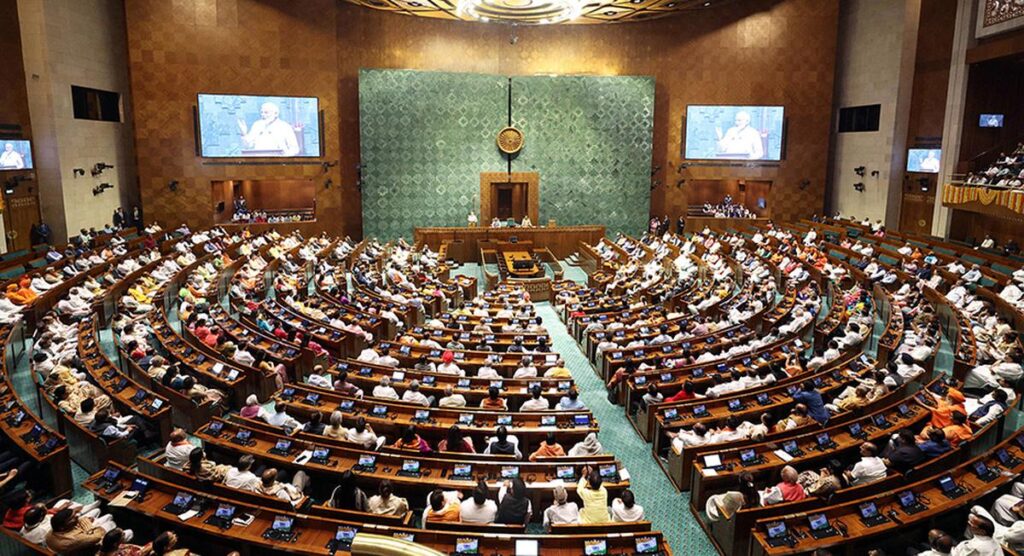
Expansion of the Lok Sabha
Under the provisions of the new Delimitation Bill, the number of Lok Sabha seats is expected to see a massive increase, jumping from the current 543 to approximately 850. This expansion is driven by the need to reflect India’s growing population and ensure better representation for citizens. The projections suggest that seats in the various states could rise to around 815, while Union Territories might see their representation increase to roughly 35. This marks one of the most significant shifts in Indian parliamentary history since the 1970s.
Implementation Timeline and Process
The government’s strategy involves a swift transition following the potential passage of the bill in the Lok Sabha. Once the legislation is approved, the Centre intends to establish a Delimitation Commission. This commission will be tasked with the complex job of redrawing the boundaries of constituencies based on the latest demographic data. The goal is to complete this seat-increasing exercise at a rapid pace so that the new structure can be fully implemented in time for the 2029 General Elections.
Proportional Reservations
A crucial aspect of this seat hike is its impact on reserved categories. Following the increase in total seats, the number of constituencies reserved for Scheduled Castes (SC) and Scheduled Tribes (ST) will also rise proportionately. These adjustments will be strictly based on the population figures derived from the official Census data. By aligning the seats with current population statistics, the government aims to ensure that marginalized communities maintain a fair share of political power in the expanded house.
Impact on State Assemblies
The wave of delimitation is not limited to the national level. Reports suggest that the government is considering a uniform increase of approximately 50% in the number of Lok Sabha and Legislative Assembly seats across all states. This means that if a state currently has 100 Assembly seats, it could potentially see that number rise to 150. This broad-scale expansion is intended to make governance more accessible and to decrease the size of constituencies, allowing elected representatives to focus more closely on the needs of their smaller, more manageable voter bases. Overall, these bills represent a transformative step toward modernization of the Indian electoral system.
Senior Journalist
Anand Gantela is a seasoned media professional with nearly three decades of experience across the spectrum of Indian journalism. Having worked extensively in both print and broadcast media, he has held key positions at renowned outlets such as Prajashakthi, Andhra Bhoomi, Mudra, Media India, Siti Cable, Mana Telugu, and Maa TV. From ground-level reporting to managing news bureaus and overseeing bulletin production, Anand has witnessed the evolution of news firsthand. His wealth of experience reflects a deep understanding of the dynamic and ever- evolving landscape of news reporting.
Email: gantela.anand@gmail.com
Mobile: 7893549889