A House Divided: The Collapse of Legislative Control
The Delhi Detour and the Parliamentary Threat
Former Chief Minister of West Bengal Mamata Banerjee is in an unprecedented crisis. She lost control over the party she founded 28 years ago splitting the Congress. After 15 years of rule, she was thrown out of power in recent elections. One month ago, she had 80 MLAs with her. Now there are only 20 MLAs left. Crisis deepens for Mamata as her parliamentary party is facing a split and majority of the 28 Lok Sabha Members threaten to sit as a separate block and support the NDA government. The NDA government, in turn, is said to be toying with the idea of Delimitation Bill which is other name for Women Reservation Bill. Kalyan Banerjee, representing the MPs who are loyal to Mamata, has called the defectors the traitors and challenged them to resign from Lok Sabha and get elected afresh. In the meanwhile, Mamata was in Delhi and hugged Sonia Gandhi indicating her comeback to INDIA.
Echoes of 2006: The Empty Dharna at Y-Channel
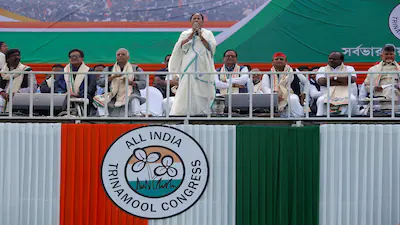
Y Channel in Kolkata has an important place in Mamata’s political journey. That was where she attracted huge crowds in her historic hunger strike in 2006 against Singur land acquisition policy of the Communist regime. On 2 June 2026, Mamata staged a dharna at the same place. The public response was starkly different. There were no crowds. Her aides made calls to all the 80 party MLAs, some 40 MPs and prominent persons in the fields of culture and literature. Most of them did not take the call. Only a handful of old-guard MLAs attended the event.
About five weeks ago, Mamata Banerjee walked14 kms (in spite of her backache) through the streets of Kolkata city in her final election campaign for her Bhabanipur constituency. The ministers, MLAs and persons belonging to film industry jostled for proximity to her making the lives of security personnel miserable. In a week from then, she lost power and was deserted. A defeat in an important election makes the life of the top leader miserable.
The Rapid Descent from Absolute Power
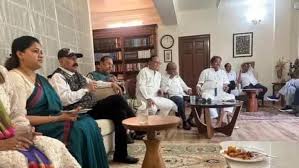
In the Assembly where she was the undisputed leader of the ruling party five weeks ago with 215 members, she was left with 80 members on May 4, four weeks ago, when the election results were declared. Now 58 of her MLAs left her in lurch and formed a separate group under the leadership of Ritabrata Banerjee, a politician who left the CPM after it lost power and joined the TMC. The new speaker who was a BJP man has recognized him as the opposition leader. He rejected Sobhandeb Chattopadhyay, a respectable politician, appointed by Mamata for the post of the opposition leader. The BJP is not interested in admitting the affected TMC MLAs. It already has two thirds majority in Assembly. It is more interested in TMC MPs.
Ideological Void: A Transactional Party in Freefall
TMC had no political or spiritual philosophy. It is more a transactional party. The loyalty and trust beget positions. Power was TMC’s core value and ideology, and once the power has gone away, the party headed for disaster. The TMC leaders do not know how to respond to the changed situation or how to keep the flock together without the glue of power. The most important factor that kept the party growing so far has been the stellar leadership of Mamata Banerjee and her clean and inspiring personal image.
The Nephew Factor: The Rise and Pushback against Abhishek Banerjee
Mamata Banerjee has recognized that the MLAs and MPs are more against her nephew Abhishek Banerjee than her. She has taken some steps to clip the wings of Abhishek who is embroiled in court cases and ED raids. She dissolved all the position s in the party. The TMC is finding itself confronting a question that would have sounded inconceivable just about a month ago: Can a party built around Mamata Banerjee survive when her authority over it is no longer absolute? For nearly three decades, the TMC’s internal order rested on one unquestioned truth: Mamata was the party and the party was Mamata. For the first time in its history that equation is challenged. What began as a rebellion inside the assembly has evolved into a struggle over legislators, a likely spill over in Parliament (Where the TMC has 28 Lok Sabha Members and 13 in Rajya Sabha). Ultimately the fight would be for the control over the ‘Flower and Grass’ symbol and the future of India’s formidable regional party.
The Last Straw: Standing Ovations and Internal Rebellion
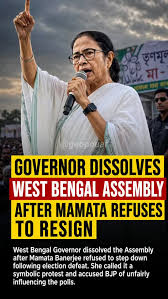
An expelled TMC leader, Sandipan Saha, told media persons that the MLAs were asked to give a standing ovation to Abhishek Banerjee for the excellent work he did during the election campaign. This was the proverbial last straw. Even senior MLAs, who were there in the party when Abhishek was attending the school, were allegedly asked to stand up and applaud. Not only Abhishek Banerjee, they are a few others who behaved in an autocratic fashion.
The first open challenge emerged on May 19 when Ritabrata Banerjee and Sandipan Saha questioned why Falta MLA Jahangir Khan had not been expelled despite publicly withdrawing from the re-poll campaign. Veteran leader Kunal Ghosh also raised similar concerns at the time, though he later distanced himself from the rebel camp.
Abhishek Banerjee is allegedly arrogant and he has control over Mamata. Veterans who walked at will into her home now go through Abhishek’s Camac Street Office to meet her. This development had alienated from her the people who sustained her through Singur, Nandigram and prolonged anti-left struggle. Old associates felt sidelined quietly as ticket distribution and organizational decisions are left in a few hands. The party has lost its organic link to the ground.
Allegations of Electoral Manipulation and the Road Ahead
Mamata appeared strong and dynamic. There was never any doubt about her hold on the party. There were strong reservations about Abhishek but not to the extent of splitting the party and playing to the BJP’s advantage. Anti-incumbency was not visible strikingly even during the polling. A feeling that Bengalis who like the Communists and Mamata would not vote for saffron party has been belied. There is no doubt the elections in Bengal were thoroughly manipulated. More than 90 lakh names were removed from the voters’ list. About 27 lakh voters were waiting for approval of adjudicators. The approval never came and they were helpless watchers while the fortunate ones were voting.
Mamata has crossed 70. There is no doubt about her dynamism. She started a new innings in the opposition. When she defied CPM leadership she was in her 50s. She has indicated that she would be willing to join hands with the Congress in fighting the future elections. In 2024 elections, she was not willing to concede even a couple of seats to Congress. She is prepared to change and launch a fresh fight. It has to be seen how far she would succeed.
Prominent Journalist
Dr. K. Ramachandra Murthy is a versatile journalist with a distinguished career. Dr. Murthy began his extensive career with Andhra Prabha of The Indian Express group in Bengaluru. He was editor of Udayam, Vaartha and Andhra Jyothy. Dr. Murthy founded and edited HMTV news channel and The Hans India, an English newspaper. He was also editorial director of the Telugu newspaper, Saakshi. He was awarded Ph. D for his research work in rural reporting. Dr. Murthy’s five decades in journalism showcases his influential roles across both print and electronic media. He wrote the political biography of NTR published by Harper Collins.
Email: murthykondubhatla@gmail.com
Mobile: 9908002211