Liberation came only after 13months of the Nizam’s Razakars in Telangana
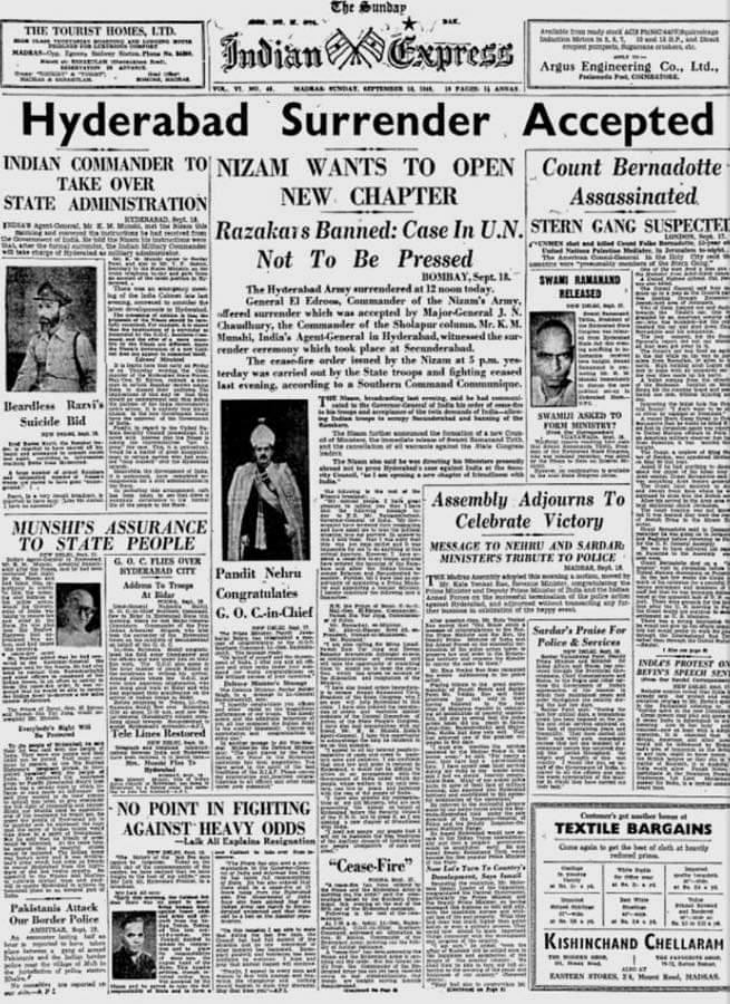
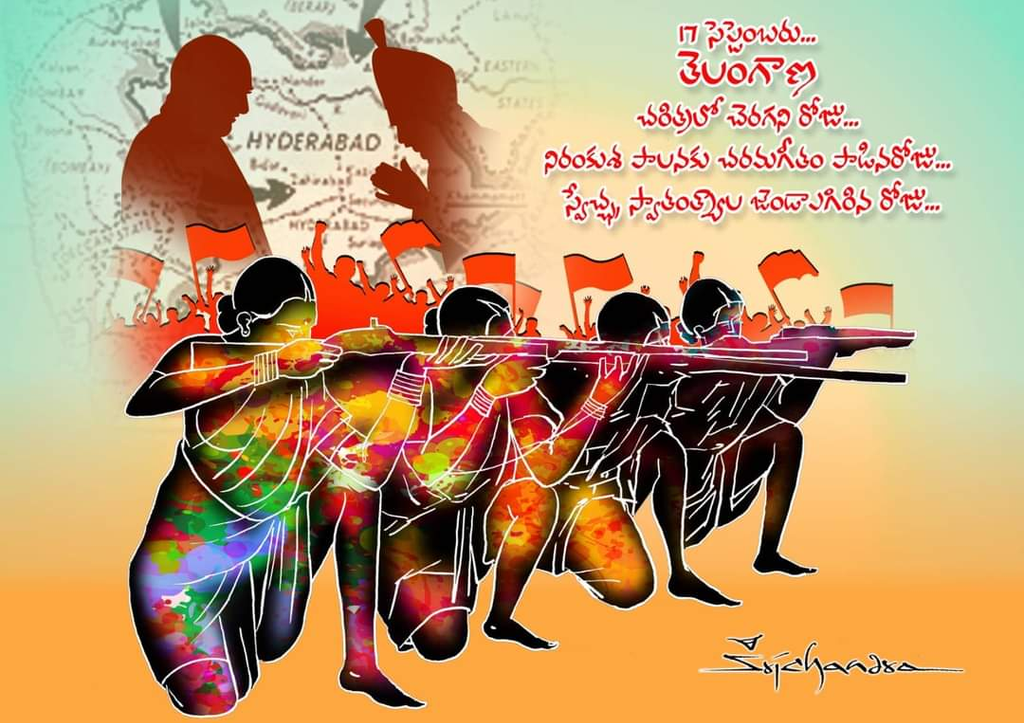
It is difficult to believe that Telangana did not attain independence on 15th August 1947. Because the Hyderabad State was under the cruel rule of the Nizams. After several decades, even after India got it, the people of Telangana were victims of Razakars, private goondas, and the Nizam’s army. It was on 17th September 1948 that, for 13 months, people of Telangana faced murders, rapes, and looting. The story of the liberation of Hyderabad State is generally told through the names of prominent political leaders, underground activists, Arya Samaj workers, Communists, journalists, and those who participated in the armed and non-violent resistance against the Nizam’s rule and the Razakars. But the history of a movement is never made only by its famous leaders. It is also made by ordinary-looking individuals who carried messages, distributed literature, organised young people, protected neighbours, maintained secret communication and repeatedly risked their lives.
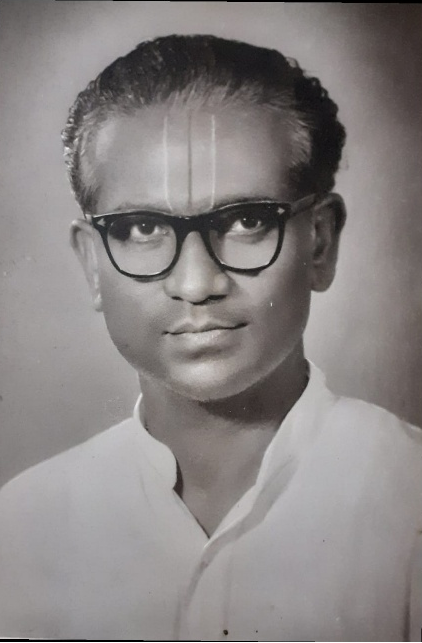
M. S. Acharya — Madabhushanam Srinivasacharya — belonged to this lesser-recorded but important category of freedom fighters. He was a journalist, newspaper agent, organiser, messenger and volunteer who participated in the struggle for the liberation of Hyderabad State. His contribution is particularly significant because his political activity and journalism were inseparable. The newspaper in his hands was not merely a source of information. During the years of repression, it became a vehicle for communication, mobilisation and resistance.
An account written by T. Hayagrivacharya, a freedom fighter and president of the Freedom Fighters Committee, records several episodes from Acharya’s activities during the Hyderabad liberation struggle. The account describes the dangers he faced in distributing newspapers and agitation literature, his work with youth organisations, his role in maintaining communication between border camps and Warangal, and several occasions on which he narrowly escaped death.
When possessing a Telugu newspaper itself was dangerous
The political atmosphere in Hyderabad State during the Razakar period was one of severe repression. Telugu newspapers and literature critical of the Nizam’s administration could attract official hostility. According to the account of Hayagrivacharya, merely possessing or carrying a Telugu newspaper could be treated as an offence against the State.
Some leaders were imprisoned in Warangal, while others operated from camps along the borders of Hyderabad State. Communication between these leaders and people inside the State was difficult and dangerous. It was in this gap that Acharya and his brother undertook a risky but essential task.
They carried pamphlets, newspapers, and messages between the border camps, the people in Warangal, and those who were imprisoned. Agitation literature produced outside the State had to reach people inside it. Information about the movement had to travel in the opposite direction. Every such journey carried the possibility of interception by the Razakars.
Acharya therefore became part of an informal communication network. The printed word travelled through him.
Pamphlets from the border camps were concealed inside newspapers and distributed among the people. This was not routine newspaper circulation. It was clandestine political communication carried out under conditions in which discovery could lead to physical assault, imprisonment or death.
The risks were so serious that Acharya and his associates adopted various protective measures. They shifted houses approximately every two months to avoid the attention of the Razakars. At one stage, when members of the family had left Warangal for safety, Acharya and his brother remained behind and continued their activities.
The family itself therefore became part of the story of the struggle. The decision to remain in Warangal while others moved away was not without consequences.
A cyclostyle machine hidden inside an Andhra Patrika bundle
One of the more remarkable episodes concerns a cyclostyle machine. The struggle required the rapid reproduction of pamphlets, messages, and other literature. Acharya and his associates arranged for a cyclostyle machine to be brought from Madras concealed within a bundle of Andhra Patrika newspapers.
This detail reveals the practical character of the underground movement. Political resistance required not only courage but also communication infrastructure. Information had to be reproduced, copied, and distributed quickly.
Acharya’s position as an Andhra Patrika correspondent and agent gave him an unusual opportunity. He could move newspapers and collect information as part of his journalistic work. At the same time, he could distribute movement literature through the same channels. Journalism and resistance thus became closely connected. He was not merely reporting what was happening. He was also helping information to reach those who needed it.
The border camps were important centres of the Hyderabad liberation movement. Leaders operating from outside the Nizam’s territory attempted to maintain contact with activists and sympathisers inside.
According to Hayagrivacharya’s account, Acharya helped disseminate news and messages from the border camps. Publications such as “Sarathi,” edited by Talluri Ramanujaswamy, and “Hyderabad,” associated with Dr. M. Chenna Reddy, were circulated along with pamphlets and other movement literature.
This work required considerable personal courage. Every newspaper bundle, pamphlet, and message could potentially expose the person carrying it. Acharya’s journalistic identity gave him a public reason for handling newspapers, but the material he circulated often had a purpose beyond ordinary news reporting. He was helping maintain the flow of information in a movement in which censorship and physical intimidation sought to prevent such communication.
Law professor and eminent columnist
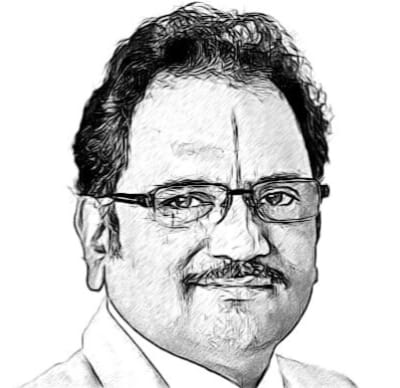
Madabhushi Sridhar Acharyulu, author of 63 books (in Telugu and English), Formerly Central Information Commissioner, Professor of NALSAR University, Bennett University (near Delhi), presently Professor and Advisor, Mahindra University, Hyderabad. Studied in Masoom Ali High School, AVV Junior College, CKM College, and Kakatiya University in Warangal. Madabhushi did LL.M., MCJ., and the highest law degree, LL.D. He won 4 Gold Medals at Kakatiya University and Osmania University.
Email: cicsridhar@gmail.com
Mobile: 8447651505