Real teaching and learning can save hundreds of lives. Lessons, letters and books educate, inspire, and help people to survive and succeed, says the writer.
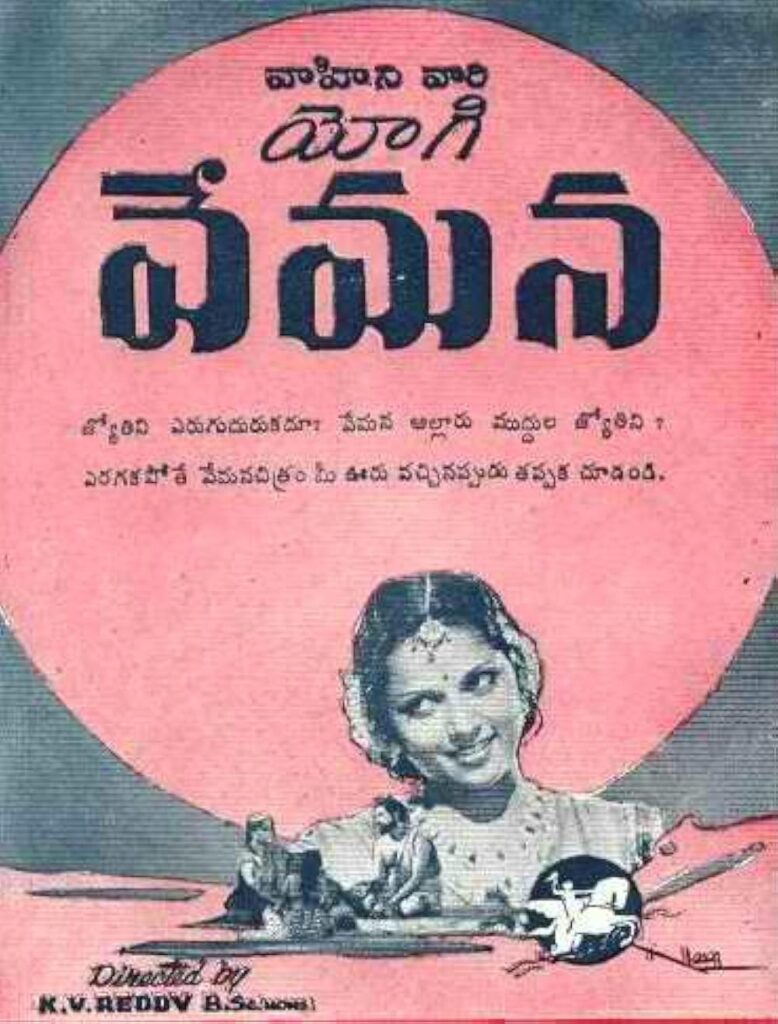
After watching the movie Yogi Vemana, by Padma Shri V. Nagayya (1904–1973), a Telugu matinee idol, about fifty years ago, a boy became a yogi called Mummidivaram Balayogi. Nagayya said he was influenced by Gandhi and took part in the Dandi Satyagraha.
In an essay competition during my school days, I won a Telugu book Siddha Purushulu (Accomplished Personalities), which contained ten or twelve small chapters on great persons. The first chapter was about Ramanuja, who struggled and suffered at his Guru’s Ashram to learn the Tirumantram (sacred mantra). After 18 attempts to reach the Guru’s Ashram with great patience, the Guru recited the mantra in his ear, saying it was top secret. He took a promise that Ramanuja would not reveal it to anyone, warning that if the promise was breached, “you will go to Hell, never get salvation.”
In no time, Ramanuja rushed to the top of the gopuram (temple tower), called hundreds of villagers, and loudly proclaimed the mantra:
“Om Namo Narayanaya,
Shrimannarayana Charanau Sharanam Prapadye,
Shrimate Narayanaya Namaha”
for the benefit of all.
It was an information revolution, a path-breaking disclosure, ignoring age-old official secrecy norms and ending discrimination in access to learning.
No caste, no creed, no religion shall be a bar to learning.
An angry Guru told him he would certainly go to Hell for this great sin. Ramanuja smiled and said: “What if I go, when millions attain salvation?”
The Guru realized that elevating oneself is too small before the mission of elevating millions through divine knowledge. The Guru became a disciple of the Shishya. Ramanuja became Jagadguru—the universal teacher. (April 24 is the birth anniversary of Ramanuja.)
This chapter inspired me deeply.
During my eleventh year, I used to read the galley proofs brought by my father (M.S. Acharya, a journalist and freedom fighter). I used to wonder how Telugu letters were so beautifully chiselled in perfect size, with accurate uniformity, lined up in sequence representing dynamic sentences on wet newsprint sheets.
Their shape, technique, and form—more than their content—created great curiosity. I hesitated to ask my father how those letters were written. When my family moved into a house where a letterpress was established in the front portion, I got the answer.
I learned the dynamics of 54 Telugu letters occupying 360 holes in wooden composing tables. I was educated not only by reading and writing, but also by composing articles for my father’s journal Janadharma (Weekly, 1958–1994).
At the Hyderabad Law School, during my lecture on the crime of attempt to commit suicide, I explained:
Suicide should not be resorted to, as it amounts to a permanent solution to a temporary problem. If a young lover ends his life because his girlfriend did not accept his love, it is an extreme step to tackle a temporary issue. If she later reaches out to say “I love you,” how will he receive it?
One morning in 1997–98, my landline rang. A lady student called me. Her voice was unclear. Somehow she communicated that she had swallowed sleeping pills and still held some in her hand. I asked her to throw them away through the window. I reached her and took her to the hospital. Finally, she survived.
After some time, she told me that she remembered my lesson before slipping into sleep under the influence of pills. It was not me, but the knowledge from that lesson that provoked her to think.
A schoolgirl, Ms. Tilly, alerted her mother and about 200 boarders of a hotel on Phuket Island in Thailand about an impending tsunami. She convinced all to vacate, and within minutes, the hotel was washed away.
No one knew what a tsunami was until it struck fatally in 2006. She was regarded as a “tsunami angel” for saving 200 families. When the media asked how she knew in advance, she said:
“I remembered the graphic narration of my geography teacher before the vacation in my school.”
Real teaching and learning can save hundreds of lives.
When Anna Hazare was passing through a very frustrating phase, afflicted by a cynical thought of ending life, he looked at a cover photo of Swami Vivekananda put up in a book stall at New Delhi Railway Station. He read it. Later, he said that the Vivekananda book had completely changed the course of his life. (But the episode of Anna Hazare is part of a game to come to power, unfortunately)
Lessons, letters, and books educate, inspire, and help people to survive and succeed in life.
World Book and Copyright Day, also known as World Book DayApril 23rd is symbolic in world literature, marking the death anniversary of renowned authors William Shakespeare, Miguel Cervantes, and Inca Garcilaso de la Vega.The day aims to promote the enjoyment of books, support publishing, and protect intellectual property through copyright.The initiative was created by UNESCO and first celebrated on April 23, 1995.Global Recognition: It is recognized in over 100 countries and involves schools, libraries, and publishers.World Book Capital: Each year, UNESCO and international book trade organizations choose a city to be the World Book Capital.UK Exception: In the UK and Ireland, a separate World Book Day is observed on the first Thursday in March. Significance:
Reading is championed as a vital tool for education, transmitting culture, and fostering empathy, particularly in children. The day often highlights the importance of protecting authors’ rights and combating piracy. Themes: Themes often focus on literacy, indigenous languages, and the importance of literature.Activities: Events include book donations, author visits to schools, and library initiatives designed to make books accessible to all.
(Based on my talk on World Book Day, April 23, at Kendriya Sahitya Academy, New Delhi.)
Law professor and eminent columnist
Madabhushi Sridhar Acharyulu, author of 63 books (in Telugu and English), Formerly Central Information Commissioner, Professor of NALSAR University, Bennett University (near Delhi), presently Professor and Advisor, Mahindra University, Hyderabad. Studied in Masoom Ali High School, AVV Junior College, CKM College, and Kakatiya University in Warangal. Madabhushi did LL.M., MCJ., and the highest law degree, LL.D. He won 4 Gold Medals at Kakatiya University and Osmania University.
Email: cicsridhar@gmail.com
Mobile: 8447651505