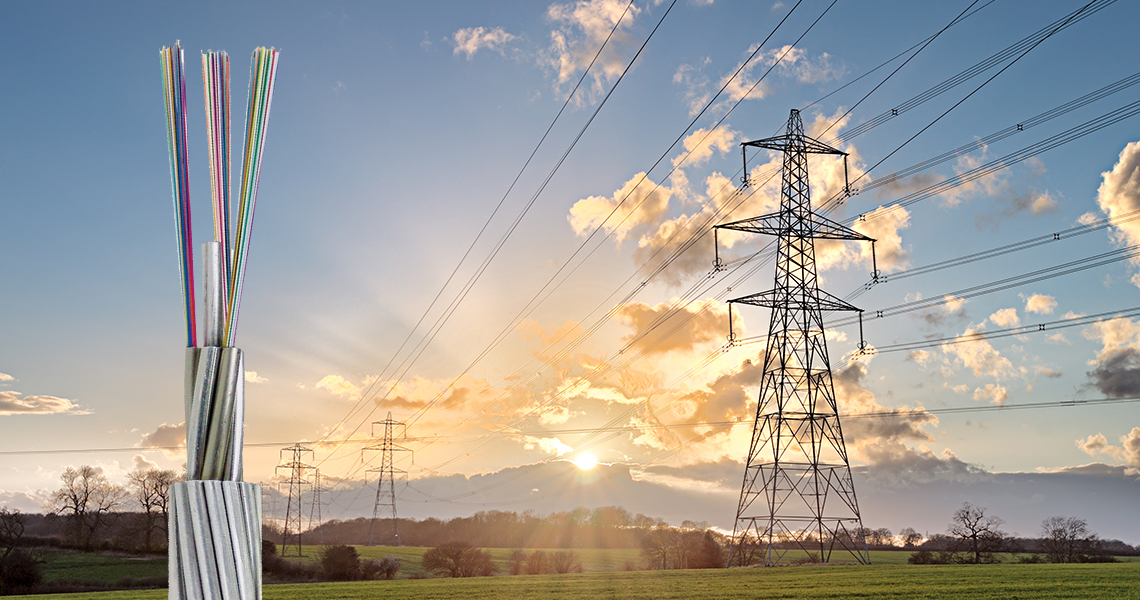
- OPGW wires on POWERGRID lines
- Powertel is the brand name of Power Grid
- Benefits to Telecom and Cell Phone Industry
- It has the feature of lightening protection
The installation of Optical Ground Wire (OPGW) on high-tension power grid lines has become a true “game-changer” for the Indian telecommunications and power sectors. By leveraging the vast infrastructure of the Power Grid Corporation of India Limited (POWERGRID), India has turned its electricity network into a high-speed data backbone that maximizes both efficiency and profit. The revenue of POWERGRID is expected high with the OPGW.
The Rise of Powertel and Power Grid Teleservices

Powertel is the brand name for the telecommunications arm of POWERGRID. Operating as a wholly-owned subsidiary under Power Grid Teleservices Limited, it leverages a massive national fiber optic network. By using OPGW, Powertel offers critical services such as bandwidth leasing, MPLS (Multi-Protocol Label Switching) VPN, and high-speed internet connectivity to government bodies, telecom operators, and private enterprises. For telecom giants like Jio, Airtel, and BSNL, OPGW is essential for backhaul connectivity the link between local cell towers and the core internet backbone. The 5G towers require massive bandwidth OPGW provides the “highway” necessary to connect remote towers to central data centers.
Bridging the Digital Divide
In rural India, digging trenches for underground fiber is often too expensive or geographically difficult. Since power lines already reach these remote villages, OPGW brings high-speed internet to areas that were previously digitally isolated. Unlike underground cables, which are frequently cut during road construction, overhead OPGW provides a secure backup route with 99.9% availability.
From Simple Earth Wires to OPGW
- It has the feature of lightening protection
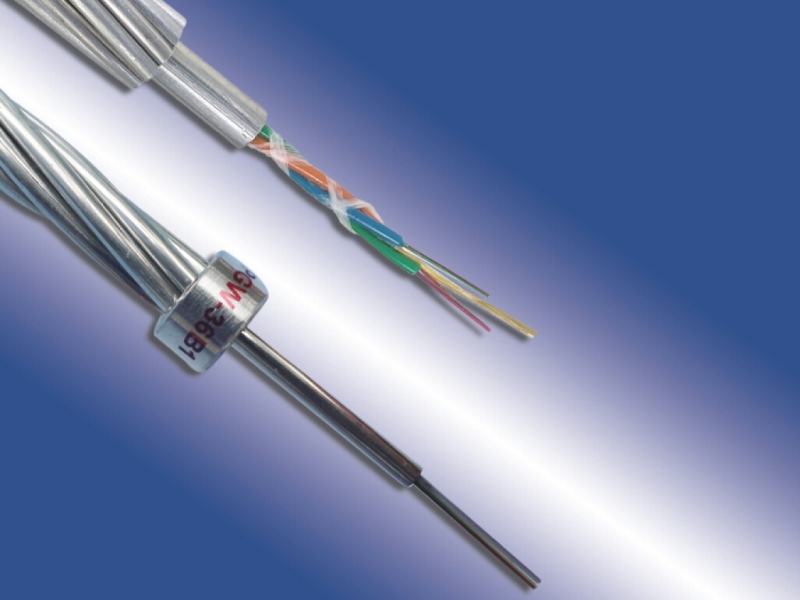
While OPGW technology was patented in the late 1970s, POWERGRID began its serious implementation in 2001 following a government decision to share infrastructure costs between power and telecom projects. The transition from traditional Galvanized Steel Earth Wires to OPGW represents a significant technological leap. Used solely for lightning protection and grounding. A multi-functional cable made of aluminum-clad steel with a fiber optic core. It sits at the highest point of the tower, acting as a continuous lightning rod while carrying terabits of data per second, completely immune to electromagnetic interference. Now, it is not only lightening protection but also useful to telecom services.
A Milestone Achievement in the Indian Context
India now operates one of the largest overhead fiber optic networks in the world. This is a major milestone for several reasons. POWERGRID operates over 100,000 kilometers of OPGW. Because the “Right of Way” (land) and towers already exist, there is no need for expensive land acquisition. This saves 60–70% of the costs associated with traditional underground fiber. A prime example is the 400kV Guntakal-Kadapa line in Andhra Pradesh. This vital corridor connects the energy-rich Rayalaseema region. Recent OPGW upgrades allow the grid to “talk” to itself in real-time, balancing loads and preventing blackouts.
A Synergy of Sectors
By late 2025, India surpassed 42 lakh route kilometers of total optical fiber. OPGW serves as the high-voltage backbone of this achievement. It creates a perfect synergy. the Power Sector gains SCADA and remote monitoring capabilities necessary for integrating fluctuating renewable energy like solar and wind, while the Telecom Sector receives a “plug-and-play” infrastructure to rapidly deploy 4G and 5G services nationwide.
Editor, Prime Post
Ravindra Seshu Amaravadi, is a senior journalist with 38 years of experience in Telugu, English news papers and electronic media. He worked in Udayam as a sub-editor and reporter. Later, he was associated with Andhra Pradesh Times, Gemini news, Deccan Chronicle, HMTV and The Hans India. Earlier, he was involved in the research work of All India Kisan Sabha on suicides of cotton farmers. In Deccan Chronicle, he exposed the problems of subabul and chilli farmers and malpractices that took place in various government departments.
Email: ravindraseshu7@gmail.com
Mobile: 9063718675