- Major Blow to Maoists
- Focuses on the primary event
- Surrender Trend and Cascading Effect on the Movement
- Decimation of the CPI (Maoist) Leadership: Discusses the wider implications.
- Loss of the “Last Hope” for Revival
In all, thirteen leaders and cadres of the CPI (Maoist), including the most feared Hidma and his wife, were eliminated by the security forces in Andhra Pradesh in their operations on Tuesday and Wednesday. The AP intelligence agency and the security forces have dealt a major blow to the Maoists. The credit of getting rid of Hidma, the last hurdle for the success of Operation Kagar, goes to the AP security forces and intelligence network.
Significance for Operation Kagar – Removing the Main Hurdle

The killing of top Maoist commander Madvi Hidma, a central committee member and South Bastar battalion commander of the banned CPI (Maoist), along with five others including his wife in an encounter in Alluri Sitharamaraju district of Andhra Pradesh on Tuesday, is a very important development. Hidma’s wife Madakam Raje, a member of the Chhattisgarh State Zonal Committee, had been giving inputs to her husband for planning dare-devil attacks on the security forces. Though there are four months to the deadline of 31 March 2026 set by Home Minister Amit Shah, the security forces are likely to reach their goal faster than expected with the elimination of Hidma.
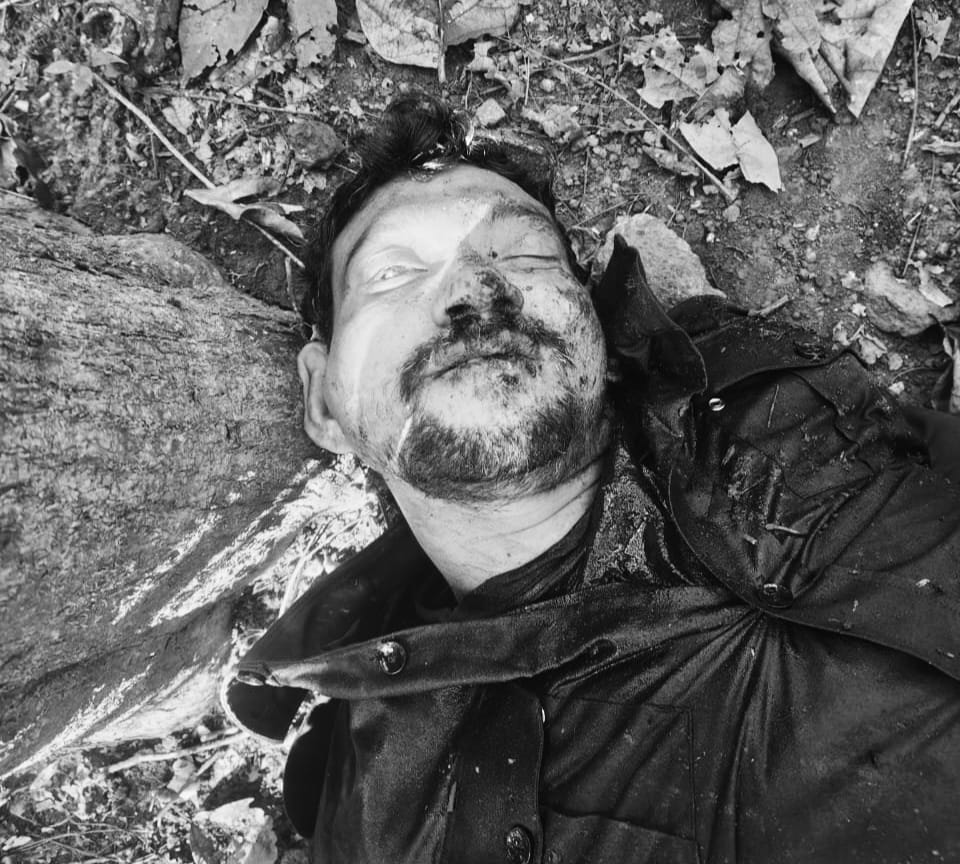
The gunfight between the Maoists and the security forces is said to have taken place between 6.30 am and 7 am near Nelloru village in the Maredumilli Agency area. The other four Maoists have been identified as Deve, Lakmal, Malla, and Kamlu, all Hidma’s bodyguards. According to Andhra Pradesh Intelligence Chief Mahesh Chandra Laddha, the six bodies were recovered and shifted to Rampachodavaram Area Hospital for post-mortem. Central Reserve Police Force (CRPF) battalions, the Commando Battalion for Resolute Action (COBRA), the Border Security Force, Indo-Tibetan Border Police, Chhattisgarh police, and its District Reserve Guards (new name for Salwa Judum, which was supposed to have been dispensed with following the historic judgment of Justice Sudershan Reddy in 2011), have been taking part in the task of eliminating Maoists. The Organisation for Counter Terrorist Operation (OCTOPUS) and the AP police personnel have been doing an extraordinary job for about forty days.
Seven more Maoists, including the key IED expert Tech Shankar, were killed on Wednesday in an encounter in Andhra Pradesh’s Alluri Sitharamaraju district, only a day after top Maoist Hidma and his wife with their bodyguards were killed. Those who were killed were identified as Meturi Joga Rao alias Tech Shankar, native of Bathupuram in Srikakulam district of AP; Jyothi alias Saritha, who earlier worked as a guard commander to former Maoist chief Nambala Kesava Rao; Suresh alias Ramesh, who earlier worked in Jagargonda in Chhattisgarh; Lokesh alias Ganesh, earlier Jagargonda militia commander; Sainu alias Vasu, Deputy Commander of Jagargonda; Anitha; and Shammi, who were earlier with the Jagargonda dalam. The encounter was part of anti-Maoist operations undertaken by AP police. They have arrested around 50 Maoist cadres across Krishna, Eluru, NTR Vijayawada, Kakinada, and Dr. BR Ambedkar Konaseema districts. The arrested include high-ranking special zonal committee members, divisional and area committee leaders, militants who deal with logistics, communication, and armed platoon members. Most of them are linked to Hidma.
Details his background and leadership

Hidma was born some forty-four years ago at Puvarti village of Sukma district in Chhattisgarh. He created a niche for himself by mounting dare-devil attacks on security forces, thus winning the confidence of the cadres of the Maoist party. He built his own intelligence network which helped him to know the moves by the security forces. He inflicted heavy casualties on the forces. He came to command the People’s Liberation Guerrilla Army thanks to his dedication, discipline, strategic skills, and dynamism. Then he joined the central committee, which was dominated by leaders from Telangana and Andhra Pradesh.
Context and Impact: Hidma’s Profile and the Movement’s Future
Hidma had done an extraordinary job as a Maoist leader. His group was linked to several major attacks on security forces, including the massacre of 76 CRPF personnel in 2010 and the killing of 27 personnel in the 2013 Jhiram Ghati attack. The attacks by Hidma and his men were responsible for the killing of 22 personnel in the 2017 Sukma ambush and the 2021 Tarrem attack.
In mid-October, about 258 Maoists had surrendered in Gadchiroli and Jagdalpur. It had a cascading effect on the movement. Many Maoist leaders, including Mallojula Venugopal Rao alias Sonu, had laid down their arms and joined the mainstream. Hidma encouraged his daughter to surrender. He was also understood to have been planning to surrender at an opportune time. He had a Rs. 1 crore reward on his head. The CPI (Maoist), which had about 42 Central Committee members in 2004, now has only 12. The CC placed all its hopes for the revival of the movement on Hidma. With his death, the senior leaders left behind in the party are now clueless.
The security officers and the Union Home Ministry officials monitoring Operation Kagar consider Hidma’s killing as a major success. Union Home Minister Amit Shah commended the job done by the security forces. The Maoists have lost their most important leader.
Prominent Journalist
Dr. K. Ramachandra Murthy is a versatile journalist with a distinguished career. Dr. Murthy began his extensive career with Andhra Prabha of The Indian Express group in Bengaluru. He was editor of Udayam, Vaartha and Andhra Jyothy. Dr. Murthy founded and edited HMTV news channel and The Hans India, an English newspaper. He was also editorial director of the Telugu newspaper, Saakshi. He was awarded Ph. D for his research work in rural reporting. Dr. Murthy’s five decades in journalism showcases his influential roles across both print and electronic media. He wrote the political biography of NTR published by Harper Collins.
Email: murthykondubhatla@gmail.com
Mobile: 9908002211