The Semantics of Deletion: “ASDD” vs. Actual Removal
Voters are relatively safe if your name appears on the draft roll, unless someone files a Form 7 objection. Being on the draft list usually carries you into the final list. The voter, who receive a notice flagging you as a suspect citizen or suspect voter, though you still have a chance to clear your status. It means the voter’s name is removed from the roll. Auditing deletion flows reveals how much of this comes down to semantics. After a journalist reported on an audit and a press conference took place, we shared a combined report covering two audits.
A journalist from a prominent media house pointed out that instead of writing “deleted voter,” their report had marked entries as “ASDD.” The journalist argued that being marked “ASDD” sounded temporary—something a voter could easily fix with a BLO—and asked why so much fuss was being made over it. That conversation made me realize how easily using bureaucratic or Election Commission terminology downplays the real gravity of the situation. It is not merely a technical “ASDD” tag or a routine notice; practically speaking, either you are a suspect voter or you are deleted.
Ground Audits in Tirumalagiri and Musheerabad: What the Numbers Miss
Prioritizing people who received notices or appeared on ASDD lists for ground audits in Tirumalagiri turned up glaring gaps. Blank Notices: Eleven people in Tirumalagiri received notices instructing them to appear, yet the notices were blank and gave no reason for why they had been issued. Wrongful Deletions: Out of 270 people on the ASDD list whom we managed to meet in Tirumalagiri, 43 turned out to be wrongly deleted—across just two booths alone. Unaware Voters: In those two booths, many voters who had been marked as deleted did not even know their names were removed. Media headlines frequently cite big numbers of “absent,” “shifted,” or “duplicate” voters, yet when you sample just two booths, those labels often do not hold up. We found people genuinely marked “shifted” who had actually passed away, people who had shifted who were listed as deceased at their old address, and voters flagged as “duplicate” without realizing they had two entries. Many had gotten a second voter ID years after marriage or moving to Hyderabad for work without cancelling their earlier registration elsewhere in Telangana.
When Booth Level Officers (BLOs) approached them, many honest, law-abiding citizens declined to fill out a new enumeration form, saying they already had a voter ID elsewhere. Logically, those cases should have been flagged as duplicates. Instead, they were marked Untraceable or Absent because of a blanket state-level instruction to BLOs: if an enumeration form was issued and not returned, mark the voter “Untraceable” or “Absent.” Regardless of whether an ASDD mark is right or wrong, even being marked creates its own category of trouble. Across different states, one major consequence of this Special Intensive Revision (SIR) exercise is that it cut across class lines—creating a level of public panic and seriousness that made citizens sit up and take notice.
ECI Shifts, Form 6 Confusion, and the Two-Track Voter Roll Divide
Few exercises in the Election Commission of India‘s (ECI) history have been as embarrassing as the current revision process. Following investigative reports raising questions over friction among Election Commissioners and unauthorized or irregular process changes on the ECINET portal, the stream of press releases, orders, and clarifications to Chief Electoral Officers between 23 September and 6 November felt like the ECI undermining its own framework. In our audit, roughly 85 to 90 voters—over 40 in Tirumalagiri and more than 40 in Musheerabad—appeared to be wrongly deleted. When affected voters attended public hearings and spoke out, the guidance given was to file Form 6, echoing what had been stated before the ECI and the Supreme Court. People even reacted with dark humor—asking why they had to sign as first-time voters when they had been voting there for years or wondering if they had somehow died.
Yet within roughly ten days, right around 6 November, the stance shifted abruptly: instead of requiring Form 6, enumeration forms were to be provided directly, with instructions to reach out via whatever channels were available—WhatsApp, phone calls, or other means—after earlier lacking instructions to contact voters through mobile numbers or WhatsApp. Watching those orders unfold made the underlying flaws of the exercise hard to miss.
There is also a structural divide between elections that gets too little public attention
There is a clear constitutional divide in how elections are governed in India. The Election Commission of India (ECI) oversees elections to Parliament and State Assemblies—namely the Lok Sabha and Vidhan Sabha—deriving its authority from Article 324 of the Constitution. In contrast, elections for local bodies, including Panchayats, Municipalities, and Municipal Corporations, fall under the jurisdiction of the State Election Commission (SEC), which operates under Article 243. Both provisions use nearly identical language regarding superintendence, direction, and control over electoral rolls and the conduct of elections, yet their jurisdictions are distinct.
Reports—such as findings cited from the PUCL—point to stark mismatches in states where local body rolls were being prepared alongside revision lists: around 26 lakh voters in Rajasthan and 3.38 crore in Uttar Pradesh showing discrepancies between lists, alongside voters appearing on one list but missing from the other. Effectively, citizens end up split across two different voter tracks for national/state elections versus local elections. In BJP-governed states like Rajasthan and Uttar Pradesh—where leaders like Yogi Adityanath have raised alarms over large-scale deletions—state governments shape how their State Election Commissions operate under state law. Some states prepare local body rolls independently, while others adopt the ECI roll directly.
In Telangana, ahead of upcoming GHMC elections across three municipal corporations—under the Gram Panchayat Act for rural bodies, the Municipalities Act for municipalities and other corporations, and the new Core Act replacing the GHMC Act for the three Hyderabad municipal corporations—the statutory framework aligns local roll preparation with the ECI roll. That leaves Congress-ruled states—which have been calling out the revision process and raising allegations of “vote chori”—facing a major policy decision on how they will conduct their upcoming local body elections.
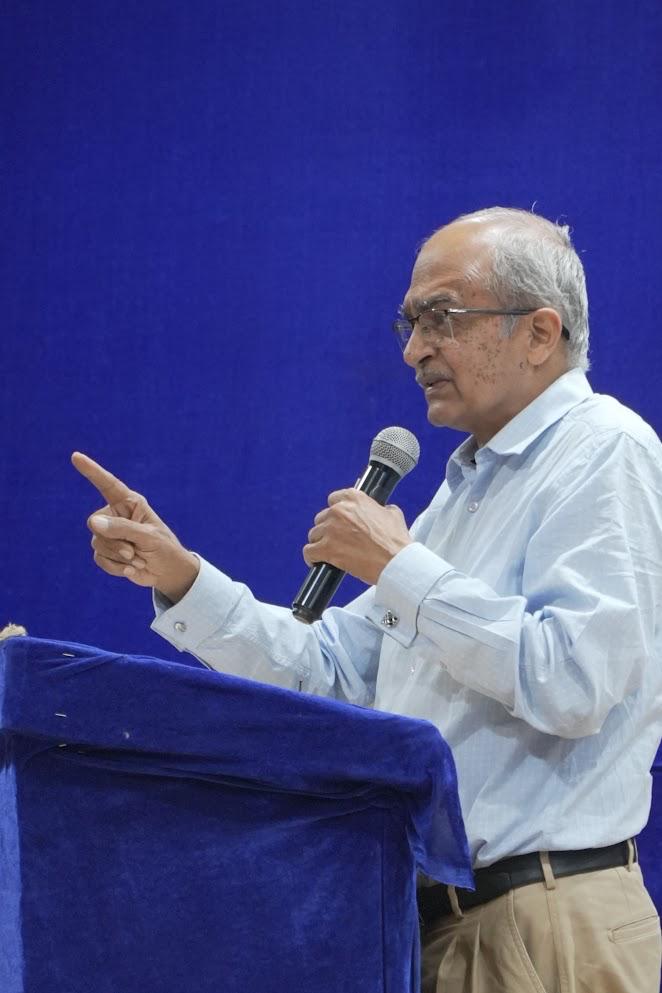
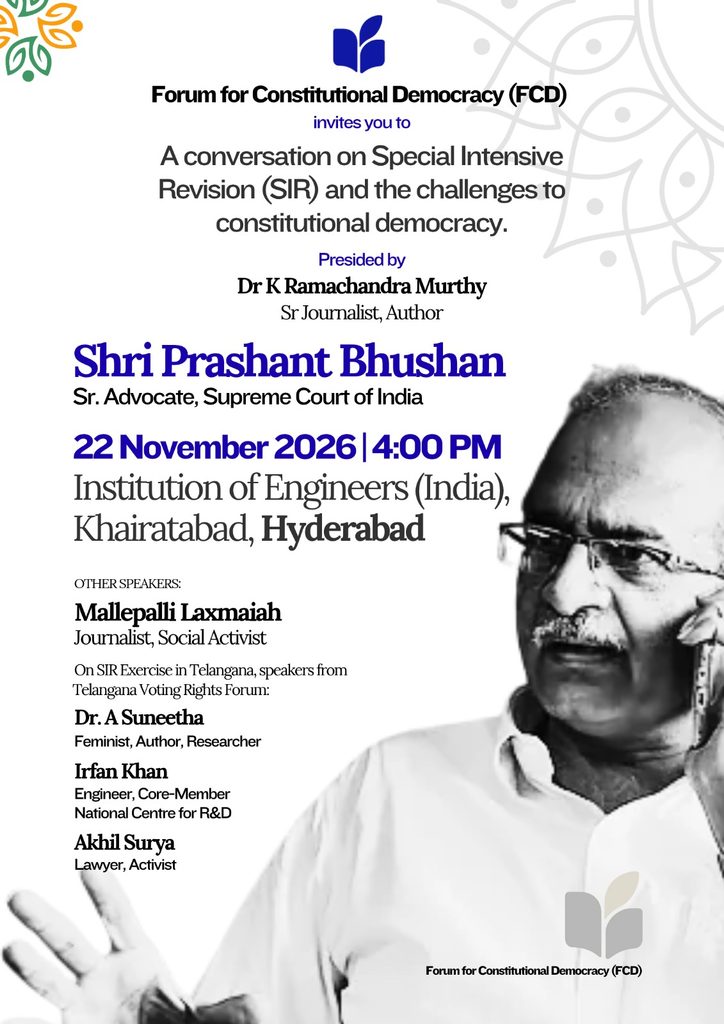
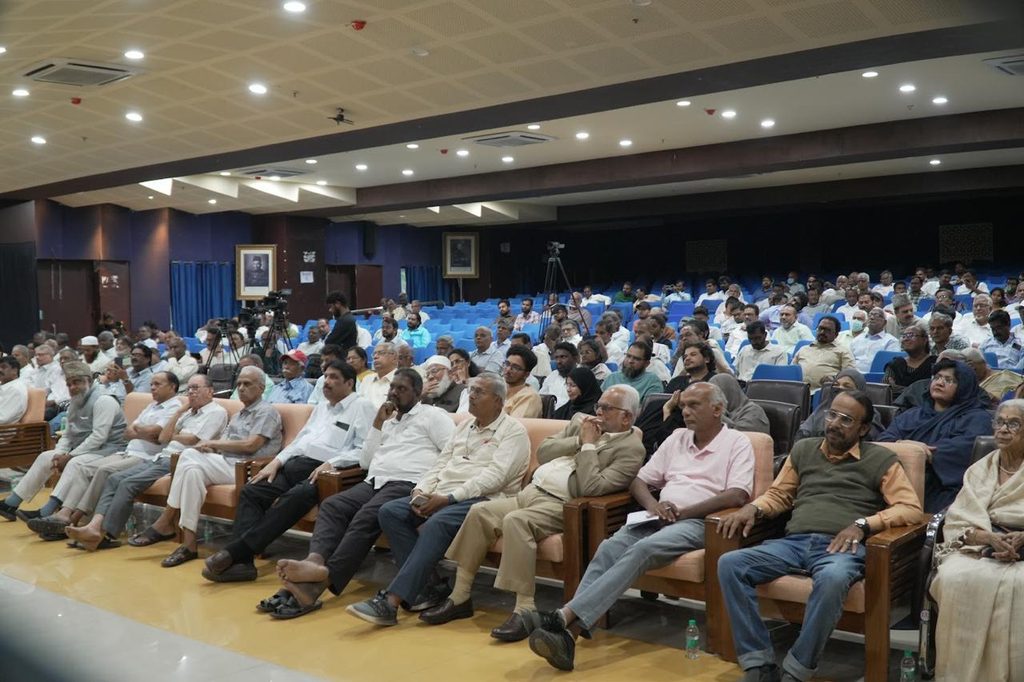
(Akhil Surya, advocate and activist, delivered a lecture on ‘Special Intensive Revision (SIR) and the Challenges to Constitutional Democracy’ at a meeting organized by the Forum for Constitutional Democracy (FCD) at the Institution of Engineers (India), Khairatabad, Hyderabad, on November 22, 2026)

With a journalistic long journey, we bring you https://primepost.news, a dynamic platform committed to unraveling the intricate tapestry of Indian politics, particularly delving deep into the heart of Telangana and Andhra Pradesh. Our blog is not just a source of news; it’s a reservoir of insights, analysis, and thought-provoking reviews.