Trump’s Global Proxies: A Tale of Two Elections
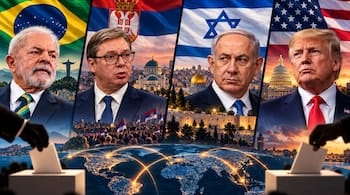
The elections held in Brazil and Israel have given mixed results for Trump. While the candidate he had sponsored in Brazil has dramatically lost his elections, his candidate in Israel, Netanyahu, has managed to cling to power though with reduced numbers. The victory of Brazil’s 80-years old president Luiz Inacio Lula da Silva was unexpected since no candidate who lost in the first round had ever won in Brazil. President Lula lost in the first round of elections on October 4 to Flavio Bolsonaro, the rightist leader. Flavio’s Liberal Party has improved its position in both houses of Congress while right-wing candidates won several provincial elections. In Israel, the Palestinian Arab parties have won a record 19 seats making it a compulsion for the former military chief Gadi Eisenkot heading the opposition to go for an unlikely tie-up with them. If he refuses to have an alliance with the Arab parties, he will be forced to support from outside Netanyahu’s minority government.
Welfare measures and digital outreach turn the tide
Netanyahu’s party won 53 out of 120 seats in Israeli parliament, Knesset.
Let us first analyze the results in Brazil. Lula did not give up after he lost the first round. He has redoubled his campaign, spoke of people’s welfare, economic issues and persuaded more people to turn up for Sunday polls and managed to win 51.7 % of the vote against Flavio Bolsonaro’s 48.2 %. Lula was a former metal worker who rose as a trade union leader before becoming the president in 2003. He would be finishing 16 years of rule as president at the end of his term which is a record in Brazilian history. As against the humble background of Lula, his opponent Bolsonaro is from a political family whose father Jair Bolsonaro lost his presidential elections four years ago to Lula with a smaller majority. The father was sentenced to 27-year jail term for trying to overthrow Lula’s elected government in 2022. His son Flavio has campaigned for his release and punishing the Supreme Court judges who sentenced his father. With this campaign which gave rise to insecurity feeling, the people outside the rightist ideology got united and voted for Lula. Lula, in his turn, unleashed social media campaign to win over younger generation. He highlighted the threat of rightists coming to power to human rights and democracy. A WhatsApp channel called ‘Lula’s Army’ with 11 million followers was successful in spreading his message. A stable economic situation in the country and falling unemployment rate in the last three and half years have helped to improve Lula’s credibility. He also announced cash dole-out scheme for the poor.
A Right-Wing Congress poses Challenges for Lula
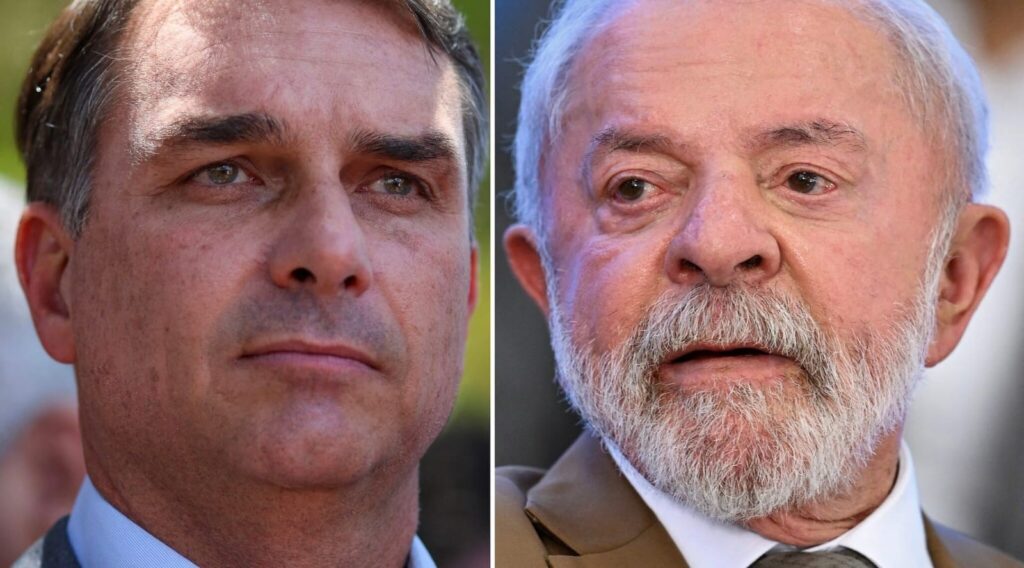
Lula’s win bucks the recent trend in South America where elections returned the right-wingers who were close to President Trump. Javier Milei is in power in Argentina while recent presidential elections in Chile and Columbia also saw conservative presidents coming back to power. Lula’s opponent Flavio Bolsonaro has protested against the declaration of results seeking an annulment. The polling hours were extended by two hours that evening after campaign teams from both sides cited inclement weather and transport problems that had prevented the voters from reaching polling stations in time. The opposition had to reconcile to the defeat.
Lula will have to work with a right-wing-controlled Congress to advance his agenda. He has to marshal his persuasive skill to manage the opposition. Leftist Spanish Prime Minister Pedro Sanches who has called a snap poll in the coming weeks against an emboldened right declared, “What happened in Brazil will happen in Spain,” adding “The comeback of global progressivism has just begun.”
“Lula’s victory is a major signal of hope,” said Dominique de Villepin, a former French Prime Minister. In the French elections scheduled next year, the right is expected to win. But there have been widespread protests by the youth there giving hope to the Left.
Netanyahu survives amid mounting criticism
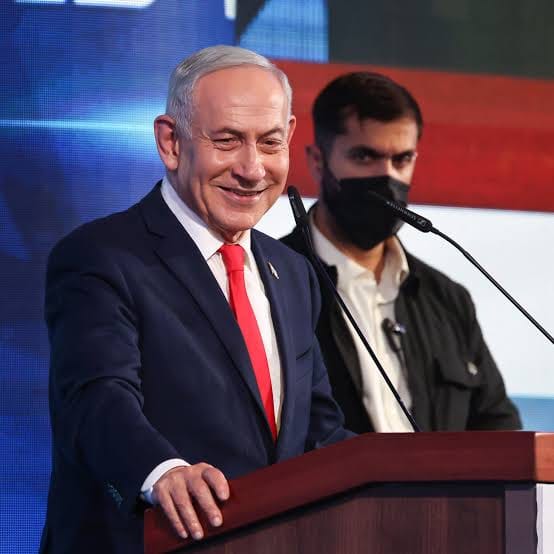
Benjamin Netanyahu was the main player in October 27 elections where he stood the test of approval by the people of Israel to his role in genocidal war in Gaza following Hamas’s October 7 attack. The opposition promised to hold him accountable for his failures which made the attack possible, the genocide in Gaza and his repeated statement that Palestinian state would not be formed as long as he is in power. His war on Gaza has killed some 70,000 Palestinians, including 20,000 children. Israel’s occupation forces tightened their control on West Bank. Netanyahu’s war on Iran has been disastrous. He exploited Israel’s security concerns for his political gains. As an incumbent, Netanyahu will remain in power until an alternative government is formed. Otherwise, his coalition would continue in power.
Arab parties emerges as Kingmakers in Israel
This election was a referendum on Netanyahu with forces supporting and opposing him splitting Israel’s Jewish and Zionist communities down to the middle. That is a reflection on how Israel was polarized after the Hamas attack. Because of the split, religious Zionism has come to play a decisive role in place of Left movement which was strong until the attack. That is how the anti-Netanyahu bloc has pledged not to have a tie-up with the Arab parties although that is the only option available to replace Netanyahu. In a way it was the Prime Minister’s plan to shift Israel politics to the right altogether and impress upon the people that only he can safeguard the interests of Israel. A vote against him would be as good as a vote for the enemies of the country. This attitude of Netanyahu has deeply divided the Israel society and led to the consolidation of Arabs who constitute about 20 percent of Israeli voters.
Trumph-Netanyahu ties raise the spectre of renewed conflict
The two-nation theory, backed by international community, is not favoured by Netanyahu. Palestinians in both Gaza and West Bank are sandwiched between the weakened Palestinian authority and the militant Hamas who want to annihilate Israel. This climate helps Netanyahu to perpetuate himself. As long as Netanyahu is in power, relaunching the war against Iran is a distinct possibility. If US President Trump, Netanyahu’s solid backer, manages to win the midterm polls due in November and Netanyahu holds on to power, the hostilities in West Asia are likely to erupt sooner than later.

Prominent Journalist
Dr. K. Ramachandra Murthy is a versatile journalist with a distinguished career. Dr. Murthy began his extensive career with Andhra Prabha of The Indian Express group in Bengaluru. He was editor of Udayam, Vaartha and Andhra Jyothy. Dr. Murthy founded and edited HMTV news channel and The Hans India, an English newspaper. He was also editorial director of the Telugu newspaper, Saakshi. He was awarded Ph. D for his research work in rural reporting. Dr. Murthy’s five decades in journalism showcases his influential roles across both print and electronic media. He wrote the political biography of NTR published by Harper Collins.
Email: murthykondubhatla@gmail.com
Mobile: 9908002211