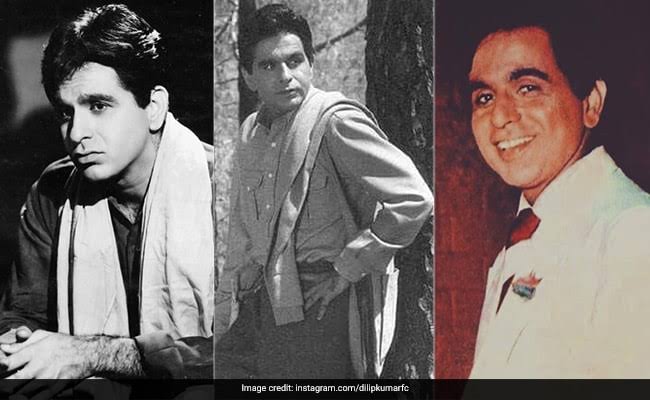
The Life, Craft, and Unfading Legacy of Dilip Kumar
Mohammed Yusuf Khan, universally adored as Dilip Kumar, remains an unmatched titan in the history of Indian cinema. Born on 11 December 1922 in Peshawar, British India, and passing away on 7 July 2021 in Mumbai at the age of 98, his journey from a fruit merchant’s son to the “Kohinoor of Bollywood” is the stuff of legend. Spotted by Bombay Talkies owner Devika Rani while running an army canteen in Pune, he adopted the screen name Dilip Kumar and debuted with Jwar Bhata in 1944. Spanning 55 years across 65 selective films, his career set the gold standard for cinematic performance.
Deep-Rooted Expression and Psychological Depth
Dilip Kumar revolutionized how emotions were communicated on the Indian silver screen. Before his arrival, acting in Indian cinema often leaned towards theatrical melodrama and loud articulation. Dilip Kumar introduced a psychological interiority to his characters, internalizing their pain, ambition, and conflict. Whether portraying the brooding anguish of a jilted lover or the quiet dignity of a wronged patriarch, his expressions came from a place of profound emotional honesty. Satyajit Ray famously hailed him as the ultimate method actor, noting that his ability to convey complex inner turmoil with a simple furrow of the brow or a distant gaze was peerless.
The Reign of the Tragedy King
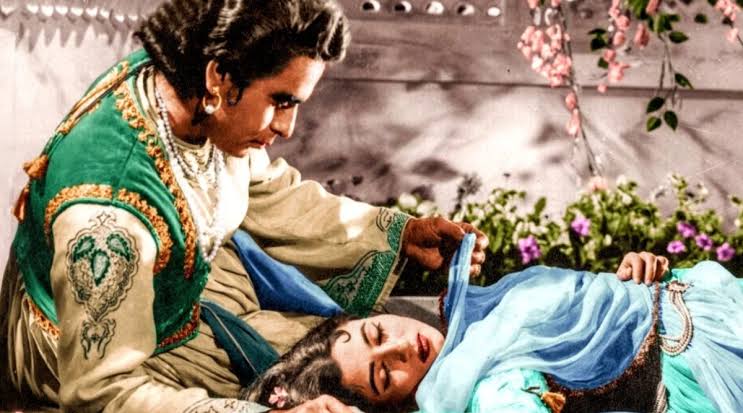
Between 1947 and 1965, Dilip Kumar reigned supreme as the undisputed number-one star of Hindi cinema, earning the moniker “Tragedy King.” His penchant for intense, melancholic roles—where characters suffered unrequited love or tragic fates—deeply resonated with post-partition audiences dealing with their own grief. Films like Deedar, Devdas, and Andaz turned sorrow into high art. Cinema halls frequently witnessed viewers weeping openly during his death scenes. The emotional toll of playing these heavy roles became so intense that, on the advice of his therapist, he began taking up lighter, comedic, and swashbuckling roles in films like Azaad and Kohinoor to restore his mental equilibrium.
Masterclass in Micro-Expressions: Lips and Eyes
One of Dilip Kumar’s greatest technical achievements was his mastery over micro-expressions, particularly through his eyes and lips. While contemporary actors relied heavily on sweeping physical gestures, Dilip Kumar could communicate a storm of rage, hesitation, or heartbreak with a microscopic twitch of his lip or a subtle shift in his gaze. His eyes spoke volumes before a single word of dialogue was uttered. A momentary downward glance could convey profound defeat, while a steady, unblinking stare captured unwavering resolve, making close-up shots mesmerizing character studies.
The Iconic Hairstyle
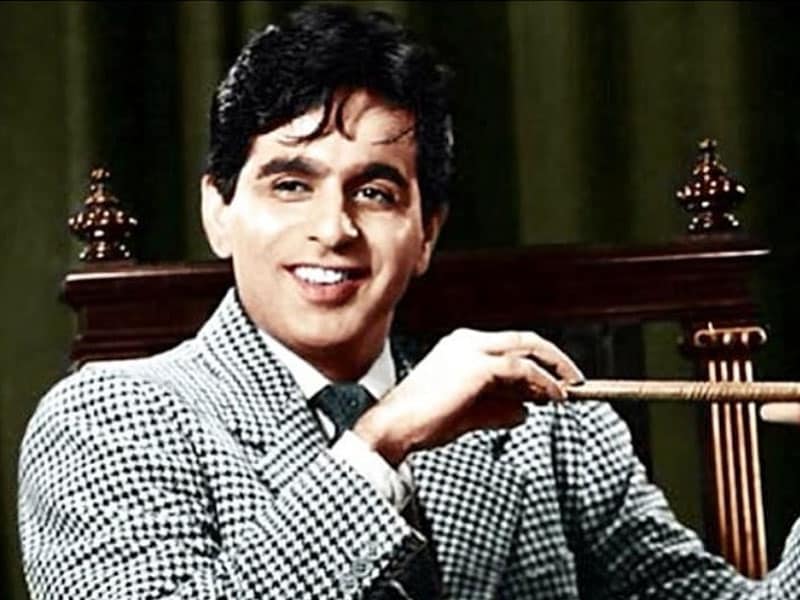
Beyond his acting prowess, Dilip Kumar’s immaculate, wavy side-parted hairstyle became an enduring cultural phenomenon across South Asia. In an era before glossy grooming magazines or social media, millions of young men across India and Pakistan rushed to local barbershops asking for the “Dilip Kumar cut.” The hairstyle complemented his sophisticated yet approachable persona, perfectly framing his expressive face and adding to his undeniable screen magnetism as Bollywood’s first true style icon and superstar.
Economy of Body Movement During Dialogue Delivery
Dilip Kumar pioneered the art of stillness in front of the camera. While delivering heavy, poetic Urdu and Hindi dialogues, his body remained remarkably still, allowing his voice modulation and tonal variations to carry the narrative weight. He understood that excessive physical movement could distract from the emotional core of a scene. By anchoring his body, he forced the audience to hang on to every measured syllable, creating an intense, hypnotic gravity that made his dialogue delivery feel intensely intimate and conversational rather than staged or declamatory.
Family Roots and the Journey from Peshawar
Born as the fourth of twelve children to Lala Ghulam Sarwar Khan and Ayesha Begum, Dilip Kumar spent his early childhood in the fruit orchards of Qissa Khwani Bazaar in Peshawar. In the 1930s, the family migrated to Deolali in Maharashtra before settling down in Mumbai, where his father ran a fruit business in Crawford Market. He was grounded in a cultured, multi-lingual household, which gave him fluency in Urdu, Pashto, English, and Hindi. In October 1966, he married Saira Banu, a union that stood the test of time for 55 years until his passing, despite a 22-year age gap. Saira stood as a pillar of strength, nursing him through his twilight years. He was later laid to rest at the Juhu Qabrastan with full state honours.
The Father of Method Acting in India
Long before Hollywood’s Marlon Brando or Actors Studio techniques became household terms in global cinema, Dilip Kumar was instinctively practicing method acting in Bollywood. He deeply researched his roles, observing real-life people, studying legal terminology for courtroom scenes, and mastering dialects. His approach inspired generations of legendary actors who came after him—including Amitabh Bachchan, Shah Rukh Khan, Naseeruddin Shah, and Nawazuddin Siddiqui—all of whom acknowledge him as the foundational patriarch of serious, realistic acting in Indian cinema.
Top Ten Essential Films
Evaluating his stellar filmography, ten cinematic milestones stand out as absolute masterpieces of Indian cinema: Andaz (1949): A monumental love triangle with Raj Kapoor and Nargis that shattered box-office records. Deedar (1951): The quintessential tragedy defining his era of heartbreaking melodramas. Azaad (1955): A massive swashbuckling hit that proved his versatility beyond tragic roles. Devdas (1955): Bimal Roy’s adaptation where his portrayal of the self-destructive lover became immortal. Naya Daur (1957): A socially resonant drama as a tonga driver battling mechanization. Madhumati (1958): A haunting tale of reincarnation that swept Filmfare awards. Mughal-e-Azam (1960): K. Asif’s historical opus where he played Prince Salim with royal majesty. Ganga Jamuna (1961): A rustic, self-produced epic exploring a brother pushed into banditry. Ram Aur Shyam (1967): A sparkling double-role comedy showcasing his impeccable comic timing. Shakti (1982): A riveting generational clash where he held his own against Amitabh Bachchan, winning his eighth Filmfare Best Actor award.
Principal Correspondent, Prime Post
Vidya Sagar Chaturvedula is a passionate film enthusiast whose four-decade career spans multiple sectors, including media and industry. Fluent in Telugu, Hindi, and English, he has a deep appreciation for cinema, particularly films in those three languages. His passion goes beyond simple viewing; he enjoys analyzing directional skill, the emotional depth of actors’ performances, and the profound meaning embedded in dialogue. Mr. Sagar is known for his ability to clearly articulate and narrate his insightful film analyses after watching a movie.
Email: sagar.chaturvedula@gmail.com
Mobile: 9030702917


Dilip Kumar great legendary actor
Of my time
We named my brother as Dilip Kumar simplicity actor
Who impressed film land
Versatile actor
He played as comedian serious action roles
He is jem of the actor
His roles in. Madhumati and Ram aur Shyam. Just superb.oone. Of the best review taken. Keepit up.
Good review 👍
Dilip Kumar is the greatest actor of our Indian cinema; he was known as the Tragedy King because he was very natural and acted through his facial expressions, eye movements, and emotional restraint.
Great review.
Good review
A legend, pioneer in cinematography. It appeara to me there is a dearth of films to learn about his acting talent. An inspiration maybe a roll model for the upcoming film artists. Nice review.
Dilip kumar was a legendary actor in Indian cinema. He acheived so many national awards. Good narration
Respected actor
Good review