Why Credibility and Neutrality Matter for the ECI
Accountability and Transparency
Upholding the Gold Standard
Preserving Institutional Integrity in Indian Elections
Former CECs Call for Direct Public Engagement
Protecting the Neutral Umpire
OP Rawat and Ashok Lavasa on ECI’s Trust Deficit
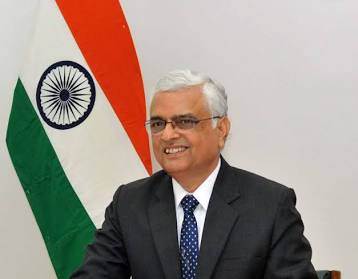
At the India Today Conclave, two former top officials of the Election Commission of India (ECI)—former Chief Election Commissioner O.P. Rawat and former Election Commissioner Ashok Lavasa—offered crucial insights into the growing public debate surrounding the commission’s independence and credibility. Speaking candidly on the institutional challenges, both veteran administrators addressed concerns over perceived bias, communication gaps, and the imperative to uphold the highest standards of electoral integrity.
A Shadow Over the Office, Not the Institution
Former Chief Election Commissioner O.P. Rawat drew a clear distinction between the institution of the ECI and the individuals currently heading it. Addressing recent political backlashes and questions regarding the poll body’s neutrality, Rawat remarked that any current shadow of doubt rests over the three serving election commissioners, not on the constitutional foundation of the institution itself.
Rawat emphasized that the ECI has historically set a “gold standard” for democratic election management globally. However, he noted that “things are not as they used to be,” highlighting a clear need for proactive transparency. According to Rawat, the current commissioners must come out into the open, face the public directly through press conferences, and directly answer critical questions. He cautioned that if the leadership avoids transparent engagement, the Commission’s reputation will inevitably suffer. Rawat maintained that while controversies are periodic, public confidence can only be restored if commissioners demonstrate accountability and address grievances head-on.
Acknowledging the Trust Deficit
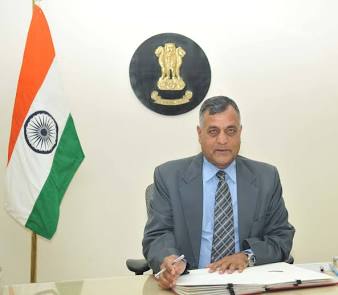
Joining the dialogue, former Election Commissioner Ashok Lavasa focused on the emerging perception of bias and the critical responsibility of the commission in preserving public trust. Lavasa observed that a distinct “trust deficit” has developed between the election body, political parties, and voters. He emphasized that the ECI itself bears responsibility for contributing to this perception, whether through its decisions, its timing, or its communications. For an umpire in a vibrant democracy, perception is as vital as reality. Lavasa noted that neutrality must not only exist in process but must also be clearly visible to all stakeholders. When political actors or citizens begin to view the referee as partisan, the core foundation of democratic legitimacy is tested. He underlined that the commission’s primary duty is to act strictly in accordance with constitutional principles, ensuring that rules are enforced uniformly across the entire political spectrum without fear or favour.
Preserving Institutional Standards
Both former commissioners shared the perspective that electoral integrity relies on continuous self-correction and transparent operations. Discussing ongoing procedural controversies, including roll revisions and administration, they stressed that democratic processes must strictly adhere to finalized, transparently published voter lists to eliminate any scope for suspicion or disenfranchisement.
Rawat urged observers and the public to give the institution time to clear the air rather than rushing to premature conclusions, provided the current leadership actively takes steps to engage open channels of communication. At the same time, the underlying warning from both speakers was clear: the ECI cannot afford to rely solely on past prestige.
Conclusion
The reflections of O.P. Rawat and Ashok Lavasa at the Conclave serve as a timely reminder of the delicate nature of public trust in democratic institutions. Their collective stance underscores that maintaining credibility requires more than just administrative execution; it demands complete transparency, direct engagement with critics, and an unwavering commitment to remaining an impartial umpire. For the ECI to safeguard its legacy, its current leadership must heed these veteran insights, rebuild trust through open dialogue, and ensure that Indian electoral democracy remains robust and unquestioned.
Editor, Prime Post
Ravindra Seshu Amaravadi, is a senior journalist with 38 years of experience in Telugu, English news papers and electronic media. He worked in Udayam as a sub-editor and reporter. Later, he was associated with Andhra Pradesh Times, Gemini news, Deccan Chronicle, HMTV and The Hans India. Earlier, he was involved in the research work of All India Kisan Sabha on suicides of cotton farmers. In Deccan Chronicle, he exposed the problems of subabul and chilli farmers and malpractices that took place in various government departments.
Email: ravindraseshu7@gmail.com
Mobile: 9063718675