Policy Requirements for Inclusive Governance and Sustainability
The question is not whether India should develop data centres or invest in artificial intelligence. It is whether the economic benefits of data centres justify the public expenditure, land concessions, electricity consumption, water use, and environmental risks they impose on local communities. The concerns raised by former Union Government Secretary E.A.S. Sarma (from Visakhapatnam) deserve a comprehensive examination. He raised many critical, or sometimes even disastrous, problems. Three questions based on international experience: Have the Netherlands, China, or other countries banned or restricted data centres? Regarding Public-interest assessment, it is said that the real dangers of data centres, and what safeguards should India require before approving them?
Should data centres be banned?
The international experience is more nuanced than a complete ban. Some governments have restricted the location, scale, or energy use of very large data centres because they compete with housing, industry, and ordinary consumers for scarce resources.
China has not imposed a blanket Ban
What happened as per US–China relations? China has consolidation, energy controls and designated hubs. China has not imposed a blanket nationwide ban on data centres. Instead, its policies have increasingly sought to concentrate large computing infrastructure in designated national hubs, subject projects to energy-efficiency reviews and restrict inefficient or poorly located facilities. A July 2026 report by the US–China Economic and Security Review Commission describes tighter controls over smaller projects and the approval of larger facilities. China is simultaneously investing in data infrastructure. Its approach is therefore better understood as controlled expansion and strategic allocation, rather than a rejection of the industry.
India need not copy either country’s policy wholesale. But it should examine whether every proposed hyperscale facility belongs in a water-stressed metropolitan region, whether the electricity is genuinely available, and whether a smaller or more resource-efficient alternative would serve the same purpose.
The Netherlands: restrictions on hyperscale facilities
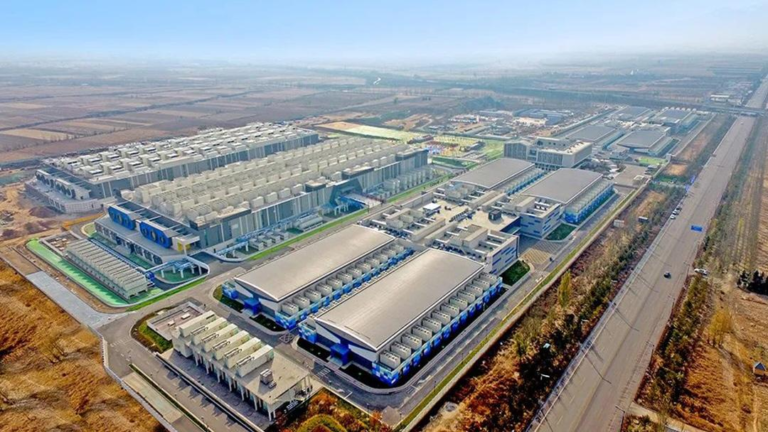
Some international news reports say: The Netherlands introduced national restrictions on the siting of new hyperscale data centres in 2024. Hollands Kroon in North Holland and Het Hogeland in Groningen. These restrictions were based on competing demands for land and sustainable electricity, and the limited wider public benefit of some facilities. They did not ban every data centre. A Reuters report dated 6 August 2026 described objections concerning water scarcity and possible impacts on wildlife near Kambalakonda Wildlife Sanctuary. It also reported legal challenges to environmental clearances and the company’s position on cooling technology. These are contested issues that require examination through the relevant environmental assessments and court proceedings. A data centre is not simply an office building full of computers. A hyperscale facility may contain thousands of servers, high-density AI computing equipment, cooling systems, transformers, backup generators and extensive electrical infrastructure. Its environmental impact depends on its size, cooling technology, energy source, location, and operating practices.
A major danger is evaporation of water, resulting in scarcity
Servers generate heat continuously. Some cooling systems consume substantial quantities of water through evaporation; other systems use air cooling or closed-loop liquid cooling and can reduce direct water consumption.
The risk is greatest when a facility draws from groundwater, drinking-water reservoirs or municipal supplies in an already water-stressed region. Even where a company promises to use treated wastewater, the government must verify that the supply is reliable and does not displace existing users.
The Ministry of Environment, Forest and Climate Change stated in August 2026 that AI data centres do not automatically require a separate environmental clearance simply because they are data centres. Certain projects may nevertheless require clearance under the building and construction or township categories. Water availability and reuse are among the issues considered in the applicable assessment process.
Electricity demand and higher costs
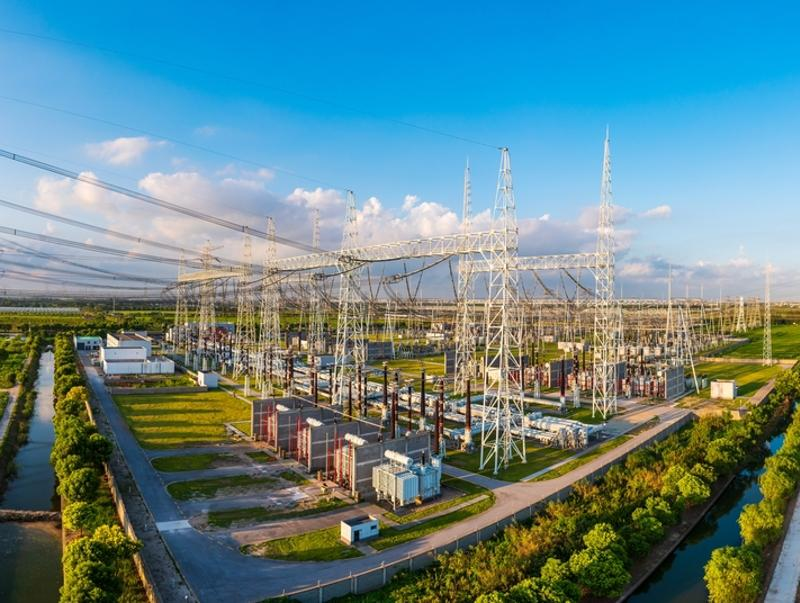
A large AI data centre can require hundreds of megawatts of continuous power. Several such facilities clustered together can create a substantial new load on the electricity grid.
If generation and transmission infrastructure are inadequate, the consequences may include expensive grid upgrades, increased dependence on fossil-fuel generation, pressure on power availability and higher costs for other consumers. The exact effect on household tariffs depends on tariff design, subsidies, cost allocation and how the additional capacity is financed.
The US experience
The US experience also demonstrates the concern: a Reuters report on 12 October 2026 described grid operators’ difficulties in accommodating rapidly growing data-centre demand.
Air pollution, noise and heat
Backup diesel generators can emit nitrogen oxides, particulate matter and other pollutants when operated. Their actual impact depends on the number of generators, fuel, emission controls, operating hours and proximity to homes. Cooling equipment and generators may also produce continuous noise. Waste heat can affect the immediate surroundings, although its significance varies with site design and climate. These risks should be assessed through emissions inventories, noise measurements, generator testing records and enforceable operating conditions—not simply through a company’s general assurance that it uses advanced technology.
Land conversion and ecological damage
Large campuses require land not only for server buildings but also for substations, roads, cooling infrastructure and power connections. Site selection can therefore affect agriculture, settlements, drainage, wildlife corridors and nearby ecosystems.
The relevant question is not merely how many acres a company receives. It is whether the land is suitable for that use, what alternatives were available, whether the price reflects its real opportunity cost and whether cumulative development will damage the surrounding environment.
Limited employment relative to investment
Data centres can create construction employment, skilled technical jobs and demand for security, maintenance and related services. They can also support cloud computing, research and other digital industries.
However, a capital-intensive facility does not necessarily employ as many people during normal operation as a manufacturing plant of comparable investment. AI computing infrastructure may support enormous computing capacity with a relatively small permanent workforce.
The correct measure is not the headline investment figure. It is the number, quality and duration of jobs actually created, the proportion available to residents, and the additional economic activity attributable to the project.
Electronic waste and resource consumption
Servers, batteries, circuit boards and power equipment eventually need replacement. Poor handling of discarded electronics can create pollution and waste valuable materials. Battery storage also requires fire-prevention and emergency-response arrangements. Data centres should therefore have enforceable electronic-waste, battery-management, recycling and fire-safety plans, with responsibility clearly assigned to the operator. The key distinction is that these are risks, not inevitable outcomes of every data centre. Better cooling, renewable electricity, water reuse, efficient computing and appropriate siting can reduce the impact. Whether those measures are sufficient must be established for each project. The CAG would need to operate within its statutory audit mandate and the evidence available to it. Nevertheless, the question of whether government support delivers value for money is central to performance auditing.
The national policy question: what should India require?
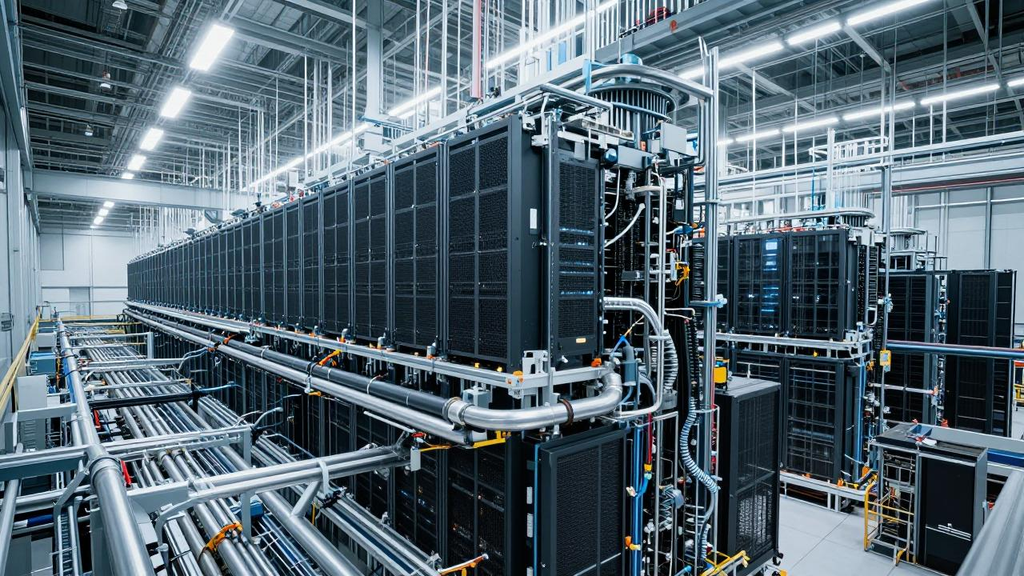
On 14 October 2026, The Indian Express reported on a NITI Aayog Frontier Tech Hub framework proposing stricter assessments of electricity and water availability, environmental safeguards and measurable economic benefits before states approve or incentivise data centres. The proposals include checking grid readiness, accounting for long-term water availability and linking incentives to actual results.
Reuters reported on the same date that the Union government was preparing a dedicated data-centre policy, with concern about the possibility that rising electricity demand could increase costs for ordinary consumers. These developments point towards several practical safeguards.
Water-security clearance before approval. Each large project should provide a credible long-term water balance, including summer scarcity, drought scenarios, existing household and agricultural demand, and the proportion of water supplied from treated wastewater. Freshwater allocations should not compromise essential public needs.
Proof of electricity availability. The developer should disclose its projected demand, power source, transmission requirements and the infrastructure costs attributable to the project. Additional capacity should not be sanctioned on the assumption that the required infrastructure will somehow appear later.
Location-based restrictions. States should identify suitable data-centre zones and exclude or restrict locations where water stress, ecological sensitivity, land-use conflict or inadequate grid capacity make large projects unsuitable.
Transparent environmental assessment. Approval should examine cumulative impacts from multiple facilities, not just the isolated impact of each building. Water, air pollution, noise, biodiversity, electronic waste and emergency preparedness should be covered.
Conditional public incentives. Concessions should be linked to measurable milestones: operational investment, employment, local training, renewable-energy delivery, water efficiency and compliance with environmental conditions. Incentives should be reviewed or suspended where enforceable commitments are not met.
Independent public disclosure. Governments should publish project-wise details of land allotment, concessions, power allocation, water use, employment and compliance. Commercial confidentiality should not become a blanket justification for withholding information about public resources.
The objective should not be to prohibit investment merely because it is large. It should be to ensure that the private benefits of digital infrastructure are not achieved by transferring disproportionate costs to households, farmers, workers or the environment. But a more serious disaster is ‘the culture of corrupt ethics’.

Law professor and eminent columnist
Madabhushi Sridhar Acharyulu, author of 63 books (in Telugu and English), Formerly Central Information Commissioner, Professor of NALSAR University, Bennett University (near Delhi), presently Professor and Advisor, Mahindra University, Hyderabad. Studied in Masoom Ali High School, AVV Junior College, CKM College, and Kakatiya University in Warangal. Madabhushi did LL.M., MCJ., and the highest law degree, LL.D. He won 4 Gold Medals at Kakatiya University and Osmania University.
Email: cicsridhar@gmail.com
Mobile: 8447651505