Citizen Advocacy or Constitutional Transgression?
A Strike for Governance or a partisan Stumble?
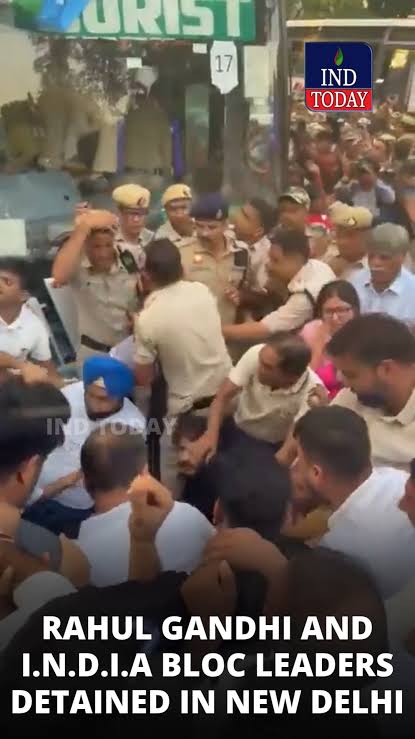
The protests now unfolding in New Delhi and in some other parts of the country against the Election Commission of India’s Special Intensive Revision (SIR) of electoral rolls, coupled with demands for the resignation of Chief Election Commissioner Gyanesh Kumar, have acquired an importance extending well beyond the immediate political contest. At stake is not merely the fate of an electoral revision exercise, but the credibility of the institution entrusted with conducting the world’s largest democratic elections. The controversy therefore deserves neither facile dismissal nor uncritical acceptance. It demands constitutional sobriety, factual scrutiny and institutional transparency.
The most sensational allegation is that “13 CRORE VOTERS HAVE BEEN DELETED.” This formulation requires considerable qualification. The figure of approximately 13 crore relates to names excluded or marked for exclusion at the draft stage in the SIR exercise across States and Union Territories. But it is misleading to equate that figure with 13 crore genuine, living and eligible voters permanently deprived of their franchise. The Election Commission says the number encompasses categories such as absent, shifted, duplicate and deceased electors, besides cases requiring further verification. The distinction between a draft exclusion and a final deletion is therefore fundamental. It is not a semantic distinction. It is the difference between an administrative verification process and the final extinguishment of a citizen’s electoral entitlement.
THE 13-CRORE QUESTION
If 13 crore genuine voters have actually been removed from the electoral rolls, the allegation would constitute an electoral crisis of extraordinary proportions.
But where is the evidence?
The relevant questions are elementary.
How many of these persons are alive?
How many continue to reside at the registered addresses?
How many possess multiple electoral registrations?
How many have permanently migrated?
How many are deceased?
How many could not be contacted?
How many failed to submit the prescribed enumeration forms?
How many were ultimately restored after filing claims and objections?
And, most importantly, how many eligible Indian citizens were finally prevented from voting?
Unless these questions are answered with constituency-wise, booth-wise and category-wise evidence, the phrase “13 crore voters deleted” risks converting a provisional administrative statistic into a definitive political conclusion.
The possibility of errors cannot be ruled out. Nor can the wrongful exclusion of even one genuine voter be treated as a trivial administrative inconvenience. But the possibility of errors does not, by itself, establish deliberate mass disenfranchisement.
Both propositions must be kept separate.
THE DRAFT ROLL IS NOT THE FINAL VERDICT
An electoral roll cannot be a static document.
Citizens die. Families migrate. Addresses change. Duplicate registrations occur. People move between constituencies. Names may remain on electoral rolls long after their holders have ceased to be eligible electors.
Periodic revision is therefore not, by itself, an assault upon democracy. Indeed, maintaining an accurate electoral roll is indispensable to democracy.
The crucial constitutional distinction is between provisional exclusion and final disenfranchisement.
A name missing from a draft roll is not necessarily a citizen finally deprived of the vote.
That distinction must not disappear beneath the noise of political mobilisation.
THE CITIZEN IS NOT WITHOUT REMEDY
The real test of SIR is whether an eligible elector wrongly excluded from the draft roll has an effective and accessible means of restoration.
The answer, in law, is substantially in the affirmative.
The electoral framework provides mechanisms for claims, objections, inclusion, correction and appeals. Forms 6, 7 and 8 provide important procedural avenues for citizens to seek inclusion, raise objections and correct electoral particulars. Political parties can also deploy Booth Level Agents to scrutinise electoral-roll changes and bring discrepancies to the notice of election authorities.
The Supreme Court’s intervention in the Bihar SIR proceedings has further emphasised that the verification process must not become an arbitrary instrument of exclusion.
Thus, the genuine voter is not constitutionally helpless.
The remedy for wrongful exclusion is verification, objection, appeal and, where necessary, judicial review.
That is democracy translated from rhetoric into remedy.
ARE THE EXCLUSIONS POLITICAL OR RELIGIOUS?
This is perhaps the most serious allegation being made by the protesters.
If eligible voters belonging predominantly to a particular political constituency, religion, caste or community have been systematically excluded, the matter would raise grave constitutional questions.
But such an allegation cannot be established merely by citing the aggregate number.
The electoral roll does not record whether a person votes for the BJP, Congress, Left or any regional party. Nor does the existence of a voter on an electoral roll establish his or her political allegiance.
To prove partisan or communal disenfranchisement, one would require evidence of a demonstrable pattern—preferably constituency-wise and booth-wise—showing disproportionate exclusion of otherwise eligible electors, followed by evidence that such exclusions were discriminatory rather than attributable to death, migration, duplication, non-residence or other legitimate causes.
POLITICAL SUSPICION IS NOT PROOF. STATISTICAL COINCIDENCE IS NOT PROOF. A SLOGAN IS NOT PROOF.
But neither should the demand for proof become an excuse to suppress investigation.
If credible evidence emerges, it must be investigated impartially.
THE ECI TOO MUST ANSWER DIFFICULT QUESTIONS
The Election Commission cannot claim that its constitutional status places it beyond scrutiny.
Reports of internal disagreements within the Commission concerning aspects of the electoral-roll revision and the manner in which decisions were taken have intensified public concern.
Such reports do not, by themselves, establish electoral fraud.
But they certainly justify questions.
A constitutional institution whose principal asset is public trust must explain its functioning transparently, particularly when the controversy concerns the electoral franchise.
The Commission should therefore publish, to the maximum extent compatible with privacy and security, comprehensive data showing:
* the number of names excluded at the draft stage;
* the precise reasons for exclusion;
* the number falling into each category;
* the number of claims received;
* the number restored;
* the number finally excluded; and
* the number of eligible electors who subsequently succeeded in establishing their entitlement.
Such disclosure would do more to silence unfounded allegations than any number of political rebuttals.
THE PROTEST IS LEGITIMATE; THE CONCLUSION MUST STILL BE PROVED
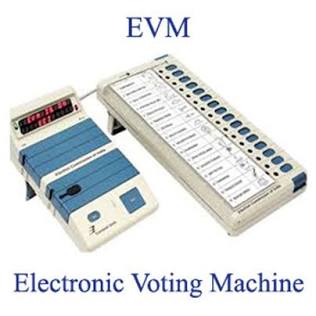
The right to peaceful protest is intrinsic to a constitutional democracy.
Opposition parties, students, civil society organisations and citizens have every right to question the Election Commission, demand transparency and seek the resignation of an office-holder whom they believe has failed in his constitutional responsibility.
The participation of political parties does not, by itself, make an agitation illegitimate.
But another principle is equally important:
THE RIGHT TO PROTEST DOES NOT CONFER THE RIGHT TO DECLARE AN UNPROVEN ALLEGATION TO BE AN ESTABLISHED CONSTITUTIONAL FACT.
Reports of detentions, police restrictions, barricading and FIRs in connection with the Delhi demonstrations also deserve scrutiny. Peaceful democratic dissent must not be unnecessarily or disproportionately curtailed.
At the same time, those exercising the right to protest carry a corresponding responsibility to distinguish evidence from allegation.
IS THE AGITATION POLITICALLY MOTIVATED?
Almost certainly, in the ordinary sense that political parties are participating in it.
But political motivation, by itself, does not invalidate a grievance.
Every major democratic agitation has a political dimension. The more pertinent question is whether the political objective is accompanied by demonstrable evidence.
There is a danger on both sides.
The Opposition could be tempted to transform every disputed electoral entry into evidence of “vote theft”.
The Election Commission could be tempted to treat every criticism as politically motivated propaganda.
Neither approach serves democracy.
The Opposition must produce evidence.
The Election Commission must produce transparency.
The citizen must be allowed to judge.
THE GREATER DANGER IS THE EROSION OF TRUST
The gravest casualty of the present confrontation may not be the electoral roll itself but public confidence in the electoral process.
If citizens begin to believe that their names can disappear arbitrarily from electoral rolls, faith in elections will diminish.
If citizens are simultaneously told, without adequate evidence, that millions of genuine voters have been deliberately erased, faith in the Election Commission will also diminish.
Both outcomes are dangerous.
An independent Election Commission requires public confidence. Political parties require credible elections. Citizens require certainty that their franchise will not disappear through administrative opacity.
A BETTER WAY FORWARD
The present controversy should be converted from a political confrontation into an institutional exercise in verification.
The Election Commission should undertake a transparent, time-bound examination of disputed exclusions.
Political parties should independently scrutinise the electoral data through their Booth Level Agents.
Civil society organisations should identify individual cases of genuine exclusion rather than merely circulate aggregate figures.
Citizens whose names have disappeared should immediately verify their status and use the statutory mechanisms available for restoration.
And the judiciary must remain available wherever administrative remedies fail.
Such a process would transform the controversy from “WHO STOLE THE VOTE?” into the far more useful question:
“WHICH GENUINE VOTER HAS BEEN WRONGLY EXCLUDED, WHY WAS THAT PERSON EXCLUDED, AND HOW QUICKLY CAN THE ERROR BE CORRECTED?”
That is the language of constitutional democracy.
YOUNG INDIA CAN TURN CONCERN INTO SERVICE
There is, finally, a constructive role for India’s youth in this controversy.
Young Indians who possess the time, patience and technological ability can render an invaluable civic service by helping genuine voters verify their names in the electoral rolls, understand the claims-and-objections procedure, obtain the necessary information and approach the competent authorities wherever a legitimate exclusion has occurred.
They need not become partisan activists.
They need not campaign for one political party against another.
They need only help a genuine citizen secure what is constitutionally his or hers—the right to participate in the democratic process.
IF OUR YOUTH CAN FIND TIME TO DEBATE POLITICS ON SOCIAL MEDIA, THEY CAN ALSO FIND TIME TO HELP A GENUINE VOTER SECURE HIS OR HER RIGHT TO VOTE.
THAT WOULD BE A GREAT SERVICE TO DEMOCRACY.
Such voluntary civic assistance would be infinitely more valuable than merely circulating allegations, slogans and political accusations.
Democracy is not sustained only in Parliament, on television screens or on the streets of the capital.
It is sustained at the doorstep of the ordinary citizen.
THE BALLOT MUST REMAIN ABOVE PARTISAN POLITICS
The Election Commission is not infallible.
Political parties are not infallible.
Civil society is not infallible.
The citizen, however, is the sovereign beneficiary of the electoral process.
The SIR exercise must therefore be judged neither by the claims of the Election Commission nor by the slogans of the protesters, but by independently verifiable facts.
If genuine voters have been wrongfully excluded, their restoration is imperative.
If administrative errors have occurred, responsibility must be fixed.
If discriminatory patterns are established, they must be investigated and remedied.
If the allegation of 13 crore genuine voters being permanently deleted proves unfounded, political parties must have the intellectual honesty to correct the record.
And if the Election Commission has conducted the exercise properly, it should have nothing to fear from complete transparency.
The present agitation may be politically motivated; it may also contain legitimate democratic concerns. The two are not mutually exclusive.
What would be ill-conceived, however, is to embarrass the nation by converting an unresolved administrative controversy into a declaration that Indian democracy has already been stolen without establishing the factual foundation for so grave a charge.
Equally-ill-conceived would be to dismiss every criticism as an attempt to weaken the nation.
India’s democracy is stronger than both propositions.
THE ELECTION COMMISSION MUST PROVE ITS IMPARTIALITY THROUGH TRANSPARENCY.
THE OPPOSITION MUST PROVE ITS ALLEGATIONS THROUGH EVIDENCE.
THE YOUTH OF INDIA CAN PROVE THEIR COMMITMENT THROUGH CIVIC SERVICE.
And above all, the ordinary citizen must remain at the centre of this entire constitutional endeavour.
The ballot is not the property of a political party.
It is not the possession of the Election Commission.
It belongs to the citizen.
TO PROTECT THAT BALLOT IS A CONSTITUTIONAL DUTY.
TO QUESTION ITS PROTECTION IS A DEMOCRATIC RIGHT.
TO HELP A GENUINE CITIZEN SECURE IT IS A NOBLE CIVIC SERVICE.
That is the higher meaning of democracy—not merely to protest when one’s political interests are threatened, but to stand beside the citizen whose voice may otherwise remain unheard.
LET INDIA’S YOUTH THEREFORE NOT MERELY ARGUE ABOUT DEMOCRACY—LET THEM HELP A GENUINE VOTER EXERCISE IT.
THAT WOULD BE A GREAT SERVICE TO THE NATION.
And that, ultimately, is where the controversy over SIR must end: not in political victory or institutional humiliation, but in the unimpeachable assurance that every genuine Indian citizen entitled to vote shall have the opportunity to do so.
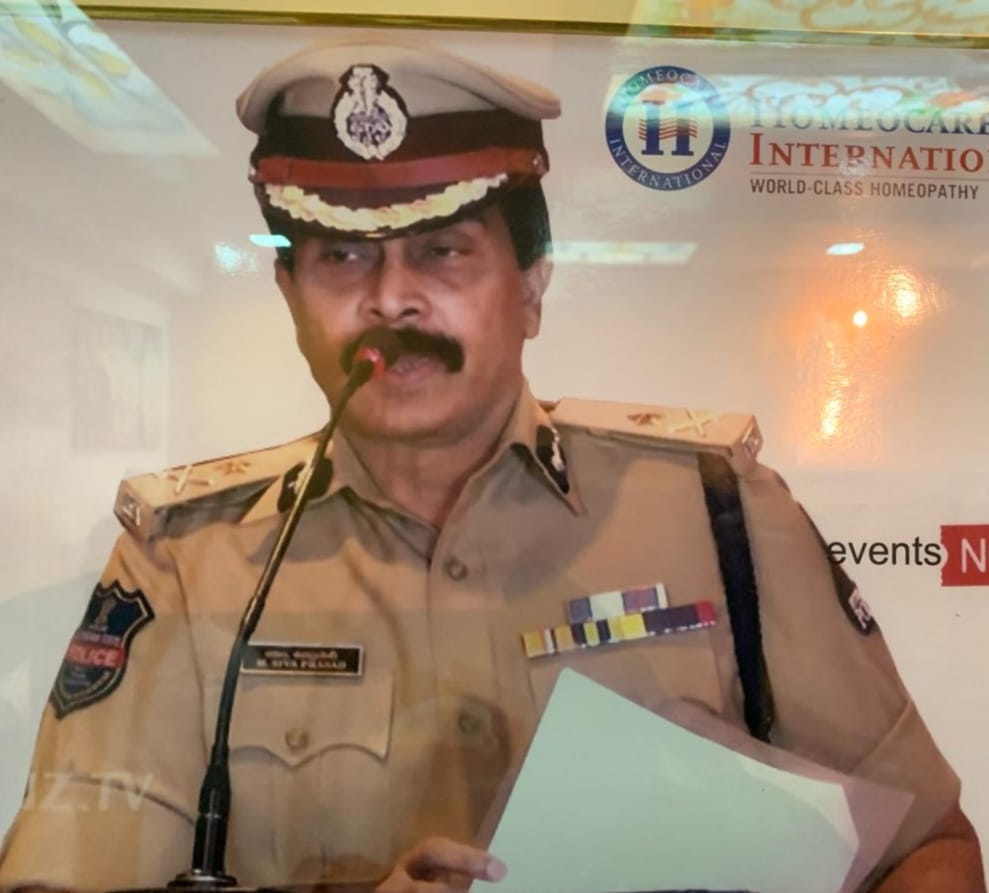
M. Shiva Prasad, IPS (Rtd.) is a dedicated law enforcement professional who served the combined Andhra Pradesh cadre before opting for the Telangana cadre. Though a native of Andhra Pradesh, he considers himself a true Hyderabadi with an abiding love for the Telugu people. Driven by sincerity, fearlessness, and a lifelong fight against inequality and injustice, his ultimate strengths remain his goodwill and deep affection for the public and the police force. Today, he continues his mission by writing snippets and articles true to his conscience.
Email: Shivareach@yahoo.com
Mobile: 98480 38774