CEC Gyanesh Kumar Must Answer for ECI Irregularities
Mass Disenfranchisement Allegations in ECI’s Electoral Roll Revision
The Special Intensive Revision (SIR) of voters list undertaken by the Election Commission of India (ECI) in the country has already led to the disenfranchisement of more than 13 crore people. More than 47 lakh (33%) of the registered voters of the Delhi were removed from the draft electoral list. One of the reasons shown is that they have shifted from their original residence. They are not being registered in their new places of residence by allowing them to fill up Form – A (for shifted voters) and are being told that they have to fill up Form – 6 which is for new voters and where they are asked to declare that they have not voted before and can be prosecuted for false declaration.
Those whose names have been set aside include former Vice President, former judges of Supreme Court and High Courts, former and present election commissioners, the foreign minister Jai Shankar and his wife, former chief minister of Delhi and his wife, former deputy chief minister of Delhi and his wife and various other prominent people.
A Triumph of Investigative Journalism
How Internal Dissent Exposed the ECI’s Electoral Roll Crisis
The Indian Express has lived up to its reputation by coming up with an investigation which is the most important of the stories it put out ever since the days of Arun shoourie. I am particularly glad since I was associated with the Indian Express group in its good olden days of championing investigative journalism soon after the Emergency. The recent story on the Election Commission of India was the best I have known so far.
The Election Commissioners – Sukhbir Singh Sandhu and Vivek Joshi – have been asking the right questions although they were misunderstood by people like me for their silence all these days when the electoral rolls are squandered in the name of SIR. Why they chose not to speak up and come into the public domain is the question that remains unanswered. They went to the Chief Secretary of the Union Government, the highest official in the country. They should have approached the President of the republic as they are not supposed to be answerable to the government. They should have quit on the lines of Ashok Lavasa who resigned from the Election Commission when he did not get satisfactory answers to his questions. However, the fact that they have been registering their questions/protests for the last ten months itself is reason enough to respect them.
From 2023 Law to Electoral Roll Controversy
How Executive Overreach Weakened the Election Commission
Now the ball is in the court of the Chief Election Commissioner Gyanesh Kumar to answer the questions raised by the other two Election Commissioners or quit. If Gyanesh Kumar failed to raise up to the occasion, it will be the duty of the Supreme Court to intervene. The apex court has not done its duty since its intervention in the SIR in Bihar when it asked the ECI to consider the Aadhaar Card as one of the documents in the matter of verification. It is to the credit of PV Narasimha Rao who made the single-person ECI into three-member commission when TN Seshan was lording over the commission in early 1990s. The Modi government played its trick with Parliament where it used its majority to remove the teeth of the ECI by bringing a new law in 2023.
This new law is being examined by the Supreme Court and it has opted for a larger bench to take a final view. The SC is duty bound to strike down the law after the expose of the ECI functioning by the Indian Express. The Chief Justice of India (CJI) should be there along with the prime minister and the leader of opposition in the committee to select Chief Election Commissioner and other two election commissioners as was the case before 2023. The new law made the committee as good as the executive by adding Home Minister Amit Shaw in place of CJI.
14 Written Objections in 10 Months
How Sidelining the Majority Undermines the ECI’s Legal Mandate
Even the 2023 law is very clear as far the decision-making process is concerned. Section 18 (2) of the Chief Election Commissioner and other election commissioners (Appointment, conditions of service and term of office) Act, 2023, provides that all business of the Commission shall, as far as possible, be transacted unanimously. If the CEC and other election commissioners differ, the matter “shall be decided according to the opinion of the majority.” Section 18 (1) goes further. Even the procedure for transaction and allocation of business may be regulated only by unanimous decision. Unanimity is the statutory norm and when it fails, the decisions should be taken by majority. The election commissioners were being kept in dark in a body that should forge a consensus, failing that abide by the majority.
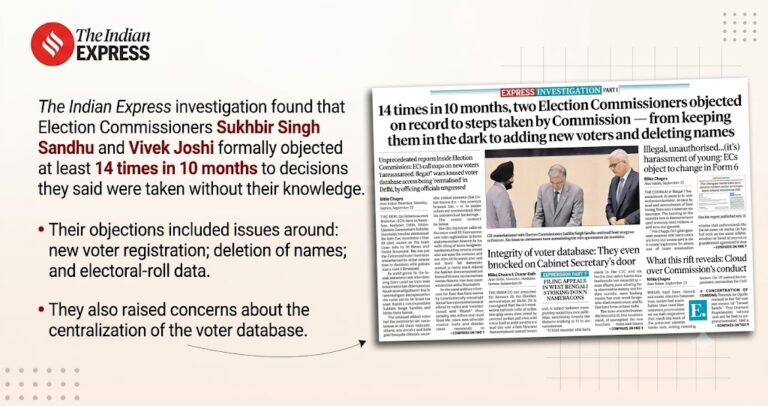
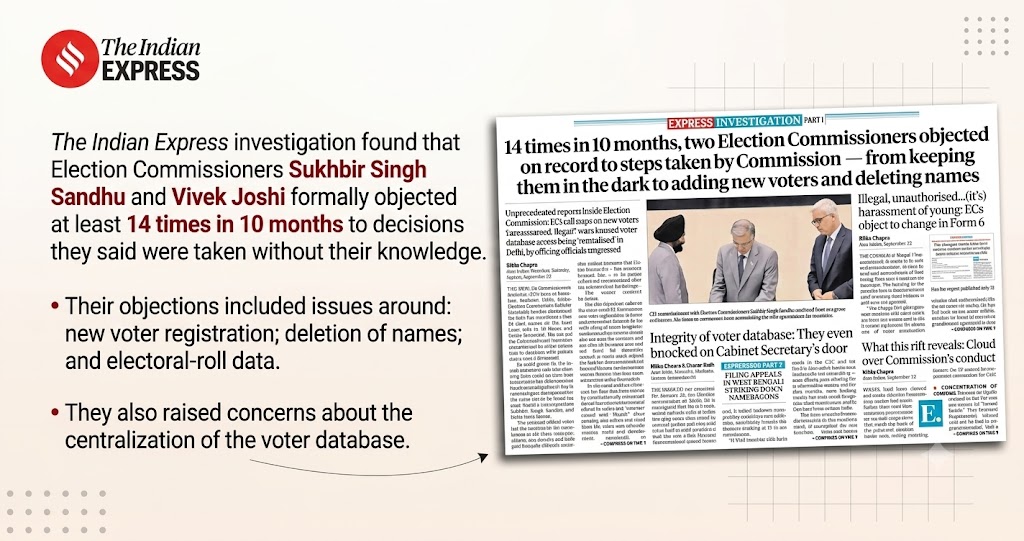
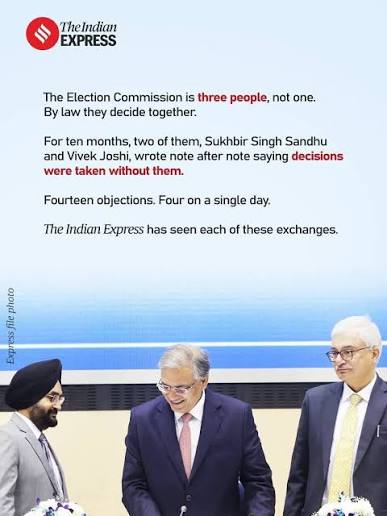
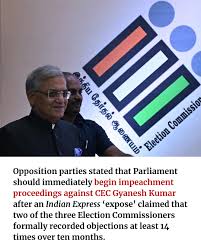
According to the Indian Express story, the two election commissioners have recorded their objections 14 times in ten months for the decisions taken and orders issued by the ECI with their agreement. In addition to this, they also objected to the changes made in Form 6. All these objections are similar to the questions raised in the media by former Chief Election Commissioner SY Quraishi, former election commissioner Ashok Lavasa, Public intellectuals Yogendra Yadav, Parakala Prabhakar, legal luminaries like Madan Lokur and others. Their objections pertain to the registration, deletion and restoration of names of voters, control over the digital architecture of rolls. The main question asked by the critics so far was whether the SIR exercise was fair, useful or necessary. The main question changes after the Indian Express expose to whether the decision were being taken by the ECI or elsewhere. If the decisions are not taken by the ECI in the manner described even in the 2023 law, they are prima facie ultra vires.
Overruled and Ignored
How the ECI Deployed an ‘Unauthorized’ Form 6 Against Majority Consent
The controversy regarding the Form 6 explains the problem more vividly. It was in May this year that election commissioner Joshi reportedly recorded that Form 6, prescribed under the Registration of Electoral Rules could not be altered by an SIR direction without amending the rules. Sandhu also agreed with this objection. Yet only the altered form appeared on ECI net. Sandhu called in August the change ‘unauthorized and illegal’ and sought its removal forthwith. But the ECI net even today has only the manipulated form. Though the majority opinion of two election commissioners was recorded it was not taken into consideration by the ECI.
‘The two ECs stand up to ask; CEC must answer, the SC must not run away,’ was the headline of the full-blooded editorial in the Thursday edition of the Indian Express. The CEC Gyanesh Kumar must answer all the questions raised by the two election commissioners and the Supreme Court should not run away as it did after the SIR in Bihar. During and after the SIR in West Bangal and many other states, the SC is seen as blindly supporting the ECI.
Prominent Journalist
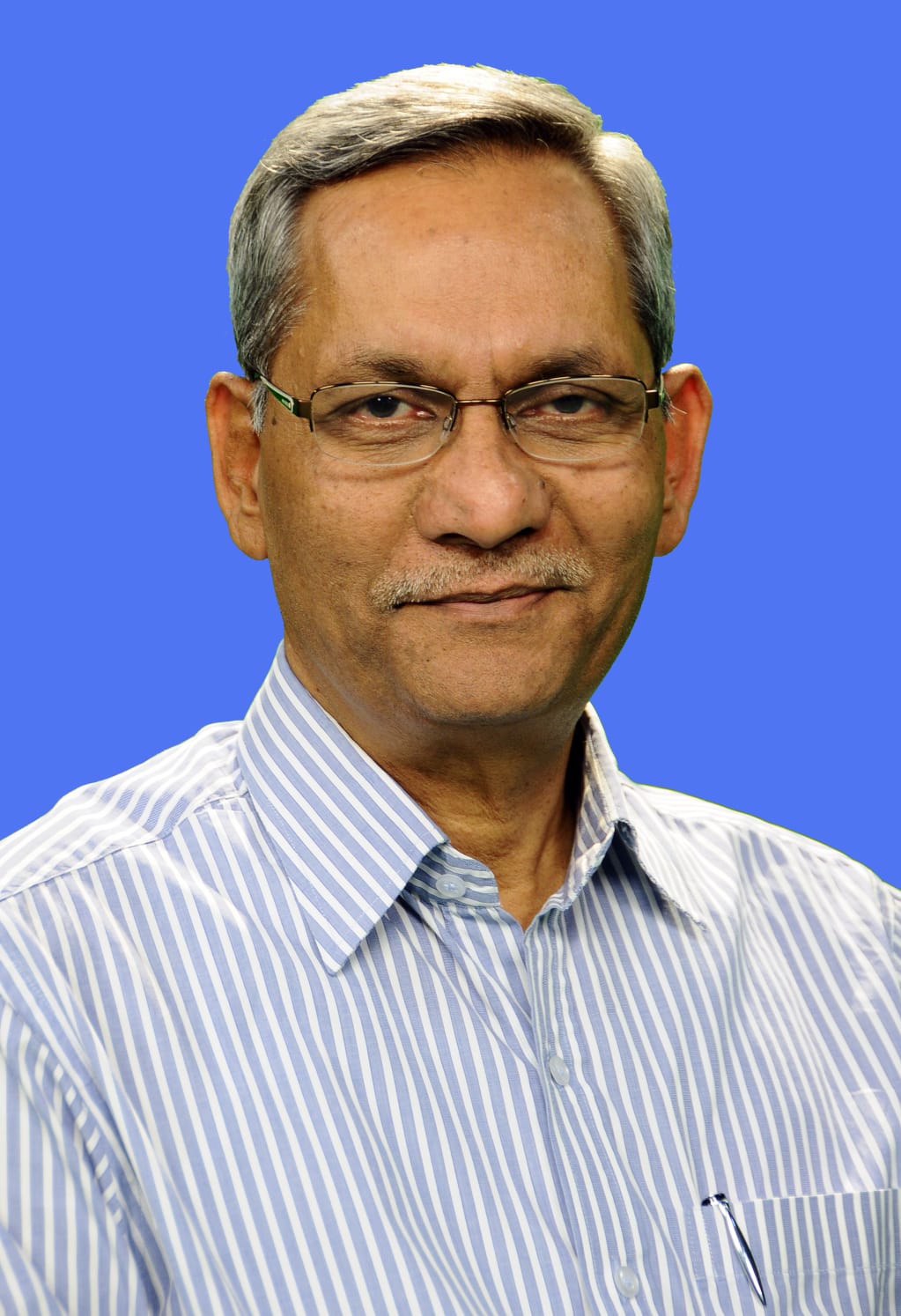
Dr. K. Ramachandra Murthy is a versatile journalist with a distinguished career. Dr. Murthy began his extensive career with Andhra Prabha of The Indian Express group in Bengaluru. He was editor of Udayam, Vaartha and Andhra Jyothy. Dr. Murthy founded and edited HMTV news channel and The Hans India, an English newspaper. He was also editorial director of the Telugu newspaper, Saakshi. He was awarded Ph. D for his research work in rural reporting. Dr. Murthy’s five decades in journalism showcases his influential roles across both print and electronic media. He wrote the political biography of NTR published by Harper Collins.
Email: murthykondubhatla@gmail.com
Mobile: 9908002211