India’s Unfinished Quest for Economic, Social and Institutional Sovereignty
India became politically independent in 1947, breaking the chains of colonial rule. Yet political independence, by itself, does not constitute complete sovereignty. True sovereignty is ultimately measured by a nation’s substantive capacity to determine its economic destiny, secure essential resources, educate and employ its young, protect the health and dignity of its people, distribute opportunity fairly, preserve institutional autonomy and conduct democratic governance without being distorted by wealth, caste, creed, communalism, organised crime, political corruption or bureaucratic inertia.
It is in this broader sense that the hyphenated expression “IN-DEPENDENCE” becomes an uncomfortable, yet appropriate, description of contemporary India.
India is no longer dependent in the colonial sense. But it remains dependent, to varying degrees, upon imported energy, fertilisers, pharmaceutical raw materials, strategic minerals, advanced technology, capital and external markets. Internally, it continues to wrestle with caste and class inequalities, concentration of wealth, inadequate human-capital formation, unemployment, institutional weaknesses, political money and the persistence of black and illicit wealth.
The argument is not that India has failed. Far from it. India has demonstrated remarkable resilience, achieved substantial macroeconomic expansion, built world-scale digital infrastructure, improved physical connectivity, expanded its services exports and emerged as an increasingly consequential global economic and diplomatic power.
The question is more fundamental:
Is economic growth being converted into economic sovereignty, productive employment, social mobility, human capability and institutional integrity?
That is the real inquiry behind IN-DEPENDENCE.
THE CATCH-22 OF A RISING ECONOMY
India today presents a striking paradox. It possesses high economic growth, expanding infrastructure, a sophisticated digital public architecture, rising exports, a resilient banking system and increasing global influence. Yet these achievements coexist with unemployment, underemployment, inadequate health and education outcomes, enormous informal employment and persistent inequality.
The Economic Survey 2025–26 estimated real GDP growth at 7.4 per cent in FY2025–26, while private final consumption expenditure reached an estimated 61.5 per cent of GDP. Services exports have also expanded substantially, reaching a record level in FY2024–25.
Fiscal consolidation, a fiscal deficit of around 4.4 per cent of GDP and continuing public capital expenditure demonstrate considerable macroeconomic strength. Yet India’s young population continues to confront a troubling gap between aspiration and opportunity.
Around one-fourth of young people aged 15–29 are neither employed nor in education or training, while only a small proportion have received formal technical or vocational training.
A demographic dividend is not created merely by having a young population. It is created when that population possesses education, skills, health and productive employment.
Otherwise, the demographic dividend can become a demographic burden.
TRADE: INTERDEPENDENCE WITHOUT VULNERABILITY
India cannot realistically aspire to complete economic autarky. Interdependence is an essential characteristic of modern international commerce. The objective, therefore, should not be isolation but strategic resilience.
India’s share of global merchandise exports has increased significantly, while services have become a major source of foreign exchange. Yet the merchandise trade balance remains vulnerable to energy and commodity prices.
The July 2026 merchandise trade deficit, which rose to nearly $32 billion, illustrated this vulnerability. The services sector, by contrast, generated a substantial surplus and provided an important cushion.
This asymmetry reveals a fundamental truth: India’s external economic strength increasingly rests upon its services capabilities, while its merchandise trade remains exposed to imported energy and critical commodities.
A geopolitical crisis thousands of kilometres away can therefore raise the price of oil, gas, fertilisers, shipping, electricity and food within India.
Trade diversification can reduce risk. Domestic capability can reduce dependence.
That distinction should guide India’s economic strategy.
ENERGY: THE FOUNDATION OF STRATEGIC AUTONOMY
India remains heavily dependent upon imported crude oil, with import dependence close to 90 per cent of consumption.
Every major rise in crude prices affects the current account, the rupee, inflation, transport costs, fertiliser prices, household expenditure and government finances.
Supplier diversification is necessary, but it cannot by itself constitute energy sovereignty.
India needs a diversified energy architecture combining renewable energy, nuclear power, storage technologies, domestic exploration, electric mobility, green hydrogen and energy efficiency.
The objective should not be to eliminate international dependence—which is neither possible nor desirable—but to ensure that no external disruption can seriously compromise India’s economic stability.
Strategic autonomy, rather than autarky, should be the goal.
FOOD SECURITY AND FERTILISER SOVEREIGNTY
India is one of the world’s largest agricultural economies, yet important components of its fertiliser chain remain heavily import-dependent.
In 2024–25, imported shares were estimated at approximately 86 per cent for rock phosphate, 52 per cent for sulphur, 78 per cent for natural gas used in the urea sector, 75 per cent for ammonia, 52 per cent for phosphoric acid and 100 per cent for muriate of potash.
Such dependence creates a structural vulnerability. A disruption in energy supplies, mineral availability, shipping or international fertiliser prices ultimately reaches the farmer, the food market, the subsidy bill and the household consumer.
Subsidies can cushion the impact. They cannot permanently eliminate the underlying dependence.
The long-term answer lies in domestic production, diversified imports, soil-health management, precision agriculture, balanced nutrient use and scientific crop diversification.
Food security must progressively become food-system resilience.
RARE EARTHS: FROM GEOLOGICAL WEALTH TO TECHNOLOGICAL SOVEREIGNTY
Possessing rare-earth deposits does not automatically confer technological sovereignty.
The strategic chain is far more demanding:
Mining → Separation → Refining → Alloying → Magnet Manufacturing → Advanced Industry
China’s dominance in processing and permanent magnets demonstrates the strategic danger of possessing resources while importing high-value products derived from them.
India must therefore move beyond resource ownership towards value-chain ownership.
The challenge is not merely to extract minerals from Indian soil, but to process them, manufacture advanced components and integrate them into domestic industrial ecosystem.
A resource-rich nation can remain technologically dependent if it lacks the capacity to transform.
CASTE, CLASS AND CREED: POLITICAL FREEDOM WITHOUT COMPLETE SOCIAL FREEDOM
The Constitution guarantees equality before law. But constitutional equality does not automatically create equality of opportunity.
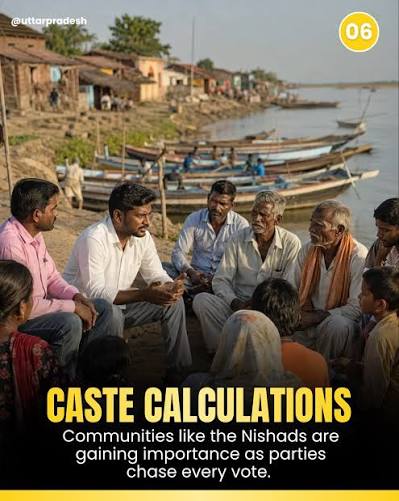
Caste, class, religion, region and inherited social networks continue to influence access to education, employment, property, credit, political representation and social mobility.
The larger objective must be substantive equality through universal access to quality schooling, nutrition, healthcare, housing, skills, credit, property opportunities and dignified employment.
The ultimate measure of social justice should therefore be not merely representation, but mobility.
Birth should not become destiny.
THE TWO-INDIA PROBLEM
Economic growth and capital accumulation are indispensable to national development. The problem begins when economic opportunity becomes excessively concentrated.
A market democracy does not require equality of outcomes. It does, however, require equality of access to the ladder of advancement.
When wealth, education, property, social networks and political influence reinforce one another across generations, inequality can become self-perpetuating.
India must therefore pursue a difficult balance: strong capital formation alongside broad-based opportunity.
The objective should be an economy in which prosperity expands the social base rather than merely enlarging existing concentrations of wealth and influence.
HEALTH: HUMAN CAPITAL, NOT CHARITY
Healthcare is often treated as welfare expenditure. It should instead be understood as productive national infrastructure.
Malnutrition, preventable disease, inadequate primary healthcare and catastrophic medical expenditure diminish labour productivity, household savings and human capital.
India has made progress in expanding health coverage and increasing public health expenditure, but the scale and quality of public healthcare remain uneven.
A nation cannot claim substantive sovereignty if illness can push millions of families into financial ruin.
The health of citizens is ultimately an element of national strength.
EDUCATION WITHOUT EMPLOYABILITY
India has expanded higher education on an enormous scale. Yet the proliferation of degrees cannot substitute for competence.
The deeper crisis is increasingly one of educated unemployability.
Education must integrate knowledge with critical thinking, communication, technology, vocational competence and practical experience.
Engineering, medicine and general education must be judged not merely by examination results and certificates, but by the capabilities they create.
Vocational education must cease to be treated as a second-class pathway.
The country does not need merely more graduates. It needs more capable citizens.
THE DEMOGRAPHIC DIVIDEND OR DEMOGRAPHIC BURDEN?
India’s young population remains one of its greatest potential assets. But demographic advantage is time-bound.
A young citizen without employment, skills or credible economic opportunity experiences not merely material deprivation but a crisis of expectation.
Persistent unemployment and underemployment can contribute to social frustration, substance abuse, political extremism and destructive populism.
The demographic window must therefore be converted into productive human capital before it begins to narrow.
The question is no longer whether India has a demographic dividend.
The question is whether India can capture it.
BLACK MONEY AND THE SHADOW ECONOMY
Informality should not be confused with illegality. Millions of informal workers are legitimate citizens operating outside formal systems because of the nature of their occupations and economic circumstances.
Black money is different. It represents concealed taxable income or wealth associated with unlawful or undeclared economic activity.
The shadow economy flourishes where cash dependence, regulatory discretion, weak enforcement and opacity intersect.
Its influence can extend into land and real estate, elections, mining, liquor, narcotics and public contracts.
The answer is not simply more raids or greater coercion. The deeper reform is to create a system in which lawful economic activity is easier, faster and more rewarding than illicit activity.
LIQUOR, MINING AND THE MAFIA ECONOMY
Liquor taxation creates a fundamental fiscal contradiction. Governments may depend heavily upon revenue from intoxicants while simultaneously confronting their social and public-health consequences.
Mining presents a comparable governance challenge. Where valuable natural resources coexist with regulatory discretion and weak enforcement, political, bureaucratic, commercial and criminal interests can converge.
The remedy lies in transparent licensing, digital monitoring, environmental accountability, proper royalty collection, community participation and financial investigation of the entire illicit chain.
The objective must be to prevent public resources from becoming private fiefdoms.
DRUGS: NATIONAL SECURITY AND PUBLIC HEALTH
India’s narcotics challenge increasingly involves synthetic drugs, pharmaceutical diversion, international trafficking and digitally facilitated distribution.
Policing remains indispensable, but enforcement alone cannot solve the problem.
The required response must
It is preventing a young citizen from entering the drug economy in the first place.
ELECTION MONEY AND DEMOCRATIC INTEGRITY
Democracy cannot be separated from the manner in which elections are financed.
The growing financial scale of electoral competition raises a fundamental question: can political influence remain genuinely democratic when financial capacity increasingly determines visibility, mobilisation.
Electoral finance therefore requires greater transparency in political donations, expenditure, advertising and mobilisation, together with credible mechanisms for enforcing the rules.
ANTI-DEFECTION LAW: THE CONSTITUTIONAL PARADOX
The Tenth Schedule was introduced to curb political defections and the notorious culture of Aaya Ram, Gaya Ram.
Its weakness lies less in its constitutional purpose than in its implementation.
Where disqualification proceedings remain pending for prolonged periods, a mechanism intended to protect political stability can itself become vulnerable to political calculation.
India requires a time-bound, impartial and institutionally credible mechanism for adjudicating defection cases.
A constitutional safeguard must not become a procedural loophole.
BUREAUCRACY AND POLITICAL WILL
India does not suffer from a shortage of laws, schemes, committees or policy documents.
The recurring weakness lies in implementation.
Administrative reform must therefore move beyond training programmes.The constitutional bureaucracy must be designed
BANKING: FROM NPA RECOVERY TO NEW VULNERABILITIES
India’s banking sector has made considerable progress since the major non-performing asset crisis of the previous decade.
But financial risks do not disappear. They migrate.
The rapid expansion of household credit and retail lending requires continuing vigilance. Credit must strengthen productive investment, entrepreneurship and employment rather than merely fuel consumption or speculative asset inflation.
Financial discipline must apply equally to powerful borrowers and ordinary citizens.
A banking system is sovereign in the public interest only when it serves the vulnerable but not the wealthy influencers.
THE RUPEE AND EXTERNAL VULNERABILITY
Currency depreciation is not automatically evidence of economic failure. Exchange rates reflect a complex interaction of domestic and international forces.
But persistent weakness becomes more consequential when an economy depends heavily upon imported oil, fertilisers, machinery and strategic technologies.
The durable answer is not artificial defence of a particular exchange-rate level.
A stronger rupee is ultimately sustained not by intervention alone, but by a stronger productive economy.
THE FREEDOM TO THINK
There is another, more subtle dimension to IN-DEPENDENCE.
The recent political vocabulary surrounding expressions such as “Dimagi Naxal”—a “Naxal of the mind”—raises an uncomfortable question about the boundaries of dissent, criticism and intellectual freedom.
A civilisation that takes pride in its ancient intellectual traditions and a Constitution that guarantees freedom of speech must remain capable of accommodating disagreement.
The tendency to equate dissent with division creates a modern democratic paradox.
A democracy does not become stronger because citizens agree with everything the establishment says. It becomes stronger when institutions possess the confidence to withstand criticism without treating criticism itself as subversion.
The freedom to think independently is itself an element of national sovereignty.
THE CENTRAL CONTRADICTION
India’s greatest challenge is not simply poverty.
It is the possibility of becoming a high-growth but highly unequal middle-income society, where advanced islands of prosperity coexist with large populations facing insecure employment, weak human capital and limited social mobility.
GDP growth is indispensable—but incomplete.
Growth must ultimately be judged by what it produces beyond the statistical aggregate:
human capability, productive employment, social mobility and institutional strength.
That is the central contradiction of India’s IN-DEPENDENCE.
FROM IN-DEPENDENCE TO SUBSTANTIVE SOVEREIGNTY
India’s next phase of nation-building should rest upon ten strategic priorities:
1. Energy sovereignty through diversification, renewables, nuclear power, storage and efficiency.
2. Critical-mineral sovereignty through domestic processing and strategic value chains.
3. Technological sovereignty in semiconductors, advanced machinery, defence and other critical sectors.
4. Employment-centred growth, particularly labour-intensive manufacturing.
5. Education-to-employment reform, replacing credentialism with competence.
6. Universal and affordable healthcare as human-capital infrastructure.
7. Transparent political finance and stronger democratic institutions.
8. Time-bound anti-defection adjudication insulated from partisan manipulation.
9. Outcome-oriented administrative reform with accountability and professional autonomy.
10. Social mobility as the ultimate measure of justice, ensuring that birth does not determine destiny.
THE SECOND INDEPENDENCE
India’s first independence liberated the nation from colonial sovereignty. The unfinished Second Independence must liberate the citizen from structural dependence—dependence upon inherited privilege, imported necessities, inadequate education, inaccessible healthcare, insecure employment, political money, bureaucratic discretion and criminalised economic networks.
That is why ‘’IN-DEPENDENCE ‘’ is more than a rhetorical expression. It is a diagnosis of the unfinished work of nation- building
It is whether resources serve the people; institutions serve the Constitution; the economy serves productive citizenship; education creates capability; healthcare protects dignity; democracy remains accountable; and opportunity is not predetermined by birth, wealth or political influence.
India has travelled an extraordinary distance since 1947.
But the unfinished journey remains:
from political independence to economic sovereignty;
from formal equality to substantive equality;
from literacy to learning;
from degrees to skills;
from growth to shared prosperity;
from bureaucracy to accountable governance; and
from electoral democracy to institutional democracy.
That is the real Second Freedom Struggle.
India must cease merely being independent of the foreigner and become increasingly independent of its own structural dependencies.
That is the meaning of IN-DEPENDENCE

M. Shiva Prasad, IPS (Rtd.) is a dedicated law enforcement professional who served the combined Andhra Pradesh cadre before opting for the Telangana cadre. Though a native of Andhra Pradesh, he considers himself a true Hyderabadi with an abiding love for the Telugu people. Driven by sincerity, fearlessness, and a lifelong fight against inequality and injustice, his ultimate strengths remain his goodwill and deep affection for the public and the police force. Today, he continues his mission by writing snippets and articles true to his conscience.
Email: Shivareach@yahoo.com
Mobile: 98480 38774