Part III
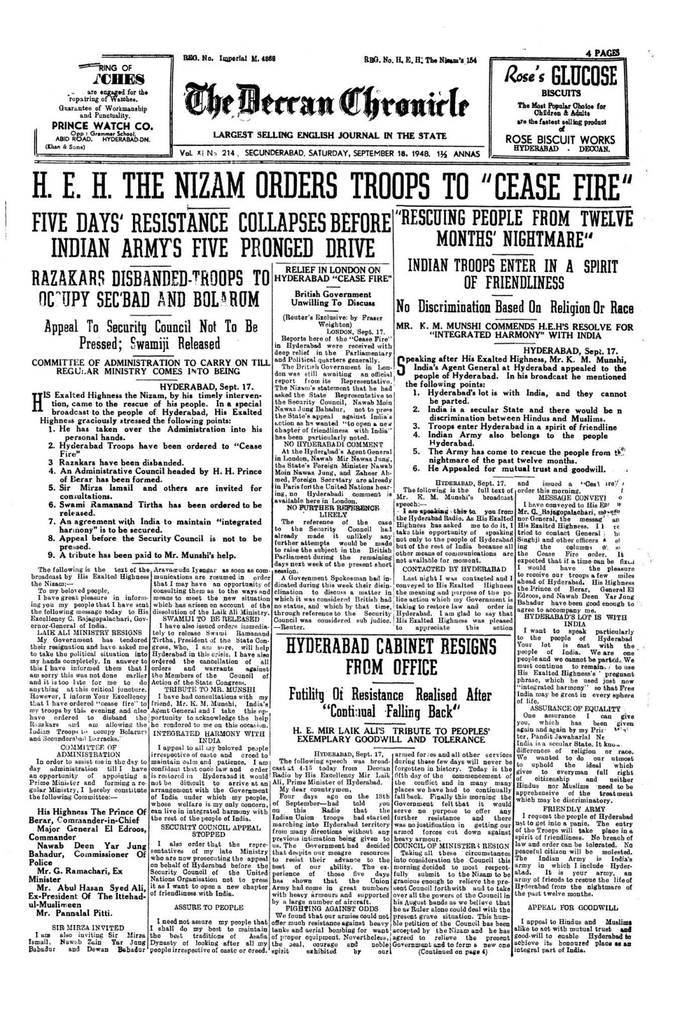
The Indian Army’s Operation Polo in September 1948 brought the Nizam’s rule to an end and resulted in Hyderabad State’s integration with the Indian Union. For those who had lived through the preceding years, the political change was also a personal liberation. Families that had fled could return. People who had lived under threat could move with greater freedom. His family did not know where he went, lived, or how he could reach Warangal until 22nd September 1948.
For Acharya, however, liberation did not mark the end of public service. He continued as a journalist and correspondent of Andhra Patrika. In 1958, he began publishing the weekly Janadharma, and in 1980 he launched the daily Warangal Vani. Thus, the underground circulation of newspapers during the Hyderabad struggle eventually evolved into a lifetime devoted to journalism.
The question of recognition as a freedom fighter
There is another chapter in Acharya’s story that deserves attention: the question of official recognition. During conversations with him, the question was raised whether he should seek recognition as a freedom fighter. Acharya reportedly responded that he had never been arrested or imprisoned and therefore wondered whether he qualified.
The answer was that imprisonment was not necessarily the only basis for recognition. Participation in recognised forms of the freedom struggle, including activities conducted from border camps, could also be relevant under the applicable government schemes. T. Hayagrivacharya, who had himself been associated with the freedom movement and later held public responsibilities, became an important witness in this process.
A detailed note was prepared describing Acharya’s activities: his work with border camps, distribution of literature, secret communication, youth organisation, encounters with Razakars, efforts to secure the release of Mustyala Shankar Rao, and other activities. Hayagrivacharya eventually signed a recommendation concerning Acharya’s role in the border-camp struggle. Other Arya Samaj leaders also supplied documents supporting his claim. The eventual recognition established an important point: a freedom struggle is not confined to those whose names appear in arrest registers or prison records. Underground communication, intelligence gathering, mobilisation, distribution of prohibited literature and other forms of resistance could also constitute meaningful participation.
A pension that became security for his widow
Recognition had a practical consequence for the Acharya family. According to the family account, Acharya initially received a freedom-fighter pension of Rs. 500 a month, which was subsequently increased to Rs. 1,000. After he died in 1994, the pensionary benefit continued to his widow, and over the years the amount was revised substantially in accordance with government increases. The significance of this pension was not simply financial compensation.
For nearly three decades after Acharya’s death, his wife could receive an income associated with his recognised contribution to the freedom struggle. By the time of her death in January 2023, the pension had reportedly risen to around Rs. 60,000 a month, subject to the applicable revisions. The family did not regard this merely as a government payment. It represented, in a small but tangible way, institutional recognition of a life spent in a struggle whose immediate rewards had been neither money nor position.
From freedom fighter to crusader of journalism
The most striking feature of M. S. Acharya’s life is the continuity between his role in the Hyderabad liberation movement and his later journalism. During the struggle, he used newspapers to carry forbidden information. After liberation, he used journalism to carry public information.
During the movement, he risked his life to ensure that people received news from leaders and border camps. After independence and Hyderabad’s integration, he built newspapers that could serve as institutions of public communication. Janadharma, founded in 1958, and Warangal Vani, begun in 1980, were therefore not accidental departures from his earlier life. They were a continuation of the same fundamental commitment: the belief that information must reach the people. The title given to the account by T. Hayagrivacharya — “Acharya: A Freedom Fighter & Crusader of Journalism” — captures this continuity. Acharya’s contribution may not have been recorded in the conventional language of major political leadership. He did not command an army or occupy a high office during the liberation struggle. His work was often hidden: carrying a pamphlet, transporting a newspaper, passing a message, watching an airport, organising a youth camp, protecting a neighbourhood or helping rescue a colleague. But movements survive through precisely such networks of people.
Remembering the man behind the newspaper
M. S. Acharya’s life demonstrates that the Hyderabad liberation struggle had many layers. There was political leadership, ideological mobilisation, public protest, underground activity, physical resistance, journalism and community self-defence. Individuals often moved between these roles. Acharya stood at the intersection of several of them.
He was a journalist who became a messenger, a newspaper agent who became a distributor of underground literature, an organiser who mobilised youth, a volunteer who protected civilians, and a freedom fighter who ultimately spent the rest of his life building newspapers. The later history of Janadharma and Warangal Vani cannot therefore be separated from the earlier history of Hyderabad’s liberation.
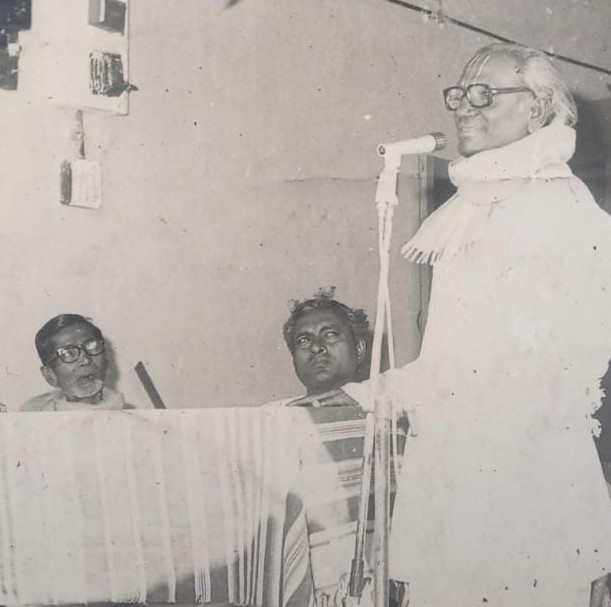
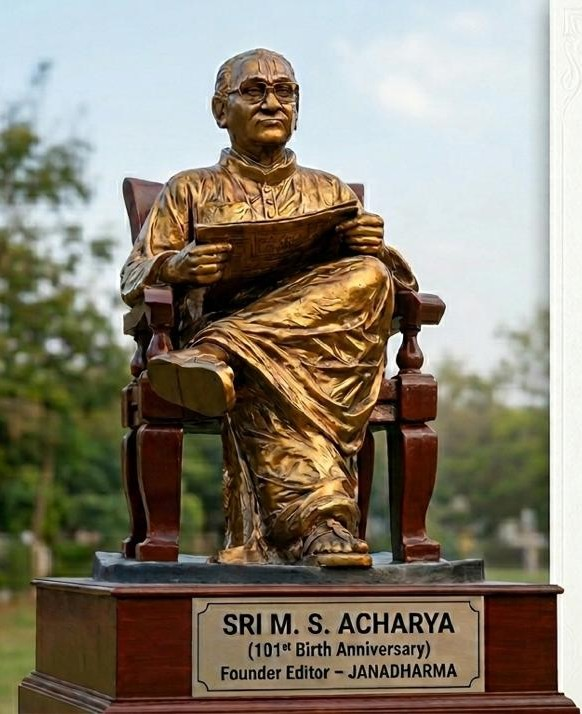
His story also reminds us that freedom is not secured only when an army enters a city or when a political order changes. Freedom is built day after day by people who preserve communication, public information alive. For M. S. Acharya, journalism was not simply a profession acquired after the struggle. It was the instrument through which he had already begun serving the cause of freedom. That is why his story deserves to be remembered not merely as the biography of a newspaper editor, but as part of the social history of the Hyderabad Liberation Movement, a history in which the courage of individuals, the solidarity of communities and the power of the printed word came together. In memory of M. S. Acharya, his Statue (Vigraham) was installed in Journalists Colony (Phase III) at Gopanapalli, Hyderabad.
Law professor and eminent columnist
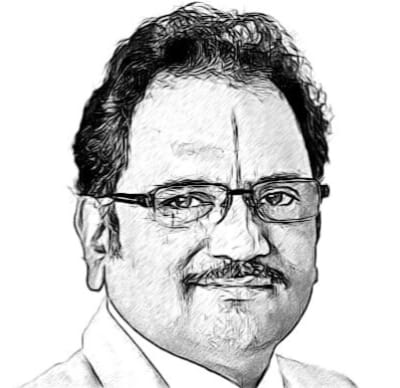
Madabhushi Sridhar Acharyulu, author of 63 books (in Telugu and English), Formerly Central Information Commissioner, Professor of NALSAR University, Bennett University (near Delhi), presently Professor and Advisor, Mahindra University, Hyderabad. Studied in Masoom Ali High School, AVV Junior College, CKM College, and Kakatiya University in Warangal. Madabhushi did LL.M., MCJ., and the highest law degree, LL.D. He won 4 Gold Medals at Kakatiya University and Osmania University.
Email: cicsridhar@gmail.com
Mobile: 8447651505