The Boundaries of Legal Adjudication
Political Discipline Trumps Individual Immunity
The Divergent Standards in Public Life
The Failure of Surekha’s Argument
In a court of law, justice operates under the doctrine of personal criminal responsibility. The judiciary assesses guilt based solely on direct evidence, admissible witnesses, and proven facts involving the individual accused. A tribunal will not penalize a parent for the unlawful actions of a child, nor will it extend criminal liability to family members simply due to their lineage. Law courts strictly insulate immediate relatives from sentencing unless direct complicity, conspiracy, or joint participation in the offense is legally proven.
The Mechanics of Political Discipline
Political parties operate under entirely different operational norms. A political party functions as a brand built on organizational hierarchy and public trust. The party high command is not bound by strict judicial rules of evidence when maintaining party integrity. Consequently, when the kith and kin of a political leader issue statements that damage the organization’s standing or target its leadership, the political responsibility inevitably falls on the leader. Within political structures, silence or failure to publicly distance oneself from family members’ hostile remarks is frequently interpreted as tacit endorsement.
The Cabinet Ouster- The Case of Konda Surekha

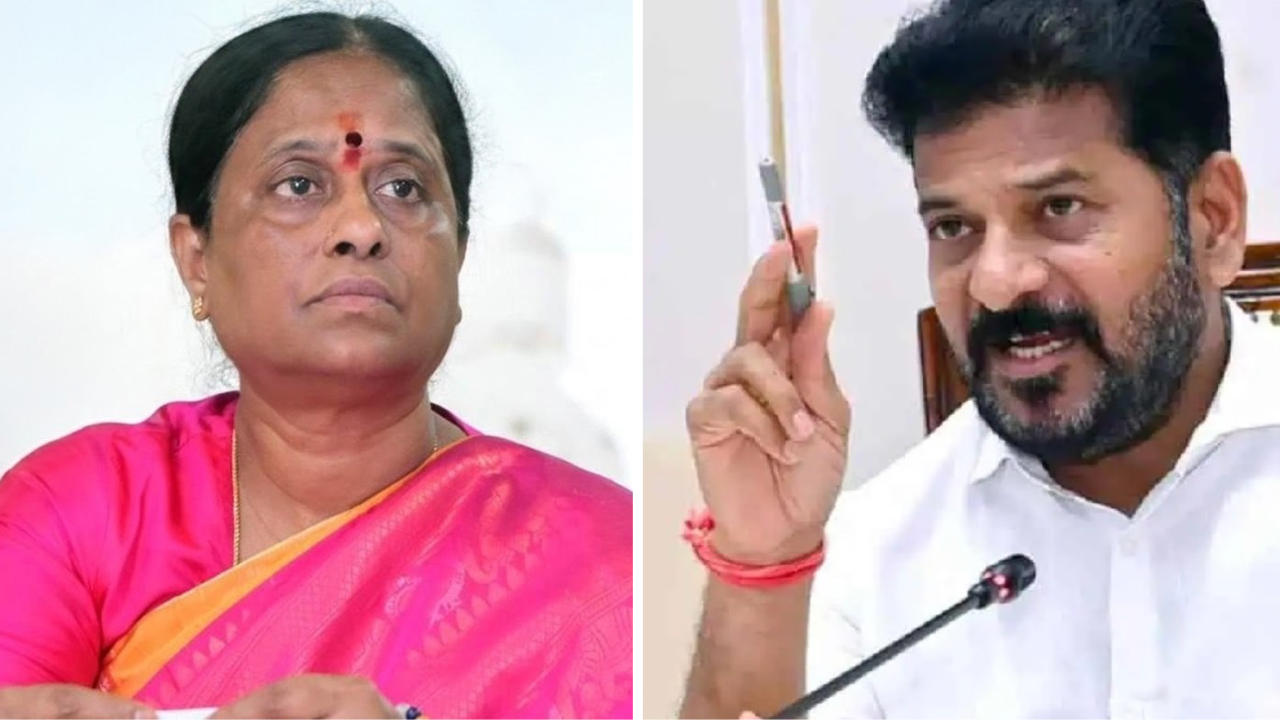
This fundamental disconnect between legal logic and political reality was highlighted by former Minister Konda Surekha following her removal from the Cabinet headed by Chief Minister A. Revanth Reddy. The political friction escalated after her daughter, Konda Sushmita, made public criticism targeting the party leadership and the Chief Minister. In response to the party’s disciplinary proceedings, Surekha raised an argument rooted in individual liability: that she should not be held accountable or penalized for public assertions made independently by her adult daughter.
Political Realities and High Command Action
While Surekha’s argument mirrors the standards of a court of law, it misjudged the realities governing political organizations. In a ruling administration, internal cohesion and loyalty to the chief executive are paramount. The party high command viewed the repeated public attacks by her immediate family as a breach of party discipline that undermined the government’s authority. Because a minister represents both the cabinet and the ruling party, public damage caused by close family members creates an intolerable conflict within political ranks.
Ultimately, the party high command enforced political necessity over individual immunity, leading to her removal from the Telangana Cabinet to preserve internal discipline and signal zero tolerance for insubordination.

Editor, Prime Post
Ravindra Seshu Amaravadi, is a senior journalist with 38 years of experience in Telugu, English news papers and electronic media. He worked in Udayam as a sub-editor and reporter. Later, he was associated with Andhra Pradesh Times, Gemini news, Deccan Chronicle, HMTV and The Hans India. Earlier, he was involved in the research work of All India Kisan Sabha on suicides of cotton farmers. In Deccan Chronicle, he exposed the problems of subabul and chilli farmers and malpractices that took place in various government departments.
Email: ravindraseshu7@gmail.com
Mobile: 9063718675




Konda Surekha ‘s issue is not legal