
BLACK MONEY, OFFSHORE WEALTH, BENAMI EMPIRES, AND THE MORAL PARADOX OF MODERN INDIA
A Classical Editorial Analysis
India celebrates the spectacular rise of its millionaires and billionaires as symbols of economic transformation. The stock markets soar, luxury automobiles multiply, skyscrapers redefine city skylines, and real estate commands astonishing valuations. Yet beneath this glittering prosperity lies a disturbing question that successive governments have struggled to answer:
How much of India’s wealth is visible, and how much remains buried in the shadows?
Official statistics proudly proclaim rising tax collections, GST revenues, digital transactions, and expanding financial inclusion. These are genuine achievements. Yet they narrate only one side of India’s economic story. The other is written in cash, concealed ownership, offshore structures, benami holdings, and undeclared assets.
India has not merely an economy.
It possesses a parallel economy.
The Invisible Fortune
For decades, public discourse has revolved around Indian wealth allegedly parked abroad through tax havens, layered corporate entities, discretionary trusts, and complex ownership structures. International initiatives on financial transparency have made it increasingly difficult to conceal such assets, yet the challenge has by no means disappeared.
Offshore banking is not illegal in itself. Global businesses and individuals legitimately maintain overseas accounts in compliance with applicable laws. The concern arises when offshore entities are allegedly used to evade taxes, conceal beneficial ownership, launder illicit proceeds, or circumvent financial regulations.
The distinction between lawful tax planning and unlawful tax evasion is fundamental. Unfortunately, sophisticated financial engineering can sometimes blur that distinction.
The Industry of Tax Avoidance
Modern taxation has evolved into an industry of specialists.
Lawyers, auditors, tax consultants, financial advisers, investment bankers, and Chartered Accountants perform indispensable and entirely legitimate roles in helping individuals and businesses comply with complex tax laws. However, where professional expertise is misused to facilitate concealment or fraudulent reporting, it undermines both the legal system and public confidence.
The issue is not professional knowledge.
It is the unethical use of professional knowledge.
Every loophole legally exploited may reduce tax liability. Every fraudulent concealment destroys public trust.
Charity and Public Image
Corporate philanthropy and charitable giving have funded hospitals, universities, scholarships, and disaster relief across India. Many individuals contribute generously and transparently.
Yet public debate often arises when philanthropy becomes a substitute for accountability. Large charitable donations cannot compensate for unlawful tax evasion if such evasion exists. Nor can public generosity erase private illegality.
Charity cannot become a moral shield against legal responsibility.
The true measure of social responsibility is not merely what one donates after accumulating wealth, but whether that wealth has been earned, disclosed, and taxed in accordance with the law.
Benami India
The Indian fascination with land has produced both prosperity and pathology.
Benami ownership, concealed beneficial interests, multiple layers of proxies, agricultural holdings acquired through intermediaries, luxury farmhouses, and undervalued registrations have historically attracted regulatory attention. Legislative measures such as the Benami Transactions (Prohibition) framework seek to curb such practices, yet enforcement remains complex.
Land is no longer merely a productive asset.
It has become a preferred repository for undisclosed wealth.
When agricultural land, luxury estates, and urban properties are acquired through opaque ownership structures, the consequences extend beyond taxation. Markets become distorted, housing becomes unaffordable, and honest purchasers compete against invisible capital.
Gold: India’s Silent Currency
Gold occupies a unique cultural and economic position.
It preserves wealth, transcends generations, and enjoys deep social acceptance. At the same time, undeclared gold holdings have historically featured in discussions on tax evasion and unaccounted wealth.
Unlike digital assets, gold can be stored, transported, and transferred with relative anonymity. Consequently, it has long been viewed as one of the preferred stores of concealed wealth.
Real Estate Inflation
Reports of extraordinarily high-value land transactions—sometimes reaching figures such as Rs 147 crore per acre in premium locations—capture public imagination. Such valuations may reflect genuine market demand in exceptional cases, but they also fuel debate about speculative investments, concentration of capital, and the role of unaccounted money in driving prices beyond the reach of ordinary citizens.
When land becomes a financial instrument rather than a social resource, inequality deepens.
Election Finance
No discussion of black money is complete without addressing electoral funding.
Election campaigns require enormous resources. While the legal framework provides mechanisms for reporting and regulation, concerns about opaque funding and undisclosed expenditure continue to be debated by policymakers, courts, civil society, and election observers.
Where political finance lacks complete transparency, democracy itself becomes vulnerable to the influence of unaccounted wealth.
The Enforcement Challenge
India possesses no shortage of institutions.
The Income Tax Department.
The Enforcement Directorate.
The Financial Intelligence Unit.
The Central Bureau of Investigation.
The Serious Fraud Investigation Office.
State Anti-Corruption agencies.
The Reserve Bank of India.
Numerous financial regulators.
The challenge is not merely creating institutions.
It is ensuring timely, impartial, evidence-based, and consistent enforcement.
Selective enforcement breeds cynicism.
Delayed enforcement encourages impunity.
Weak prosecution diminishes deterrence.
Justice delayed in financial crime often becomes justice denied.
The Moral Contradiction
The ordinary salaried taxpayer has little opportunity to conceal income. Taxes are deducted before earnings reach the bank account. Meanwhile, those with access to sophisticated financial structures, complex ownership arrangements, and international advisory networks may have greater opportunities to minimise or, in some cases, unlawfully evade tax obligations.
This perceived imbalance undermines the social contract.
Citizens willingly pay taxes only when they believe that everyone is subject to the same rules.
Beyond Economics
Black money is not merely a fiscal issue.
It is a constitutional issue.
It weakens equality before the law.
It corrodes democratic accountability.
It distorts markets.
It fuels corruption.
It inflates land prices.
It erodes public morality.
It transfers the burden of governance from the dishonest to the honest taxpayer.
Conclusion
India’s aspiration to become a developed nation cannot rest solely on rising GDP, expanding stock indices, or the increasing number of millionaires. The true test of a mature republic is not the wealth it creates but the transparency with which that wealth is generated, disclosed, and taxed.
Economic growth without ethical governance creates prosperity for a few.
Transparent governance creates prosperity for a nation.
BLACK MONEY IS NOT MEReLY HIDDEN CURRENCY.
IT IS HIDDEN INEQUALITY.
IT IS HIDDEN POWER.
IT IS HIDDEN INJUSTICE.
Until every rupee is subject to the same law, the Republic will continue to struggle against the invisible economy that flourishes beneath its visible success.

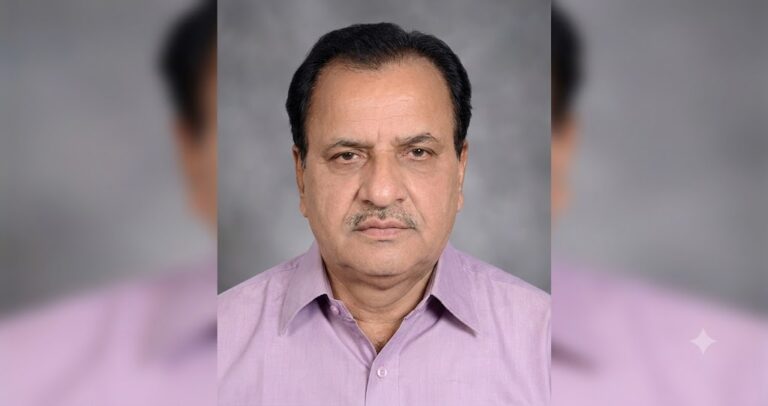
M. Shiva Prasad, IPS (Rtd.) is a dedicated law enforcement professional who served the combined Andhra Pradesh cadre before opting for the Telangana cadre. Though a native of Andhra Pradesh, he considers himself a true Hyderabadi with an abiding love for the Telugu people. Driven by sincerity, fearlessness, and a lifelong fight against inequality and injustice, his ultimate strengths remain his goodwill and deep affection for the public and the police force. Today, he continues his mission by writing snippets and articles true to his conscience.
Email: Shivareach@yahoo.com
Mobile: 98480 38774

An extremely thought provoking article Sir.