The Republic of Private Interests
A Classical Satire on India’s Political Class, Institutions, and the Moral Crisis of DemocracyTHE
A Social, Anthropological, Political, and Civilisational Inquiry
“When every citizen claims to be the centre of the universe, the nation eventually loses its centre.”
There are nations governed by constitutions.
There are societies governed by traditions.
There are civilizations governed by moral philosophy.
India, paradoxically, appears increasingly governed by competing self-interests.
The immortal Telugu idiom “Evadi Gola Vadide”—every man engrossed in his own clamour—has become far more than a colloquial expression. It has evolved into perhaps the most penetrating social-anthropological explanation of contemporary India. It captures, with rustic brevity and philosophical precision, the tragedy of a civilization where every institution speaks of national service while often pursuing sectional advantage.
The result is neither anarchy nor order.
It is organised confusion.
It is institutionalised contradiction.
It is democracy reduced to a perpetual marketplace of competing egos.
THE EGO REPUBLIC
Modern political philosophy assumes that citizenship enlarges the individual beyond the self.
Indian public life often appears to produce the opposite.
The individual becomes increasingly imprisoned within concentric circles of self-interest.
Self before family.
Family before caste.\Caste before community.
Community before religion.
Religion before party.
Party before Constitution.
Constitution before nation.
The nation itself frequently becomes an afterthought.
Public life consequently degenerates into an endless competition of narcissisms masquerading as patriotism.
Every individual demands sacrifice from others while carefully exempting himself.
Everyone demands rights.
Few speak of duties.
Everyone seeks justice.
Few practise fairness.
THE POLITICS OF CASTE: AN ANCIENT HIERARCHY IN MODERN DRESS
Modern India never abolished caste.
It merely digitised it.
Political parties transformed it into electoral mathematics.
Universities converted it into competitive entitlement.
Social organisations institutionalised it.
Media commercialised it.
Academia theorised it.
The bureaucracy administratively classified it.
Elections periodically resurrect it.
Every political manifesto promises a casteless society while meticulously calculating caste arithmetic.
The Republic condemns caste in speeches and celebrates it in candidate selection.
Nothing better illustrates institutional hypocrisy.
RELIGION: FROM INNER CONSCIENCE TO OUTER SPECTACLE

Religion once sought to discipline the soul.
Politics increasingly employs it to discipline the electorate.
Faith becomes visibility.
Pilgrimage becomes publicity.
Prayer becomes political theatre.
Temples, mosques, churches, monasteries and gurudwaras often become unwilling participants in electoral choreography.
The louder the profession of faith, the weaker often becomes the practice of compassion.
Dogma triumphs.
Morality retreats.
THE LEGISLATURE: REPRESENTATION OR PERPETUAL CAMPAIGN?
The Legislature was envisioned as the grand deliberative assembly of the Republic.
It increasingly resembles an arena of uninterrupted electioneering.
Parliament debates less.
It disrupts more.
Legislation receives insufficient scrutiny.
Political rhetoric substitutes parliamentary reasoning.
Party whips often overpower individual conscience.
Representative democracy gradually becomes representative partisanship.
The legislator increasingly behaves less as the trustee of the nation and more as the permanent campaign manager of the next election.
THE EXECUTIVE: THE BURDEN OF RED TAPE
Government possesses immense constitutional authority.
Administration frequently suffers institutional paralysis.
Red tape survives every political revolution.
Files travel more slowly than public suffering.
Procedures multiply.
Permissions accumulate.
Committees investigate.
Sub-committees review.
Expert groups recommend.
Implementation waits.
The Indian bureaucracy contains some of the world’s finest civil servants.
Yet it also carries one of the heaviest inheritances of procedural conservatism.
Administrative inertia frequently defeats administrative intention.
Innovation suffocates beneath regulation.
The citizen approaches government not with confidence but with apprehension.
The file becomes more powerful than the individual.
THE JUDICIARY: JUSTICE DELAYED, DEMOCRACY FATIGUED
The judiciary remains the constitutional conscience of the Republic.
Yet justice postponed increasingly resembles justice denied.
Millions await decisions.
Generations inherit litigation.
The courtroom becomes an inheritance rather than a remedy.
Judges struggle heroically under impossible burdens.
Vacancies remain unfilled.
Procedural complexity overwhelms substantive justice.
The Constitution promises equality before law.
Delay frequently produces inequality before time.
The poor litigant often wins only after losing the best years of life.
THE TRIANGLE OF MUTUAL BLAME
The Legislature blames the Executive.
The Executive blames the Judiciary.
The Judiciary occasionally criticises both.
The Opposition blames the Government.
The Government blames history.
The media blames everyone.
Social media condemns all institutions within seconds.
Responsibility becomes infinitely divisible.
Accountability becomes permanently invisible.
DEMOCRACY WITHOUT DISCIPLINE
India proudly celebrates itself as the world’s largest democracy.
Size alone, however, is not synonymous with quality.
Democracy requires informed citizens.
Institutional restraint.
Moral discipline.
Civic responsibility.
Public reasoning.
Instead, democratic participation frequently ends at the polling booth.
Thereafter begins political tribalism.
Victory becomes entitlement.
Defeat becomes conspiracy.
Consensus becomes weakness.
Compromise becomes betrayal.
The Republic survives.
It seldom governs itself gracefully.
THE DEMOGRAPHIC PARADOX
India proudly celebrates its demographic dividend.
Demography itself is morally neutral.
A young population without quality education becomes unemployment.
Without healthcare it becomes vulnerability.
Without skills it becomes frustration.
Without opportunity it becomes instability.
Without ethical education it becomes manipulation.
Numbers alone never created civilizations.
Character did.
LOPSIDED DEVELOPMENT
India simultaneously launches spacecraft to distant planets and struggles to provide clean drinking water to every village.
Artificial Intelligence expands.
Human intelligence remains unevenly cultivated.
Urban skylines rise majestically.
Rural distress persists stubbornly.
Digital payments flourish.
Basic sanitation still fails millions.
Luxury hospitals rival global standards.
Primary healthcare often struggles for elementary infrastructure.
Economic islands of extraordinary prosperity float amidst oceans of deprivation.
Growth becomes visible.
Development remains uneven.
INEQUALITY: THE SILENT CONSTITUTIONAL CRISIS
The distance between privilege and poverty is measured not merely in income.
It is measured in opportunity.
Education.
Healthcare.
Nutrition.
Justice.
Connectivity.
Influence.
The affluent purchase time.
The poor wait.
The affluent purchase education.
The poor compete for survival.
The affluent navigate institutions.
The poor endure them.
Thus inequality gradually becomes self-replicating.
THE EDUCATION OF IGNORANCE
India possesses one of the world’s largest educational systems.
It does not necessarily produce proportionate intellectual independence.
Schools reward memory.
Society rewards conformity.
Politics rewards loyalty.
Media rewards sensationalism.
Social media rewards outrage.
The result is an educated ignorance—degrees without discernment, information without wisdom, opinion without scholarship.
Critical thinking becomes the rarest public resource.
THE DECLINE OF MORALITY
No Constitution can manufacture integrity.
No Parliament can legislate character.
No Court can permanently enforce virtue.
No bureaucracy can administer conscience.
Morality remains the invisible architecture of civilization.
When morality weakens, institutions gradually imitate society’s decline.
Corruption ceases to be exceptional.
It becomes cultural.
Dishonesty ceases to embarrass.
It becomes normal.
Public office ceases to represent duty.
It becomes opportunity.
THE MEDIA: THE MARKETPLACE OF PERCEPTION
The classical press investigated.
Contemporary media increasingly performs.
Television amplifies conflict.
Social media industrialises outrage.
Algorithms reward anger.
Nuance disappears.
Complexity becomes commercially unprofitable.
Noise acquires higher ratings than knowledge.
The citizen consumes perpetual excitement while remaining insufficiently informed.
THE INVISIBLE MAJORITY
Amid this carnival of institutions stands the ordinary Indian.
The farmer.
The sanitation worker.
The school teacher.
The pensioner.
The small trader.
The unemployed graduate.
The migrant labourer.
The widow.
The disabled citizen.
They rarely occupy television studios.
They rarely influence policy debates.
Yet they continue carrying the Republic upon their shoulders.
They pay the hidden taxes of inefficiency, inflation, corruption, delay, and indifference.
THE GREAT SATIRE OF THE REPUBLIC
The Constitution promises equality.
Society negotiates hierarchy.
Politics promises service.
Power pursues permanence.
Education promises enlightenment.
It frequently manufactures competition.
Religion promises compassion.
It often produces exclusion.
Law promises justice.
Delay weakens hope.
Administration promises efficiency.
Procedure defeats purpose.
Media promises truth.
Commerce rewards spectacle.
Democracy promises collective wisdom.
Ego frequently delivers collective confusion.
CONCLUSION: THE PHILOSOPHY OF “EVADI GOLA VADIDE”
The tragedy of contemporary India is not that its institutions are inherently weak. Its Constitution remains among the world’s most visionary constitutional documents. Its democratic resilience has repeatedly surprised sceptics.
The deeper crisis lies elsewhere.
It is a crisis of civic character.
A crisis of public morality.
A crisis of institutional accountability.
A crisis of collective purpose.
No nation can indefinitely flourish when every institution becomes self-referential, every political party becomes self-righteous, every community becomes self-absorbed, every bureaucracy becomes self-protective, every media house becomes self-promotional, and every citizen becomes exclusively self-centred.
A civilization is not destroyed only by invasion or economic collapse. It can also be quietly diminished when the common good is gradually abandoned in favour of innumerable private ambitions.
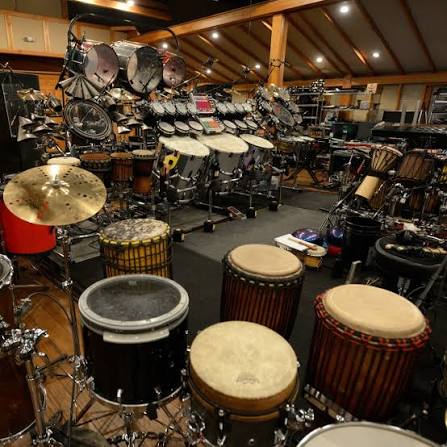
The Telugu proverb “Evadi Gola Vadide” therefore transcends folklore. It becomes a profound political diagnosis. It reminds us that a republic cannot endure merely through elections, laws, and institutions. It survives only when citizens and institutions alike recognise that freedom without responsibility degenerates into licence, rights without duties into entitlement, democracy without morality into spectacle, and politics without statesmanship into an endless procession of competing drums.
When every drum insists upon drowning every other, the music of the Republic is replaced by noise. And when noise becomes the language of democracy, civilization itself begins to lose its voice.

M. Shiva Prasad, IPS (Rtd.) is a dedicated law enforcement professional who served the combined Andhra Pradesh cadre before opting for the Telangana cadre. Though a native of Andhra Pradesh, he considers himself a true Hyderabadi with an abiding love for the Telugu people. Driven by sincerity, fearlessness, and a lifelong fight against inequality and injustice, his ultimate strengths remain his goodwill and deep affection for the public and the police force. Today, he continues his mission by writing snippets and articles true to his conscience.
Email: Shivareach@yahoo.com
Mobile: 98480 38774