College students studying in university campus with books and devices, preparing for exams
Dharmendra Pradhan – Resignation
Education, Ideology, and the Future of India’s Classrooms
Education is the most enduring instrument through which a nation shapes not merely the intellect of its citizens but also their collective memory, cultural identity, constitutional values, and civic consciousness. Governments come and go, ministers resign or are replaced, but educational reforms often outlive political regimes, influencing generations long after their architects have left office.
Consequently, the public debate surrounding Union Education Minister Dharmendra Pradhan should not be confined merely to the question of whether he ought to resign. Even if a minister vacates office, the larger question remains: what kind of educational philosophy has been institutionalised, and what consequences will it have for India’s democratic and pluralistic future?
The controversy surrounding the National Education Policy (NEP) 2020 and the subsequent revision of NCERT textbooks is therefore not simply administrative. It concerns the politics of knowledge, historical memory, constitutional values, and nation-building itself.
Education as an Instrument of National Identity
Every civilisation teaches history from its own perspective.
Britain celebrates the Tudors and Churchill.
France venerates Napoleon despite controversy.
Japan debates its wartime history.
China narrates history through the lens of national rejuvenation.
India too has the legitimate right to revisit its educational curriculum. No syllabus is immutable. Historical research evolves, new evidence emerges, and curricular revisions are both natural and necessary.
The question, however, is not whether textbooks should change.
The question is whether they are becoming more balanced or merely replacing one ideological narrative with another.
Reinterpreting Medieval Indian History

One of the most debated aspects of recent curriculum reforms has been the treatment of medieval India. Earlier textbooks were criticised by many scholars for disproportionately emphasising the administrative achievements, architecture, literature, and cultural contributions of the Mughal Empire while devoting comparatively less attention to episodes of religious persecution, temple destruction, forced political subjugation, and resistance by several indigenous kingdoms.
Recent NCERT revisions seek to present a broader narrative by giving greater attention to regional kingdoms such as the Cholas, Cheras, Pandyas, Satavahanas, Marathas, Ahoms, Vijayanagara, and others, alongside accounts of resistance to various invading powers. Supporters argue that this corrects long-standing historiographical imbalances. Critics, however, caution that history should neither glorify nor demonise entire communities or dynasties, but rather present evidence in all its complexity.
Remembering the Emergency
Another significant curricular change has been the increased emphasis on the Emergency (1975–1977), widely regarded as one of the most controversial chapters in independent India’s constitutional history.
The suspension of fundamental rights, censorship of the press, preventive detentions, constitutional amendments, and political centralisation are increasingly presented as lessons in safeguarding democratic institutions.
From an educational perspective, studying the Emergency serves an important civic purpose. Democracies strengthen themselves by teaching not only their achievements but also their failures.
Rediscovering India’s Indigenous Knowledge Systems
The National Education Policy also encourages greater recognition of India’s intellectual heritage. Traditional systems such as Ayurveda, Yoga, Indian mathematics, astronomy, philosophy, Sanskrit knowledge traditions, and classical languages receive greater prominence.
Few serious scholars dispute that India’s civilisational contributions deserve wider academic recognition. The challenge lies in ensuring that traditional knowledge is taught alongside modern scientific methodology rather than as its substitute. Authentic scholarship flourishes when cultural pride coexists with empirical inquiry.
Celebrating Indigenous Heroes

Recent textbooks devote greater attention to regional rulers and resistance movements that previously occupied relatively limited space in mainstream curricula. Leaders such as Chhatrapati Shivaji Maharaj, the Cholas, Ahoms, Rani Durgavati, Lachit Borphukan, Maharana Pratap, the Vijayanagara rulers, and numerous tribal freedom fighters receive expanded coverage.
This broader geographical representation undoubtedly enriches Indian historical understanding. Yet historical scholarship requires nuance.
Heroism should be celebrated without reducing complex historical interactions into simplistic binaries of virtue and villainy. Contemporary Military Operations in the Classroom
Another emerging trend involves incorporating India’s contemporary military achievements and national security operations into educational material. Supporters contend that students should understand India’s defence capabilities, technological progress, and strategic resilience.
Critics argue that contemporary military events require careful academic distance, rigorous documentation, and mature historical evaluation before becoming part of school curricula. Education should cultivate informed patriotism rather than unquestioning nationalism.
Language Policy and National Integration
The National Education Policy advocates multilingual learning and promotes the study of Indian languages alongside the mother tongue. Its stated objective is to strengthen cultural exchange, cognitive development, and national integration.
Educational research generally supports multilingual education for improving learning outcomes and intercultural understanding. However, implementation remains uneven across states, with concerns regarding teacher availability, regional sensitivities, and linguistic autonomy. The success of language policy ultimately depends less upon legislation than upon administrative capacity and cooperative federalism.
Beyond Curriculum: The Larger Structural Crisis
Public discourse often focuses intensely upon textbook revisions while overlooking deeper structural deficiencies.
Millions of Indian children continue to study in schools lacking laboratories, libraries, digital infrastructure, trained teachers, and adequate learning environments. Learning outcome surveys repeatedly reveal deficiencies in foundational literacy, numeracy, comprehension, and analytical reasoning.
Graduate unemployment remains high despite increasing educational enrolment.
The real crisis is therefore not merely what children study, but how they learn.
No curriculum, however sophisticated, can compensate for poor teaching quality.
Resignation Will Not Resolve Structural Problems
Calls for the resignation of an Education Minister may satisfy immediate political demands. Yet ministerial accountability alone cannot repair systemic weaknesses accumulated over decades.
India’s educational transformation requires sustained improvements in teacher training, research quality, institutional autonomy, curriculum transparency, educational equity, digital access, and evidence-based policymaking.
The debate must therefore rise above personalities.
The central question is neither whether one minister remains nor whether another replaces him.
The enduring question is whether Indian education is producing informed citizens capable of critical reasoning, scientific temper, constitutional morality, and cultural confidence.
Conclusion
Every generation rewrites history.
Wise nations rewrite it through scholarship.
Polarised societies rewrite it through ideology.
India stands at a defining educational crossroads.
If curriculum reform becomes an exercise in correcting historical omissions through balanced scholarship, it will strengthen the Republic.
If, however, educational institutions become arenas for competing political narratives, future generations may inherit not historical understanding but historical polarisation.
The future of India will ultimately be determined less by who occupies the office of the Education Minister than by what occupies the minds of India’s children.
For classrooms do not merely preserve a nation’s past—they quietly construct its future.
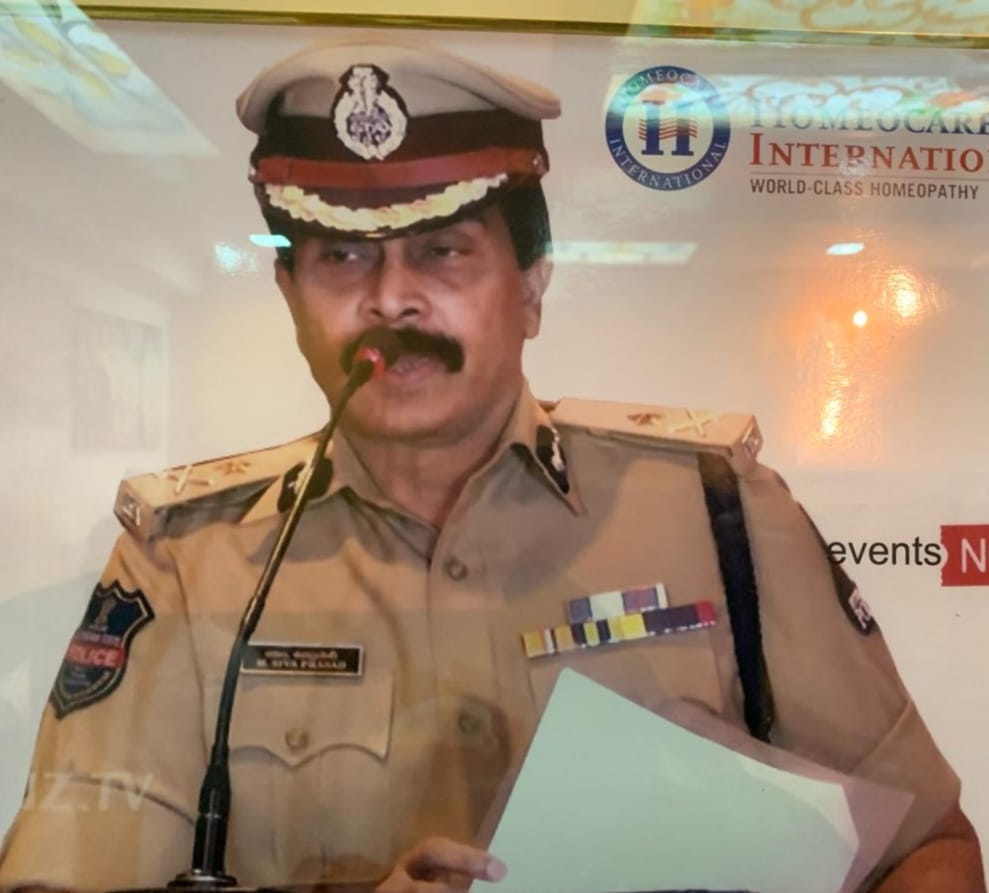
M. Shiva Prasad, IPS (Rtd.) is a dedicated law enforcement professional who served the combined Andhra Pradesh cadre before opting for the Telangana cadre. Though a native of Andhra Pradesh, he considers himself a true Hyderabadi with an abiding love for the Telugu people. Driven by sincerity, fearlessness, and a lifelong fight against inequality and injustice, his ultimate strengths remain his goodwill and deep affection for the public and the police force. Today, he continues his mission by writing snippets and articles true to his conscience.
Email: Shivareach@yahoo.com
Mobile: 98480 38774