The Cascading Nightmare of “Purged” Voters
Based on recent macro-analyses by political and constitutional scholars, the SIR, Census, and Delimitation function together as a unified spectrum. There is a need to refer to statements made by Congress General Secretary K.C. Venugopal in his interview with The Hindu on July 18, 2026, to weave directly into the complex matrix of the electoral, legal, and constitutional crisis. Venugopal explicitly warns that the ruling dispensation is attempting to win elections by distorting India’s constitutional and federal balance through a three-pronged mechanism:
- Splitting Political Parties to manufacture an artificial parliamentary supermajority.
- The SIR Process to selectively purge, shrink, and reshape local electorates on the ground.
- Delimitation (via the Constitution 131st Amendment Bill) to permanently lock in those redrawn, highly engineered boundaries at a national level.
His observation that “the Government appears to be trying to divide Opposition parties to facilitate its agenda” highlights how local engineering scales into national dominance. The administrative tools—namely the SIR data and demographic surveillance software—are deployed aggressively in non-aligned terrains, shifting the competitive baseline of entire states. As noted in recent macro-analyses by political and constitutional scholars, the SIR, Census, and Delimitation function together as a unified spectrum.
THE APPARATUS OF ELECTORAL RE-ENGINEERING
The proposed structural shift operates through a three-phase sequence designed to systematically alter electoral dynamics. It begins with Phase 1: The SIR Audit, which utilizes algorithmic deletions to purge millions of voters from electoral rolls, particularly targeting regions like West Bengal and Telangana. This sets the stage for Phase 2: The Census, which captures and solidifies these altered demographic data points under newly established constraints. Finally, the process culminates in Phase 3: Delimitation—enacted through the 131st Amendment—which permanently redraws Lok Sabha constituency boundaries, effectively locking in long-term regional and partisan advantages.
This structural loop explains why the Supreme Court’s recent intervention is so critical. By ruling in the West Bengal case that the SIR outcome cannot be used to determine citizenship or strip individuals of civil rights, the Court temporarily severed the first link of the chain. If the state cannot use the SIR to legally or socio-economically “erase” people, the foundation upon which future delimitation boundaries are drawn becomes highly contested.
The Legal and Parliamentary Shield
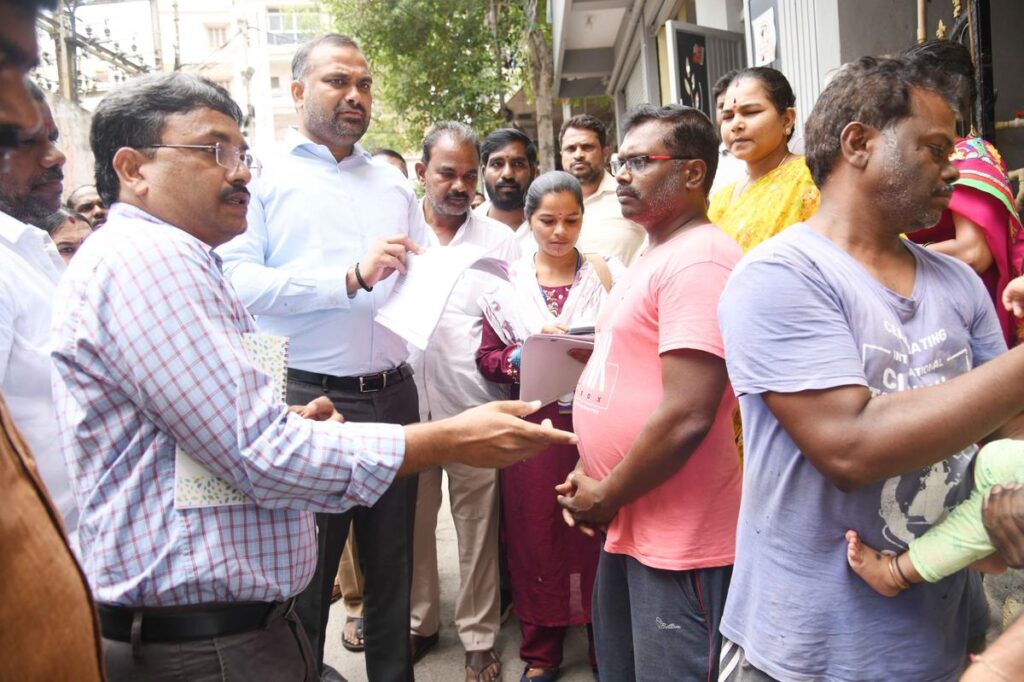
Venugopal’s interview sets the stage for a major battle in the upcoming Monsoon Session. The Congress party’s core demand, insisting on seeing the full text of the Delimitation Bill and forcing an all-party consultation, is an effort to protect the federal compact. They argue that the executive must not be granted sweeping powers to unilaterally dictate representation.
For ordinary citizens facing the brunt of these policies in Telangana or West Bengal, the message is clear: the micro-struggle over a local verification form or a 2002 legacy document is not merely a bureaucratic chore. It is the frontline of a larger, systemic effort to redraw the political architecture of the nation. The Supreme Court’s defense of civil rights provides the legal armor, while the Opposition’s stance against the 131st Amendment serves as the parliamentary line of defense.
Statement from the bench of the Supreme Court (not the Judgment)
The breaking news regarding the Supreme Court’s intervention (on 17.7.2026) in the West Bengal Summary Internal Review (SIR) case brings a profound judicial shift to the ongoing voter deletion crisis. When integrated into the context of Telangana’s looming disenfranchisement of 88 lakh voters, this legal development serves as an indictment of bureaucratic overreach and offers a critical framework for how citizens can fight back against arbitrary exclusions.
The Bench, headed by Chief Justice of India Surya Kant and featuring a significant observation by Justice Joymalya Bagchi, has fundamentally stripped the Election Commission (EC) of the power to act as an arbiter of citizenship.
Justice Bagchi explicitly clarified the boundaries of electoral audits based on the Supreme Court’s May 27 judgment in the Bihar SIR case:
- No Citizenship Mandate: The outcome of an SIR cannot be used to conclusively determine whether an individual is a citizen of India.
- The Jurisdiction Gap: Justice Bagchi notes: “The EC is not a constitutional authority regarding Articles 9, 10, 11 and 12 of the Constitution.” Constitutional authority over citizenship rights belongs strictly to the Union Government via the Citizenship Act, not the EC or its localized booth-level software.
- Preservation of Status Quo: Until a formal government adjudication occurs, an individual’s existing civil status must continue. The EC cannot implicitly strip a person of their civic identity by deleting them from a voter roll.
Erased by Algorithm: The Unseen Impact of Electoral Roll Purges
The petition, filed by Congress leader Prasenjit Bose and argued by senior advocate Gopal Sankaranarayanan and advocate Neha Rathi, exposes how voter deletion triggers a domino effect that destroys a citizen’s livelihood. The petition challenged three highly damaging orders issued by the West Bengal government that weaponized the SIR list:
- May 19 Order (The Annapurna Scheme Cash Freeze): The State directed that “purged” voters must be removed as beneficiaries of the Annapurna cash transfer scheme for women, unless they filed an appeal before the SIR tribunal.
- June 4 Order (PDS Ration Cancellation): The state explicitly linked food security to voting by ordering the deletion of individuals from the Public Distribution System (PDS) solely because their names were missing from the SIR list.
- May 14 Order (Caste Certificate Revocation): The state called for authorities to re-verify and cancel the caste certificates of anyone deleted by the SIR, threatening their access to reservation benefits and social protections.
The Paralysis of the Appellate Machinery
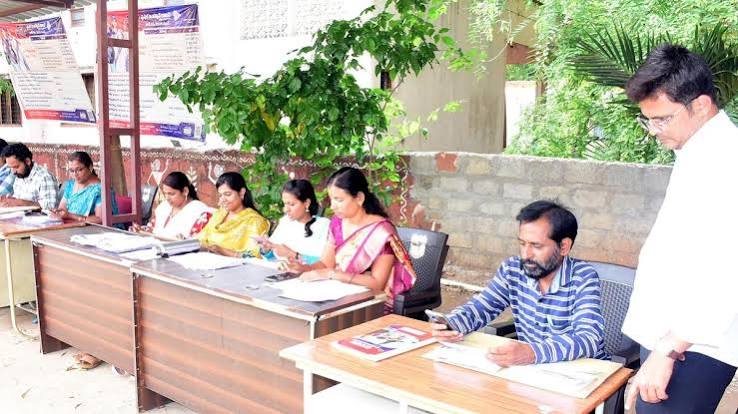
The core of the legal argument exposes a cruel administrative trap: while the state acts instantly to strip citizens of food, cash, and identity benefits based on the SIR, the system meant to correct errors operates at a snail’s pace.
WEST BENGAL SIR APPEALS STATUS
+—————————-+——————————–+
Total Appeals Filed == 34,00,000 (34 Lakh)
Total Appeals Disposed == 38,00,000 (Only ~1.1%)
Backlog Awaiting Trial == Over 33.5 Lakh
Total Active Tribunals == 19
Success Rate of Heard Cases == 70% Cleared for Re-inclusion
+—————————-+——————————–+
Because 70% of the appeals heard so far resulted in the voter being reinstated, it proves that the initial SIR deletions were deeply flawed, inaccurate, and unjust.
To resolve this bottleneck, the petition argues for:
- A “minimum documentary threshold” to accelerate case disposal. As advocate Sankaranarayanan argued, “If you have a passport, that should be a clear pass for citizenship.”
- Total structural transparency, requiring the 19 tribunals to establish public websites, upload their orders, and publish explicit Standard Operating Procedures (SOPs).
- The eradication of the systemic vacuum caused by the complete absence of local-language guidelines, clear timelines, or ground-level legal aid for the poor, illiterate, and uneducated who cannot navigate online portals.
The Direct Impact on Telangana’s Electoral Crisis
This Supreme Court intervention fundamentally changes the stakes for the ongoing voter verification drive in Telangana.
Destruction of the “2002 Legacy Data” Trap
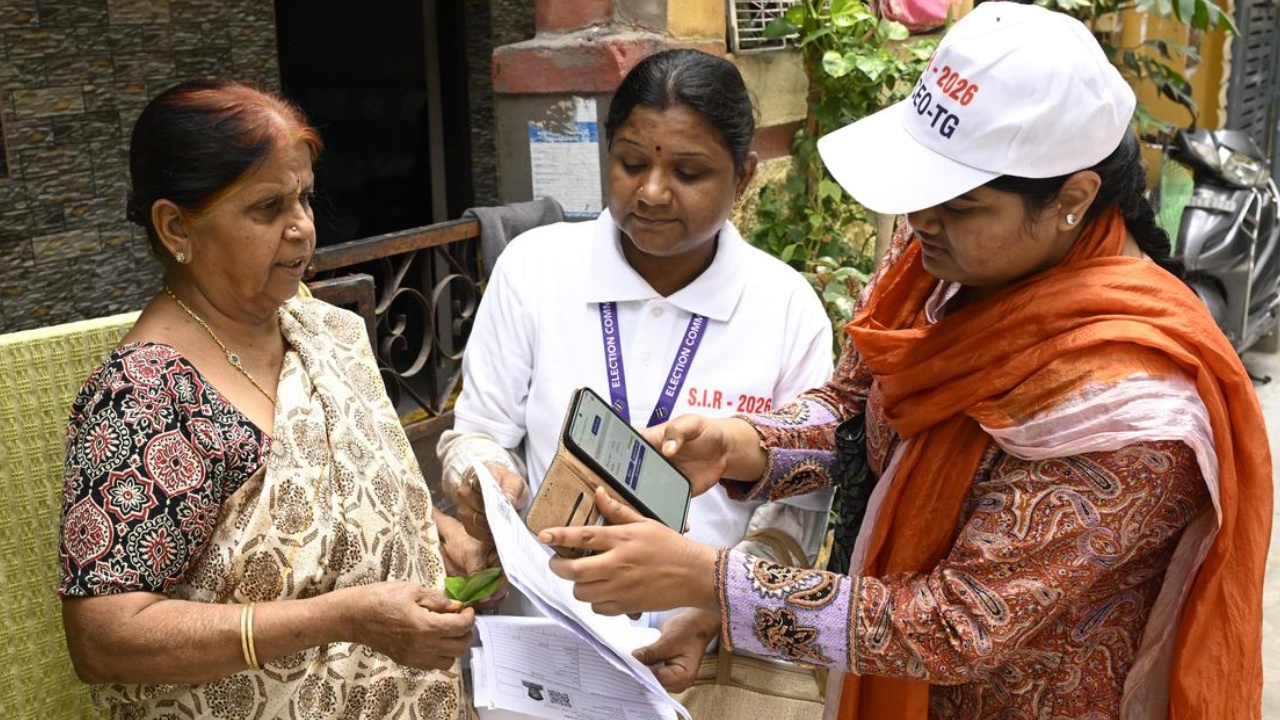
The Telangana administration’s insistence that voters must match legacy data from the 2002 SIR to retain their vote is now legally highly vulnerable. If the Supreme Court rules that an SIR cannot determine citizenship or permanently alter civil rights, Telangana officials cannot use the failure to find 2002 records as grounds to effectively invalidate a citizen’s status.
A Shield Against Algorithmic Deletion (DSA/DSE Software)
The Supreme Court’s warning prevents Telangana from using its Demographic Surveillance Agency (DSA) software to conduct automated, unchecked purges. If the software flags a “Demographically Similar Entry” across the Andhra-Telangana border, the state cannot instantly delete the voter without a rigorous, transparent human adjudication process.
Protection Against Welfare Weaponization
The West Bengal model exposed a chilling reality: voter deletion quickly leads to welfare starvation. In Telangana, where millions depend on specialized state welfare schemes, food rations, and local subsidies, the Supreme Court’s notice blocks any attempts to link PDS rations or state benefits to the submission of the new voter forms.
A Roadmap for Structural Accountability
The legal demands raised in the petition—such as local language guidelines, low documentary thresholds (like using a passport or existing structural ID as an immediate pass), and the mandate for ground-level legal assistance—give Telangana’s civil society and opposition parties a clear legal playbook. The state cannot simply declare “no form, no vote” via local officials like C. Sudarshan Reddy without establishing an accessible, fully functional, and transparent appeals infrastructure. The Supreme Court has sent a clear message across the country: The Election Commission is a manager of voter rolls, not an arbiter of human existence.

Law professor and eminent columnist
Madabhushi Sridhar Acharyulu, author of 63 books (in Telugu and English), Formerly Central Information Commissioner, Professor of NALSAR University, Bennett University (near Delhi), presently Professor and Advisor, Mahindra University, Hyderabad. Studied in Masoom Ali High School, AVV Junior College, CKM College, and Kakatiya University in Warangal. Madabhushi did LL.M., MCJ., and the highest law degree, LL.D. He won 4 Gold Medals at Kakatiya University and Osmania University.
Email: cicsridhar@gmail.com
Mobile: 8447651505