Speculative Capital and the Erosion of Housing Affordability
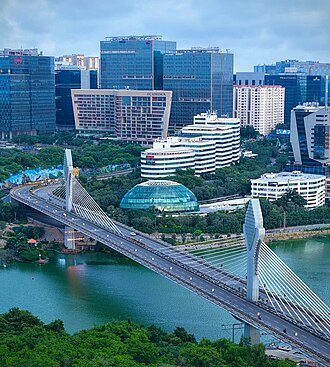
Hyderabad, once celebrated as India’s most promising and affordable metropolitan destination, now stands at the crossroads of prosperity and exclusion. Behind the glittering skyline of Kokapet, Neopolis, Financial District, Gachibowli, and Tellapur lies a darker economic reality. The city’s housing market has steadily drifted away from the aspirations of ordinary citizens and increasingly serves the interests of speculative capital, political patronage, and institutional complacency.
The latest findings of the Knight Frank India Affordability Index merely quantify what thousands of middle-class families have silently endured for years. Hyderabad has become the third least affordable housing market among India’s eight largest metropolitan cities, requiring an average household to devote nearly 41% of its monthly income merely to service housing EMIs. Housing affordability ceases to exist when nearly half of disposable income disappears into loan repayments. A home transforms from a constitutional aspiration into a lifelong financial liability.
The Divergence of Land Valuations and Middle-Class Incomes
The crisis is not accidental. It is systemic. Housing prices have detached themselves from economic fundamentals. They are no longer determined by construction costs, genuine demand, or household incomes. Instead, they increasingly reflect speculative land valuations created through artificial scarcity, aggressive bidding, political patronage, and institutional incentives that reward appreciation rather than accessibility.
Every new record-breaking land auction is celebrated as an economic triumph. Every soaring square-foot rate is projected as evidence of Hyderabad’s global stature. Yet every such celebration quietly pushes another salaried family beyond the boundaries of home ownership. Rising land values enrich governments through stamp duty and registration revenues, strengthen developers through higher margins, inflate banking credit portfolios, and expand municipal tax collections. The only stakeholder left impoverished is the ordinary citizen who actually needs a home.
The Luxury Trap

The housing market has gradually evolved into a sophisticated financial ecosystem where land functions less as a social resource and more as a speculative financial asset. In this ecosystem, shelter becomes secondary while capital appreciation becomes the primary objective. The spectacular rise of western Hyderabad illustrates this transformation with remarkable clarity. Kokapet, Neopolis, Gachibowli, Narsingi, Nanakramguda and Tellapur have witnessed unprecedented appreciation within a remarkably short period. Much of this escalation has been driven not by corresponding improvements in affordability or public welfare but by speculative acquisition of land banks, delayed releases of developable land, luxury-oriented project launches, and expectations of perpetual appreciation.
This speculative spiral creates a vicious cycle. Developers acquire land at inflated prices. Expensive land necessitates luxury construction. Luxury construction excludes middle-income buyers. The resulting scarcity of affordable housing further inflates prices. Every participant benefits except the ultimate consumer.
Government intervention has unfortunately failed to alter this structural imbalance. Successive housing programmes have generated impressive announcements but limited transformative outcomes. The Two-Bedroom Housing Scheme symbolised dignity for economically weaker sections. Yet in numerous locations, completed structures reportedly remain underutilised because supporting civic infrastructure—water supply, electricity, drainage, public transport and maintenance—failed to materialise simultaneously. Physical construction without functional urban planning merely converts welfare into abandoned concrete.
Similarly, affordable housing initiatives have struggled against the harsh arithmetic of land economics. When land itself constitutes the largest component of project cost, affordable housing becomes commercially unattractive. Private developers naturally gravitate towards premium residential segments where margins are substantially higher. Public policy, instead of correcting this market failure, often becomes dependent upon the very market forces responsible for creating it.
The deeper concern extends beyond economics into governance
Land administration in Telangana remains fragmented across multiple authorities. Revenue departments maintain historical records. Urban development authorities regulate planning permissions. Municipal corporations supervise civic infrastructure. Registration departments record transactions. Police investigate land disputes. Civil courts adjudicate ownership conflicts. Each institution performs a limited statutory function, yet no single authority assumes comprehensive responsibility for ensuring transparency, preventing speculation, or protecting vulnerable purchasers. This institutional fragmentation creates fertile ground for organised land syndicates.
Across rapidly urbanising corridors, allegations frequently surface regarding forged title documents, overlapping survey records, illegal layouts, benami acquisitions, encroachments, manipulated valuations, and prolonged civil litigation. Judicial proceedings often extend across decades, during which disputed properties continue changing hands multiple times, multiplying uncertainty while enriching intermediaries.
Delay itself becomes an economic commodity.
The longer litigation continues, the greater the opportunity for speculative profits. Meanwhile, enforcement agencies confront their own structural limitations. Revenue officials face enormous administrative burdens. Municipal authorities struggle with explosive urban expansion. Police intervene primarily when criminality becomes apparent, whereas most land disputes initially masquerade as civil disagreements. Courts remain overwhelmed by mounting pendency. The cumulative effect is not necessarily institutional conspiracy but systemic incapacity that benefits organised speculative interests.
Political economy further complicates reform.
Urban land represents one of the most valuable financial resources available to any government. Escalating property values generate substantial revenues through registrations, development charges, conversion fees, property taxation, and auction proceeds. Governments therefore possess strong fiscal incentives to encourage appreciation while simultaneously proclaiming commitments to affordability. This contradiction lies at the heart of Hyderabad’s housing dilemma. A city cannot simultaneously maximise land monetisation and guarantee affordable housing without deliberate corrective intervention.
Banks too become integral participants in this expanding ecosystem. Rising property prices necessitate larger home loans extending over twenty-five or thirty years. Families enter prolonged cycles of indebtedness. A single employment disruption, medical emergency, or economic slowdown threatens financial stability. Housing finance thus transforms into a mechanism through which future incomes are continuously transferred into present-day asset valuations.
The social consequences are profound
Young professionals postpone marriage because housing remains unaffordable. Families migrate towards distant peripheral settlements, sacrificing time, productivity, and quality of life through exhausting daily commutes. Informal settlements expand because formal housing remains inaccessible. Rental markets become increasingly exploitative. Intergenerational wealth inequality widens as property ownership becomes concentrated among earlier purchasers and speculative investors. Urban inequality thereby acquires a distinctly geographical character. The affluent inhabit integrated urban ecosystems with superior infrastructure, educational institutions, healthcare, and employment opportunities. The working and middle classes increasingly occupy distant peripheries where public services remain inadequate, transportation expensive, and economic mobility constrained.
The constitutional promise of equitable urban development gradually yields to the market logic of exclusive urban privilege. International experience demonstrates that successful metropolitan housing requires strong public institutions, transparent land records, swift judicial resolution of property disputes, inclusionary zoning, rental housing reforms, land value taxation, and robust public transport connecting affordable peripheral housing with employment centres.
Hyderabad possesses extraordinary economic potential
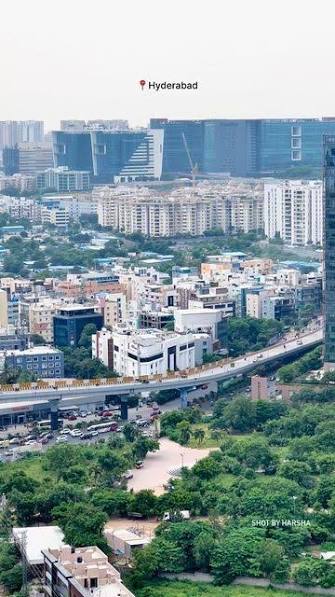
Its technology sector continues attracting global investment. Infrastructure expansion remains impressive. Demographic growth generates sustained demand. Yet no city can indefinitely sustain prosperity when housing becomes inaccessible to the very workforce that powers its economic engine. Urban civilisation ultimately rests not upon skyscrapers but upon social equilibrium. The true measure of a city’s greatness is not the height of its towers but the accessibility of its homes. Until housing returns from the realm of speculation to the realm of social justice, Hyderabad’s celebrated growth story will remain incomplete—a magnificent skyline casting an increasingly long shadow over those who can no longer afford to live beneath it.
As the ancient wisdom reminds us.
“सर्वे भवन्तु सुखिनः, सर्वे सन्तु निरामयाः।”
May all live in dignity; may all live in security.
A civilised city cannot merely build taller buildings.
It must build the possibility of home.
The Author’s Testament.
A Home Bought with Hope, Paid for with a Lifetime.
This is not merely an essay on housing economics.
Nor is it an abstract critique of banking, real estate, or public policy
It is, above all, the lived testimony of a citizen who carried the burden of a housing loan for nearly three decades, and who learned—at immense personal cost—that a house can sometimes become the heaviest cross a middle-class family is called upon to bear.
Like millions of ordinary Indians, I once nurtured a simple dream: to own a modest apartment that would provide dignity, security, and permanence to my family. To realise that dream, I obtained a housing loan from the then Syndicate Bank, now merged with Canara Bank. On the day I signed the loan documents, I believed I was purchasing a home. In retrospect, I had unknowingly entered into a covenant that would shape the next twenty-nine years of my life. For almost three decades, I honoured every obligation to the best of my ability. Month after month, year after year, I paid Equated Monthly Instalments with unwavering sincerity. By the end of that long journey, I had paid interest amounting to nearly twice the original principal. Yet the burden seemed to possess a life of its own, refusing to loosen its grip.
Then came the years of relentless adversity.
Personal tragedies.
Family responsibilities.
Medical challenges.
Financial distress.
Each arrived not in isolation, but in succession, testing both endurance and faith.
The correspondence from the bank became unceasing.
One notice followed another.
Then another.
Until the number reached fifty-nine notices and memoranda.
Every envelope carried more than official communication.
It carried anxiety.
It carried uncertainty.
It carried the silent fear that years of sacrifice might ultimately dissolve into loss.
Telephone calls became a source of apprehension.
Every message on the mobile phone seemed to herald another demand.
Every knock on the door stirred unease.
Peace gradually surrendered to perpetual anticipation.
Eventually, my loan account was classified as a Non-Performing Asset (NPA).
For a financial institution, that may be an accounting designation.
For a borrower, it is an emotional verdict.
The ordeal reached its most painful moment when auction proceedings were initiated. Public auction notices were published in newspapers. Notices were affixed to the property itself.
Those sheets of paper were legally required documents.
Yet to me, they appeared as public proclamations of personal defeat.
They did not merely describe a property.
They seemed to expose a lifetime of struggle before strangers.
For an entire day, I found myself unable to remove those notices.
I stood before them in silence.
Not because I accepted them.
But because I was gathering the strength to confront what they represented.
When I finally tore them down, it was not an act of anger.
It was an act of quiet anguish.
The paper yielded easily.
The wounds it left behind did not.
Many advised me to initiate prolonged legal proceedings.
Indeed, I seriously contemplated approaching the courts.
I have always retained profound faith in the rule of law.
Yet life is seldom governed by legal theory alone.
At that stage, I was already carrying the weight of numerous personal, familial, financial, and emotional crises. To embark upon another prolonged legal battle required time, emotional strength, and financial resources that I simply did not possess.
Sometimes life compels a person not to abandon justice, but to postpone the pursuit of it in order to survive.
Nevertheless, surrender was never an option.
I borrowed from relatives.
I sought help from friends.
I mobilised every resource available to me.
In good faith, I requested that the bank consider a one-time settlement with a modest concession, so that an honourable closure could be achieved.
That request was declined.
Ultimately, through extraordinary effort and immense sacrifice, I arranged an enormous sum and discharged the liability in full.
The loan account was finally closed.
The debt disappeared from the ledger.
The pain did not disappear from memory.
Financial losses can, over time, be repaired.
Documents can be cancelled.
Accounts can be closed.
Auction proclamations can be withdrawn.
But there exists no accounting system capable of measuring sleepless nights.
No balance sheet records humiliation.
No financial statement quantifies the silent tears shed within a family striving only to preserve the sanctity of its home.
I narrate this experience neither in bitterness nor in search of sympathy.
I recount it because behind every statistic on housing affordability stands a human story.
Behind every Non-Performing Asset stands a family.
Behind every auction notice stands an ageing parent, an anxious spouse, or a child wondering whether tomorrow’s home will still be theirs.
Housing, therefore, must never be viewed merely as collateral.
It is the repository of memory.
It is the sanctuary of family.
It is the visible expression of human dignity.
A civilised society must ensure that the aspiration to own a modest home does not become a sentence of lifelong financial servitude or a journey through public humiliation.
A home ought to be a refuge from suffering.
It must never become the source of it.

M. Shiva Prasad, IPS (Rtd.) is a dedicated law enforcement professional who served the combined Andhra Pradesh cadre before opting for the Telangana cadre. Though a native of Andhra Pradesh, he considers himself a true Hyderabadi with an abiding love for the Telugu people. Driven by sincerity, fearlessness, and a lifelong fight against inequality and injustice, his ultimate strengths remain his goodwill and deep affection for the public and the police force. Today, he continues his mission by writing snippets and articles true to his conscience.
Email: Shivareach@yahoo.com
Mobile: 98480 38774