Thirupathi to Srisailam to Ayodhya
Temple: The Epicentre of Human Learning, Finance, Trade, Banking, Culture, Civilisation and Lived Experience
Faith, Stewardship and India’s Dharmic Dilemma
Civilisations are ultimately sustained not by armies, markets or political institutions alone, but by invisible reservoirs of trust accumulated over centuries. Among the greatest of these reservoirs in India is the sacred relationship between the devotee and the deity—a relationship founded not upon contracts, coercion or calculation, but upon faith. The coin dropped into a hundi, the ornament placed at the feet of a deity, the land endowed to a temple, and the humble offering made by a pilgrim represent far more than economic transactions. They are expressions of reverence, gratitude, hope and surrender. They constitute a moral covenant between devotion and stewardship.
To understand the contemporary debate surrounding temple administration, one must first understand what a temple historically represented in Indian civilisation.
A temple was never merely a structure of stone. It was a civilisation in miniature.
It was the nucleus around which social, economic, cultural, educational and spiritual life revolved.
The temple bell did not merely announce worship. It marked the rhythm of community life. Generations were born, educated, married, nourished, employed and ultimately remembered within the moral universe created by the temple. Every aspect of lived human experience found expression within its sacred precincts.
Few societies in human history have demonstrated such extraordinary generosity towards religious institutions as India. Across mountains, forests, villages and cities, millions continue to contribute to temples, mutts, ashrams and sacred institutions despite personal hardship and economic uncertainty. The agricultural labourer, the street vendor, the school teacher, the industrialist and the expatriate Indian participate alike in this civilisational act of giving. The phenomenon transcends economics. It belongs to anthropology, history and collective memory. It reflects a culture in which dana is not merely charity but Dharma; not expenditure but spiritual participation.
Historically, temples occupied a position far more profound than that of ritual centres. They functioned as ancient universities long before the emergence of modern educational institutions. Centres of learning flourished around temples, producing scholars, philosophers, poets, mathematicians, astronomers, linguists and theologians. Knowledge was preserved, transmitted and refined within these sacred ecosystems. The intellectual traditions that enriched India for millennia were nurtured under the shadow of temple towers and within the serenity of temple courtyards.
Temples were simultaneously centres of art, music, dance, sculpture, architecture and literature. Entire traditions of classical music, Bharatanatyam, Kuchipudi, Odissi and numerous regional art forms owe their survival to temple patronage. The temple was the museum, university, academy and cultural archive of ancient India.
Yet their role extended even further
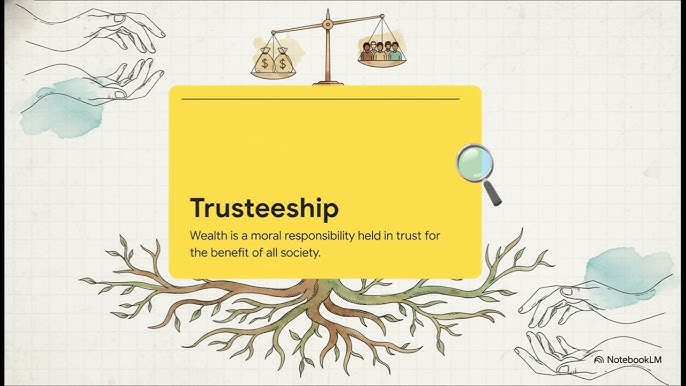
Temples served as economic institutions of remarkable sophistication. Historical records reveal that many temples maintained granaries, managed agricultural lands, employed artisans, financed irrigation works and supported commercial activity. During periods of drought, famine and social distress, temples distributed food and provided relief to affected populations. Annadanam was not charity alone; it was social security rooted in Dharma.
Many temples also acted as custodians of wealth and facilitators of commerce. Merchants deposited resources with temples, sought financial assistance for trade expeditions and relied upon the credibility of temple institutions in commercial transactions. Endowments generated revenues which supported education, welfare, infrastructure and economic activity. In several regions, temples functioned as precursors to organised banking systems, serving as repositories of wealth and centres of economic trust. Long before modern financial institutions emerged, trust itself was the currency that sustained economic life.
And the temple was its guardian.
The deity presided not merely over rituals but over an entire moral economy. The temple therefore represented far more than religion. It embodied culture, economy, governance, education and community. It was the meeting point between the sacred and the secular, between spirituality and society, between transcendence and daily existence. It is against this vast civilisational backdrop that contemporary debates regarding temple governance acquire significance. The concern is not the existence of wealth within religious institutions.
Nor is it a question of diminishing the sanctity of devotion. Rather, it concerns the stewardship of resources entrusted by millions of believers who assume, often without question, that their offerings will be administered with integrity, wisdom and transparency.
Recent years have witnessed a succession of public controversies involving religious institutions across the country. Questions surrounding the management of temple lands, administration of endowment properties, utilisation of donations, quality control of prasadam systems, trustee appointments, contractual processes and governance structures have repeatedly surfaced in public discourse. The widely discussed Tirumala laddu controversy served as a reminder that even matters appearing administrative can acquire profound spiritual significance when they touch the sentiments of millions.
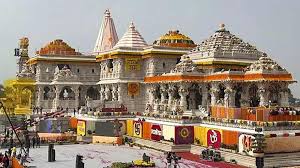
Similarly, discussions surrounding the management of donations and institutional oversight at newly emerging centres of pilgrimage, including Ayodhya, have highlighted the growing importance of transparent accounting systems, robust auditing mechanisms and public confidence. Such discussions should not be viewed as criticism of institutions themselves but as evidence of the expectations naturally accompanying unprecedented public generosity. Where devotion reaches extraordinary heights, accountability must aspire to equally elevated standards.
The larger issue is not whether irregularities exist.
The larger issue is whether systems are sufficiently transparent to assure devotees that sacred offerings remain beyond reproach.
Faith does not fear scrutiny.
Faith fears betrayal.
The constitutional framework of India reflects a delicate balance between religious freedom and public accountability. Articles 25 and 26 recognise the autonomy of religious practice and the rights of religious denominations to manage their institutions. Simultaneously, the constitutional order recognises that secular aspects of administration remain subject to lawful regulation. Courts have repeatedly drawn a distinction between matters of faith and matters of management. Ritual belongs to religion; financial administration belongs to governance.
The challenge before India is therefore neither theological nor political alone.
It is fundamentally civilisational.
How does a society preserve the sanctity of religious institutions while ensuring the accountability expected in a modern constitutional democracy?
The question becomes even more complex when viewed through the prism of contemporary governance. In many instances, temple administration is linked to governmental structures through endowment departments and statutory boards. Elsewhere, institutions function through autonomous trusts enjoying considerable independence. Both models possess strengths and vulnerabilities. Excessive governmental intervention risks politicisation. Excessive autonomy risks opacity. Neither extreme necessarily guarantees public confidence.
Perhaps the most persistent concern arises from the perception that trusteeship has increasingly become entangled with political patronage. Across several regions, appointments to governing boards often become subjects of public debate. Political affiliations, social influence, electoral calculations, business interests and factional considerations are frequently alleged to influence selections. Governments change. Boards change. Trustees change.
The deity alone remains unchanged.
Whether such perceptions are justified or exaggerated, they carry consequences. Sacred institutions derive legitimacy not merely from legality but from credibility. A temple may survive controversy; it cannot indefinitely flourish without trust.
The irony is impossible to ignore.
The institution entrusted with safeguarding faith is itself judged by the degree of faith it inspires.
Trusteeship, in its purest sense, is among the noblest concepts evolved by civilisation. A trustee owns nothing and safeguards everything. He is a custodian rather than a proprietor. The law recognises this as a fiduciary obligation. Dharma recognises it as a sacred duty. Both traditions converge upon a single principle:
Authority exists solely for stewardship.
This principle lies at the heart of the Indian philosophical tradition. The Isha Upanishad proclaims that all resources belong ultimately to the Divine and must be enjoyed through restraint and responsibility. The Bhagavad Gita teaches that actions performed without selfish attachment constitute the highest form of duty. The Mahabharata repeatedly reminds rulers and custodians that wealth acquires legitimacy only when employed for Lokasangraha—the welfare and sustenance of society.
In this vision, transparency is not a bureaucratic requirement.
It is a moral obligation.
Accountability is not a secular intrusion.
It is Dharma expressed through governance.
The significance of this principle extends beyond temples alone. Every institution receiving public contributions—whether temple, mosque, church, gurudwara, mutt or charitable trust—must ultimately be judged by identical standards of integrity. Constitutional equality demands nothing less. Public trust requires nothing less. Ethical governance requires nothing less.
Yet the purpose of this reflection is not cynicism.
Civilisations decline when distrust becomes habitual.
Equally, they stagnate when legitimate questions are suppressed.
The true path lies in enlightened stewardship.
India possesses within its own traditions the intellectual and moral resources necessary for such renewal. The Rig Veda places truth at the centre of cosmic order. The Upanishads elevate integrity into a spiritual discipline. The Dharmashastras emphasise responsibility accompanying authority. The epics repeatedly demonstrate that institutions survive only when ethical conduct accompanies power.
The challenge before contemporary India is therefore not a crisis of faith.
It is an opportunity to deepen faith through trust.
The devotee does not seek perfection from institutions.
He seeks sincerity.
He does not demand infallibility.
He seeks accountability.
He does not question the sanctity of the deity.
He seeks assurance regarding the stewardship of the offering.
Every rupee deposited in a hundi carries within it a story of sacrifice.
Every ornament offered to a deity embodies gratitude.
Every donation reflects hope invested in something larger than oneself.
Such offerings deserve governance of the highest order.
Ultimately, the future of India’s sacred institutions will not be determined by the magnitude of donations they receive, the grandeur of their architecture or the prominence of their trustees. It will be determined by the confidence they inspire among ordinary devotees.
For faith may be divine, but administration is human.
And wherever human beings become custodians of sacred trust, transparency becomes an act of reverence.
The sages of India understood this truth long before modern audit systems, constitutional doctrines or regulatory frameworks emerged. They recognised that Dharma alone sustains institutions, communities and civilisations.
That timeless wisdom remains as relevant today as it was millennia ago.
For the greatest offering made by a devotee is not gold, land or money.
It is trust.
And the highest form of trusteeship is to prove worthy of it.
Dharmo Rakshati Rakshitah — Dharma protects those who protect Dharma.


With a journalistic long journey, we bring you https://primepost.news, a dynamic platform committed to unraveling the intricate tapestry of Indian politics, particularly delving deep into the heart of Telangana and Andhra Pradesh. Our blog is not just a source of news; it’s a reservoir of insights, analysis, and thought-provoking reviews.