Mrs. Indira Gandhi became the Prime Minister after a short stint by Gulzarilal Nanda, following the sudden death of the stalwart Lal Bahadur Shastri. It was Shastri who first initiated the first steps towards the Green Revolution. Rankled by the “short tether policies” of the crude Texan, Lyndon B. Johnson, Mrs. Gandhi wholeheartedly supported the proposal made by C. Subramaniam, the Union Minister for Food and Agriculture from 1964 to 1967.
The present generation, or several generations, remember Indira Gandhi only for imposing the Emergency in India on 25th June 1975. Justice Sudarshan Reddy has actively participated in Shri. Jayaprakash Narayan’s call for “Total Revolution” was a bitter critique of the political developments leading up to and during the Emergency phase. “But, I wish to place on record that this was on account of a genuine belief that Mrs. Gandhi’s restrictions on democratic participation and on constitutional rights were fundamentally misguided and flawed, said retired Justice of SC, Reddy
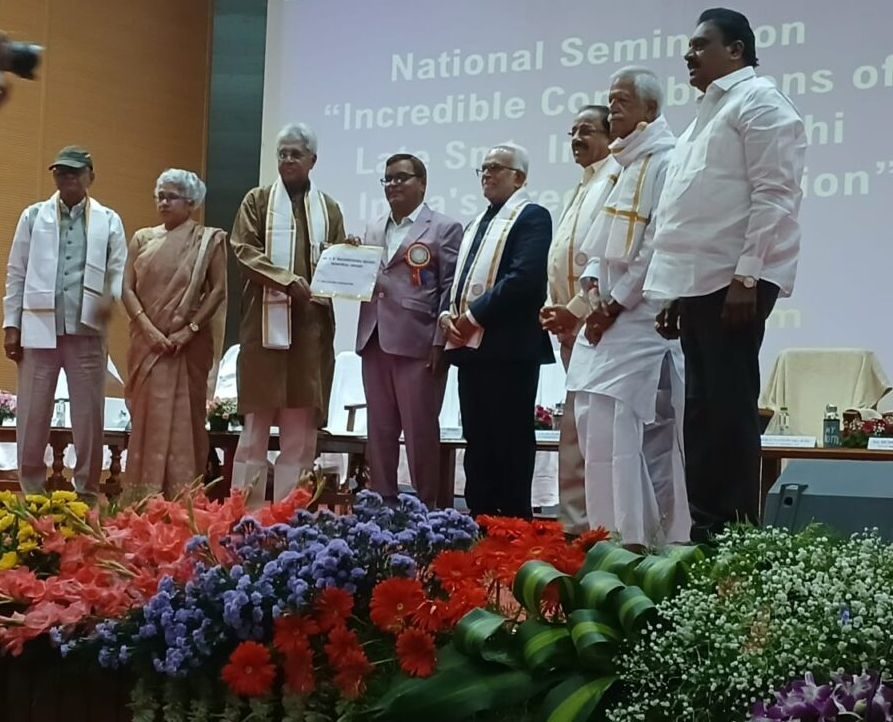
‘But it is also time to memorize the incredible contribution of the late Smt. Indira Gandhi’s to India’s Green Revolution. Her leadership was pivotal in turning India from food scarcity to food security during the Green Revolution of the 1960s–70s’ said Justice Sudarshan Reddy, who delivered a highly reflective and philosophically grounded lecture on June 12, 2026, during the 62nd Foundation Day Celebrations and National Seminar at Professor Jayashankar Telangana Agricultural University (PJTSAU) in Hyderabad.

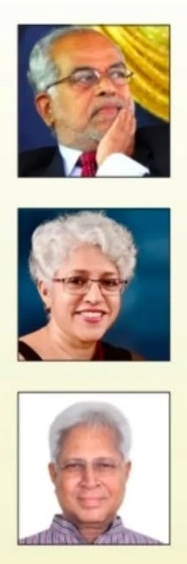
University Foundation Day Lecture:
Justice B Sudarshan Reddy,
former Judge, Supreme Court
Keynote Address:
Prof. Madhura Swaminathan, Indian Statistical Institute, Bengaluru
Special Address:
Shri VundavalliArunakumar,
Eminent Parliamentarian and Policy Analyst
The basis of the Preamble of our Constitution.
‘To our Constitution speaks of the great liberties and rights of faith, expression, and justice – as tools to ensure that the inherent dignity of every human being in India is assured as indefeasible, both as individuals and as groups. The polity was organized as a federal one, being a Union of States – albeit with a centralizing tendency, the people were recognized as inherently vested with inalienable fundamental rights, as a part of their inherent human dignity.
And it was mandated, through non justiciable Directive Principles of State Policy (yet were deemed as foundational to governance) inter alia, that the State always seek to instantiate social justice (Article 38), prevent the concentration of economic power and material resources in a manner that may work to the detriment of the many (Article 39(b)) and organize agriculture and animal husbandry on modern and scientific lines (Article 48).’
“Hardscrabble peasant background,” of Justice Reddy
Drawing from his own roots in a “hardscrabble peasant background,” Justice Reddy outlined how the Green Revolution under Smt. Indira Gandhi’s administration was not merely an agricultural strategy, but a transformative tool for national, spiritual, and material reconstruction along with referring to his background, and the philosophy of the Constitution, its policy, and preamble, using her schemes and programs, Indira Gandhi made some significant contributions, according to a research paper called “Prof K Jaishankar Memorial Lecture’ highlights several key themes and positive growth metrics under her leadership:
- Nationalization of Banks, 1969: Improved rural credit flow, enabling small farmers to invest in HYV seeds, pumps, and fertilizers.
- Farmer-Centric Programs: Expanded rural credit, minimum support prices (MSP), and input subsidies to help farmers adopt new technology.
- Political Will & Policy Backing: As Prime Minister, she strongly backed the adoption of High-Yielding Variety (HYV) seeds, chemical fertilizers, and irrigation expansion despite political risk and criticism.
- Institutional Support: Strengthened ICAR, agricultural universities, and extension systems to take lab research to the field. Established institutions like ICRISAT in Hyderabad in 1972.
- Food Self-Sufficiency Push: Prioritized national grain procurement, buffer stocks, and the Food Corporation of India (FCI). India achieved wheat self-sufficiency by 1974.
Indira Gandhi is not a mere “kat puthli”:
Justice Reddy said that Indira understood the moral urgency of the extreme hunger of hundreds of millions of Indians.
‘Mrs. Gandhi, to use a sporting parlance, really stepped up to the plate. She gave her full political support to the proposal to expand the Intensive Agricultural Area Programme (“IAAP”), notwithstanding opposition from many MPs, as it covered only 1/3 of the then districts of India. It is to Mrs Gandhi’s credit that she had imbibed all the moral lessons of the freedom struggle, having been herself a freedom fighter. Often derided as a mere “kat puthli” who was to dance at the instance of a strong Syndicate in the shadows, she placed her political career on the line and fought back.
Her decisive support ensured the Green Revolution moved beyond pilot projects to nationwide impact, averting famine and laying the foundation for India’s agricultural growth.
Under Mrs Gandhi, it was realized that a move also needed to be made to encourage increases in productivity in dry farming areas. As the initial phase of the Green Revolution was confined to irrigated areas, Mrs. Gandhi – on the initiative and advice of Dr. Swaminathan – made the effort to establish the International Crop Research Institute for Semi-Arid Crops (ICRISAT). This was established in 1972.
Referring to Agriculture as a profession, Justice Reddy said,
“It also gladdens my soul, at some deep subconscious level, to be doing this. I was born in a village not too far from here in a hardscrabble peasant background….In a country in which nearly 56% of people are engaged in agriculture and allied sector activities, a nation as a people that evolved for thousands of years on the foundations of bronze age agrarian revolution, and in a country in which the very life breath we take is a gift of our toiling farmers, it cannot be anything but humility as a platform on which I could have taken on this responsibility”.
Offering tributes to Indira Gandhi, he said, “that can of course also be done by a dry recitation of various accomplishments, while she was the Prime Minister. However, such a recitation would be fundamentally incomplete, because Mrs Gandhi was herself a part of and also the product of the intense intellectual and emotional churning that was the freedom movement”.
Referring to Agriculture as a profession, Justice Reddy said,
“It also gladdens my soul, at some deep subconscious level, to be doing this. I was born in a village not too far from here in a hardscrabble peasant background….In a country in which nearly 56% of people are engaged in agriculture and allied sector activities, a nation as a people that evolved for thousands of years on the foundations of bronze age agrarian revolution, and in a country in which the very life breath we take is a gift of our toiling farmers, it cannot be anything but humility as a platform on which I could have taken on this responsibility”.
Offering tributes to Indira Gandhi, he said, “that can of course also be done by a dry recitation of various accomplishments, while she was the Prime Minister. However, such a recitation would be fundamentally incomplete, because Mrs Gandhi was herself a part of and also the product of the intense intellectual and emotional churning that was the freedom movement”.
The Green Revolution was ushered in by Indira Gandhi
Justice Reddy recalls the critical 1950s and 1960s, a period when India was heavily reliant on foreign food aid and its farming communities were still reeling from extreme feudal exploitation. Smt. Indira Gandhi viewed food security as an absolute prerequisite for national dignity. By championing the Green Revolution, her administration effectively transitioned India from a state of vulnerable dependence to one of complete self-sufficiency, ensuring security of food for all, including the poorest sections of society.
The speech emphasizes that the Green Revolution was never treated as a “dry recitation of accomplishments.” Instead, Indira Gandhi made profound emotional and political investments to empower the common farmer. To support the technical shifts in agriculture, she spearheaded comprehensive, 360-degree structural changes, which included:
- Overhauling economic institutions to make credit available directly to rural sectors.
- Altering market dynamics to protect peasants from the exploitative clutches of private moneylenders.
- Enabling small and marginalized farmers to absorb the financial risks of adopting new agricultural technologies.
Indira tackles the historical injustices
Justice Reddy explicitly bridges Indira Gandhi’s policies with the foundational moral compass of the Indian freedom struggle. He cites early nationalist thinkers like Dadabhai Naoroji and R.C. Dutt, who fiercely criticized the “relentless drain of wealth” and arbitrary colonial taxation that systematically impoverished the Indian peasant.
In Justice Reddy’s view, Indira Gandhi’s administration actively corrected these historical injustices. She moved beyond “mere political freedom” to realize a far larger socio-economic endeavor: emancipating hundreds of millions of rural poor from the shackles of perpetual debt and ignorance.
He said further: The real test was of course about finances. Mrs. Gandhi had to face the acid test of her leadership in that regard. Most of India’s private sector banks at that time were family owned, and availability of credit to rural sectors was hugely problematic, or nearly non-existent. Green Revolution required the farmers to have significant financial resources for various inputs. While there may have been an element of political gamesmanship in sidelining the Syndicate, the ideological differences about whether communities resources were to be made available for ensuring livelihood and food security for hundreds of millions of Indians brought this to a head. Again, this was political brinkmanship. She staked her reputation and political career. But nationalize the 14 banks she did, in 1969, primarily to extend credit to farmers and other economic players in the rural sectors.
“Class Banking to Mass Banking”
But change is not easy. Though the objective was “Class Banking to Mass Banking” and nationalized banks were instructed to lend 40% of their total lending to Agriculture and small-scale industries, the laws could not be changed significantly. The issue was of credit worthiness of farmers and their ability to provide security. After she came back to power in 1980, she, based on the report by B. Sivaraman, got the Parliament to establish the National Bank for Agriculture and Rural Development or popularly known as NABARD. Its function is to refinance all Banks and Cooperative Sector Banks. The total loans, including long-term loans, refinanced by NABARD, stand at Rs 33 Lakh crores. NABARD refinances bank loans up to 40% of crop loans at 4.5%, Justice Reddy explained.
Setting the Bedrock for Institutional Growth
The establishment of dedicated agricultural institutions and universities (like PJTAU) is highlighted as a direct product of this era’s vision. By combining scientific innovation with macro-economic protections, her administration successfully merged the material needs of the country (scientific yields, fertilizers, high-yielding seeds) with its spiritual goals—transforming farmers into fully participating, empowered social forces crucial to forging a renewed, self-reliant national identity.
There are always unintended consequences. All of the foregoing also meant that the benefits were flowing only to big landholders, and problems of landlessness and hidden unemployment were rampant. One of the primordial concepts of the freedom movement was that peasants are the real landowners. Mrs. Gandhi viewed her pushing of land reforms in the 1970s as a realization of that aspect of our freedom movement, he said.
(Dr. YSR & Dr. KVP Foundation, a Public Charitable Trust, instituted a fund of Rs 21 lakhs for an annual cash award of Rs 1.00 lakh to an academically meritorious student pursuing studies in agricultural sciences at Prof. Jayashankar Telangana Agricultural University, to Prof. Aldas Janaiah, vice-chancellor.)
Prof Madabhushi Sridhar Acharyulu (Justice Sudarshan Reddy delivered a lecture at the National Seminar at Professor Jayashankar Telangana Agricultural University. The Article based on the lecture of Justice Sudarshan Reddy)

With a journalistic long journey, we bring you https://primepost.news, a dynamic platform committed to unraveling the intricate tapestry of Indian politics, particularly delving deep into the heart of Telangana and Andhra Pradesh. Our blog is not just a source of news; it’s a reservoir of insights, analysis, and thought-provoking reviews.



It’s true that many resolutions have been taken by then Prime Minister for the Nation development mentioned. Among them one of the resolutions food self sufficiency (green revolution), nationalisation of banks, Institutional support. Now it is great to see that no hunger deaths. And above all development has been taken place in all walks of life. Good Writeup.