IDENTITY CRISIS:
THE HIDDEN ENGINE OF HUMAN CIVILISATION, CONFLICT AND THE MODERN WORLD ORDER
The twenty-first century is witnessing a paradox unprecedented in human history. Humanity has conquered distance but not distrust. It has accumulated wealth but not wisdom. It has connected continents through technology while simultaneously fragmenting societies through suspicion, hostility and polarisation. Nations possess unprecedented scientific capabilities, yet remain haunted by ancient fears. Individuals enjoy freedoms unimaginable to previous generations, yet increasingly suffer from loneliness, anxiety, alienation and a profound sense of insecurity. Beneath the visible crises of our age—neo-nationalism, trade wars, religious extremism, terrorism, caste conflicts, class struggles, social unrest, political polarisation and geopolitical rivalry—lies a deeper and more enduring phenomenon: the crisis of identity.
Identity crisis is frequently reduced to a psychological condition experienced by adolescents or individuals struggling with self-definition. Such an interpretation is profoundly inadequate. Identity is not merely a matter of personal psychology. It is a social, historical, political, economic, religious, cultural, linguistic and civilisational construct. It emerges from an individual’s relationship with family, caste, class, religion, language, region, race, gender, occupation, education, health, wealth, status and nationhood. Consequently, identity crisis is not merely an individual disorder. It is often a collective condition capable of shaping the destiny of societies and nations.
The Psychology of Human Recognition
Human beings require more than food, clothing, shelter and physical security. They require dignity. They require recognition. They require acceptance. They require belonging. The desire to be acknowledged as worthy and significant is among the most powerful forces governing human behaviour. A hungry man seeks bread. A poor man seeks livelihood. But a humiliated man seeks dignity. History repeatedly demonstrates that while human beings can endure material deprivation for long periods, they find humiliation, exclusion and invisibility intolerable.
Identity as the Engine of Human History
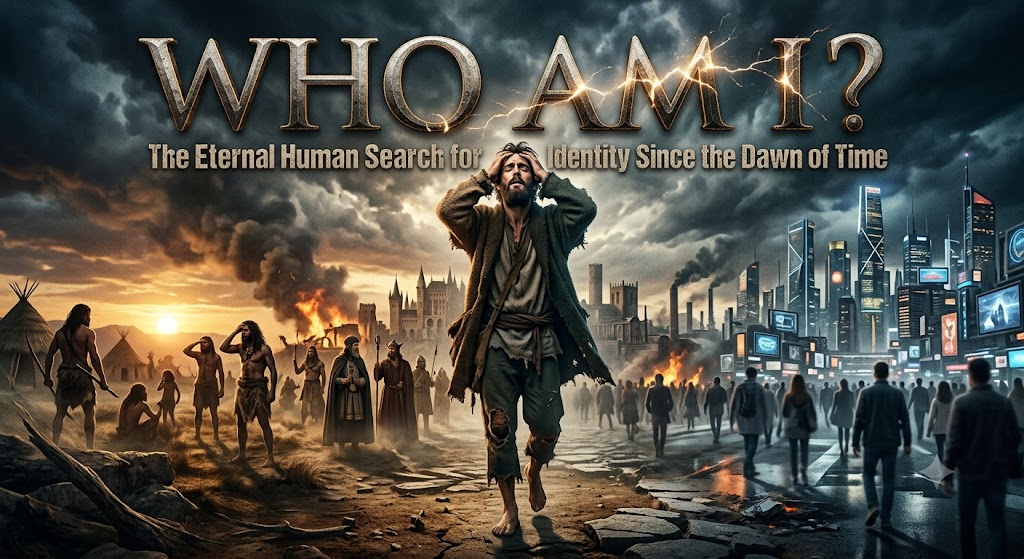
The roots of identity conflict are deeply embedded in the evolution of civilisation itself. Human history can be interpreted as a continuous struggle among competing identities. Tribal wars, dynastic rivalries, religious crusades, colonial conquests, nationalist movements, revolutions, civil wars and world wars were not merely contests for territory and resources. They were equally struggles for recognition, legitimacy, honour, status and collective dignity. Material interests may have provided the immediate causes, but identity often supplied the emotional energy.
Caste, Identity, and the Struggle for Dignity
Few institutions have shaped identity more profoundly than social hierarchies. Across civilizations, distinctions based on class, race, religion, ethnicity and status created enduring systems of privilege and exclusion. In the Indian context, caste emerged as one of the most influential determinants of social identity. It regulated occupation, status, education, marriage and access to power for centuries. Although constitutional democracy has dismantled legal discrimination, historical memories of hierarchy, humiliation and exclusion continue to shape social consciousness. Consequently, caste remains not merely a sociological category but a powerful psychological and political force. The struggle for reservation, representation, social mobility and recognition is often a struggle for dignity as much as a struggle for resources.
Religion represents another enduring source of identity. It provides meaning, continuity, moral order and collective memory. Yet religion also possesses the capacity to divide as well as unite. Throughout history, faith has inspired extraordinary acts of compassion and sacrifice, while simultaneously becoming a source of conflict and exclusion. Religious extremism frequently emerges when communities perceive threats to their identity, traditions or existence. Radical ideologies often succeed because they offer wounded individuals and alienated groups a sense of belonging, purpose and significance. Terrorism, therefore, cannot be understood solely as a security challenge. It is often the violent expression of a deeper crisis of identity.
The Psychology of Economic Inequality
Economic inequality similarly possesses an important psychological dimension. Poverty is not merely the absence of income. It is frequently accompanied by social invisibility, exclusion and diminished self-worth. Economic disparities become particularly dangerous when they coincide with social and political marginalisation. Class conflict therefore extends beyond material deprivation. It often reflects a collective demand for dignity and recognition. Human beings do not merely seek wealth; they seek respect. When societies fail to provide avenues for meaningful social mobility, resentment accumulates beneath the surface, waiting for opportunities to erupt.
The modern era has intensified these tensions. Globalisation promised prosperity, integration and cooperation. While it delivered remarkable economic advances, it also disrupted traditional identities. Communities increasingly fear cultural erosion, demographic transformation, economic displacement and loss of historical continuity. The resulting insecurity has fuelled the resurgence of neo-nationalism across the world. National identity becomes a refuge in times of uncertainty. What appears as a political movement is often a deeper psychological search for belonging and collective security.
The Global and Digital Quest for Relevance
Trade wars provide another illustration of identity operating at the level of nations. States do not compete solely for markets and resources. They compete for prestige, influence and status. Economic rivalry frequently becomes an extension of collective identity. Nations seek recognition as great powers. Political leaders seek historical significance. The pursuit of economic dominance is often intertwined with the quest for symbolic superiority. The struggle is not merely for prosperity but for relevance and prestige.
The digital revolution has added an entirely new dimension to the crisis. Social media has transformed identity into a public performance. Recognition has become quantifiable. Approval has become measurable. Visibility has become a social currency. Human beings increasingly evaluate their worth through external validation. The consequence is widespread psychological vulnerability. Anxiety, depression, loneliness and alienation have become defining characteristics of modern society. Technology has connected billions of people but has not necessarily strengthened their sense of belonging.
Identity as the Lens for Contemporary Crises
At the psychological level, the progression of identity crisis often follows a predictable pattern. Humiliation produces insecurity. Insecurity generates fear. Fear encourages submission. Prolonged submission creates resentment. Resentment gradually transforms into anger. Anger seeks expression through aggression. Aggression may manifest as violence, extremism, communal hatred, separatism, ideological fanaticism or war. Not every individual follows this path, nor does every community succumb to radicalisation. Yet history repeatedly demonstrates that unresolved humiliation is one of the most potent sources of collective conflict.
Many contemporary phenomena can therefore be understood through the lens of identity. Neo-nationalism reflects the search for collective security. Religious extremism reflects the search for belonging. Terrorism reflects the violent politicisation of wounded identity. Caste conflicts reflect competing struggles for dignity and recognition. Class struggles reflect demands for economic justice and social respect. Trade wars reflect contests for prestige and geopolitical status. Even tendencies towards social fragmentation and anarchy frequently emerge when shared identities collapse and institutional trust erodes.
The great paradox of human civilisation is that the same species capable of producing philosophy, science, literature, spirituality and compassion is equally capable of oppression, hatred, exploitation and war. This contradiction cannot be explained solely through economics or politics. It lies deeper, within humanity’s perpetual struggle to reconcile identity with universality.
Ancient Epics and the Eternal Quest for Recognition
The ancient epics and wisdom traditions recognised this dilemma long before the emergence of modern social sciences. The Ramayana and the Mahabharata are not merely narratives of kings and battles. They are profound explorations of honour, legitimacy, duty, status and identity. The tragedy of Karna is fundamentally the tragedy of social recognition. His lifelong struggle was not merely for power but for dignity and acceptance. Similar themes echo through the scriptures, philosophies and literature of every civilisation.
The sages of antiquity confronted a question that continues to challenge humanity: why does man repeatedly create divisions despite recognising the unity of existence? The seers of the Upanishads, the Buddha, Mahavira, the Sufi mystics, the philosophers of Greece and the saints of numerous traditions approached the problem from different directions. Yet many arrived at a similar insight. Identity is necessary for social existence, but attachment to identity becomes destructive when it evolves into ego and exclusivism.
The Upanishadic vision of Vasudhaiva Kutumbakam viewed humanity as a single family. The Bhagavad Gita warned against pride, attachment and delusion. The Buddha identified craving and ego as the roots of suffering. The wisdom traditions of the world repeatedly sought to reconcile diversity with universality, individuality with compassion, and identity with humanity.
Yet history records a tragic irony. The same civilisations that preached universal brotherhood often institutionalised hierarchy. The same religions that proclaimed compassion occasionally became instruments of exclusion. The same societies that celebrated justice frequently tolerated oppression. The contradiction remains unresolved.
Preserving Identity Without Fostering Division
The defining challenge of the twenty-first century is therefore not merely economic growth, technological innovation or military strength. The deeper challenge is civilisational. How can societies preserve identity without fostering division? How can communities honour tradition without perpetuating prejudice? How can nations cultivate patriotism without descending into chauvinism? How can individuals seek recognition without seeking supremacy? How can diversity coexist with social cohesion?
The future of humanity may depend upon its ability to answer these questions. For the gravest threat confronting civilisation may not be climate change, artificial intelligence, economic recession or military confrontation. Beneath all these crises lies a more fundamental danger: the failure of human beings to recognise their shared humanity beneath the countless identities they have created for themselves.
Until humanity learns to balance identity with universality, dignity with equality, and recognition with compassion, the volcano of identity will continue to smoulder beneath the foundations of civilisation—occasionally erupting as nationalism, caste conflict, class warfare, religious extremism, terrorism, social unrest and war. The ancient sages recognised this danger thousands of years ago. Modern civilisation is only beginning to rediscover it. The central question therefore remains as relevant today as it was in the age of the Vedas, the Buddha, Socrates and the great philosophers of history:
WHO AM I?
And flowing from that timeless inquiry emerges another question: Can humanity cherish its identities without becoming imprisoned by them? The answer to that question may determine whether the future belongs to coexistence or conflict, civilisation or chaos.

The author of the article, M. Shiva Prasad, IPS (Retired), worked in the combined Andhra Pradesh cadre before opting for the Telangana cadre. A true Hyderabadi at heart, he has a deep love for the Telugu people. Throughout his career, he excelled at handling extremism and countering religious terrorism. He remains a passionate lover of the uniform and a dedicated law-and-order officer.

With a journalistic long journey, we bring you https://primepost.news, a dynamic platform committed to unraveling the intricate tapestry of Indian politics, particularly delving deep into the heart of Telangana and Andhra Pradesh. Our blog is not just a source of news; it’s a reservoir of insights, analysis, and thought-provoking reviews.

Wonderful. As said many changes in life style, education, thinking purview, financial growth communication many advancements have come in modern life. But not able to realise the charm of the life. Life has become mechanical. We don’t have to apply mind, because everything has become mechanical. Do we call it development in our day today behavior? One should posses this question to themselves. A good writeup. Thought provoking.