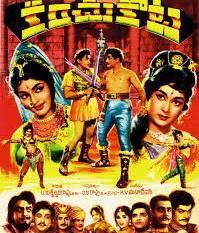
The Puppet Masters of Kanchu Kota: Sophisticated manipulation for power
Decoding the Villains’ Mind Games in the film
Concept of “the person behind the person”
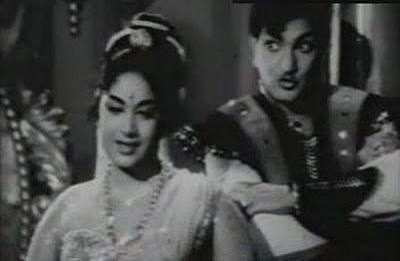
Moves of Villains like Chess Game
The ultimate chess move in this political thriller involves the classic folklore trope of switched infants and hidden identities, used here as a deliberate psychological counter-strategy. In the golden era of Telugu folklore cinema (Janapada), the physical battles of swords and shields were often preceded by much more lethal encounters: the battles of wits, betrayal, and political manoeuvrings. Producer U. Visweswara Rao’s 1967 celluloid classic Kanchu Kota, directed by C. S. Rao, stands as a masterclass in this genre. Beyond the larger-than-life heroism of N. T. Rama Rao, the film’s narrative engine is driven by the calculated, cold-blooded strategies of its antagonists. Scripted brilliantly by Tripuraneni Maharadhi, Kanchu Kota exposes the dark psychology of absolute ambition, where the ultimate end game is to control the throne of Bhallalla by placing a puppet ruler upon it.
The Strategy of the “Shadow Ruler”
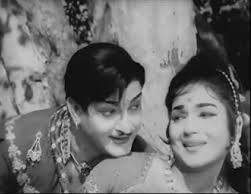
The chief architect of chaos in Kanchu Kota is the evil chief minister, Bhairavacharya. His strategy is not a crude, direct coup; instead, it relies on the sophisticated manipulation of royal vulnerabilities. Bhairavacharya understands that a crown stolen by force invites immediate rebellion. Therefore, he plays a deeper mind game: the strategy of the shadow ruler.
When King Rajendra Bhupathi, driven by brotherly love and a desire for reform, naively hands administrative power to his brother Vijayendra, Bhairavacharya spots his opening. He doesn’t target the king initially; instead, he targets the weaker, more malleable mind of Vijayendra. By feeding Vijayendra’s latent jealousy and ambition, Bhairavacharya isolates the king within his own court. He uses the king’s trust as a weapon against him, orchestrating Rajendra’s assassination through the henchman Martanda while keeping his own hands seemingly clean.
Proxies, Betrayals, and the Amputation of Trust
The core of the villains’ mind game lies in the concept of “the person behind the person.” Bhairavacharya never intends for Vijayendra to enjoy true sovereignty. Vijayendra is merely a stepping stone—a proxy to legitimize the transition of power. The moment the rightful king is eliminated and the queen escapes with the infant Prince Surendra, the villainous dynamic shifts.
In a chilling demonstration of political ruthlessness, Bhairavacharya betrays his own co-conspirator. Once Vijayendra has served his purpose of destabilizing the kingdom, he is brutally cast aside and physically incapacitated. By removing Vijayendra’s agency, the antagonists ensure that no internal dissent can challenge their hold on the fort. This multi-layered betrayal highlights a recurring theme in classical statecraft: in the pursuit of absolute power, alliances are purely transactional, and today’s accomplice is tomorrow’s liability.
The Infanticide Plot and Legacy Erasure
To permanently secure the throne for their own lineage, the villains must erase the past. By targeting the royal lineage, they attempt to cut off the psychological anchor of the kingdom—the people’s loyalty to the rightful heir.This web of deceit becomes so complex that it eventually traps its creators. The villains’ overconfidence in their own intellectual superiority blinds them to the unpredictable variables of fate and poetic justice. They play a game of chess where they view people as mere pawns, failing to realize that a pawn—in this case, the resilient Prince Surendra (NTR)—can cross the board to checkmate the king.
Verdict on the Narrative Structure
Kanchu Kota succeeds because its villains are not just muscle; they are strategists who understand court psychology, the leverage of secrets, and the power of patience. U. Visweswara Rao crafted a cinematic experience where the architectural strength of the Kanchu Kota (Bronze Fort) is mirrored by the rigid, calculated coldness of the villains’ minds—making NTR’s eventual triumph of justice all the more spectacular.

Principal Correspondent, Prime Post
Vidya Sagar Chaturvedula is a passionate film enthusiast whose four-decade career spans multiple sectors, including media and industry. Fluent in Telugu, Hindi, and English, he has a deep appreciation for cinema, particularly films in those three languages. His passion goes beyond simple viewing; he enjoys analyzing directional skill, the emotional depth of actors’ performances, and the profound meaning embedded in dialogue. Mr. Sagar is known for his ability to clearly articulate and narrate his insightful film analyses after watching a movie.
Email: sagar.chaturvedula@gmail.com
Mobile: 9030702917




really enjoyed how you unpacked the story of Kanchu Kota. Your insights into the characters and power dynamics made for a compelling read.
Good review
Nicely narrated the movie of Telugu legendary Actor Dr NTR.
Nice review.
Nice review
Nice review. wish I could watch it again.
Good. Review
Kanchukota (1967) iz a classic socio-fantasy movie acted by Ntr, devika, Vanisree. Directed by C. S.Rao the movie remains celebrated for a thrilling narrative for a mysterious kingdom, excellent performances and, mythological undertones. All songs are super hits. Very good review.
Well narrated
Chess type story line gave good performance from the cast and some great music and songs by KV Mahadevan like sarileru neekevvaru..
The box office was so considered a success
Very Good review.
Good review.