- The Supreme Court’s Verdict on SIR: A Critique of the ECI’s Electoral Roll Revision
The Supreme Court judgment on SIR (Special Intensive Revision) of electoral rolls undertaken by the Election Commission of India did not surprise anyone. Knowing the attitude of the judiciary ever since the hearing started in July last year, the order that everything is fine with the ECI is only expected. SIR process had started in Bihar on 24 June 2025 and the hearing on the petitions on SIR was launched in the Supreme Court on 10 July 2025. The fact that the SC allowed the process of SIR to go on in Bihar and 12 other states and union territories in the course of one year is in itself an indication of the mind of the judiciary that it finds nothing urgent to intervene. The SC said doing SIR is the Constitutional duty of Election Commission. The comment of a judge that ‘if not in this election, the voters who are barred now can vote in next elections’ shows how non-serious and casual the apex court is.
The Court’s Rationale and Political Repercussions
The SC played around with process and raised some questions somewhat inconvenient to the EC thus making the petitioners happy for that moment and declared finally that it would not allow anyone to interfere with the process started by the EC. The 124-page judgment which was reserved earlier and delivered on Wednesday, 27 May 2026, emboldened and encouraged the NDA government to attack the Congress and other opposition parties saying that hurdles were sought to be created for free and fair elections. “Sir bears a direct nexus to the Constitutional goal of free and fair elections. Free and fair elections do not rest merely upon the mechanics of polling. They equally depend upon the integrity, accuracy and purity of the electoral roll which forms the foundation of the democratic process,” the judgment said.
Impact on Voters and Comparisons to the Emergency Era
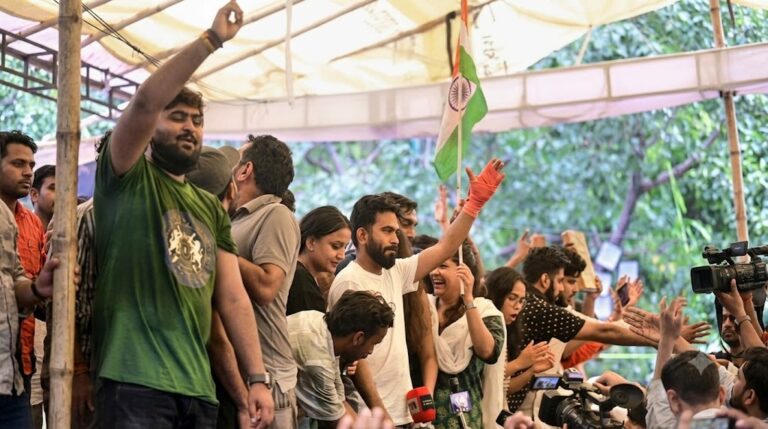
The apex court helped the EC by appointing adjudicators in West Bengal where some 27 lakh voters were waiting for clearance. Some hundreds were cleared in time for polling and the bulk of the voters were unable to vote. The Supreme Court’s belated order is described as unconstitutional. The judgment is compared to the Jabalpur court judgment during Indira Gandhi’s Emergency regime delivered by five Judges bench which said there is no guarantee for right to live under Emergency conditions. Social activist Yogendra Yadav and Supreme Court lawyer Prashant Bhushan made the comparison with Jabalpur case. Yadav said he was not surprised by the judgment. He did not even go to the apex court on Wednesday though he was aware that the judgment is slated to be pronounced since he imagined what kind of judgment would come.
Scope of the Petitions and Potential Voter Deletion
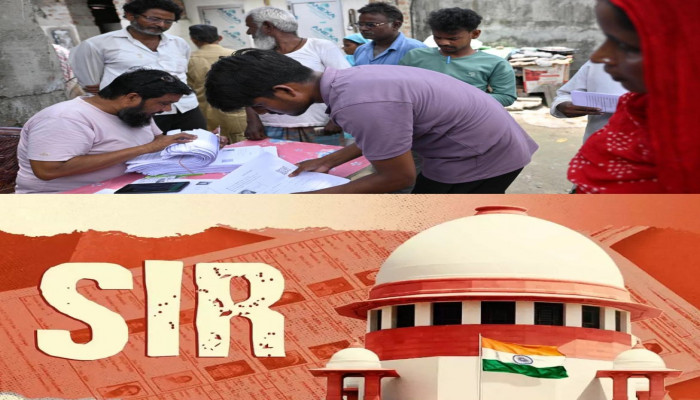
The petitions on SIR in Bihar were filed by ADR (Association for democratic reforms), TMC MP Mahua Moitra, social activist Yogendra Yadav and many others. All the petitions were bundled together and heard by the SC bench. The judgment is concerned with Bihar technically but the orders and the points made by the bench apply to the rest of the country as well. If the SIR is continued unabated in the rest of the States including Telangana and Andhra Pradesh, the total number of votes deleted may be about 16 crores or more than twelve percent of the voters in the country. The judgment said the bench has looked primarily at four aspects. One, whether the EC has the right to conduct SIR. Two, whether the objective of the SIR is justified. Three, whether the law allows the EC to conduct the SIR. Four, whether the citizenship of the voters could be removed in the process.
Legal Misinterpretations and the Question of Citizenship
The EC has some special rights under Art 324 of the Constitution. But the SIR is not among those rights. The Representation of People Act (RPA) is the main instrument which deals with the whole gamut of elections and the EC. The SC said Art 324 has given complete rights to the EC. It is misinterpretation. It has no right to remove the voters name from the list just before elections. According to section 21 and subsection 3 of the RPA, the EC has a right to revise the electoral rolls in one constituency or part of a constituency under extraordinary circumstances. This sub-section is mistakenly read to mean that EC has right to revise the electoral rolls not only in a state but throughout the country. This amounts to helping the EC to help the BJP. Moreover, there are no extraordinary circumstances either in Bihar or West Bengal. This is misuse of the law. The apex court allowed the EC to interpret sub-section 3 of section 21 beyond all constraints.
The advocates on behalf of the petitioners have submitted many proofs to buttress their arguments that the EC is going out of the way to help the ruling party. But the apex court did not take cognizance of their arguments and declared that the EC has done all these things in order to hold free and fair elections. Justice Surya Kant said, “Citizenship is a condition precedent for enrolment (in election rolls), The EC in the course of preparing or revising the electoral rolls, is undoubtedly empowered to examine questions bearing upon citizenship.” The bench has directed the poll body to refer within the next four weeks, the names of electors who were part of the 2003 electoral rolls but were purged in the Bihar SIR on the grounds of being non-citizens for adjudication by a competent authority under the Citizenship Act.
Experts say that the EC has no right to decide whether a voter is a citizen or not. Hussain Vs Union of India case was heard by three Judges bench. The bench ordered that the EC has no business to decide the citizenship of a voter. The bench specifically said it is the responsibility of the government to decide the citizenship issue. The two judges bench headed Chief Justice Surya Kant has passed orders that contradict the three – judges bench.
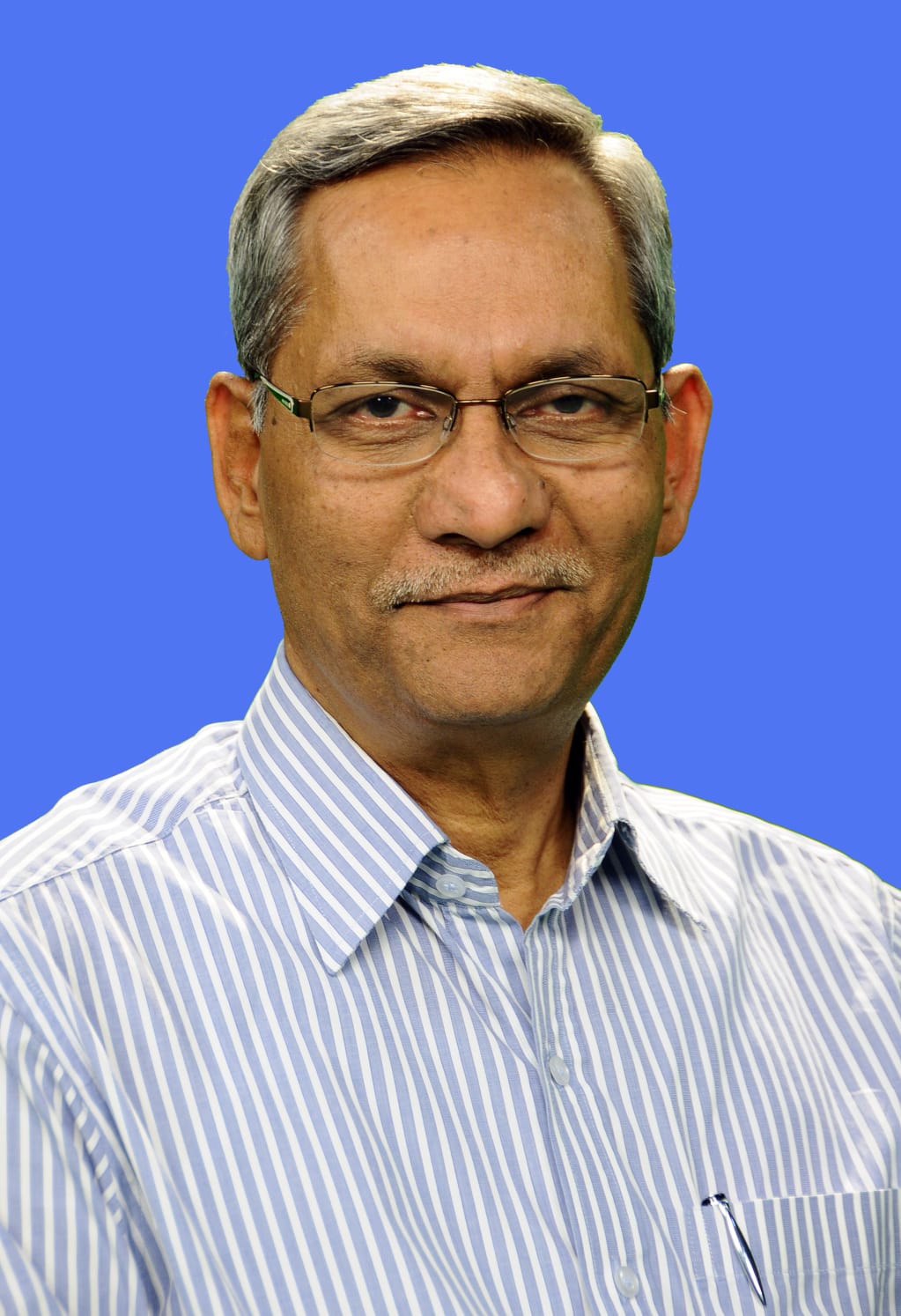
Prominent Journalist
Dr. K. Ramachandra Murthy is a versatile journalist with a distinguished career. Dr. Murthy began his extensive career with Andhra Prabha of The Indian Express group in Bengaluru. He was editor of Udayam, Vaartha and Andhra Jyothy. Dr. Murthy founded and edited HMTV news channel and The Hans India, an English newspaper. He was also editorial director of the Telugu newspaper, Saakshi. He was awarded Ph. D for his research work in rural reporting. Dr. Murthy’s five decades in journalism showcases his influential roles across both print and electronic media. He wrote the political biography of NTR published by Harper Collins.
Email: murthykondubhatla@gmail.com
Mobile: 9908002211