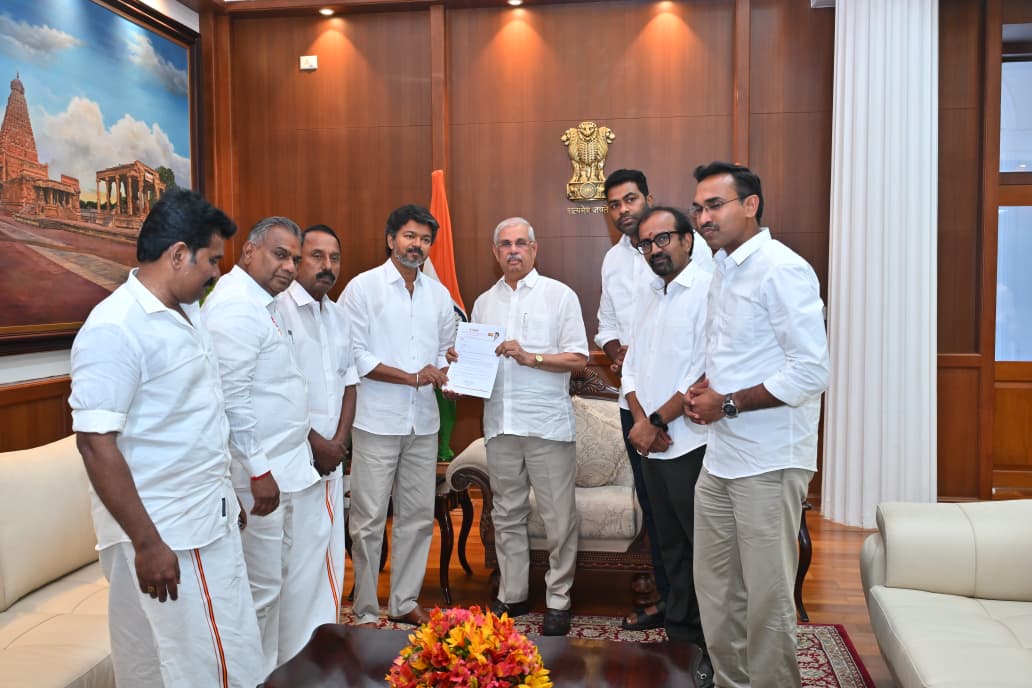
Tamil Nadu’s hung assembly may become one of the most significant constitutional moments in contemporary Indian federal politics.
The crisis is not simply about government formation. It is about:
- The role of Governors
- The sanctity of democratic mandates
- Constitutional morality
- Anti-defection safeguards
- Judicial oversight and
- The balance between political power and constitutional restraint
The experiences of Manipur, Karnataka, Maharashtra, Goa, Meghalaya, and Bihar demonstrate how fragile democratic conventions can become when constitutional offices are politicised. Ultimately, the solution lies not inside Raj Bhavan but on the floor of the Tamil Nadu Legislative Assembly. That alone is the true constitutional battlefield where majority, legitimacy, and democratic authority must finally be determined. Tamil Nadu has almost always produced clear majority governments, especially after the rise of the Dravidian parties since 1967. That is why the present 2026 situation is being described as extraordinary. However, historically speaking, there have been rare situations resembling a hung assembly or minority government phase.
The important distinction is between:
- a true hung assembly (no party/alliance able to immediately command majority) and
- a minority government surviving with outside support.
Historically, Tamil Nadu largely avoided hung assemblies
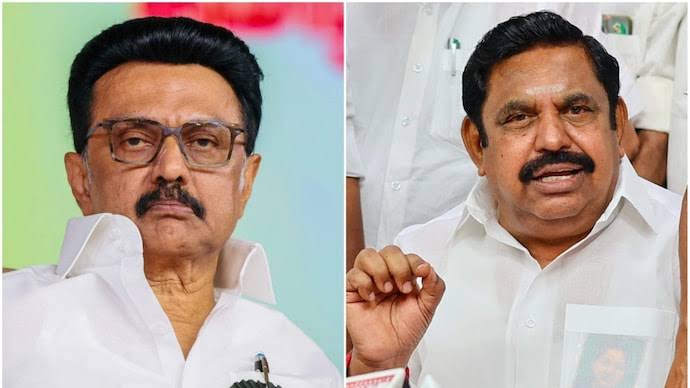
From 1967 onward, Tamil Nadu politics became dominated by two major poles: Dravida Munnetra Kazhagam (DMK) and All India Anna Dravida Munnetra Kazhagam (AIADMK). One or the other usually secured a stable majority with alliance partners. This produced a remarkably stable electoral pattern compared with many northern states. Political analysts often say Tamil Nadu was one of the few large states where coalition instability was rare, defections were limited, and fractured mandates were uncommon.
1952 Madras State election
The first major example came in the 1952 election in the old Madras State Assembly. No party secured a clear majority immediately. The Indian National Congress emerged as the largest party but lacked an outright majority initially. Support from independents and smaller groups became necessary. Many historians, therefore, treat 1952 as the first “hung” or semi-hung situation in the region’s legislative history.
2006: Minority government
Another important episode occurred in the 2006 Tamil Nadu election. The DMK under M. Karunanidhi won only 96 seats — below the majority mark — and formed a minority government with outside support from Congress and Left parties. Technically:
- The DMK itself lacked a majority,
- But the alliance arrangement provided enough stability.
Therefore, many scholars describe 2006 as a minority government, not a fully unresolved hung assembly.
Why 2026 is different
The current 2026 situation is being called unprecedented because neither of the traditional Dravidian blocs has secured dominance, a third force, TVK, has emerged as the single largest party, and no stable pre-poll coalition appears to command majority support.
This creates:
- Genuine uncertainty,
- Post-poll bargaining,
- Constitutional discretion for the Governor,
- And the possibility of multiple competing claims.
That is why several commentators are describing 2026 as: the first real modern-era hung assembly in Tamil Nadu politics.
Vijay’s Real Challenge: Numbers and Negotiation
For Vijay, electoral success alone is insufficient. The challenge now is political management. To reach the effective majority figure of 117, TVK needs support from 11 MLAs. This requires:
- Coalition diplomacy
- Issue-based negotiation
- Maintaining public legitimacy
- Avoiding allegations of inducements
- Ensuring stability before the floor test.
In coalition politics, arithmetic and constitutional morality must coexist.
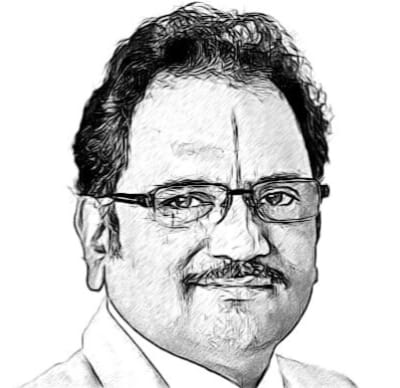
Law professor and eminent columnist
Madabhushi Sridhar Acharyulu, author of 63 books (in Telugu and English), Formerly Central Information Commissioner, Professor of NALSAR University, Bennett University (near Delhi), presently Professor and Advisor, Mahindra University, Hyderabad. Studied in Masoom Ali High School, AVV Junior College, CKM College, and Kakatiya University in Warangal. Madabhushi did LL.M., MCJ., and the highest law degree, LL.D. He won 4 Gold Medals at Kakatiya University and Osmania University.
Email: cicsridhar@gmail.com
Mobile: 8447651505
Entire Episode looks political drama. I remember in P. V. Narasimha Rao issue in Parliament Elections, he was short in single digited number to form the Government. But he was offered to form the Government by then President of India. Later it was set right within no time as he got absolute majority. Similarly, Mr. Vijay, TVK Party Supremo, should have been invited to form the Government. It’s not at all a big deal. It looks fishy.