A Blueprint for Contemporary Pluralism
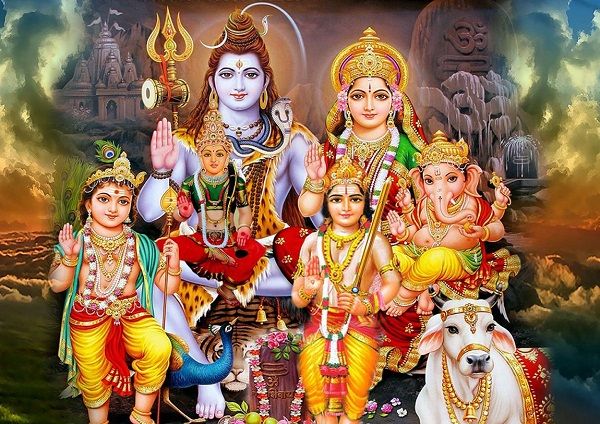
The Shiva Parivar shows us how to bring opposite forces together. Our world is often split by polarised
narratives of forced choices of binary selection. Shiva and his Parivar (family) offer a toolkit for
inclusivity. By looking at the contradictions in Shiva, the nature of his family, and the peace among
their companions, we find a manual for a living civilisation.
The Centre
Contradictions within Shiva
A family only finds peace when the individual is comfortable with their own inner conflict. Shiva is the
perfect example of integrated extremes.
The God on Earth
Unlike other deities who reside in distant heavens, Shiva is the only god who lives on Earth. He stays on Kailash, a real mountain. He proved his terrestrial connection by marrying Parvati, a human girl from the mountains. He represents the “Terrestrial Absolute”—the divine living in the soil.
The Ascetic and the Householder
He is a cosmic monk who wanders cremation grounds. Yet he is also a devoted husband and father. He proves that high spirituality is not about escaping life. It is about being fully present while staying detached.
The Father of Movement and Stillness
He is the Adiyogi, the first teacher of Yoga and internal quietness. Yet he is also the Nataraja, the master of the great dance and external movement. He established both the 84 asanas of yoga and the 108 movements of the Tandava. He proves that action only works if there is a quiet centre.
The Bhikshu and the Annapoorna
Shiva is a beggar with an empty bowl. He shows that the ego must be empty to find wisdom. He chooses to have nothing, yet he is fed by Parvati as Annapoorna, the Goddess of Nourishment. The one who owns the universe acts as a beggar to be fed by the one who provides everything.
The Wealthy Outcast
He is Mahadeva, the master of all material and spiritual wealth. Yet he chooses to live as an outcast. He keeps the company of the Ganas and spirits in the fringes of society. He proves that true power is owning everything but being possessed by nothing.
The Supreme Auditor of Ego
Shiva does not bow to status. He once tested Brahma and Vishnu by appearing as an infinite pillar of fire. He punished Brahma for a lie but remained a close friend to Vishnu. He values truth over rank.
The Bridge between Ram and Ravana
He is worshipped by both Ram and Ravana. He is the point where the Sura (the establishment) and the Asura (the rebels) meet. He loves both with the same heart. He sees their sincerity rather than their social or moral labels.
The Saviour’s Paradox
When a great poison threatened existence, Shiva drank it to protect the world. He held it in his throat. Yet when the nectar of immortality appeared, he showed no interest. He is involved in the crisis but detached from the reward.
Contemporary Relevance:
The Neelakanta style of Management
This model for authentic leadership moves beyond executive performance to internal stability as a
driver of impact. Shiva acts as the ultimate auditor, valuing the integrity of truth over the sanctity of
status. He bypasses the “Yes-men” of corporate hierarchy to find core data, proving that a leader must
be more interested in what is true than who is right. He navigates the boardroom and the fringe with
equal equanimity, speaking to the establishment and the outcast with the same authentic frequency.
This creates a leader comfortable in any context.
Crucially, Shiva manages toxic assets by holding the poison of crisis or cultural rot in his throat. He
processes the mess for the safety of the system without letting it reach his heart or destroy his inner
peace. By prioritising the mission over the credit, he ends internal competition. This is high-intensity
composure. It proves that a leader can be at the centre of intense activity while remaining as still as a
mountain, leading through purpose rather than ego. This is a model for authentic leadership. A leader
must be an auditor who values truth over hierarchy. They must navigate both the boardroom and the
fringe with the same calm. Most importantly, they handle toxic assets or crises without letting them
destroy their inner peace. They work for the mission and not the credit.
The Inner Circle
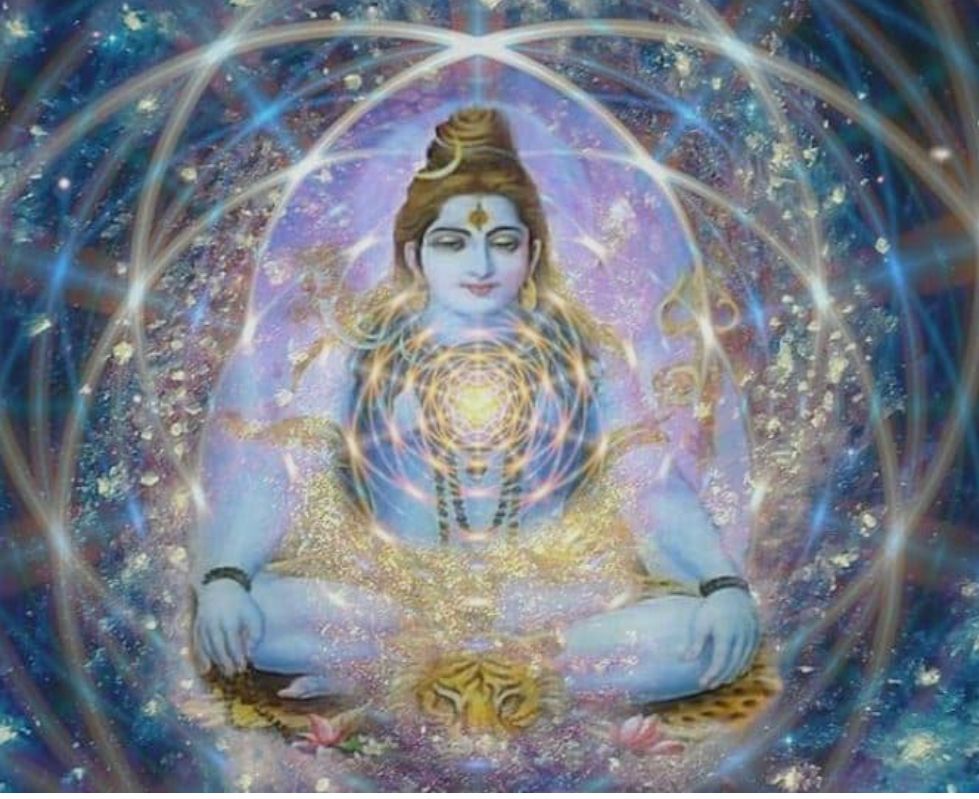
Symmetry of Family Members
The family members do not mirror Shiva. They balance him. Their different qualities create a home
that is stable and dynamic.
- Stillness and Foundation :Shiva is silent consciousness. Parvati is active energy and the solid foundation. He is the cosmic peak. She is the Earth that supports it.
- The High-Born and the Outcast: Parvati is the daughter of a rich king. She represents the
highest order of civilisation and royalty. Her choice to marry Shiva, the wanderer of the Ganas,
is the ultimate social bridge. It shows that a living civilisation must integrate the elite and the
forgotten to be whole. - Logic and Valor: Ganesha represents the quiet strength of strategy. Kartikeya represents the
fierce strength of the warrior. One removes obstacles with wisdom. The other removes them
with courage. - The External and attached: Ganga resides on Shiva’s head. She provides an external
perspective of purification and flow. She clears the stagnation that builds in any system. She is
connected to the head of the house but is not attached to domestic politics. She represents
connection without attachment. - Contemporary Relevance :The Architecture of the Composite Team Modern diversity often fails
because companies seek a “culture fit.” This leads to cloning. The Shiva Parivar offers a better model
called culture contribution. A great team needs a visionary (Shiva) for innovation. It needs a foundation
for safety (Parvati). It needs a strategist (Ganesh) for efficiency and an executor (Karthikeya) for
delivery. Finally, it needs the consultant (Ganga). This is the agent who turns a flood of chaotic ideas
into a steady stream of progress.
The Outer Circle
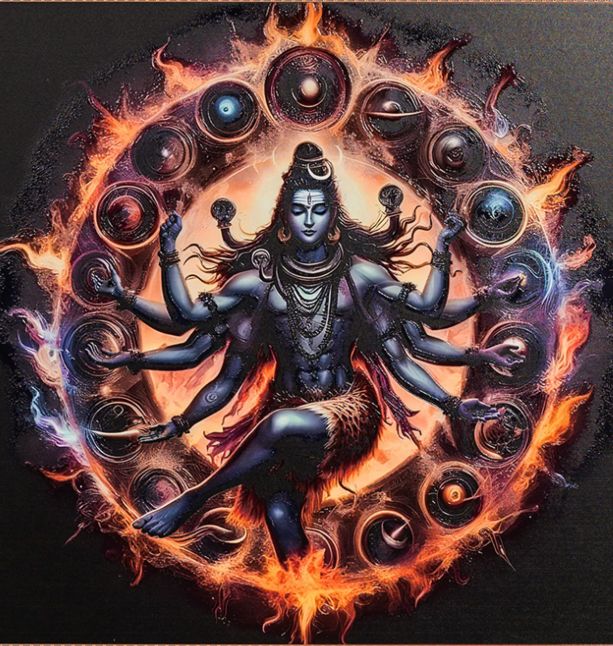
The Biological Paradox
In the wild, these beings live by a “kill or be killed” rule. In Shiva’s home, the food chain is suspended.
This happens through alignment and not through force.
- The Snake and the Mouse: A snake lives by consuming rodents. Around Shiva’s neck sits the predator. Beneath Ganesha sits the prey. Here, the mouse is a fellow devotee and not a meal. This shows a system can protect its weakest members even when powerful interests are in the room.
- The Peacock and the Snake: In nature, the peacock kills even the most venomous snakes. Yet Kartikeya’s peacock and Shiva’s snake share the same space in peace. This teaches us that natural animosity fades when both parties focus on a higher duty.
- The Lion and the Bull: This is the ultimate tension between the hunter and the hunted. Parvati’s lion and Shiva’s bull stand side by side. It proves that power does not have to be predatory. In a balanced civilisation, the strong and the useful exist together without victimisation.
Contemporary Relevance: Radical Inclusivity This is the framework for pluralism in corporate life.
Diversity initiatives often fail because they try to tame the predator or harden the prey. They want
everyone to act the same. Shiva’s model proves you can handle natural enemies like competing
departments or rival stakeholders. You do not need to pull the lion’s teeth. You simply provide a
common centre that is more important than the instinct to compete.
Conclusion
The Masterpiece of Inclusion
The Shiva Parivar is a manual for the modern seeker. It proves you do not have to choose between
being strong and being kind. You do not have to choose between being a thinker and a warrior.
Following this logic means you stop choosing “either or.” You are both. We integrate our internal
conflicts and our family differences. We create a civilisation that is wild and wise. It is stable and
flowing. It is ancient and modern
About the Author
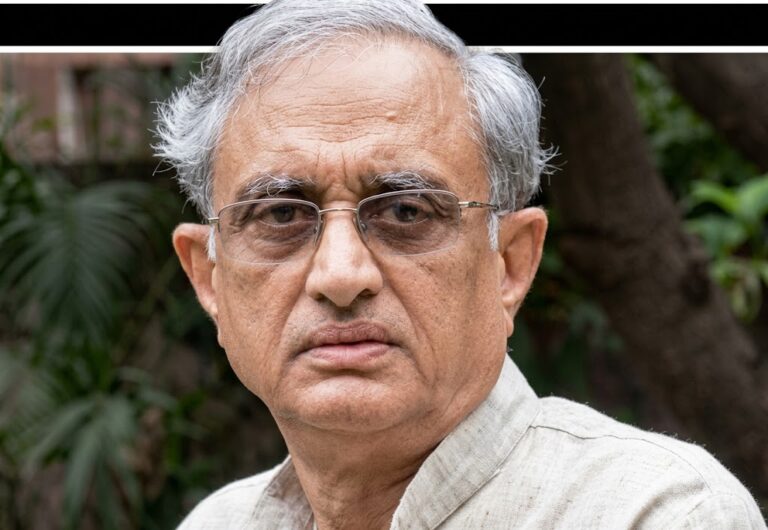
R Srinivasa Murthy, the author of the article, is a corporate leader and strategist who acts as an independent writer and seeker of Hindu philosophy. He is dedicated to decoding Sanatana Dharma as a practical system for the next generation. His upcoming book, “Logic of And: Sanatana Dharma as a Toolkit for the Contemporary Seeker”, bridges the gap between ancient wisdom and modern life to build an inclusive and living civilisztion.

With a journalistic long journey, we bring you https://primepost.news, a dynamic platform committed to unraveling the intricate tapestry of Indian politics, particularly delving deep into the heart of Telangana and Andhra Pradesh. Our blog is not just a source of news; it’s a reservoir of insights, analysis, and thought-provoking reviews.

Very nice
Nicely explained how Lord Shiva – Pariwar connected to our humanly world, significance. It’s matching to happenings in the Universe in each and every aspect. I came to know the facts about Lord Shiva – and Parivaar connection in bringing harmony in the universe. Every aspect which mentioned here very close to this narration. Vital. Worthy. To be preserved.
Thank you
It’s a universal truth as you rightly mentioned that Lord Shiva has built his surroundings on the earth in Mount Kailash. He tried to bring peace on the earth, but some how he is a Bhola means, to everyone once think him in the mind just he says I am with you and what we expect that will be done. Therefore Lord Shiva is an Universal God and everyone worship him with effection.
Good Narration.
Nice reflection sir.Thank you
Being the master of Symphony and Cacophony is Divinity. With self improvement we experience Symphony in the Cacophony we reach in togetherness with the Divine.
Right observation sir
Excellent narrative 🙏🏻🙏🏻🙏🏻🙏🏻
Thank you
Balance is essence of creation earth would have been different place a thousand kms farther or nearer to sun. Seasons, day/ night, nutrition, acid/ alkali balance , opposition and proposition in politics all demand ” balance” without which the pull of power is overwhelming.
Thankyou
It is realitysir still we have.to learn
It is realitysir still we have.to learn
Nice perspective on Shiva
Very nicely written. This is reminding me about the “The Shiva Trilogy”
This is one of the few posts which can be read multiple times.
Well narrated about shiva parivar. While reading, it is auto connected to our lives, and understand the reality – think & change to correct side of Dharma.
The article is very interesting to read topic by topic till the conclusion.
Well narrated about shiva parivar. While reading, it is auto connected to our lives, and understand the reality – think & change to correct side of Dharma.
The article is very interesting to read topic by topic till the conclusion.
Thank you
Well narrated about shiva parivar. While reading, it is auto connected to our lives, and understand the reality – think & change to correct side of Dharma.
The article is very interesting to read topic by topic till the conclusion.
Sir Review is good
We have boosted experience
To understand shivas Pariwar.
Lord shiva is so powerful
And Assist and give boon
To every one and solve s
Problem Amicably
And in peas ful manner
Om Namashivaya shivaya.
Har har Mahadev
Most wonderfully elaborated, keeping things simple, without avoidable complexities. Such content is very useful and relevant to the younger Hindu generations, who tend to miss out on structured exposure to Indian (Sanatan) philosophies, more on account of their avoiding native Indian languages. My compliments to the author and wish him success in such endeavours. Kudos
Thanks dear Vijay
Good review. Very informative.
This one is well written.
Thank you
Excellent Naration : Contradictions don’t divide us—they complete us. The Shiva Parivar stands as a profound metaphor for balance, acceptance, and coexistence.
Beautiful set of seemingly opposing concepts, my favourite being kindness and strength, that are deeply relevant for leading personal and corporate life. Looking forward to your book!
Thanks Mahesh
Shiva Parivar symbolises the grand tenet of unity in diversity. This is a universal principle doctrined in hindu philosophy. So too it’s understood that our altar is complete only when we decorate it with this picture and worship. Good narration.
‘Shiva Parivar’ symbolises the grand tenet of unity in diversity. This is a universal principle doctrined in hindu philosophy. It’s believed that our altars are incomplete without decorating with this picture. Every wish is granted worshipping it. Subham! Good narration.
Thanks sir
This has been a great writing and comparing shiva with modern corporate board room and it’s challenges. Truly superb and everyone ,especially the gen z to read and understand
Thanks Raja…you may share with next gen in your circles
Well narrated and connecting with loves practically. Thank you 🙏
Thank you
Very logical and deep analysis to teach the present generation -the so called GEN -Z
Well written sir. Life is all about finding the peace with inner conflicts. When everyone is stuck between either / or, Peace is about accepting to be both.
Very nice explanation
Truly insightful and creative piece of writing, beautifully drawing parallels between the mythology -Shiva Parivar and a modern corporate world.
Giving insights on coexistence, balance and the challenges
Har Har Mahadev