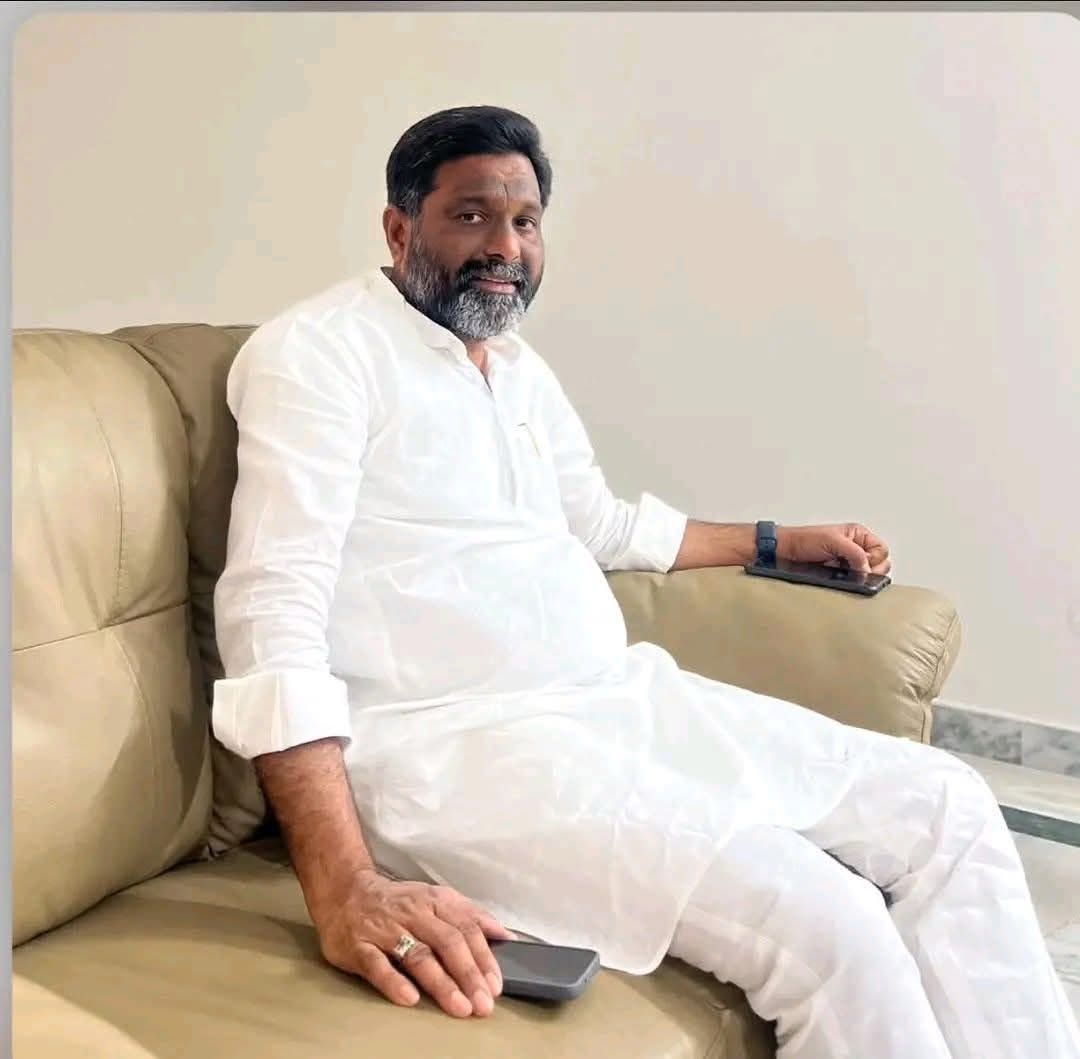
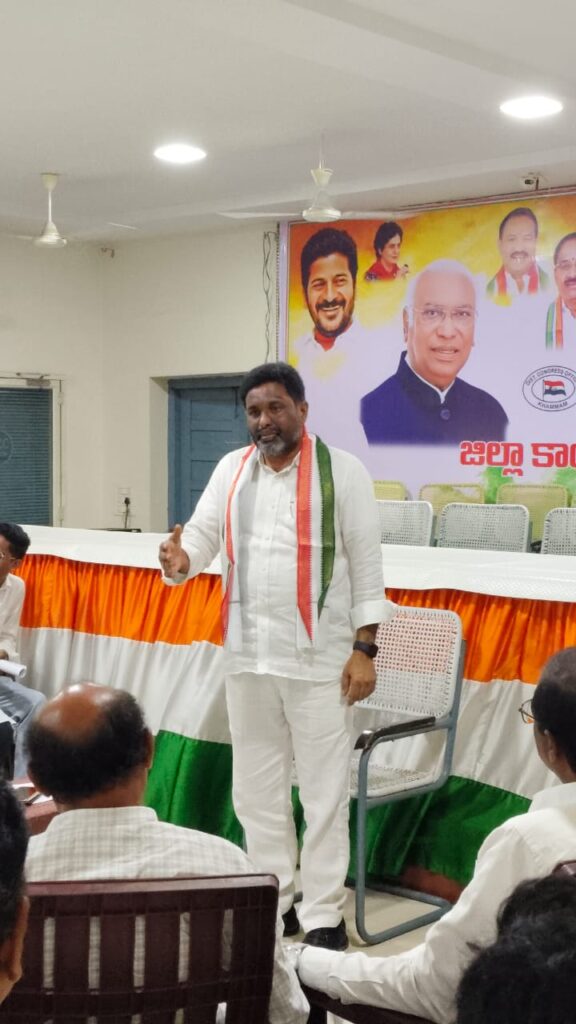
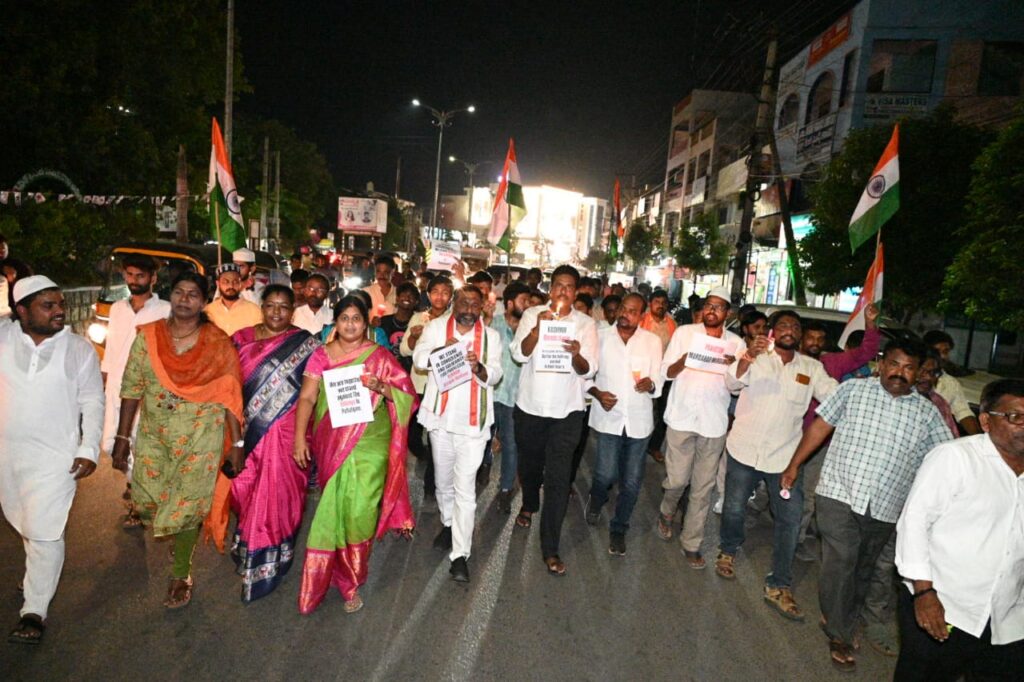
The Congress party may measure its strength in the thousands of leaders and lakhs of workers across its ranks, but the loss of a single “hardcore” activist like Javed Mahammad leaves a void that numbers cannot quantify. On Wednesday, the party lost one of its most dedicated soldiers in a tragic road accident near Suryapet. Javed was traveling from Khammam to Hyderabad when the mishap occurred, cutting short a life defined by unwavering loyalty and intellectual depth. Whether it was a party membership drive or a call for a protest, Javed led the program with unwavering dedication.
A Lifetime of Unwavering Loyalty
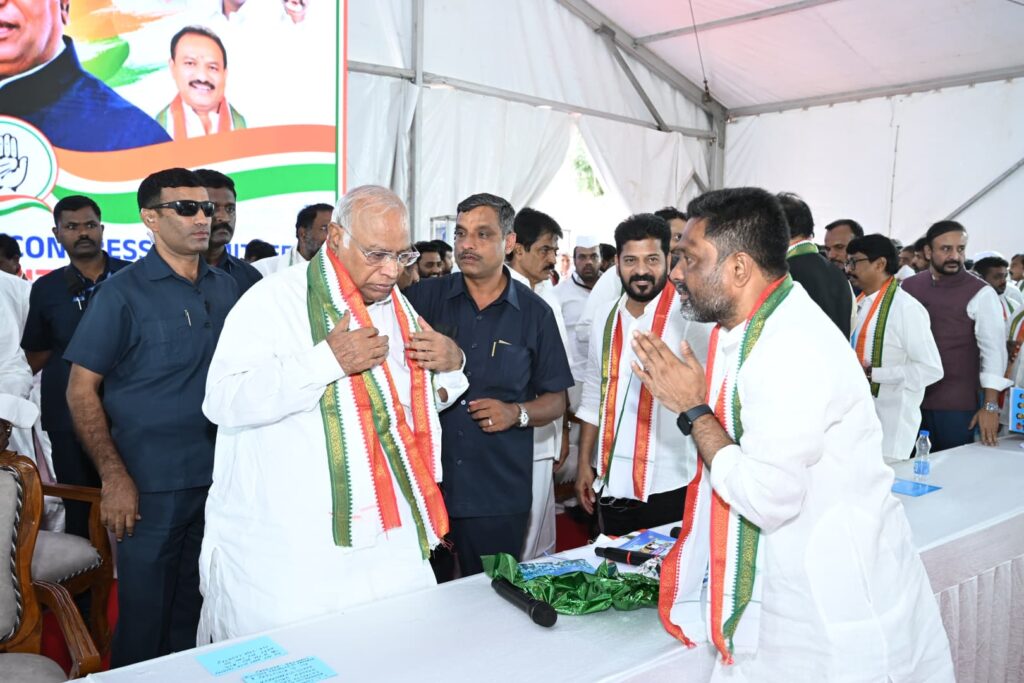
Javed Mahammad’s journey with the Congress began in 1994. Joining as a regular worker, he rose through the ranks to become the President of the Khammam Town Congress Committee. Unlike the fleeting allegiances often seen in modern politics, Javed was a man of principle who never once violated the party line.
In every election cycle, regardless of the candidate, Javed was a fixture on the ground. He worked tirelessly to ensure the party’s success, driven not by personal ambition, but by a deep-seated belief in the Congress ideology. His peers remember him as a repository of party history, possessing an encyclopedic knowledge of the policies that shaped post-independence India.
An Intellectual Guardian of the Congress Legacy
Javed’s commitment was not merely emotional; it was deeply intellectual. In a previous interview with Prime Post, he eloquently charted the evolution of the Indian nation through the lens of Congress leadership. He viewed the party’s journey as a continuous effort to build a nation strong in both defense and economics: Jawaharlal Nehru: Focused on the “temples of modern India”—government-sector industries and massive irrigation projects to secure food sovereignty. Lal Bahadur Shastri: Galvanized the nation with the iconic “Jai Jawan, Jai Kisan” slogan. Indira Gandhi: Championed social justice through “Garibi Hatao” and fortified India’s defensive capabilities. Rajiv Gandhi: Ushered in the technological revolution that laid the groundwork for the digital age. P.V. Narasimha Rao: Architected the 1991 economic liberalization that transformed India into a global contender.
Rural Poor and Critic of Policy Shifts
Javed was particularly passionate about the MGNREGS, a scheme he believed restored dignity to rural farm workers. However, in his final writings for Prime Post, he expressed sharp displeasure over the 2025 transition of the scheme into VB-G RAM G (viksit Bharat Guarantee for Rozgar and Ajeevika Mission Grameen).
He argued that the new 60:40 cost-sharing model between the Centre and States weakened federalism and shifted the program from a rights-based framework to an allocation-based system. For Javed, these weren’t just administrative changes; they were threats to the self-confidence of the Indian worker. –
A Heart for the Marginalized: The Identity Card Initiative
Perhaps the most telling story of Javed’s character involves his advocacy for migrant workers. Years ago, while I was at Deccan Chronicle, Javed shared a photograph of skilled carpenters and plumbers from Uttar Pradesh and Bihar holding identity cards.
These workers, essential to the construction industry, were frequently harassed by night-patrol police due to language barriers and a lack of documentation. Javed didn’t just sympathize; he acted. He negotiated with the police to issue formal identity cards to these workers, ensuring their safety and dignity. When the Deccan Chronicle gave this story front-page priority over VIP tours, a humble Javed called to ask why. My response remains the same today: “It is a human interest issue, and you solved it.”
Javed Mahammad was more than a party worker; he was a bridge between policy and the people. His passing is a reminder that the true strength of a democracy lies not in its high-profile leaders, but in the quiet, persistent work of activists who care for the man at the end of the line.
Editor, Prime Post
Ravindra Seshu Amaravadi, is a senior journalist with 38 years of experience in Telugu, English news papers and electronic media. He worked in Udayam as a sub-editor and reporter. Later, he was associated with Andhra Pradesh Times, Gemini news, Deccan Chronicle, HMTV and The Hans India. Earlier, he was involved in the research work of All India Kisan Sabha on suicides of cotton farmers. In Deccan Chronicle, he exposed the problems of subabul and chilli farmers and malpractices that took place in various government departments.
Email: ravindraseshu7@gmail.com
Mobile: 9063718675