The Indian Stand: Diplomacy Amidst the “De Facto” Blockade
The Strategic Chokepoint: Why US-Israel fails Against Geography
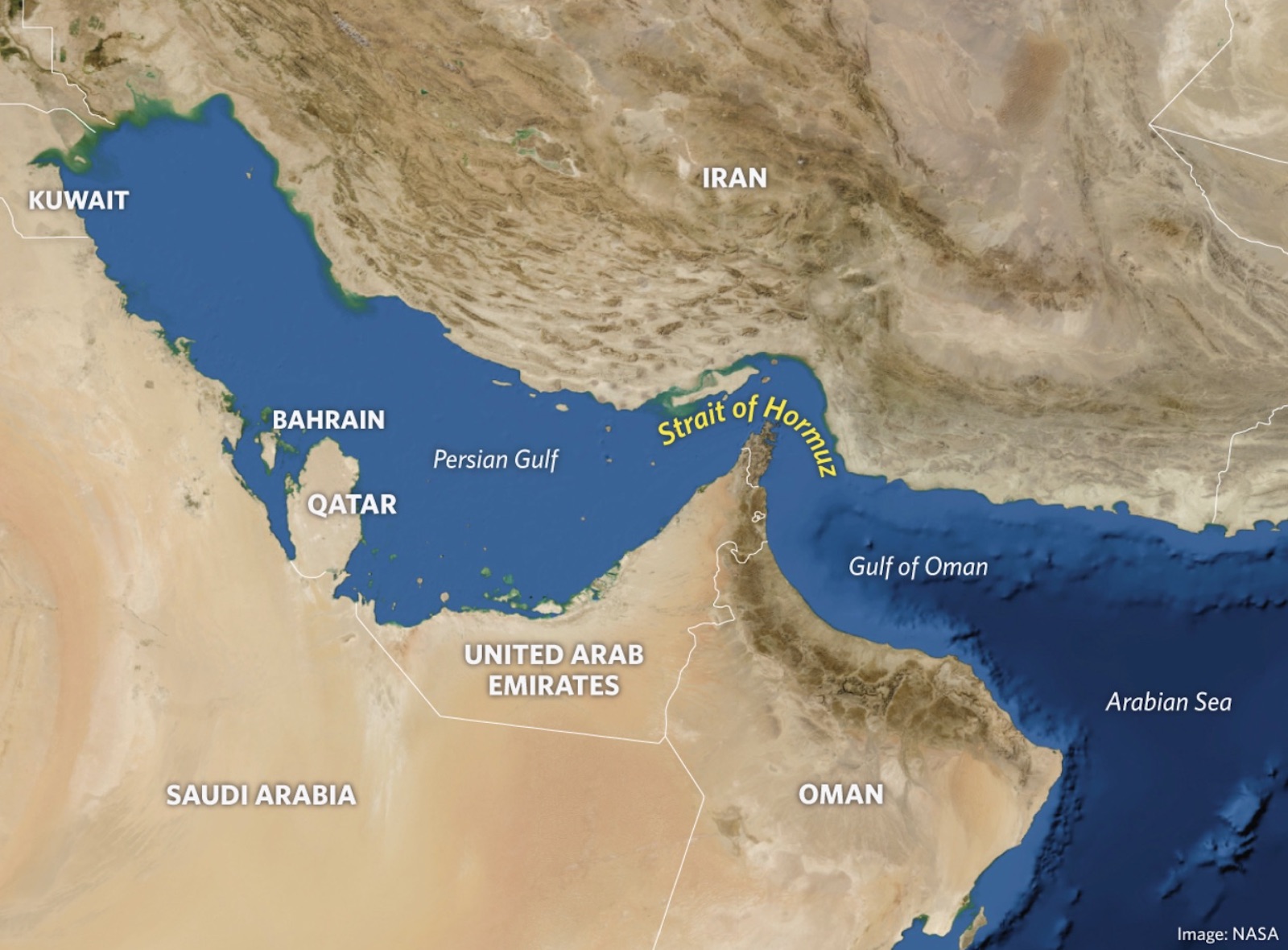
The Strait of Hormuz has emerged as the central flashpoint of the current conflict between Iran and the US-Israel coalition. Despite intense aerial bombardments on Iranian military sites and the reported destruction of major Iranian naval assets, the waterway remains effectively under Iranian control.
The Strategic Stalemate: Why Control is Elusive
While the US and Israel possess overwhelming conventional military power, controlling the Strait is not a matter of simple naval superiority. While the US and Israel can dominate the skies, “controlling” the Strait requires the total elimination of every mobile missile launcher hidden in the coastal cliffs. As long as a single battery remains, the Strait is effectively closed to global trade.
Iran’s strategy relies on “anti-access and area-denial”. Even without a large surface fleet, Iran uses mobile land-based anti-ship missiles, swarms of fast-attack boats, and sophisticated sea mines. The Iranian coastline is rugged and lined with caves and hidden launch sites. Bombs can destroy visible infrastructure, but neutralizing thousands of hidden, mobile missile launchers is nearly impossible without a full-scale ground invasion.
The “Houthi Model”
Much like the Red Sea crisis of 2024, Iran has proven that it only takes a few successful strikes or the threat of strikes to make the Strait uninsurable and commercially unviable for Western-linked shipping. The Strait is often called the “world’s oil valve” because it is the only sea passage from the Persian Gulf to the open ocean. At its narrowest point—between Larak Island (Iran) and Quoin Island (Oman)—it is approximately 21 nautical miles (39 km) wide. The length of the strait stretches roughly 90 to 100 miles (150–160 km).
The Two-Mile Buffer and the “Geography of Hostility
To prevent collisions, ships use a Traffic Separation Scheme (TSS). These lanes are only 2 miles wide in each direction, separated by a 2-mile buffer. Iran had its advantage on it. Most of these navigable lanes lie within or very close to Iranian territorial waters. This proximity gives Iran a “home-field advantage,” allowing them to monitor and intercept every vessel passing through the “throat” of the Gulf.
India’s Position and the Current Status
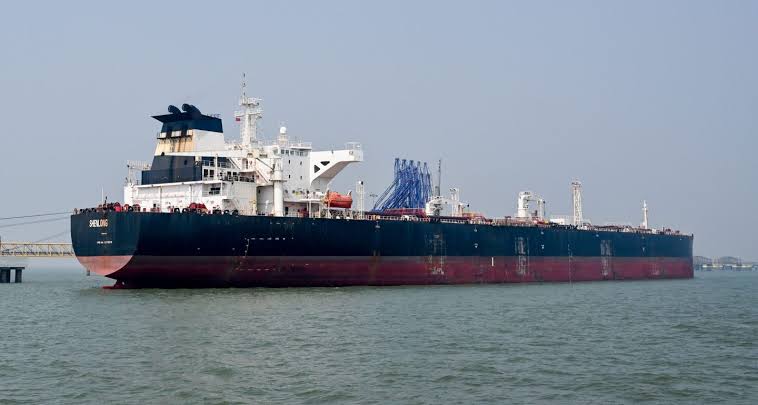
India has maintained its doctrine of strategic autonomy, refusing to join Western military coalitions while engaging in direct diplomacy with Tehran. Iran agreed to allow Indian ships, but with caveats. Iran has stated the Strait is “open” to friendly nations but “closed” to enemies (the US and Israel). However, due to active mine-laying and the risk of crossfire, passage is not guaranteed for anyone. It relied on the “Individual Basis” Rule”. External Affairs Minister S. Jaishankar clarified that there is no blanket agreement. Instead, India must coordinate with Tehran for each ship’s passage individually.
It relies on the Strait for nearly 90% of its LPG and a massive chunk of its crude oil. Unlike the US, India has chosen not to use military force. Minister Jaishankar has advocated for a “reason and coordinate” approach, leveraging India’s historical ties with Iran to secure “safe-passage windows” for essential energy supplies. This diplomatic backchannel is currently the only reason Indian kitchens are avoiding a total gas crisis.
How many Indian ships have been allowed?
As of mid-March 2026, four Indian-flagged vessels have successfully crossed the war zone unharmed since the conflict escalated. Notable among these are two LPG carriers, the Shivalik and Nanda Devi, which were cleared for passage following a high-level telephonic conversation between Prime Minister Modi and the Iranian leadership. Approximately 22 Indian-flagged vessels remain stranded or are waiting for clearance on the western side of the Gulf.
The US-Israel Condition: “Freedom of Navigation”
For Washington and Tel Aviv, the condition is absolute: the Strait must be an international waterway where no single power can dictate who passes. The US has launched “Operation Earnest Will”-style missions to clear mines, but they face a dilemma: every strike on Iran’s coast triggers more mine-laying or drone attacks on tankers, further spooking the global energy market.
The Iranian Condition is “Security for All or Security for None”. Tehran’s stance is that if their own oil exports (primarily from Kharg Island, which has faced heavy bombing) are stopped, they will ensure no one else’s oil leaves the Gulf. They demand an end to US-Israeli strikes as a prerequisite for fully reopening the lanes.

Editor, Prime Post
Ravindra Seshu Amaravadi, is a senior journalist with 38 years of experience in Telugu, English news papers and electronic media. He worked in Udayam as a sub-editor and reporter. Later, he was associated with Andhra Pradesh Times, Gemini news, Deccan Chronicle, HMTV and The Hans India. Earlier, he was involved in the research work of All India Kisan Sabha on suicides of cotton farmers. In Deccan Chronicle, he exposed the problems of subabul and chilli farmers and malpractices that took place in various government departments.
Email: ravindraseshu7@gmail.com
Mobile: 9063718675