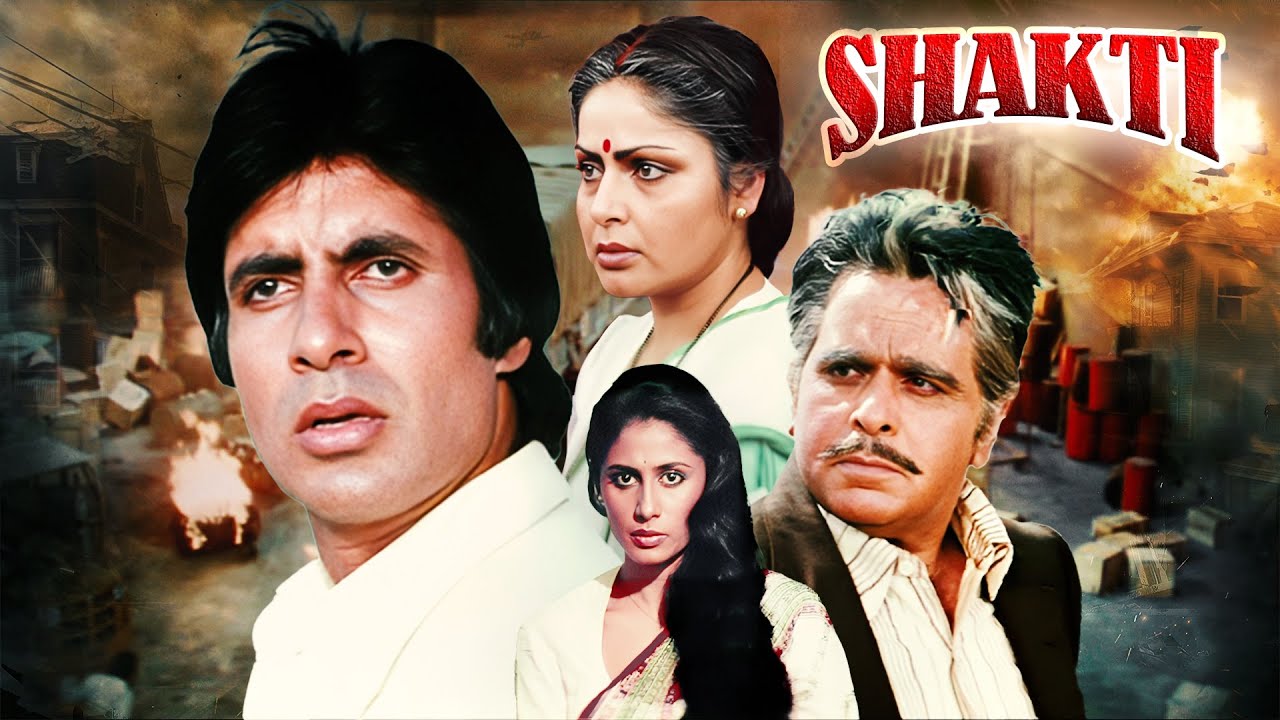
- The Stoic Lawman vs. The Wounded Rebel: A Study in Archetypes
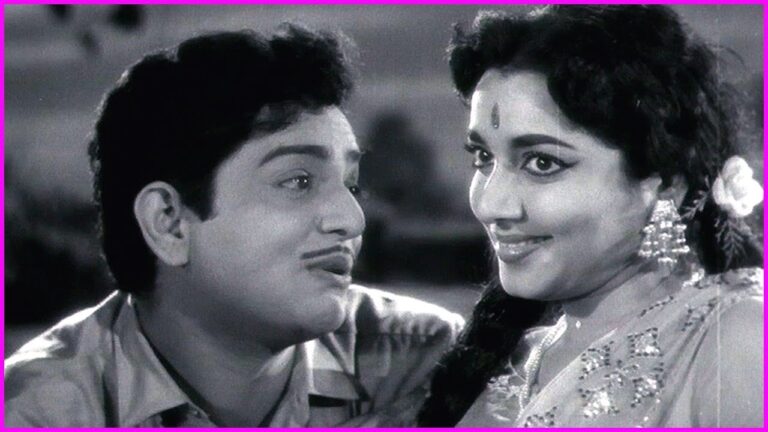
- Film of Sippy, Dileep Kumar and Amitabh
Released in 1982, ‘Shakti’ remains a monumental achievement in Indian cinema, primarily because it served as the only screen meeting between two acting legends: Dilip Kumar and Amitabh Bachchan. Directed by Ramesh Sippy and written by the legendary duo Salim-Javed, the film is a masterclass in screenwriting, exploring the tragic erosion of a father-son relationship under the weight of duty and misunderstanding.
The Catalyst of Conflict: Ashwini and Vijay
The core of ‘Shakti’ lies in the ideological divide between ‘‘DCP Ashwini Kumar’’ (Dilip Kumar) and his son, ‘‘Vijay’’ (Amitabh Bachchan). The tragedy is rooted in a childhood trauma. When a young Vijay is kidnapped, Ashwini, a man of uncompromising integrity, refuses to trade a criminal for his son’s life. In a moment of calculated bravado over the phone, he tells the kidnappers to go ahead and kill the child, asserting that he will not compromise the law.
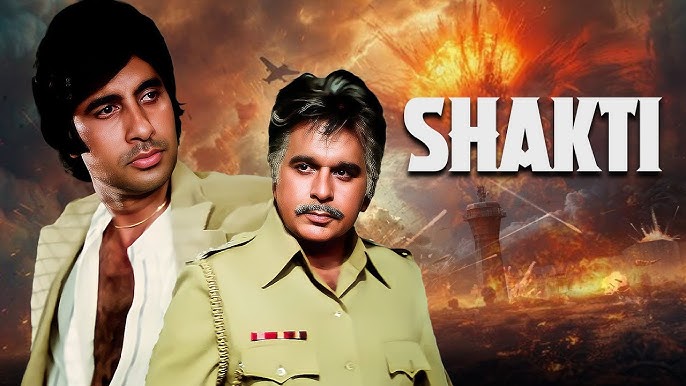
The Passing of the Torch: A Historic Cinematic Convergence
This heading addresses the “meta” significance of the film. In 1982, Dilip Kumar was the undisputed “Tragedy King” of the previous generation, and Amitabh Bachchan was the reigning “Angry Young Man.” This section would analyze how their acting styles—Dilip Kumar’s subtle, nuanced underplaying versus Amitabh’s intense, explosive delivery—complemented each other. It marks the rare moment where the two greatest pillars of Indian cinema met to create a performance that defined an era.
Though Ashwini acts out of a desperate hope that his bluff will save Vijay, the young boy hears the words and internalizes them as a death sentence from his own father. This “small misunderstanding” becomes a permanent wedge. While Ashwini harbors enormous affection for his child, his inability to articulate love outside the framework of his uniform creates a cold, professional exterior that Vijay finds impossible to penetrate.
The Language of Law vs. The Language of Love
The film’s brilliance is captured in its sharp, emotive dialogues. One of the most heart-wrenching sequences occurs in the jail. Ashwini approaches Vijay not as a parent, but as an officer, saying, “Don’t think I am talking to you as a father… I am talking as a police officer.” Vijay’s retort—”What is new in this? You were always talking to me as a police officer”—is a scathing indictment of their relationship. It highlights Vijay’s lifelong yearning for a father who prioritized him over the law.
Even when moments of vulnerability arise, they are steeped in tension. When Ashwini meets Vijay at Marine Drive to inform him of his mother’s failing health, the air is thick with resentment. Ashwini has to clarify that he isn’t there to trick Vijay into surrendering or to make his own job easier. He is a man trapped between his duty to the state and his duty to his family, unable to reconcile the two.
Emotional Anchors and the Silent Finale
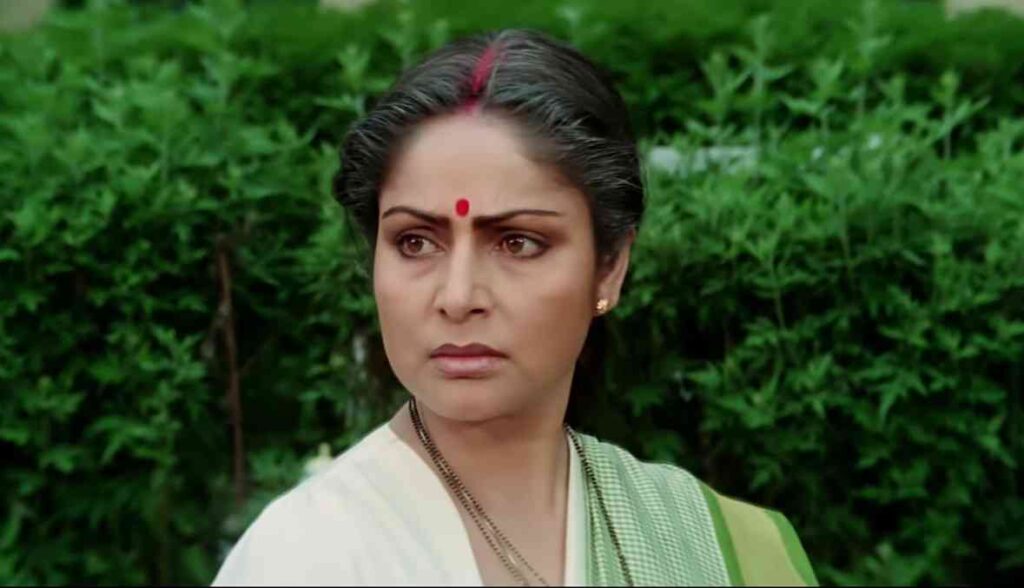
While the men clash, the women in their lives provide the emotional glue. Rakhee Gulzar, as the wife and mother caught in the crossfire, and Smita Patil, as Vijay’s wife, bring a grounded humanity to the high-stakes drama. The scene where Smita Patil visits her in-laws after the marriage is a poignant reminder of the family that could have been. Perhaps the most powerful moment in the film contains no dialogue at all. Following the death of Ashwini’s wife, father and son meet in a vacuum of grief. The expressions on Dilip Kumar’s and Amitabh Bachchan’s faces convey a lifetime of unspoken apologies and shared pain that words could never capture.
The Tragic Conclusion
The climax at the airport brings the conflict to its inevitable, bloody end. After Vijay kills the villain JK (Amrish Puri) to avenge his mother, he attempts to flee. Ashwini, ever the servant of the law, is forced to shoot his own son. As Vijay lies dying in his father’s arms, he delivers the final, soul-crushing line: “Don’t touch me… if I lived independently, I will also die independently.”
Ramesh Sippy’s Vision
‘Shakti’ remains a “super hit” because it isn’t just a movie; it is a visceral experience. With R.D. Burman’s haunting score and Ramesh Sippy’s visionary direction, it stands as the definitive cinematic exploration of the high cost of integrity and the tragic permanence of a misunderstood heart.

Principal Correspondent, Prime Post
Vidya Sagar Chaturvedula is a passionate film enthusiast whose four-decade career spans multiple sectors, including media and industry. Fluent in Telugu, Hindi, and English, he has a deep appreciation for cinema, particularly films in those three languages. His passion goes beyond simple viewing; he enjoys analyzing directional skill, the emotional depth of actors’ performances, and the profound meaning embedded in dialogue. Mr. Sagar is known for his ability to clearly articulate and narrate his insightful film analyses after watching a movie.
Email: sagar.chaturvedula@gmail.com
Mobile: 9030702917



It was a great film indeed. The actor Amitabh bachhan and Dilip sahab acted well. Smitha patil also played a major role and did well. Good narration about the film. The story behind the film was excellent.
Shakti is very interesting movie, two superstars of hindi cinema Dilipkumar and Amitabh Bachchan acted in this action drama movie directed by Ramesh sippy. Dilipkumar is honest cop and Amitabh Bachchan as his son, who has love hate relationship with his father. They performed very well. The music of the movie is excellent.
Very well written.
A film highlighting on clash between son and father! the child developing an estranged feeling towards his father, this to be pondered at length! undelying are the priorities of each, son and father from their own perspective. It may be circumstantial. The ending of picture a very tragic one. Esp the mother character is the most vulnerable! This wd leave a dent on the minds audience too. A very good film in the series of Ramesh Sippy productions. Thanks for the post.
A combination of great actors not stars with a flawless script and great director and excellent performance by all the actors Shakthi became on of the best films of Bollywood
Shakti movie
With the combination of
Dilip kumar saheb and Amitabh saheb wonderful action and with hand some dialogue s touch heart
The last dialogue
From Dilip saheb
.is Highlited.
Good review
Good analysis
This film was made with actors not stars with flawless script good direction supported with great performances from all actors
Shakthi is a fantastic film. Great performances by all. Good analysis.
Good analyzation
When shakti (authority ) devolves as sakkhti (strictness) in the eyes of the young child, the hatred it harbours, knows no limits.
The wrongdoing and crime is not far away.
The actors though good actually underperformed.
Songs kept the movie going
Nicely put