హింస రచన – ధ్వంస రచన
“The expressions ‘Himsa Rachana’ and ‘Dhwamsa Rachana’ are employed here as interpretative categories inspired by the revolutionary humanism of Mahakavi Sri Sri, to examine the architecture of violence in the contemporary world.”
The twenty-first century was widely expected to become the century of reason. The unprecedented expansion of scientific knowledge, economic interdependence and technological innovation promised a world in which diplomacy would increasingly replace confrontation, and cooperation would supersede coercion. Yet the global order appears to have travelled in the opposite direction. The contemporary international system is witnessing the steady institutionalisation of violence as an enduring instrument of statecraft, transforming conflict from an exceptional event into a permanent political condition.
The continuing military confrontation involving Iran, Israel and the United States is therefore not merely another regional crisis. It represents a profound civilisational moment, exposing the structural contradictions of the modern international order. Behind every missile launch lies an elaborate ecosystem comprising military industries, technological research, intelligence networks, strategic energy corridors, financial markets and geopolitical alliances. Modern warfare has ceased to be simply the collision of armies; it has evolved into the interaction of entire economic systems.
The Architecture of Structural Violence: A Sri Sri Lens
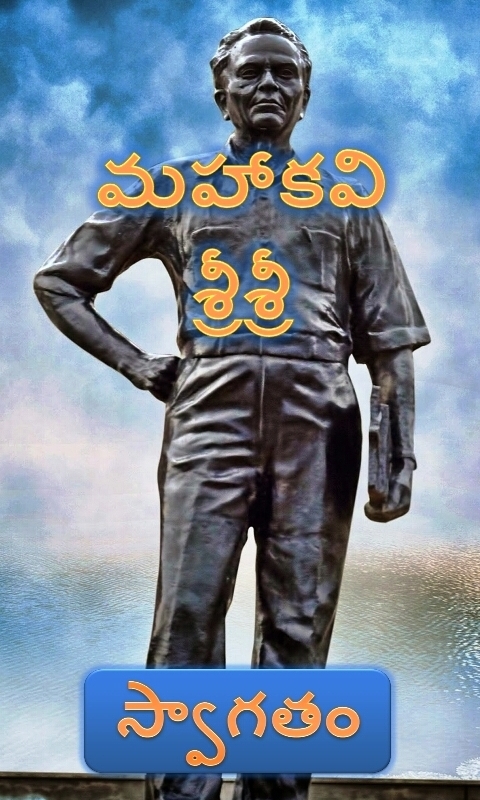
This transformation invites reflection through the revolutionary literary consciousness of Mahakavi Sri Sri. His poetry was never an anthem of destruction for its own sake. Rather, it challenged social stagnation, economic exploitation and institutional injustice. The revolutionary impulse in his literary imagination sought not the glorification of violence but the liberation of humanity from oppressive structures. Violence acquired moral meaning only when directed towards dismantling entrenched injustice and making possible a more equitable social order.
Inspired by that philosophical tradition, this essay employs two analytical constructs: Himsa Rachana—the structural composition of violence—and Dhwamsa Rachana—the structural composition of destruction. These expressions describe not isolated incidents of brutality but organised systems through which violence becomes embedded within political institutions, economic interests and strategic doctrines. They illuminate the architecture rather than the episode; the design rather than the explosion.
Structural Violence and Modern Geopolitics
The distinction is crucial. Violence, in its ordinary sense, is often perceived as an immediate physical act. Structural violence, however, operates silently through institutions, policies, technologies and economic incentives that continuously reproduce insecurity. Likewise, destruction is no longer confined to shattered buildings or devastated landscapes. It increasingly encompasses fractured economies, displaced populations, disrupted ecological systems, traumatised societies and eroded moral imagination.
Viewed from this perspective, the Middle East today symbolises not merely a theatre of war but a laboratory of twenty-first century geopolitics. Precision-guided missiles coexist with imprecise political objectives. Artificial intelligence assists military targeting while human wisdom struggles to prevent escalation. Nations capable of extraordinary scientific achievements often remain incapable of constructing durable political trust. Humanity has mastered the mechanics of destruction far more successfully than the ethics of coexistence.
The consequences reverberate far beyond the immediate battlefield. Every geopolitical confrontation destabilises global energy markets, disrupts maritime commerce, inflates insurance premiums, weakens investor confidence and diverts scarce public resources away from education, healthcare and scientific research. Defence budgets expand while developmental priorities contract. National security increasingly consumes resources that might otherwise strengthen human security.
Anthropologically, this development represents a disturbing reversal in the evolution of civilisation. Human societies gradually emerged from fragmented tribal identities towards increasingly sophisticated systems of constitutional governance, international law and multilateral cooperation. Yet beneath this institutional progress, ancient instincts of fear, retaliation and collective insecurity continue to shape political behaviour. Modern technology has not abolished tribal psychology; it has merely amplified its destructive capacity. Today’s tribe possesses satellites, cyber capabilities, hypersonic missiles and autonomous weapon systems.
The retaliatory helix thus becomes the defining metaphor of our age. Every act of violence generates fresh retaliation; every retaliation produces deeper insecurity; every new insecurity legitimises further militarisation. The cycle feeds upon itself, independent of the original grievance. What begins as strategic necessity gradually evolves into institutional habit, and eventually into political normality.
History repeatedly demonstrates that civilisations seldom collapse because of external enemies alone. They decline when violence becomes embedded within their governing logic, when fear replaces reason as the organising principle of public policy, and when military capability begins to overshadow moral responsibility. The gravest danger confronting the international community today is therefore not simply another regional war. It is the gradual acceptance of perpetual conflict as the natural condition of human civilisation. That acceptance marks the true triumph of Himsa Rachana—the systematic organisation of violence—and the quiet expansion of Dhwamsa Rachana into the very architecture of the modern world
The Political Economy of Perpetual Conflict

The greatest paradox of modern civilisation is that peace has become economically less rewarding than preparedness for war. Throughout history, kingdoms amassed armies primarily to defend territory or expand imperial frontiers. In the twenty-first century, however, military preparedness has evolved into a permanent economic ecosystem whose survival often depends upon the persistence of geopolitical uncertainty. The distinction between national security and economic interest has consequently become increasingly blurred.
This transformation deserves scrutiny beyond conventional strategic analysis. War is no longer confined to the battlefield; it has become deeply embedded within production systems, financial markets, technological innovation and international commerce. The contemporary military-industrial complex is not merely a network of defence manufacturers. It is an intricate constellation of governments, research institutions, technology corporations, intelligence agencies, financial investors and geopolitical alliances whose collective interests frequently converge around sustained military expenditure.
Within this architecture, conflict performs an economic function. Every escalation stimulates demand for sophisticated weapon systems, cyber-defence technologies, surveillance infrastructure, satellite capabilities and strategic logistics. Public expenditure on defence expands, private investment follows, technological innovation accelerates and industrial employment receives fresh momentum. The paradox is unmistakable: destruction in one part of the world often generates economic activity in another.
Such structural incentives profoundly influence political decision-making. Diplomatic restraint, though morally desirable, seldom generates measurable economic returns comparable to those associated with large-scale defence procurement. Consequently, the political economy of modern warfare creates institutional constituencies whose prosperity becomes intertwined with prolonged strategic competition. Peace, therefore, ceases to be merely a humanitarian aspiration; it becomes an economic disruption for sectors whose growth depends upon continuous military modernisation.
Institutional Coercion and the Normalisation of Emergency
This is precisely where the analytical distinction between Himsa Rachana and Dhwamsa Rachana acquires contemporary significance. Violence today is increasingly organised through institutions rather than individual actors. Budgets, procurement policies, strategic doctrines, technological innovation and intelligence frameworks collectively constitute the architecture of organised coercion. The visible battlefield represents only the final manifestation of far deeper structural processes.
The consequences extend well beyond military affairs. Every missile launched reverberates through global energy markets. Oil prices fluctuate, shipping routes become vulnerable, insurance costs escalate and supply chains experience renewed uncertainty. Inflationary pressures emerge even in countries geographically distant from the conflict. Food security, industrial production and household consumption become indirect casualties of wars fought elsewhere. Globalisation has ensured that no regional conflict remains regionally confined.
Developing economies bear a disproportionate share of these burdens. Nations struggling to eradicate poverty, improve healthcare, modernise agriculture and strengthen educational institutions are frequently compelled to divert scarce public resources towards strategic preparedness. Developmental priorities become subordinated to security imperatives. Hospitals await construction while missile systems are commissioned. Schools remain understaffed while military inventories expand. Infrastructure for human development yields to infrastructure for strategic deterrence.
From a sociological perspective, prolonged militarisation also transforms the relationship between citizen and state. Governments increasingly invoke the language of existential security to justify extraordinary executive powers, enhanced surveillance, restrictions upon dissent and expanded intelligence capabilities. Citizens gradually internalise a permanent psychology of emergency, accepting exceptional measures as routine instruments of governance. Democratic vigilance weakens not through dramatic constitutional rupture but through the slow normalisation of extraordinary authority.
The Anthropological Regression: Vengeance over Adjudication
Anthropology provides an even deeper insight into this transformation. Human societies historically evolved mechanisms to restrain cycles of revenge through customary law, moral codes and judicial institutions. Civilisation itself may be understood as humanity’s long effort to replace vengeance with justice and retaliation with reasoned adjudication. Yet contemporary geopolitics appears to reverse this historical trajectory. Retaliation increasingly precedes investigation; military demonstration frequently substitutes diplomatic negotiation; strategic symbolism often outweighs humanitarian consideration.
Technology has intensified this contradiction. Precision-guided weapons create an illusion of surgical warfare, encouraging the belief that violence can be carefully calibrated. Yet every technological refinement simultaneously increases political confidence in military solutions. The easier it becomes to wage war with fewer immediate domestic casualties, the more tempting coercive statecraft becomes. Technological precision, paradoxically, may produce greater strategic recklessness.
Equally significant is the transformation of media itself. Digital platforms have compressed the temporal distance between battlefield and living room. Images of devastation circulate across continents within seconds, yet their relentless repetition risks producing moral fatigue rather than sustained political engagement. Human suffering increasingly competes with entertainment, commercial advertising and algorithmically curated distraction. Catastrophe becomes another consumable image within the endless economy of attention.
Strategic Prestige vs. Human Welfare
Sri Sri’s revolutionary humanism continues to offer an important corrective to this moral erosion. His literary imagination consistently placed the ordinary human being at the centre of historical transformation. The worker, the peasant, the labourer and the dispossessed were not incidental figures within history; they were its principal authors. Contemporary geopolitics, by contrast, often reduces civilians to statistical abstractions—collateral damage, refugee flows, displacement figures and humanitarian indicators. Such language, though administratively useful, risks obscuring the immeasurable dignity of individual human lives.
The civilisational challenge before humanity is therefore not merely technological or strategic. It is fundamentally ethical. Unless political institutions recover the capacity to value human welfare above strategic prestige, economic competition and military symbolism, the architecture of violence will continue expanding regardless of the sophistication of international diplomacy.
The retaliatory helix thus sustains itself through a tragic convergence of economic incentives, political calculations, technological capabilities and psychological insecurities. Breaking that helix requires far more than ceasefires. It demands the reconstruction of the moral foundations upon which international order itself rests—a recognition that enduring security cannot be built upon the perpetual reproduction of organised violence.
Civilisation at the Crossroads: Beyond the Architecture of Violence
Every civilisation is ultimately judged not by the sophistication of its weaponry but by the wisdom of its institutions. Empires have risen with formidable armies and vanished with astonishing speed, while enduring civilisations have been sustained by the moral legitimacy of their political order. The defining question before the twenty-first century is therefore neither who possesses the most advanced military technology nor who commands the greatest strategic influence. It is whether humanity can preserve institutions capable of restraining power before power overwhelms civilisation itself.
The contemporary international order presents a troubling contradiction. Never before has humanity created such an elaborate architecture of global governance. International organisations, multilateral forums, humanitarian conventions and diplomatic mechanisms collectively embody the aspiration that disputes should be resolved through law rather than force. Yet these institutions often struggle when confronted by geopolitical rivalries among major powers. Their effectiveness frequently depends less upon universal principles than upon the willingness of influential states to uphold them consistently.
This inconsistency weakens confidence in the very idea of a rules-based international order. Principles that appear universal in one crisis are sometimes interpreted selectively in another. Such perceptions, whether justified or not, deepen strategic mistrust and encourage states to rely increasingly upon military capability rather than collective security. The result is a gradual erosion of institutional legitimacy and a corresponding expansion of unilateral statecraft.
No Safe Zone: How Modern War Reaches Everyone
The humanitarian consequences are profound. Modern conflicts rarely remain confined to soldiers on the battlefield. Urban centres, hospitals, schools, energy infrastructure and transport networks become entangled in military operations, leaving civilian populations to bear a substantial share of the suffering. Families are displaced, livelihoods disrupted and generations shaped by insecurity. Even after hostilities diminish, the social and psychological effects can endure for decades.
The ecological dimension of warfare is equally significant yet often receives insufficient attention. Armed conflict damages ecosystems, contaminates water resources, destroys agricultural land and accelerates carbon emissions through military activity and reconstruction alike. Environmental degradation compounds humanitarian distress, making recovery more difficult and increasing the vulnerability of affected communities. In this sense, modern war extends its consequences beyond immediate political objectives, reshaping the conditions upon which future generations will depend.
Economic fragmentation adds another layer to this crisis. Persistent geopolitical confrontation encourages protectionism, strategic decoupling and disruptions to global supply chains. While states understandably seek resilience in critical sectors, excessive fragmentation can reduce efficiency, raise costs and slow economic development, particularly for lower-income countries. Resources that could support education, public health, scientific research and climate adaptation are instead redirected towards strategic competition. The opportunity cost of perpetual militarisation is measured not only in defence budgets but also in the unrealised potential of human development.
At its deepest level, the retaliatory helix is sustained by a failure of political imagination. Security is too often conceived as the accumulation of superior force rather than the cultivation of durable trust. Yet history suggests that military strength alone cannot produce lasting stability. Stable societies are built through institutions that command legitimacy, economies that generate opportunity and political cultures capable of accommodating difference without resorting to coercion.
It is here that the enduring relevance of Sri Sri’s revolutionary humanism becomes apparent. His literary vision challenged complacency, injustice and inherited privilege, but its moral centre remained the dignity of ordinary human beings. Read in that broader spirit, his work invites reflection on structures that diminish humanity rather than on destruction for its own sake. The challenge before the present age is therefore not to romanticise conflict but to question the systems that make conflict appear inevitable.
Beyond the Architecture of Violence: Dismantling Perpetual Conflict and Reclaiming Human Security
The analytical framework of Himsa Rachana and Dhwamsa Rachana, as employed in this essay, points towards a larger conclusion. Violence and destruction become most dangerous when they are no longer perceived as exceptional failures but as routine instruments of governance, economics and diplomacy. Once embedded within institutions, they acquire an inertia that transcends individual leaders or particular crises. The architecture begins to reproduce itself.
Escaping this cycle requires more than temporary ceasefires or tactical de-escalation. It calls for sustained investment in diplomacy, renewed confidence in international law, greater transparency in strategic decision-making and a political commitment to place human security alongside national security. Equally important is the willingness of societies to resist the gradual normalisation of perpetual conflict in public discourse and collective consciousness.
The future of civilisation will not be determined solely in command centres, diplomatic summits or technological laboratories. It will also be shaped by the ethical choices of nations and the expectations of their citizens. A world that accepts organised violence as an ordinary condition of political life risks diminishing not only its security but also its humanity.
The retaliatory helix is therefore neither inevitable nor irreversible. Civilisations have repeatedly demonstrated the capacity to reform institutions, revise assumptions and expand the boundaries of moral responsibility. Whether the present generation can do the same remains one of the defining questions of our time.
The true measure of progress will not be the number of conflicts humanity can wage with greater precision. It will be the number of conflicts it possesses the wisdom to prevent. Only when the architecture of violence yields to the architecture of justice can civilisation claim to have advanced beyond the ancient cycle of retaliation and towards a future worthy of its highest ideals.

M. Shiva Prasad, IPS (Rtd.) is a dedicated law enforcement professional who served the combined Andhra Pradesh cadre before opting for the Telangana cadre. Though a native of Andhra Pradesh, he considers himself a true Hyderabadi with an abiding love for the Telugu people. Driven by sincerity, fearlessness, and a lifelong fight against inequality and injustice, his ultimate strengths remain his goodwill and deep affection for the public and the police force. Today, he continues his mission by writing snippets and articles true to his conscience.
Email: Shivareach@yahoo.com
Mobile: 98480 38774