The Legal Battle Over “The Friendship Files”
Sabeer Bhatia’s Response in Court
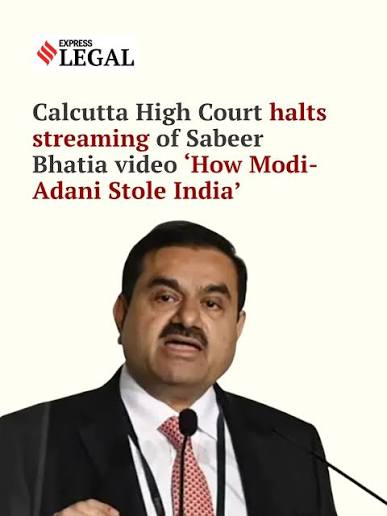
A legal conflict has emerged in the Calcutta High Court following a Rs 50 crore civil defamation suit filed by Adani Enterprises Limited against Hotmail co-founder Sabeer Bhatia. The lawsuit centers on a 36-minute documentary titled “How Modi and Adani Stole India: The Friendship Files,” uploaded to Bhatia’s YouTube channel, Bcubed (Breaking Boundaries with Sabeer Bhatia), and shared on his official X account. While Adani Enterprises alleges that the content contains false statements, omissions, and causes reputational damage, the upcoming legal proceedings pivot around the procedural reply and defense framed by Bhatia.
The Four-Week Window for Filing the Affidavit-in-Opposition
In an ex-parte interim order issued on October 26, 2026, Justice Aryak Dutt of the Calcutta High Court directed YouTube, X, and Instagram to disable access to the disputed video, its excerpts, and re-uploaded URLs across social media platforms until January 31, 2027. To ensure due process, the High Court formally laid down the schedule for the exchange of pleadings. Under the court’s order, Sabeer Bhatia and the co-respondents have been granted a period of four weeks from the date of service to file their official Affidavit-in-Opposition. This sworn written counter-affidavit serves as Bhatia’s formal response on record to challenge the allegations, present evidentiary backing for the documentary, and detail his defense against the defamation claims. Following this, Adani Enterprises will have two weeks to file an Affidavit-in-Reply before the matter is heard in the January 2027 monthly list.
Bhatia’s Stance on Corporate Reputation and Valuation
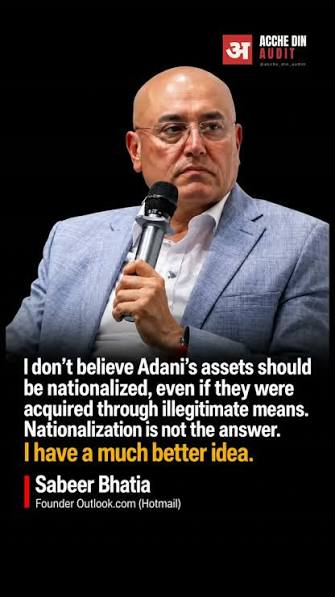
While the formal submission of the Affidavit-in-Opposition is scheduled under the court’s timeline, Bhatia’s public statements directly outline his core argument regarding the claims made by Adani Enterprises. The plaintiff claims that the documentary led to investor inquiries and caused Rs 50 crore worth of severe reputational harm. Challenging the monetary valuation of the suit, Bhatia argued that wealth acquired through alleged wrongdoing or political patronage does not confer actual credibility or public reputation. From his perspective, if the intrinsic value of the reputation in question is zero, the monetary compensation sought should logically be zero as well. This argument forms the cornerstone of his counter to the ₹50 crore damages claim, maintaining that his publication constitutes fair commentary rather than malicious defamation.
Court’s Scope on Free Speech and Fair Commentary
The High Court clarified that its interim restraint is strictly limited to the specific video, its clips, and identical reproductions. Crucially, the bench emphasized that the order does not restrain fair reporting, constructive criticism, or evidence-backed commentary regarding Adani Enterprises, the Adani Group, or government policies through other independent formats. As the legal proceedings move toward the regular bench in January 2027, the filings—starting with Bhatia’s sworn Affidavit-in-Opposition—will determine whether the documentary falls under protected freedom of speech and public interest journalism, or whether it crosses into.

Editor, Prime Post
Ravindra Seshu Amaravadi, is a senior journalist with 38 years of experience in Telugu, English news papers and electronic media. He worked in Udayam as a sub-editor and reporter. Later, he was associated with Andhra Pradesh Times, Gemini news, Deccan Chronicle, HMTV and The Hans India. Earlier, he was involved in the research work of All India Kisan Sabha on suicides of cotton farmers. In Deccan Chronicle, he exposed the problems of subabul and chilli farmers and malpractices that took place in various government departments.
Email: ravindraseshu7@gmail.com
Mobile: 9063718675