How Direct Worker Consultations Shaped the Policy
Rahul Gandhi Launched the program
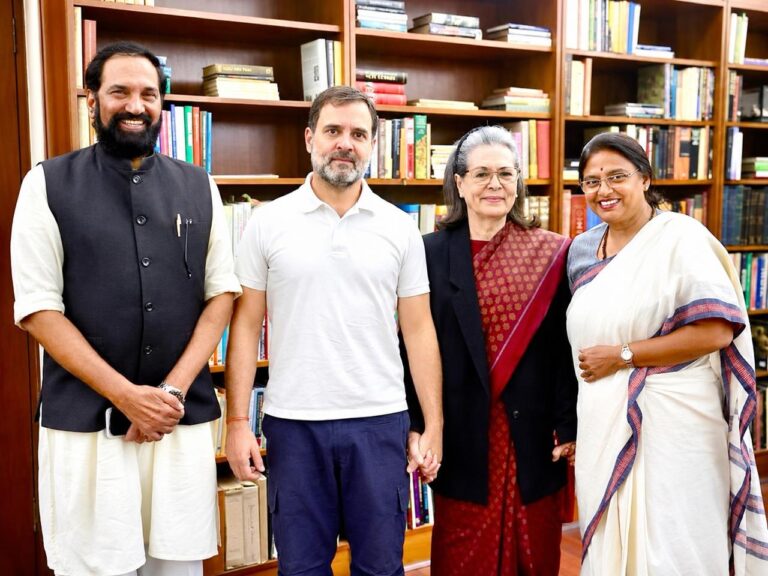
The Telangana Gig and Platform Workers (Registration, Social Security and Welfare) Act—often referred to as the Telangana Gig Workers Social Security and Welfare Scheme—is a landmark legislative framework introduced by the Telangana government to regulate the gig economy and extend formal social protection to app-based workers across delivery, ride-hailing, and home-service platforms. Leader of the Opposition in Lok Sabha Rahul Gandhi inaugurated today the gig workers scheme in Hyderabad.
Core Objectives and Provisions
Historically classified as “independent contractors” or “partners,” gig workers lacked basic employment protections. The Telangana legislation bridges this gap through several key mechanisms. All gig and platform workers, along with aggregators (such as Swiggy, Zomato, Uber, Ola, Rapido, and Urban Company), must register on a dedicated state portal. Workers receive a unique identification number valid across all platforms, ensuring their benefits remain portable even if they switch apps. The law establishes a dedicated Telangana Gig and Platform Workers Welfare Board, comprising representatives from the state government, aggregator platforms, and gig workers’ unions, to oversee policy implementation and resolve disputes.
Social Security Fund
A dedicated welfare fund is financed primarily through a welfare fee (cess)—typically between 1% and 2%—levied on each transaction processed by aggregator platforms, alongside state government grants and corporate contributions. The fund finances accidental death and disability insurance, health insurance coverage, maternity benefits, pension schemes, and educational assistance for workers’ children. Platforms are mandated to ensure fair, transparent contracts and provide reasonable notice and human review before arbitrarily deactivating a worker’s ID. Workers are also guaranteed safe working conditions and access to basic amenities like rest areas and washrooms.
Government Interaction with Gig Workers
The legislation was shaped through extensive, direct consultations between the Telangana government and gig workers’ unions, notably the Telangana Gig and Platform Workers Union (TGPWU). Ahead of drafting the policy, Chief Minister A. Revanth Reddy and senior cabinet ministers held open-house interactions with hundreds of delivery executives and cab drivers in Hyderabad. During these sessions, workers highlighted critical pain points: lack of accidental insurance during late-night shifts, arbitrary ID blocking without due process, stagnant per-order payouts amid rising fuel costs, and the absence of rest shelters. Following up on immediate commitments from these dialogues, the state government rolled out an ex-gratia accidental death insurance cover of ₹5 lakh for gig workers through the Labour Department even before the broader Welfare Board infrastructure became fully operational.

Editor, Prime Post
Ravindra Seshu Amaravadi, is a senior journalist with 38 years of experience in Telugu, English news papers and electronic media. He worked in Udayam as a sub-editor and reporter. Later, he was associated with Andhra Pradesh Times, Gemini news, Deccan Chronicle, HMTV and The Hans India. Earlier, he was involved in the research work of All India Kisan Sabha on suicides of cotton farmers. In Deccan Chronicle, he exposed the problems of subabul and chilli farmers and malpractices that took place in various government departments.
Email: ravindraseshu7@gmail.com
Mobile: 9063718675