Bountiful Rains and Bleak Realities
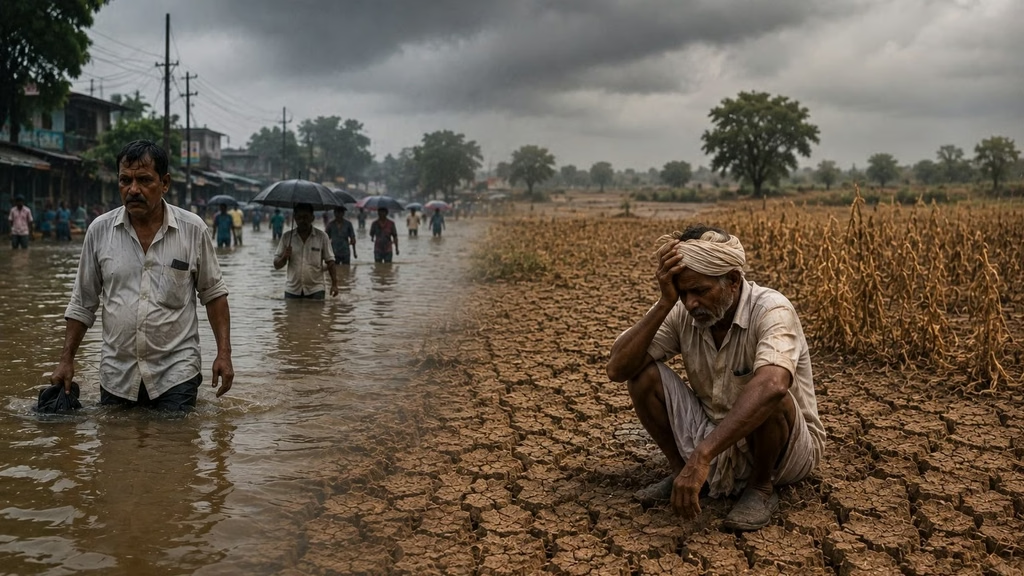
Famines, droughts, floods, crop failures
This is the grim reality of farmers’ lives across villages!
Article Written By Gujjula Eswaraiah, CPI state secretary, Andhra Pradesh
Is the state government promise more than central allocations?
The agricultural sector in Andhra Pradesh has been facing a severe crisis over the past two and a half years due to natural calamities, the negligence of policymakers, and government policies. On one hand, droughts, excessive rainfall, cyclones, and floods are pushing farmers into distress. On the other hand, farmers are facing another major problem: even after cultivating crops, they are unable to sell their produce at a fair price.
A farmer struggles immensely from the time seeds are sown until the crop is harvested. If natural calamities destroy the crops, the farmer is pushed further into a vicious cycle of debt. Sometimes, the farmer is unable even to cultivate the land. Even when crops are cultivated and harvested, there is no guarantee of a remunerative price. Farmers are unable to obtain a fair price for their produce. Tenant farmers are particularly vulnerable and are suffering from severe financial distress. Although the Central and State Governments are attempting to win public confidence through announcements of development projects worth thousands of crores of rupees, the agricultural crisis remains unresolved. This is not merely a crisis caused by natural calamities. It is also a man-made crisis resulting from the absence of proper planning, neglect of irrigation projects, indifference towards farmers’ problems, and failures in implementing policies effectively.
From Budameru Floods… Where Is the Solution?
The Budameru floods of 2024 caused unprecedented devastation in Andhra Pradesh. Streets, houses, shops, and roads in the city were submerged in water. Thousands of families were rendered homeless. Crops, livestock, agricultural equipment, and stored grain were damaged. Small traders and workers in the informal sector lost their livelihoods. Even today, questions remain unanswered regarding the government’s responsibility for flood prevention, the regulation of Budameru’s flow, the removal of encroachments, and the provision of permanent solutions. The accountability of successive governments in these matters continues to be a serious concern.
The Central Government approved ₹608.08 crore in additional assistance from the NDRF for the disasters that occurred in Andhra Pradesh in 2024. However, this amount was not exclusively allocated to the Budameru floods. It represented assistance for several disasters that occurred during that year. Similarly, in March 2026, the Centre approved another Rs 341.48 crore in additional assistance for disasters that occurred in 2025. The floods caused by the October 2025 cyclone and the subsequent heavy rainfall severely damaged the agricultural sector in coastal Andhra Pradesh. Recent cyclones and the impact of atmospheric disturbances have further aggravated the losses suffered by farmers.
This is where the real questions begin-
– How much assistance did the Centre actually announce?
– How much was genuinely released?
– How much did the State Government contribute from its own funds?
– How much compensation actually reached farmers and flood victims?
– How much additional assistance is still required?
The difference between the amounts announced by governments, the funds approved by the Centre, the amounts actually released, and the compensation received by victims must be clearly explained to the public. Merely stating that the Centre has announced financial assistance does not mean that the problems of affected people have been resolved.
Drought-Stricken Agriculture: Farmers’ Tears Behind Every Crop
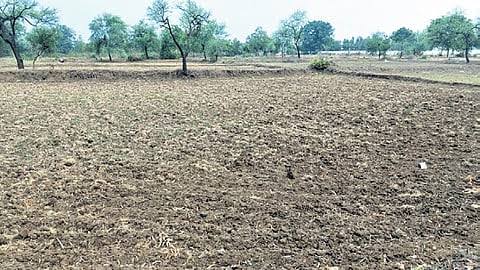
The drought has devastated the farming community. Behind every crop lies a story of tears and suffering. The 2026 Kharif season has pushed Andhra Pradesh’s agricultural sector into a severe crisis due to deficient rainfall. From June 1 to September 12, the state normally receives 476.1 mm of rainfall. However, the actual recorded rainfall was only 218.2 mm, representing a 54.2% deficit. The drought situation has been particularly severe in Anantapur, Sri Sathya Sai, Kurnool, Nandyal, Annamayya, Chittoor, and Kadapa districts of Rayalaseema, as well as Prakasam, Markapuram, Palnadu, and several other regions. The impact of drought has been clearly visible across these areas. The consequences of drought cannot be measured merely by the acreage of crops affected, as reflected in official statistics. Behind every crop is a farming family. Behind every dried-up field are mounting debts, shattered hopes, children’s education, and the future of an entire family.
Farmers’ Distress: From Drought to Floods, Where Is the Relief?
Paddy Farmers: From Paddy to Debt
Paddy farmers who invested heavily in cultivation are facing severe losses due to excessive rainfall and changes in weather patterns. When the quality of paddy deteriorates, farmers suffer financial losses. If the rains do not arrive at the right time, even the paddy crop fails. Farmers are unable to obtain adequate returns for their labour.
Dryland Farmers: Crops Destroyed by Drought and Excessive Rainfall
On one side, irrigation water is unavailable for dryland farmers, causing crops to dry up. On the other side, excessive rainfall and floods inundate fields, damaging crops. The grain harvested by farmers gets soaked and spoiled. Problems such as moisture content, grain quality standards, and transportation at procurement centres further increase farmers’ losses.
Maize Farmers: Falling Yields and Rising Costs
Maize farmers are facing declining yields due to irregular rainfall. Even when crops survive, their quality is deteriorating. Fertilizers, seeds, and labour costs have increased, but farmers are unable to obtain remunerative prices in the market.
Horticulture and Fruit Farmers
In Rayalaseema, particularly Anantapur, Sri Sathya Sai, Kurnool, Kadapa, Nandyal, and other regions, horticulture and fruit crops are a major source of livelihood. Water scarcity is drying up trees, fruit quality is declining, yields are falling, and market prices are decreasing. Farmers are suffering enormous losses. Restoring orchards destroyed by drought requires several years and substantial investment.
Cotton and Chilli Farmers
Irregular rainfall, excessive rainfall, pest attacks, and market fluctuations are severely affecting the incomes of cotton and chilli farmers. Farmers need additional funds for pesticides and fertilizers to protect their crops. However, their yields are declining, and they are unable to maintain the required quality standards. Thus, every crop is facing a different problem. But the underlying issue is the same: the absence of income security for farmers and inadequate government support for agriculture.
Who Will Wipe Away the Tears of Tenant Farmers?
Tenant farmers are among the worst affected in this agricultural crisis. Although they cultivate land belonging to others, they pay rent to landowners, borrow money, purchase fertilizers and seeds, and invest heavily in cultivation. When crops are destroyed by natural calamities, tenant farmers are still required to pay rent to landowners. They must repay their loans and support their families. However, they receive neither adequate recognition nor sufficient protection in matters of crop compensation, crop insurance, loan relief, and government assistance. The absence of land ownership documents and the failure to recognize tenant farmers in official records have pushed them further away from agricultural relief. The agricultural crisis cannot be resolved without recognizing tenant farmers, ensuring their legal rights, and providing them with adequate protection.
Rayalaseema is still worst effected with Elnino
Irrigation Projects Remain Incomplete
Irrigation is the principal foundation of development in Rayalaseema. In this drought-prone region, which depends heavily on rainfall-based agriculture, storing water and supplying irrigation to every acre are extremely important. However, even after decades, irrigation projects remain incomplete. Several major projects are still awaiting completion, while billions of rupees have already been spent. Governments change. Chief Ministers change. Project names and inauguration ceremonies change. But the actual construction of several irrigation projects remains incomplete.
Projects such as Velugonda, Galeru-Nagari, Handri-Neeva, Telugu Ganga, and Gundlakamma require clear information regarding construction progress, funds allocated, pending works, and water availability. The people of Rayalaseema deserve transparent accounts of these projects. A project such as Velugonda is expected to provide irrigation water to lakhs of acres and drinking water to lakhs of people. However, its full potential has not yet been realized, even after decades. This reflects the failure of successive governments to complete projects within their promised timelines. Whenever rainfall occurs in Rayalaseema, water flows into reservoirs, but the absence of a comprehensive system to store and distribute that water remains another major problem. When there is no rainfall, farmers struggle for even a few drops of water. Without increasing water storage capacity, completing canals, restoring reservoirs, and allocating adequate funds to irrigation projects, how can Rayalaseema be transformed into a drought-free region? Announcements alone are not enough. People need water. They need completed projects. They need every acre to receive irrigation.
Lakhs of Crores Announced for Global Agriculture Hub
Where Is the Farmers’ Welfare? The government has announced major irrigation projects and investments worth lakhs of crores of rupees, describing Andhra Pradesh as a potential global agricultural hub. However, farmers are asking where the benefits of these announcements have actually reached them. The government has announced that ₹40,352 crore will be mobilized from government sources and ₹60,000 crore through private investment. It has also stated that these investments would benefit 201 clusters, 5,869 villages, and 9.6 lakh farming families. The development of agricultural and horticultural crops is undoubtedly necessary. Farmers need markets, cold storage facilities, processing units, export opportunities, and improved infrastructure. But before achieving all these objectives, the most essential requirement is irrigation water. When borewells dry up and reservoirs remain empty, what is the meaning of announcing investments worth lakhs of crores?
If farmers cannot cultivate their crops, if harvested produce cannot be stored properly, and if market intermediaries continue exploiting farmers, who will benefit from these projects? Government investment targets must be clearly connected to actual financial resources, expenditure, and benefits reaching farmers. Farmers’ land, water, and labour must remain the foundation of agricultural development. Corporate investments should not undermine farmers’ land rights or their livelihood security. The government must guarantee farmers’ rights and livelihood security before making decisions affecting their land.
Economic Assistance Allocations: Injustice to Andhra Pradesh?
The intensity of natural calamities is increasing, but the agricultural assistance allocated to Andhra Pradesh has not increased proportionately.
The State Disaster Response Fund (SDRF) allocations indicate the following:
– 14th Finance Commission period (2015–2020): ₹2,429.50 crore
– 15th Finance Commission period (2021–2026): ₹6,300 crore
– 16th Finance Commission period (2026–2031): ₹6,533 crore
Compared with the 15th Finance Commission period, the allocation under the 16th Finance Commission has increased by only ₹233 crore. When the increasing intensity of natural calamities, agricultural investments, population, and losses are considered, this increase appears inadequate. During the current allocation period, the Centre’s share is ₹4,897.75 crore, while the State Government is expected to contribute ₹1,633.25 crore.
This means that the Centre contributes 75% and the State Government contributes 25%. However, other states have received significantly higher allocations: – Maharashtra: ₹31,597 crore- Uttar Pradesh: ₹16,342 crore – Madhya Pradesh: Rs12,477 crore – Rajasthan: ₹9,825 crore – Gujarat: ₹9,022 crore – Tamil Nadu: ₹9,051 crore – Karnataka: ₹6,847 crore -Andhra Pradesh has received only ₹6,533 crore.
These allocations are reportedly based on parameters such as risk index, population, and vulnerability. But does Andhra Pradesh, which repeatedly faces droughts, cyclones, and floods, deserve such low priority? Have the State Government’s arguments before the Finance Commission been sufficiently strong? Has the government exerted adequate pressure on the Centre to protect the state’s interests? These questions remain unanswered.
White Paper on Agricultural Losses
How Much Assistance Was Announced and How Much Reached Farmers? The governments of Andhra Pradesh must immediately release a comprehensive white paper covering droughts, cyclones, floods, Budameru floods, agricultural losses, and destruction of horticultural crops over the past two years. This white paper should not merely contain announcements of compensation and financial allocations. It must include detailed information.
1. What was the total loss caused by each natural calamity? How much damage occurred at the district, mandal, village, and crop levels?
2. How much assistance did the State Government request from the Centre? How much assistance did the Centre approve?
3. How much funding has been received from SDRF and NDRF so far? How much additional assistance remains to be received?
4. What is the total amount released by the Centre? How much has the State Government contributed from its own funds?
5. How much of the announced assistance has actually been spent? What works were undertaken using these funds?
6. How much compensation was provided to farmers, tenant farmers, horticultural farmers, and livestock owners?
7. How many farmers are still awaiting compensation? What is the total amount required to compensate them?
8. What benefits have farmers received in the form of crop compensation, input subsidies, and loan relief?
9. How much assistance was provided to victims of the Budameru floods? How much assistance actually reached them?
10. How much funding was spent in drought-affected mandals on drinking water, fodder, and livelihood support?
All these details must be made accessible to the public.
The government must publish lists of farmers who received compensation, village-wise details, and the amount still due to each farmer. The remaining compensation must be paid immediately. The State Government must explain how much it received from the Centre and how much it spent. Ultimately, both governments must clearly explain how much money actually reached farmers. The responsibility for providing these accounts rests with the governments.
Double-Engine Government
Why Is Andhra Pradesh Silent on these Issues? The BJP government at the Centre and the BJP-led coalition government in Andhra Pradesh are both in power. Prime Minister Narendra Modi has repeatedly praised the state government’s policies and development initiatives. However, why are the irrigation funds that Andhra Pradesh deserves not being secured?
Why are important agricultural assistance packages and special allocations not being seriously discussed?
Does the responsibility of protecting the state’s interests rest solely with the Chief Minister?
Does the State Government not have the responsibility to secure the funds that should come from the Centre?
When political agreements exist, the state must secure additional assistance and development benefits. But there are growing concerns that political interests are being given priority over the state’s interests. Praising the Prime Minister and supporting decisions of the Central Government should also result in securing funds for Andhra Pradesh. Otherwise, what benefit does the state derive from the enthusiasm surrounding the so-called double-engine government? A double-engine government does not merely mean that both governments belong to the same political alliance. It must also mean securing the funds due to the state, resolving people’s problems, and providing confidence to farmers. The State Government must protect the state’s interests and ensure that the people receive the benefits they deserve.
Protect Agriculture and Secure the Rights of Farmers
The Central Government must immediately announce a special agricultural assistance package for Andhra Pradesh. The package must comprehensively address losses caused by droughts, floods, and cyclones. The State Government must immediately release a comprehensive white paper. Compensation for crop losses must be announced transparently and paid fairly. Farmers must receive compensation without delay. Paddy, maize, cotton, chilli, horticultural, and other affected farmers must be protected. Tenant farmers must receive special assistance, and their status as cultivators must be recognized.
Crop compensation, crop insurance settlements, loan relief, and interest subsidies must be provided based on the actual losses suffered. Rayalaseema irrigation projects must be completed on a war footing. Incomplete projects must be identified and given clear deadlines for completion. Reservoirs, canals, and irrigation infrastructure must be strengthened. Rainwater must be stored and made available for agricultural use through a comprehensive plan. Farmers’ land rights, water rights, and income security must receive priority over the interests of private investment companies.
The Final Question: Where Is the Justice for Farmers?
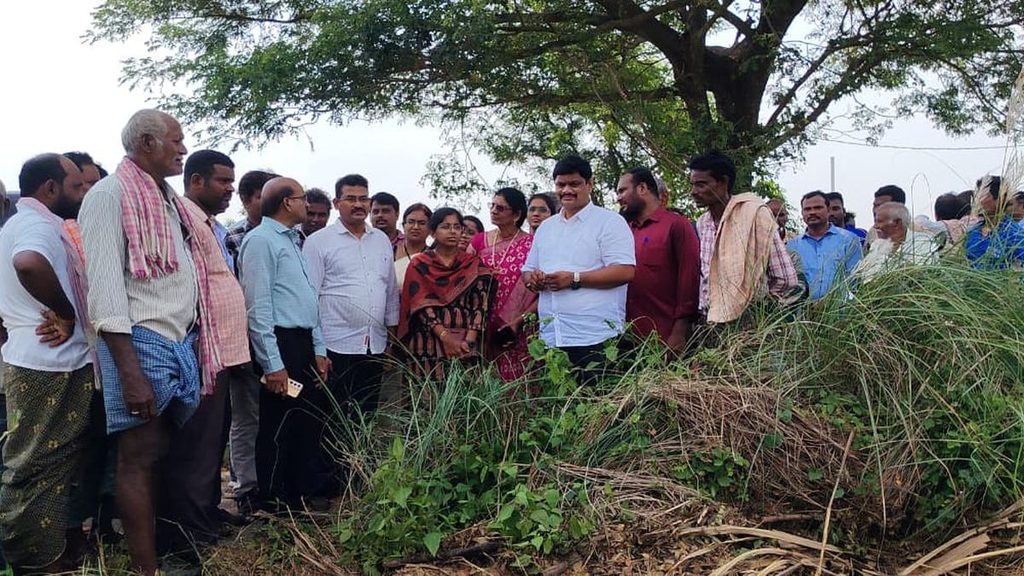
Farmers are unable to obtain a fair price for their crops. When drought strikes, they receive no adequate relief. When floods destroy crops, compensation is insufficient. Tenant farmers are not recognized. Irrigation projects remain incomplete for decades. Farmers struggle to cultivate their own land. Yet governments continue announcing development worth lakhs of crores of rupees and promoting the double-engine government. Natural calamities cannot be stopped entirely by governments. But protecting people from their consequences, ensuring justice for farmers, and securing the funds due to Andhra Pradesh are responsibilities that governments cannot escape.
If these responsibilities are neglected, public confidence cannot be restored merely through announcements and publicity. Agriculture survives only when farmers survive. The rural economy survives only when agriculture survives. Development that ignores the tears of farmers is not genuine development. When crops fail, governments must provide immediate assistance rather than merely offering sympathy. Farmers must be given confidence in their livelihoods. The rights due to Andhra Pradesh must be secured. The gap between government announcements and people’s actual lives must be eliminated. These objectives must be demonstrated through action, not publicity.

With a journalistic long journey, we bring you https://primepost.news, a dynamic platform committed to unraveling the intricate tapestry of Indian politics, particularly delving deep into the heart of Telangana and Andhra Pradesh. Our blog is not just a source of news; it’s a reservoir of insights, analysis, and thought-provoking reviews.