Inside the ECI’s Response to the ‘Vote Chori’ Movement
Institutional Retreat or Course Correction?
Recalibration Under Pressure
From Agitation to Reform
The ECI, Gen Z, and the Battle Over Electoral Roll Integrity
Navigating Electoral Integrity
The ECI, Gen Z Mobilization, and the ’Vote Chori’ Movement
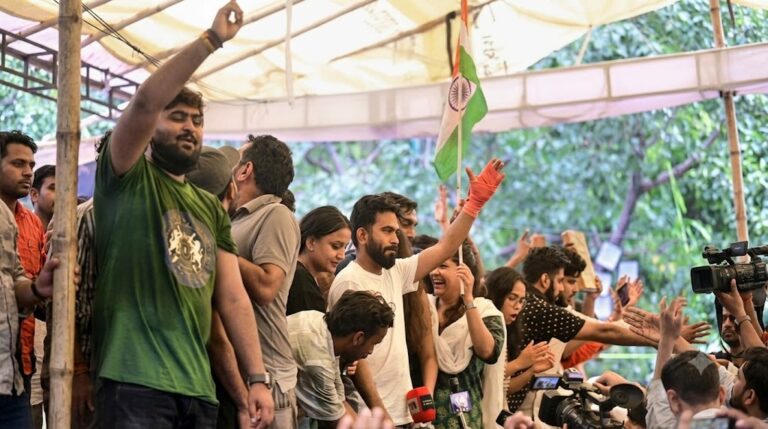
Facing widespread street demonstrations, youth-led campaigns, and internal written dissents from Election Commissioners, the ECI recalibrated several contentious procedures. It rolled back restrictive ancestral proof requirements on Form-6 for first-time voters, paused aggressive nationwide Special Intensive Revision (SIR) expansions, and instituted technical reviews of its ECINet software. While the opposition views these reversals as a conceded defeat, the ECI maintains they were necessary operational adjustments to preserve public trust and electoral integrity.
The integrity of India’s electoral framework has been at the forefront of national discourse following a high-voltage standoff between the Election Commission of India (ECI), the INDIA bloc opposition, and a surge of Gen Z voters. Central to the controversy is the Special Intensive Revision (SIR) of electoral rolls, allegations of mass voter disenfranchisement, and structural alterations to entry-level registration forms. While public protests and political pressure under the “Vote Chori” (vote theft) campaign forced significant course corrections, the poll body maintains that its decisions are grounded in statutory procedures and operational cleanup.
Surrender vs. Institutional Recalibration: Did the ECI Concede?
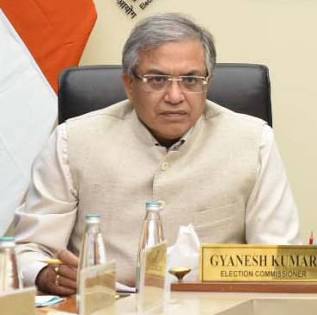
The ECI has not legally “surrendered” its constitutional mandate or bowed out entirely, but it has engaged in noticeable tactical retreats. Facing intense street protests, legal scrutiny, and internal written dissents from two Election Commissioners against Chief Election Commissioner (CEC) decisions, the ECI paused or softened several controversial administrative tweaks. While the opposition claims these steps as a defeat for the poll panel, the Commission frames them as administrative damage control and routine measures to restore public trust.
Status of the Six Objections Raised by Opposition Leaders
During the agitation led by INDIA bloc leaders and youth campaigns, six core objections were raised regarding the voter audit process: Unilateral Form-6 Alterations: Unconstitutional modifications to first-time voter registration forms. Mass En-Masse Deletions: Disenfranchisement of legacy voters without proper notice during SIR drives. Burdensome Ancestral Verification: Forcing young voters to produce proof of parent/grandparent inclusion in older legacy rolls (such as the 2002 audit). Opaque Tech Infrastructure: Glitches and lack of software integrity in the centralized ECINet system. Absence of Internal Consensus: Bypassing standard multi-commissioner concurrence for key policy orders. Procedural Arbitrariness: Arbitrary shifting of registration requirements without formal executive notification.
The ECI did not formally accept all six objections in an explicit declaration. Instead, it selectively addressed the key operational grievances—reverting objectionable clauses, pausing aggressive verification pathways, and issuing public clarifications.
Modifications Made to the Special Intensive Revision (SIR)
The Special Intensive Revision was initially designed to reconstruct voter rolls from scratch in several states. Following public backlash over millions of deleted or stranded entries, the ECI introduced critical modifications:
Halting the Expansion of SIR: The ECI paused the phase-by-phase rollout of the intensive revision across non-SIR states, halting the trend of making voter inclusion increasingly restrictive.
Fall-back to Standard SSR: On October 15, 2026, the commission announced a return to the tried-and-tested annual Special Summary Revision (SSR) cycle for 17 states and UTs, putting the aggressive nationwide SIR drive on hold.
Overhaul and Reversion of Form-6
Form-6 is the fundamental application used by first-time and youth (Gen Z) voters to join the electoral roll. In mid-2026, modified online versions forced young applicants to trace whether their parents or grandparents featured in older 2002 legacy rolls—a requirement that left thousands of eligible young citizens unable to complete registration.
The Reversion: Following intense pressure from youth groups and opposition parties, the ECI rolled back these stringent ancestral declaration clauses in non-SIR states.
Simplified Access: The online portal was restored to allow basic self-declarations and standard age/address proof without mandating legacy linkages.
Shift in Digital and Technical Policies (ECINet)
The digital infrastructure powering the poll panel came under heavy fire, with questions raised over how software adjustments were deployed.
Software Integrity Measures: Chief Electoral Officers (CEOs) across states raised red flags over automated glitches in the ECINet software. In response, the ECI initiated patch updates to fix technical loopholes that previously prevented voters whose houses were demolished or addresses changed from applying as fresh voters.
Vendor Transparency Demands: Controversy around third-party IT contractors, including software implementation by vendor partners, led to stricter oversight protocols for system-level changes.
Electoral Restorations and Special Enrolment Drives
To counter accusations of deliberate disenfranchisement under the “Vote Chori” campaign, the ECI rolled out corrective drives:
Special Enrolment Drives: The Commission ordered targeted enrolment drives specifically aiming at young voters turning 18 who were left out during the 2024–2025 transition periods.
Re-registration Pathways: For citizens removed during SIR audits, simplified re-inclusion channels were set up to fast-track restoration ahead of upcoming state elections.
Governance, Transparency, and Institutional Reforms
The agitation triggered an unprecedented spotlight on internal Commission governance. Restoration of Panel Consensus: Reports of written dissents by Election Commissioners forced a return to collegiate decision-making, ensuring major circulars are issued with explicit commissioner consensus rather than unilateral orders. Press Clarifications and Natural Justice: The poll panel issued public communications defending its legal authority while pledging adherence to principles of natural justice—promising that no eligible voter would be removed without proper notification and a fair opportunity to appeal. While the “Vote Chori” agitation and Gen Z mobilization did not completely overturn the Election Commission, they forced a significant rollback of controversial registration hurdles. By abandoning aggressive SIR mechanics in favor of standard annual revisions and simplifying Form-6, the poll panel has moved to stabilize its credibility ahead of upcoming electoral battles.

Editor, Prime Post
Ravindra Seshu Amaravadi, is a senior journalist with 38 years of experience in Telugu, English news papers and electronic media. He worked in Udayam as a sub-editor and reporter. Later, he was associated with Andhra Pradesh Times, Gemini news, Deccan Chronicle, HMTV and The Hans India. Earlier, he was involved in the research work of All India Kisan Sabha on suicides of cotton farmers. In Deccan Chronicle, he exposed the problems of subabul and chilli farmers and malpractices that took place in various government departments.
Email: ravindraseshu7@gmail.com
Mobile: 9063718675