CONSTITUTIONAL DEMOCRACY AT THE ALTAR OF POLITICAL OPPORTUNISM
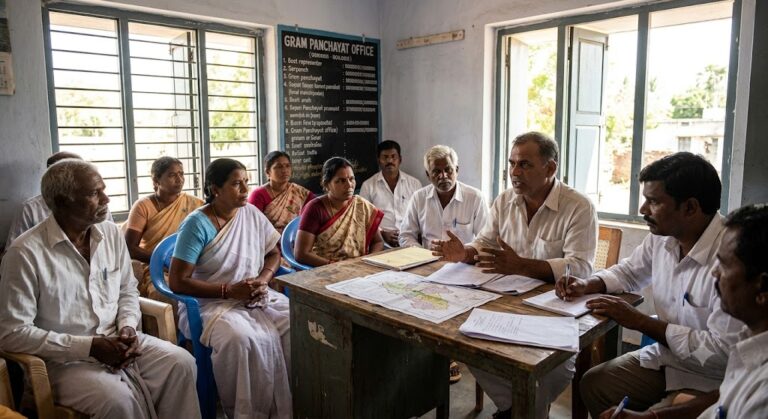
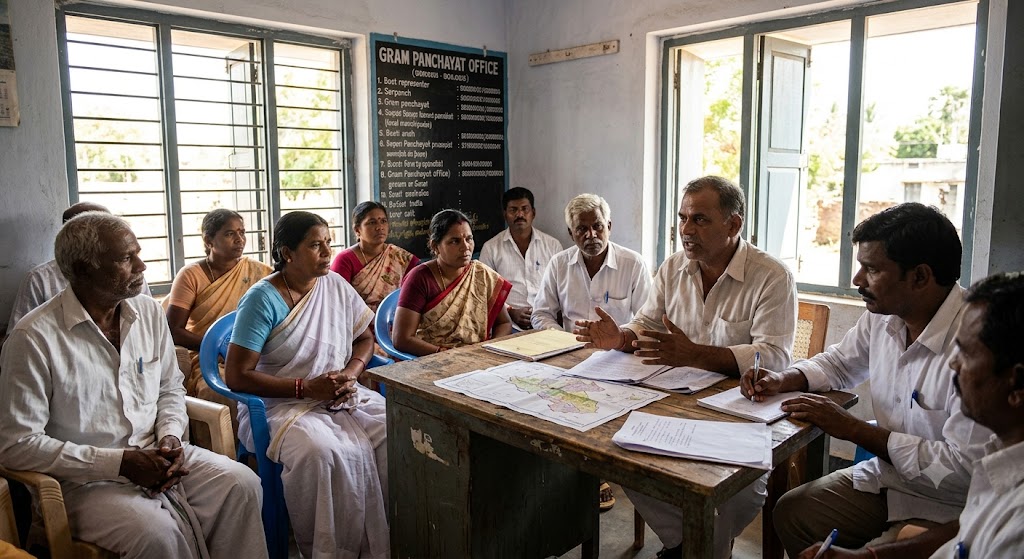
Elections are indispensable to democracy, but elections without meaningful devolution of power risk reducing self-government to a ritual of political succession. As Andhra Pradesh prepares to conduct local-body elections following the expiry of the terms of urban local bodies on March 17, 2026, and gram panchayats on April 2, the pertinent question is not merely who will capture these institutions, but what the people stand to gain from the exercise.
The proposed electoral calendar, the controversy over Backward Classes reservations and the prospect of substantial Finance Commission grants have brought local governance into sharp political focus. Yet, beneath the rhetoric of democratic renewal lies a fundamental dilemma: will these elections empower citizens, or merely install another layer of political intermediaries between the people and the State? The distinction is consequential. An election is a constitutional obligation, not a governmental favour; nor is the restoration of elected representatives, by itself, proof of effective democracy.
THE FINANCIAL STAKES AND THE POLITICS OF PUBLIC MONEY
The release of Finance Commission grants has emerged as a compelling argument for expediting the polls. The Sixteenth Finance Commission’s recommendations for 2026–31 include Rs 4,35,236 crore for rural local bodies and Rs 3,56,257 crore for urban local bodies across India. These are national allocations over five years, not sums earmarked exclusively for Andhra Pradesh.
The State must therefore publish its actual entitlement, amounts sanctioned and released, pending transfers and the conditions governing disbursement. Claims that thousands of crores will be lost unless elections are held must be substantiated through official financial documents rather than political pronouncements. The distinction between allocation, release and expenditure is fundamental. Money announced is not necessarily money received; money received is not necessarily money spent; and expenditure is not synonymous with public benefit.
The real test is whether Finance Commission grants translate into reliable drinking water, functional drainage, scientific waste management, motorable roads and improved public health. Unless expenditure is transparent and outcomes measurable, the invocation of financial urgency risks becoming another instrument of political persuasion.
THE CONSTITUTIONAL PROMISE OF GRASSROOTS DEMOCRACY
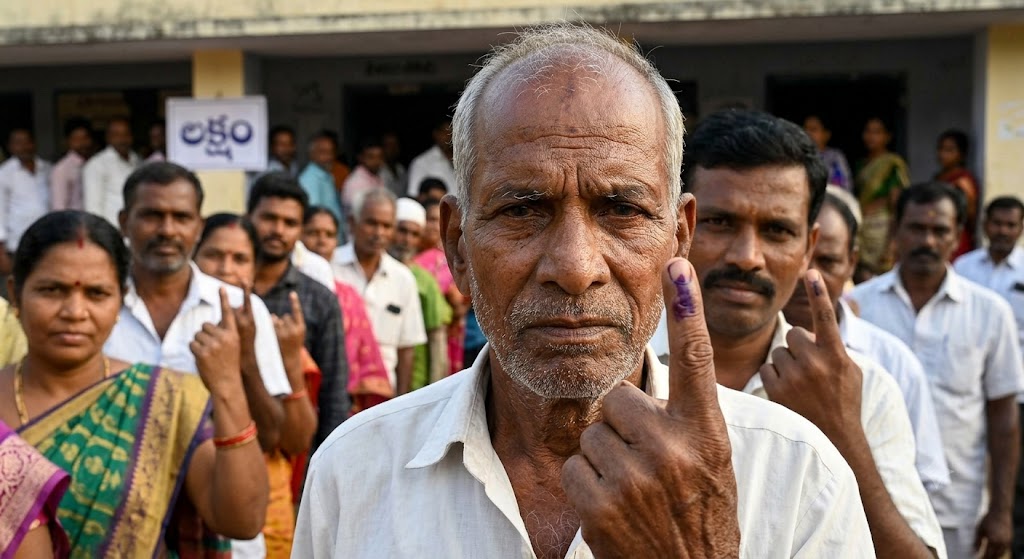
The Seventy-third and Seventy-fourth Constitutional Amendments sought to strengthen democratic decentralisation through panchayats and municipalities. Articles 243E and 243U prescribe five-year terms, while Articles 243K and 243ZA entrust rural and municipal elections to the State Election Commission. Articles 243G and 243W provide the framework for devolving powers to local institutions.
The Eleventh Schedule identifies 29 subjects associated with panchayats, and the Twelfth Schedule lists 18 functions associated with municipalities. Yet the actual transfer of responsibilities depends on State legislation and administrative arrangements. This is where the promise of local self-government encounters its most persistent contradiction. Elected representatives may be held accountable for failures in civic administration even when they lack adequate funds, personnel or decision-making authority.
Genuine decentralisation requires the transfer of functions, funds and functionaries. Without all three, local institutions risk becoming subordinate administrative outposts rather than autonomous centres of democratic decision-making. Andhra Pradesh must disclose precisely which powers have been devolved, which revenues local bodies may raise, what administrative personnel they control and which approvals remain dependent on State departments. Accountability without authority is an exercise in political evasion.
CASTE, COMMUNITY AND THE POLITICS OF REPRESENTATION
The controversy over BC reservations exposes the difficult intersection of social justice, electoral competition and constitutional limitations. Articles 243D(6) and 243T(6) permit reservations for Backward Classes in local bodies, subject to the applicable legal framework and judicial decisions. The Supreme Court’s judgments in K. Krishnamurthy v. Union of India (2010) and Vikas Kishanrao Gawali v. State of Maharashtra (2021) underscore the importance of legally sustainable, evidence-based arrangements for BC reservation in local government.
Social representation is indispensable in a society marked by historical exclusion. But reservation cannot become merely an electoral slogan, periodically revived and challenged without adequate attention to empirical evidence and legal compliance. A reserved seat has limited emancipatory value if its occupant lacks the resources and authority to influence public decisions.
Equally troubling is the manner in which caste, religion, kinship and party allegiance can shape local political competition. These identities may provide historically excluded communities with a voice, but they can also be manipulated to create patronage networks and new monopolies over public resources.
The constitutional ideal is equal citizenship. No resident should be denied civic amenities because of caste, religion, economic status or political affiliation. A panchayat or municipality belongs to the entire community, not to the faction that happens to control it.
POLITICAL REHABILITATION AND THE ECONOMICS OF POWER
Local offices confer visibility, influence and access to administrative machinery. For some aspirants, they provide an opportunity for genuine public service; for others, they may offer political rehabilitation, social recognition or a stepping stone to higher office. Political ambition is not inherently objectionable. The danger arises when public office is pursued principally for the influence it confers rather than the responsibilities it entails.
Election expenditure presents another challenge. The Andhra Pradesh Municipalities Act, 1965, contains provisions governing candidates’ election expenses. Their effective enforcement, coupled with scrutiny of campaign finance and credible complaints of inducements or coercion, is essential to electoral fairness. Nevertheless, allegations of bribery, concealed expenditure or corruption must be established through evidence. The appropriate response is not indiscriminate suspicion, but rigorous disclosure, independent scrutiny and enforcement of the law.
Public money, procurement and development contracts must likewise remain subject to transparent procedures and audit. Without such safeguards, local government can become vulnerable to political capture, regardless of which party occupies office.
DIRECTLY ELECTED MAYORS: REFORM OR PERSONALISATION OF POWER?
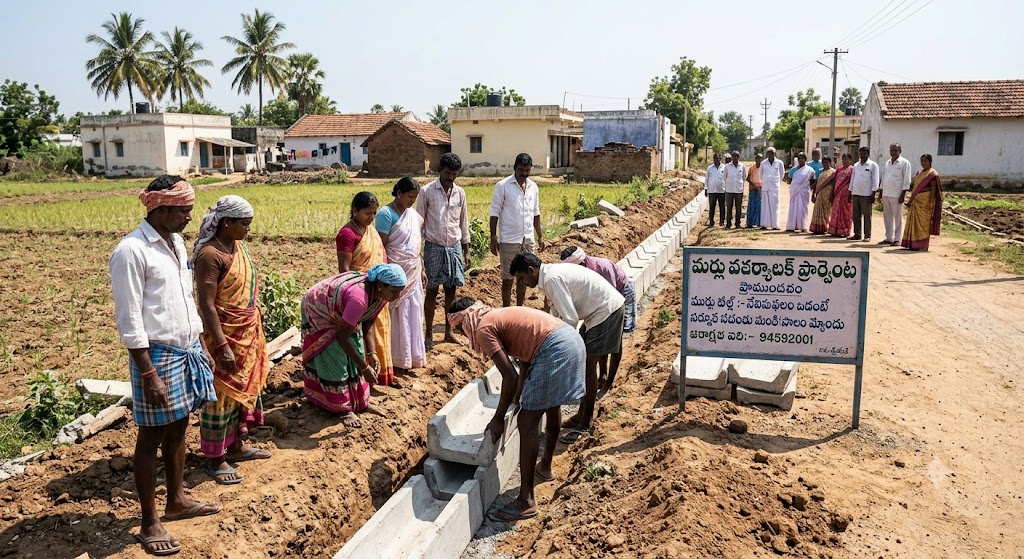
The restoration of direct elections for municipal mayors and chairpersons raises an important question about the relationship between popular legitimacy and administrative authority.
A directly elected mayor may provide citizens with a recognisable leader whose performance can be assessed at the ballot box. Yet a popular mandate cannot substitute for clearly defined powers, a functioning municipal administration and transparent budgetary procedures. If the mayor lacks effective authority, campaign promises may remain unfulfilled. If the mayor and municipal council are controlled by rival political parties, institutional confrontation may obstruct development. If power becomes excessively personalised, collective accountability may suffer. The reform must therefore be accompanied by clarity over executive responsibilities, council oversight, financial powers and the division of authority between elected representatives and the State government.
A PRACTICAL AGENDA FOR ACCOUNTABLE LOCAL GOVERNMENT
The elections should inaugurate a verifiable programme of institutional reform.
Every local body must publish an accessible annual budget, a development plan identifying priorities and costs, details of sanctioned projects and a statement of expenditure. Procurement records, contractors’ details, completion certificates and audit objections should be disclosed in accordance with the applicable law.
The State government should publish a district-wise account of Finance Commission grants, explain pending releases and establish transparent arrangements for the devolution of funds and personnel. Newly elected representatives should present measurable targets for drinking water, sanitation, roads, drainage and waste management.
Regular public meetings, accessible grievance-redressal mechanisms and independent audits should become integral to local administration. Quarterly performance reports would enable citizens to assess whether electoral promises are translated into tangible improvements. These measures are not a substitute for elections. They are the means by which elections acquire substantive democratic value.
THE VERDICT: DEMOCRACY MUST DELIVER MORE THAN REPRESENTATION
It would be simplistic to dismiss the forthcoming elections as entirely futile. They are necessary to restore elected representation and create the institutional conditions for accountable local governance. Yet it would be equally misleading to portray the mere conduct of polls as a triumph of decentralisation. If elected representatives lack financial autonomy, if public expenditure remains opaque, if social divisions are exploited for electoral advantage and if civic services continue to depend on political patronage, the people will have obtained new officeholders without acquiring meaningful self-government.
The common citizen does not require another procession of promises. The citizen requires dependable public services, equal treatment, transparent expenditure and representatives answerable for their decisions. Political parties must therefore explain not merely whom they propose to elect, but what they intend to accomplish, how they will finance their commitments and how their performance will be measured.
HOW LONG CAN THE PEOPLE BE EXPECTED TO CONFUSE THE RIGHT TO VOTE WITH THE POWER TO GOVERN? HOW LONG CAN POLITICAL PARTIES CLAIM CREDIT FOR HOLDING ELECTIONS WHILE EVADING ACCOUNTABILITY FOR THE QUALITY OF PUBLIC SERVICES?
The answer cannot be another slogan or another electoral spectacle. It must be the demonstrable transfer of authority, the prudent use of public money and the restoration of the citizen to the centre of governance.
ELECTIONS DETERMINE WHO OCCUPIES PUBLIC OFFICE; ACCOUNTABLE GOVERNANCE DETERMINES WHETHER THAT OFFICE DESERVES THE PEOPLE’S TRUST.

M. Shiva Prasad, IPS (Rtd.) is a dedicated law enforcement professional who served the combined Andhra Pradesh cadre before opting for the Telangana cadre. Though a native of Andhra Pradesh, he considers himself a true Hyderabadi with an abiding love for the Telugu people. Driven by sincerity, fearlessness, and a lifelong fight against inequality and injustice, his ultimate strengths remain his goodwill and deep affection for the public and the police force. Today, he continues his mission by writing snippets and articles true to his conscience.
Email: Shivareach@yahoo.com
Mobile: 98480 38774