Simmering Dissent from NALSAR
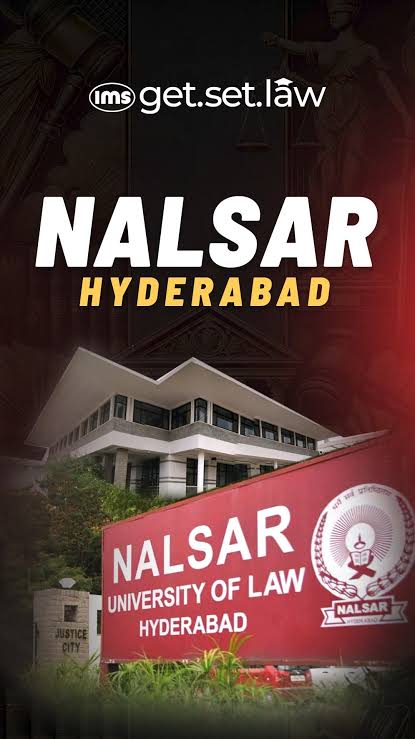
It set aside two notifications issued by the BCI relating to the NALSAR row, even though both were withdrawn within hours of their issuance following widespread criticism. On 2nd September, a bench comprising Chief Justice Surya Kant and Justices Joymalya Bagchi and V Mohana passed the order while dealing with the controversy arising out of the BCI’s action against students of Hyderabad’s NALSAR University of Law over their objections to the CJI’s proposed participation in the university’s convocation.
The Apex Court noted that his current role is temporary, stating that, as reported by the media, “Bar Council of India (BCI) Chairperson Manan Kumar Mishra’s position was only ‘pro tem’ until a freshly constituted lawyers’ body elects its office-bearers.”
Only weeks after the Supreme Court had to intervene to protect NALSAR students, faculty and administrators from coercive action threatened, the Court has now placed an important restraint on the manner in which the BCI takes policy decisions. More significantly, the Court directed that policy decisions during this interim period should be taken in consultation with the Attorney General for India and the Solicitor General of India, the permanent ex officio members of the BCI. The significance of this development cannot be overstated.
The SC’s intervention indicates a deeper concern about institutional legitimacy. BCI has democratic accountability and the exercise of regulatory power. A body which regulates entry into the legal profession exercises enormous power over the lives and careers of young law graduates. Such power cannot be exercised casually, emotionally or beyond the limits prescribed by law.
Origin with NALSAR ‘struggle’ for dissent
The institutional overreach that originated with NALSAR has since snowballed into an unprecedented systemic crisis across India’s premier law schools, triggering the cancellation of the convocation at the National Law School of India University (NLSIU), Bengaluru, and culminating in widespread demands for the resignation of BCI Chairman Manan Kumar Mishra.
We know that the Supreme Court recently censured the Bar Council of India (BCI) for attempting to withhold the enrolment of law graduates from NALSAR University following their peaceful protest regarding an invitation to the Chief Justice of India. The CJI and its bench characterized the BCI’s measures as “uncalled for”.
Reaffirming that peaceful student activism remains a protected constitutional right beyond the punitive reach of statutory regulators. While granting interim protection, the SC explicitly questioned the BCI’s locus standi to intervene in campus discourse and welcomed graduates to join the Supreme Court bar.
Arbitrary Overreach:
On August 13, the Enrolment Freeze, the BCI Chairman Manan Kumar Mishra has instructed all State Bar Councils “not to enrol law graduates passing out from NALSAR in 2026 until further orders”. Not only that, the directive demanded an authenticated inquiry report from the university identifying individuals who mobilized dissent against inviting CJI Surya Kant as convocation Chief Guest. The BCI further ordered NALSAR to submit copies of representations and official signatory lists, seeking disclosures on any involvement of faculty, research scholars, and alumni. Even now, the date for NALSAR Convocation is yet to be fixed.
There was public backlash to the BCI’s decision. Then, judicial scrutiny compelled the BCI to modify its stance within hours and restore enrolment rights; the damage to institutional trust was immediate. The attempt to paralyze the career prospects of an entire graduating batch constituted an illegal exercise of collective punishment.
The Bengaluru Convocation Fallout
After the NALSAR convocation controversy spread to NLSIU. It did not subside. Over 700 NLSIU students and alumni issued a joint statement objecting to the proposed attendance of BCI Chairman Manan Kumar Mishra and CJI Surya Kant at the university’s 34th Annual Convocation. They demanded an unconditional apology from the BCI for its intimidation of the NALSAR community.
Student dissent resulted in institutional deadlock; NLSIU officially cancelled its September 12 convocation ceremony, opting to confer degrees in absentia. Thus, historic cancellation at the country’s founding National Law University represents a profound inflection point: when future officers of the court prefer to receive their degrees by post rather than accept the patronage of a compromised regulatory leadership. The moral legitimacy of the regulator is shattered.
Accountability and Demand for Resignation
The legal fraternity questioned the fundamental statutory boundaries of BCI under the Advocates Act, 1961.The cascading fallout has provoked serious resistance. Many senior bar leaders, legal scholars, and student associations have pointed out that the BCI possesses no statutory authority under Sections 7, 24, or 35 to police pre-enrolment speech, impose blanket enrolment bans, or interfere in the internal proctorial governance of autonomous universities.
Furthermore, the controversy has catalyzed direct demands for the resignation of BCI Chairman Manan Kumar Mishra. Senior Advocate and BCI Co-Chairman Y.R. Sadashiva Reddy, alongside Executive Committee Vice-Chairman Senior Advocate Manoj Kumar N., formally demanded Mishra’s immediate resignation during General Council deliberations, highlighting autocratic governance and overreach. The Campaign for Judicial Accountability and Reforms (CJAR), along with national associations of young lawyers, have staged protests outside the BCI headquarters demanding Mishra’s removal, an independent inquiry into his decade-long tenure, and strict term limits on council leadership. Petitions have reached the Supreme Court challenging the legality of an uninterrupted, decade-long tenure at the helm of the BCI, underscoring systemic concerns over the concentration of administrative power.
Restoring Constitutional Principles to the Bar
The ten core legal imperatives raised by this controversy remain self-evident:
- The BCI lacks jurisdiction over non-enrolled students.
- Section 24A disqualifications are exhaustive and cannot be expanded by executive whim.
- Collective punishment violates Article 14.
- Threatening livelihoods to enforce deference creates an unconstitutional chilling effect under Article 19(1)(a).
A statutory regulator must never convert professional gatekeeping into an instrument of personal retribution or administrative coercion. Deference to authority cannot be extorted through threats to student careers. The crisis across NALSAR and NLSIU proves that the upcoming generation of lawyers understands constitutional ethics deeply. It is time for the Bar Council of India to be held to those exact same standards.
A victory of alumni of NALSAR for the right to protest
Paradoxically, it was a proud moment for NALSAR University of Law. A good ending of the controversy that began with students expressing their views about the choice of chief guest for their convocation, with the Supreme Court intervening to protect not merely the professional future of the graduating batch of 2026, but a principle far larger than the immediate dispute: the right of students to dissent without fear that their careers may be destroyed for doing so.
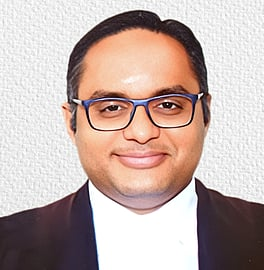
The students of NALSAR have another reason to take pride as two of its former students came forward to defend the constitutional rights of their juniors. Senior advocate K. Parameshwar, himself a NALSAR alumnus and presently serving as Additional Advocate General for the Government of Uttar Pradesh, urgently mentioned the matter before the Supreme Court on behalf of former NALSAR students Mihira Sood and another petitioner. The speed with which the issue reached the Court was itself remarkable. On the evening of August 13, 2026, the Bar Council of India issued a direction disallowing the enrolment of all graduating students of NALSAR’s B.A., LL.B. (Hons.) batch of 2026. The very next day, the matter was before the Supreme Court with a positive order.
What happened in those few hours raises serious questions about institutional power, statutory limits and constitutional responsibility.
Dramatically, the Bar Council of India intervened in its communication of August 13; the BCI reportedly directed that the entire graduating batch should not be enrolled. Though the direction was subsequently withdrawn, the damage had already been done. Not only that, but the BCI also sought an inquiry into the persons allegedly involved in the campaign against the invitation. The Supreme Court was disturbed as the Chief Justice Surya Kant himself reportedly questioned the motives behind an attempt to interfere in what he described as an ongoing “dialogue” between him and the students. Significantly, the Court barred the BCI from taking coercive action against NALSAR students, faculty members or administrators based on the incidents referred to in the BCI’s letters. The BCI was given two weeks to file an affidavit explaining its conduct.
The central constitutional issue is: Can a statutory regulatory body threaten the professional future of an entire batch of law graduates because some students expressed dissent on a matter concerning their university?
The answer cannot be found in the public servants of those involved. It must be found in the law. As rightly argued by senior advocate K. Parameshwar, neither the Advocates Act, 1961 nor the Rules of Legal Education framed by the BCI appear to authorise the Council to regulate the political, social or intellectual opinions of law students. Certainly, the BCI has an important statutory role as it prescribes standards of legal education, regulates professional conduct and performs functions relating to the legal profession. But statutory authority is not unlimited authority, as a regulator cannot discover a new jurisdiction merely because it disapproves of an event.
It is a Constitutional question whether the petition before the Supreme Court correctly raised the question of whether the BCI could effectively create a new ground of disqualification for enrolment: expression of dissent. The law prescribes specific circumstances in which a person may be disqualified from entering the profession. On an overnight decision, can BCI impose a blanket prohibition against the enrolment of an entire graduating batch, without hearing a single student and without identifying any legally established misconduct, appears fundamentally inconsistent with both statutory limitations and the principles of natural justice. The BCI’s action is troubling because of its chilling effect.
The message conveyed to young law students was unmistakable: speak against a powerful institution or personality, and your entry into the legal profession itself may be placed in jeopardy, because that is precisely the kind of fear which Article 19(1)(a) of the Constitution seeks to prevent.
Legal education cannot flourish in an atmosphere where students are expected to learn constitutional law in classrooms but remain silent when they seek to exercise constitutional freedoms in real life. A law university is not a training centre for obedience. It is a space for questioning authority, testing arguments, challenging received wisdom and developing the courage to defend unpopular positions.
The irony would be complete if future advocates were taught to defend freedom of expression in courts after being punished for exercising it as students.
Mr. Parameshwar’s submission that the BCI had embarked upon a “fishing expedition” therefore goes to the heart of the matter. Seeking to identify individual students merely because they participated in a collective expression of opinion risks converting a legitimate academic disagreement into an investigation into thought and association. Such an approach can have consequences far beyond NALSAR.
Today, it may concern students who object to a convocation guest. Tomorrow, it could concern students who criticise a university administration, a government policy, a judge, a lawyer, a regulator or the legal profession itself.
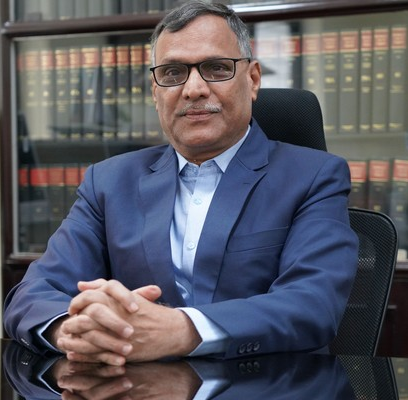
Vice-Chancellor Professor Srikrishna Deva Rao deserves equal attention to the response of NALSAR. Rather than mechanically complying with the demand for an inquiry, the University stated that it would consider whether such an inquiry would itself be constitutional and permissible under its governance regulations. Rightly, the matter was proposed to be placed before the Executive Council.
Important principle of institutional autonomy
That response reflects an important principle of institutional autonomy. Universities are not merely administrative extensions of regulatory bodies. They have their own statutory structures, governance mechanisms and constitutional responsibilities.
This lesson and episode also remind us that power must always be accompanied by restraint. The BCI occupies an important position in the legal system. Its decisions affect students, advocates, law colleges and universities across the country. Precisely for that reason, it must act with greater caution than an ordinary institution. The NALSAR episode must therefore be viewed not as a victory over a contest between students and the judiciary. In fact, Chief Justice Surya Kant’s intervention against the BCI’s threatened action demonstrated something more significant: a constitutional office cannot be insulated from criticism, but neither should criticism become an excuse for institutional retaliation. The students had the right to disagree.
The history of the BCI itself offers a relevant lesson. In Indian Council of Legal Aid & Advice v. Bar Council of India, the Supreme Court struck down the BCI’s attempt to impose an upper age limit of 45 years for enrolment as an advocate. That judgment reaffirmed a basic proposition: even a statutory regulator must remain within the limits of the statute from which it derives its power.
The NALSAR episode must therefore be viewed not as a victory of one group over another, nor as a contest between students and the judiciary. In fact, Chief Justice Surya Kant’s intervention against the BCI’s threatened action demonstrated something more significant. A constitutional office cannot be insulated from criticism, but neither should criticism become an excuse for institutional retaliation.
The greater lesson is that constitutional democracy depends upon institutions knowing both their powers and their limits.
The students had the right to disagree. The University had the responsibility to consider their representation within its own governance framework. The BCI had the duty to remain within its statutory jurisdiction. And the Supreme Court had the constitutional responsibility to intervene when professional futures and fundamental freedoms appeared to be threatened by regulatory overreach.
The immediate crisis may have passed because the BCI withdrew its most drastic direction. But withdrawal alone cannot erase the chilling effect created when hundreds of young law graduates are suddenly told that their right to enter the profession may be denied. The incident should therefore become a moment of institutional introspection.
For the students of NALSAR, it is a lesson in the practical meaning of constitutional rights. For the University, it is a reminder of its duty to protect academic freedom and institutional autonomy. For the Bar Council of India, it should be a reminder that regulatory power is not a licence for overreach.
And for the entire legal profession, the episode raises a question that deserves to be remembered: If future lawyers cannot safely dissent while they are students, who will defend the freedom of dissent when they become advocates?

Law professor and eminent columnist
Madabhushi Sridhar Acharyulu, author of 63 books (in Telugu and English), Formerly Central Information Commissioner, Professor of NALSAR University, Bennett University (near Delhi), presently Professor and Advisor, Mahindra University, Hyderabad. Studied in Masoom Ali High School, AVV Junior College, CKM College, and Kakatiya University in Warangal. Madabhushi did LL.M., MCJ., and the highest law degree, LL.D. He won 4 Gold Medals at Kakatiya University and Osmania University.
Email: cicsridhar@gmail.com
Mobile: 8447651505